
The rapid integration of artificial intelligence into corporate workflows has made AI literacy a vital asset for professionals across the globe. In the Philippines, business leaders, financial analysts, and entrepreneurs are actively seeking ways to leverage large language models like ChatGPT to optimize operations, automate repetitive tasks, and refine financial forecasting. However, because the field of generative AI moves at an extraordinary pace, finding the right book to guide your learning journey requires a strategic approach. Rather than simply purchasing the first title that appears in a search result, you must evaluate how well a book’s core concepts translate to practical, real-world scenarios.
The most effective books on ChatGPT do not merely teach you which buttons to click or provide static lists of prompts that may become obsolete with the next software update. Instead, they focus on teaching foundational frameworks such as structured prompt engineering, logical reasoning, and data-structuring methodologies. By mastering these core principles, you can easily adapt your knowledge as AI models evolve. This guide will help you navigate the process of selecting, evaluating, and applying ChatGPT literature specifically for business and finance, ensuring your investment in learning yields tangible professional benefits.
Defining Your AI Learning Objectives for Business and Finance
Before you begin browsing online catalogs or visiting local bookstores, it is essential to define your specific learning objectives. AI is a broad field, and a book that is highly rated for creative writing or basic productivity may not provide the depth required for complex business operations or financial analysis. Identifying your primary use cases early will help you narrow down your choices and select a text that aligns with your daily professional responsibilities.
Products mentioned in this guide
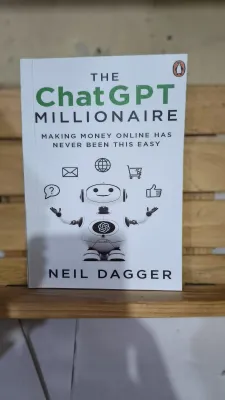

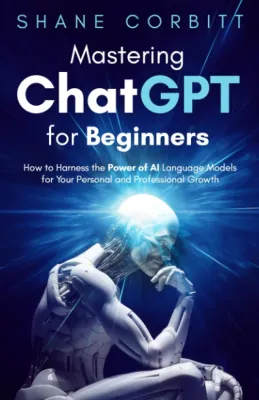
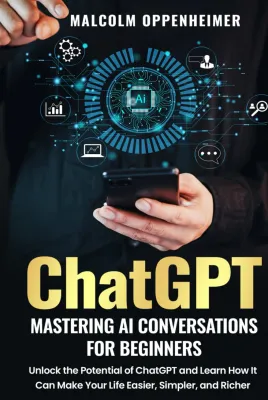
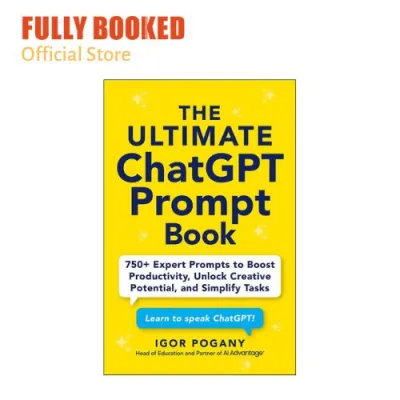
Prices are valid at publication and may change. Please refer to the product page for the latest price.
If your primary goal is to streamline daily administrative tasks, you should look for books that focus on business operations automation. These texts typically cover how to use ChatGPT for drafting professional correspondence, generating marketing copy, summarizing lengthy corporate reports, and creating standard operating procedures. The emphasis in these books is on saving time and improving communication efficiency across various departments.
For those working in accounting, investment banking, or corporate finance, your requirements will be significantly more technical. You will need a book that dives deep into financial modeling, data analysis, and quantitative reasoning. These specialized texts teach you how to use ChatGPT to write complex spreadsheet formulas, clean raw financial data, perform cohort analysis, and even generate code for financial forecasting models.
Your current technical proficiency is another critical factor to consider. If you have no prior experience with programming or data science, a beginner-friendly guide that explains natural language processing in simple terms is ideal. Conversely, if you are already comfortable with data analysis or basic programming, you will benefit more from advanced texts that explore API integrations, Python scripting alongside ChatGPT, and automated data pipelines.
Finally, consider your preferred learning format. Some readers prefer theory-heavy textbooks that explain the underlying mechanics of large language models, which can be highly beneficial for long-term strategic planning. Others learn best through highly practical, case-study-driven workbooks that offer step-by-step exercises, downloadable templates, and immediate hands-on applications that you can replicate at your desk.
Core Criteria for Evaluating ChatGPT and AI Books
With hundreds of AI-related titles available in the market, separating high-quality educational resources from hastily self-published guides can be challenging. To ensure you are investing your time and money in a book that offers genuine value, you should apply a strict set of evaluation criteria before making a purchase.

The first and most critical criterion is the publication date and the specific edition of the book. Because generative AI technology undergoes major updates multiple times a year, a book published even eighteen months ago may reference outdated interfaces or obsolete model limitations. Look for books that have been recently updated or those that explicitly focus on evergreen prompt engineering methodologies—such as role-prompting, chain-of-thought prompting, and few-shot learning—which remain highly effective regardless of the underlying model version.
Author credentials provide another vital indicator of quality. In the wake of the AI boom, many generic technology commentators have published books that offer little more than basic overviews. Prioritize authors who possess verifiable professional experience in financial analysis, corporate operations, software development, or data science. An author who has actively implemented AI solutions in a corporate environment will offer practical insights and troubleshooting advice that a generalist writer cannot provide.
Content completeness is especially important when dealing with business and financial data. A comprehensive book must address the ethical and security implications of using public AI models. Look for chapters or sections dedicated to data privacy, intellectual property considerations, and strategies for mitigating AI hallucinations. In finance, where a single incorrect digit can compromise an entire report, learning how to verify AI-generated outputs and implement strict quality control checks is absolutely essential.
Lastly, evaluate the book’s format and device compatibility. If you prefer digital reading, verify that the e-book is available in a flexible format like ePub or PDF rather than a locked layout that is difficult to read on smaller screens. Additionally, check if the publisher offers downloadable companion materials. Having direct access to a digital repository of prompt templates, spreadsheet formulas, or Python scripts saves you from having to manually type out long lines of text from a printed page.
Adapting Global AI Strategies to the Philippine Context
Most of the leading literature on ChatGPT and financial technology is written from a global perspective, often focusing on North American or European business environments. To make this knowledge truly useful for your career or business in the Philippines, you must learn how to bridge the gap between international concepts and local market realities.
When studying financial modeling and analysis through AI books, you will frequently encounter examples based on US GAAP or European accounting standards. You must actively instruct ChatGPT to adapt these models to align with Philippine tax regulations, such as the National Internal Revenue Code, local value-added tax (VAT) structures, and specific corporate tax rates. Furthermore, ensure that your prompts specify formatting outputs in the local currency using the Philippine Peso (₱) symbol to maintain professional consistency in your local reports.
Similarly, business operations examples in global books often assume access to logistics networks and platforms that may not be dominant in the local market. When designing prompts for supply chain management, inventory tracking, or customer service automation, you should customize the instructions to reflect local logistics providers, regional shipping constraints, and the specific ecommerce platforms commonly used by Filipino consumers. This ensures that the AI’s recommendations are logistically feasible and culturally relevant.
Data privacy compliance is perhaps the most critical area where global advice must be localized. International books may discuss compliance with GDPR or CCPA, but as a professional operating in the Philippines, you must strictly adhere to the Data Privacy Act of 2012 (DPA). Before inputting any corporate data, customer information, or proprietary financial records into ChatGPT, you must understand how to anonymize sensitive data. You should establish clear internal protocols to ensure that your use of AI tools does not inadvertently violate local data protection laws or compromise corporate security.
Sourcing Authentic Books and Verifying Editions
As demand for AI literature grows, so does the risk of encountering pirated copies, outdated editions, or low-quality print-on-demand reproductions. Sourcing your books from authorized and reputable sellers is the best way to guarantee that you receive complete, accurate, and high-quality educational materials.
To ensure authenticity, prioritize purchasing your books from official publisher websites, established local brick-and-mortar bookstores, or verified official storefronts on major online marketplaces. Avoid purchasing cheap digital copies or compiled prompt lists from unauthorized sellers on social media platforms, as these are frequently outdated, poorly formatted, or missing critical companion files.
Always verify the International Standard Book Number (ISBN) and the publisher details before finalizing your purchase. The ISBN is a unique identifier that ensures you are buying the exact edition you need, rather than an older version or a regional variant that may lack updated chapters. Comparing the ISBN listed on the retailer’s page with the official publisher’s catalog is a quick and reliable way to confirm you are getting the correct book.
Additionally, pay close attention to potential regional restrictions associated with digital purchases. Some international publishers bundle their books with access to online learning portals, interactive prompt libraries, or video tutorials. Before buying, verify that these digital companion resources are fully accessible to users located in the Philippines and do not require a foreign billing address or a virtual private network to access.
Frequently Asked Questions (FAQ)
Are there ChatGPT books specifically written for the Philippine market?
Currently, the vast majority of comprehensive books focusing on ChatGPT, artificial intelligence, and advanced financial modeling are published by international academic and technology presses. While you are unlikely to find a major textbook dedicated solely to Philippine business operations, you can easily use these global publications as your foundational texts. The key is to master the universal principles of prompt engineering and data structuring from these books, and then manually supplement your learning with local regulatory guidelines, domestic tax codes, and case studies from the local business community.
How often should I update my AI learning materials?
Because generative AI technology is evolving rapidly, relying solely on a single book for years is not practical. A good rule of thumb is to treat your books as foundational guides for core methodologies, while actively updating your practical knowledge every few months. You can achieve this by monitoring official release notes from AI developers, subscribing to reputable financial technology newsletters, and following software update logs. Prioritizing books that offer access to dynamic online portals or digital prompt repositories is an excellent way to ensure your learning materials remain relevant as the technology advances.
Can I use AI books to learn financial forecasting for local startups?
Yes, you can certainly use global AI books to learn the foundational principles of financial forecasting, scenario analysis, and data structuring. The mathematical models and logical frameworks used to project revenue, calculate burn rates, and estimate customer acquisition costs are universal. However, you must remain cautious and manually adjust the macroeconomic variables, local inflation rates, regional risk factors, and specific market assumptions that foreign books do not cover. Always verify the AI’s mathematical outputs against your own calculations to ensure accuracy before presenting financial forecasts to local investors.

Community discussion
Share your experience or ask a question. Comments are reviewed before publication.