
Choosing between a padded gig bag and a rigid hard case for your digital piano depends on how you transport, store, and handle your instrument. If you frequently commute locally, navigate public transport, or need a lightweight solution for home storage, a padded gig bag offers excellent portability. However, if you travel long distances, load your gear into shared cargo spaces, or need to safeguard a heavy, fully weighted 88-key keyboard from severe impacts, a rigid hard case is indispensable.
In tropical environments like the Philippines, high humidity and sudden heavy downpours present additional challenges for electronic instruments. Selecting the right protective enclosure is not just about preventing scratches; it is about shielding delicate internal circuitry and weighted key actions from moisture and physical shock. Understanding the distinct advantages and limitations of each case type allows you to make a practical investment that keeps your digital piano safe and functional.
Assessing Your Digital Piano's Transport and Storage Needs
Before choosing a case, evaluate how often and how far you plan to move your digital piano. A student taking weekly lessons nearby has vastly different requirements than a gigging musician traveling between venues every weekend.
Products mentioned in this guide
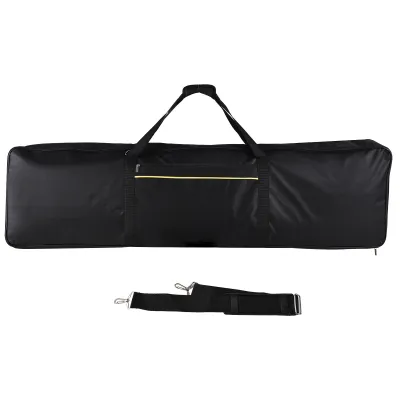
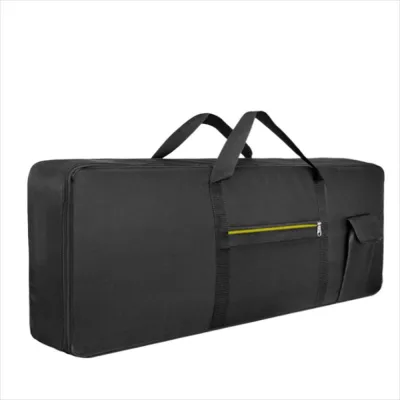
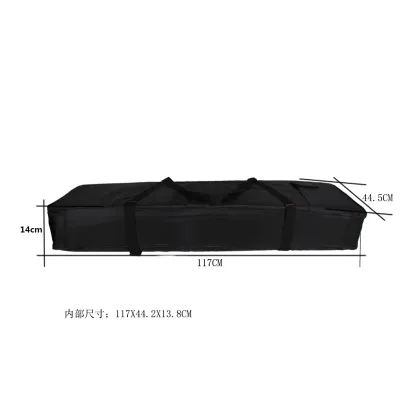
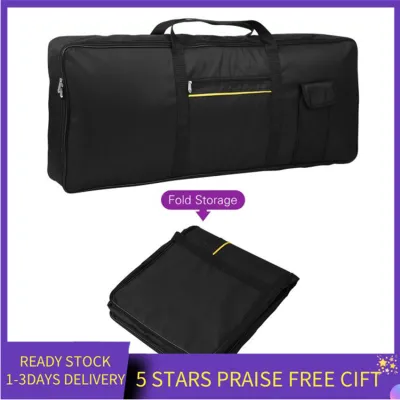

![[COD]Six-sided thickened electronic instrument bag with 61 keys and cotton thickened instrument bag](https://img.lazcdn.com/g/p/fff845fb454074cc071c690695c55013.jpg_400x400q80.jpg_.webp)
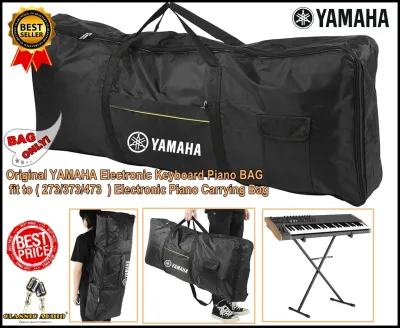

Prices are valid at publication and may change. Please refer to the product page for the latest price.
Consider your primary mode of transit. If you rely on personal vehicles where you control how items are stacked, your protection needs are relatively low. Conversely, navigating public transport, rideshares, or tricycle rides in busy metropolitan areas exposes your instrument to constant bumps, tight spaces, and unpredictable handling.
The physical characteristics of your keyboard dictate the level of structural support required. Lightweight synthesizers and MIDI controllers can easily slide into soft bags, but heavy, fully weighted 88-key digital pianos exert immense pressure on their enclosures. These heavier instruments require robust support to prevent the chassis from flexing, which can damage the delicate hammer-action keybeds inside.
Environmental factors in tropical regions play a critical role in your decision. High humidity, intense heat, and sudden torrential rains can easily penetrate basic fabrics, potentially causing moisture buildup inside the keyboard’s electronic components. You must assess whether your storage and transport routes expose the instrument to these harsh elements.
Padded Gig Bags: Flexibility for Local Gigs and Storage
Padded gig bags serve as a highly flexible solution for musicians who prioritize mobility and quick setups. These soft-sided cases are designed to guard your digital piano against everyday hazards such as dust accumulation, minor surface scratches, and light bumps during controlled transit.

The primary advantage of a gig bag lies in its lightweight construction and ergonomic carrying options. Many models feature adjustable backpack straps, heavily padded side handles, and exterior accessory pockets that allow you to carry sustain pedals, music stands, power adapters, and cables in a single trip. This hands-free convenience is invaluable when walking through crowded streets or climbing stairs.
However, soft gig bags have clear structural limitations. Because they lack a rigid outer shell, they offer virtually no protection against heavy crushing forces, severe drops, or sharp impacts. If a heavy object is stacked on top of a gig bag in a vehicle trunk, the pressure transfers directly to the keyboard’s keys and control knobs, risking structural damage.
A gig bag is highly suitable when you maintain complete physical control over your instrument at all times. It is well-suited for short-distance travel, trips in your personal car, or simply keeping your digital piano clean and dust-free when stored in a closet or on a stand at home.
Hard Cases: Maximum Defense for Touring and Freight
For scenarios where your digital piano is out of your direct supervision, a rigid hard case provides a maximum level of defense. Constructed from tough materials such as plywood, ABS plastic, or fiberglass, these cases are engineered to absorb severe impacts and completely resist crushing forces.
The structural integrity of a hard case ensures that even if other heavy equipment shifts during transit, your keyboard remains entirely isolated from external pressure. This makes them the industry standard for professional touring, air travel, and shipping via commercial freight services where baggage handlers or cargo shifts could otherwise destroy a soft-cased instrument.
This maximum protection comes with significant portability trade-offs. Hard cases are inherently heavy and bulky, often doubling the total weight you must transport. To manage this extra load, many hard cases feature built-in inline wheels and multiple heavy-duty spring-loaded handles, which may require two people to lift safely into a vehicle.
Storage also becomes a more demanding task when using a rigid case. Unlike a soft bag that can be folded and tucked away when the piano is on its stand, a hard case retains its full, bulky dimensions. You must plan for sufficient storage space in your home, studio, or vehicle trunk to accommodate these large, non-collapsible containers.
Comparing Gig Bags and Hard Cases Across Key Dimensions
To make an informed choice, it is helpful to compare how these two protection methods perform side-by-side across key operational dimensions. Your decision should balance the physical safety of your digital piano against the daily convenience of moving it.
Impact resistance is the most stark differentiator. While a gig bag relies on varying thicknesses of foam padding to cushion light knocks, a hard case utilizes a solid exterior barrier coupled with dense internal foam to neutralize high-velocity impacts. If your instrument is expensive or difficult to replace, prioritizing structural defense is often the safest path.
Weight and carrying ease directly affect your physical comfort. A gig bag adds minimal weight to your setup, making it easy to carry over long distances on foot. A hard case, while offering enhanced defense, can turn a simple trip into a strenuous physical chore, especially if you must lift it in and out of high vehicle trunks without assistance.
Price positioning and long-term durability also vary widely. Gig bags are generally more affordable, making them accessible for hobbyists and students, though their zippers and fabric seams may wear out over years of heavy use. Hard cases represent a larger upfront investment in ₱, but their industrial-grade latches, metal corners, and rugged shells are built to last a lifetime under harsh conditions. You should verify current prices in ₱ on reputable online marketplaces to find an option that fits your budget.
| Dimension | Padded Gig Bag | Rigid Hard Case |
|---|---|---|
| Impact Resistance | Low (absorbs light bumps and scratches) | High (resists drops, crushing, and heavy impacts) |
| Weight & Portability | Very lightweight; features backpack straps | Heavy; requires wheels or multi-person lifting |
| Storage Footprint | Small; collapsible when empty | Large; rigid and non-collapsible |
| Durability | Moderate; zippers and fabric wear over time | Extremely high; rugged shells and metal hardware |
| Ideal Use Case | Local travel, personal cars, home storage | Air travel, professional touring, freight shipping |
Decision Framework: Which Piano Case Should You Buy?
To finalize your decision, apply a simple set of conditional rules based on your primary usage patterns. If your routine involves carrying your keyboard to local rehearsals, traveling in your own car, or storing the instrument safely at home, a padded gig bag is the most practical and cost-effective choice.
On the other hand, if you regularly perform on professional stages, load your gear into shared band vans, fly to gigs, or ship your instrument via freight, investing in a rigid hard case is essential to safeguard your valuable equipment from catastrophic damage.
If your digital piano rarely or never leaves your living room or studio, you might not need either option. For stationary instruments, a simple, breathable fabric dust cover is often sufficient to keep the keys clean without the unnecessary expense or bulk of a full transport case.
Before making any purchase, always verify the exact interior dimensions and weight capacity of the case against your specific digital piano model’s manufacturer specifications. Do not rely solely on generic keyboard size labels, as physical dimensions and keyboard depths vary significantly between different brands and models.
Frequently Asked Questions (FAQ)
Can I use a generic keyboard bag for a fully weighted digital piano?
Using a generic, unreinforced keyboard bag for a heavy, fully weighted digital piano carries significant risks. The substantial weight of hammer-action keys puts extreme stress on standard zippers, seams, and strap attachment points, which can lead to sudden tears and drops. If you choose a soft case, ensure it features a reinforced bottom panel, heavy-duty metal zippers, and a maximum weight rating that safely exceeds your instrument’s actual weight.
Do hard cases come with custom foam inserts for digital pianos?
Some premium hard cases feature customizable foam interiors, such as pick-and-pluck foam or adjustable foam blocks, which allow you to create a snug fit tailored to your keyboard’s exact dimensions. Other cases offer universal foam padding that relies on compression to hold the instrument in place. Always measure your digital piano precisely before purchasing to ensure the internal padding secures the keyboard firmly without putting excessive, continuous pressure on the keys or control knobs.
How should I store my digital piano case when not in use?
To prolong the lifespan of your piano case, store it in a dry, temperature-controlled environment away from direct sunlight and high humidity, which can degrade fabrics, adhesives, and foam padding. For padded gig bags, consider keeping the zippers partially open or placing silica gel desiccant packets inside to prevent moisture from trapping and causing mold or unpleasant odors. Keep hard cases closed and latched to prevent dust accumulation and maintain their structural alignment.

Community discussion
Share your experience or ask a question. Comments are reviewed before publication.