
Finding the right self-help book for anxiety requires looking beyond popular book lists to find resources that match your specific symptoms, learning style, and local availability. With the unique stressors of modern life—ranging from dense urban commutes to high-pressure work environments—managing mental health is a deeply personal journey. While many popular titles are written from a Western perspective, their core psychological principles remain highly applicable if you know how to select, verify, and apply them. By focusing on evidence-based frameworks and checking the physical and digital availability of specific editions, you can find a practical guide that fits your daily routine.
Identifying Your Anxiety Triggers and Learning Style
Anxiety is not a uniform experience, and a book that helps one person might not resonate with you. To begin your search, it is essential to clarify how your anxiety primarily manifests. Some people experience generalized anxiety, characterized by persistent, free-floating worry about everyday matters like health, finances, or family. Others struggle with social anxiety, which triggers intense fear of judgment or embarrassment in social and professional settings. Panic responses, marked by sudden physical sensations like a racing heart, require a very different coping strategy than obsessive thought patterns, where the mind gets trapped in repetitive, distressing loops.
Once you understand your primary triggers, consider your preferred learning style. If you thrive on structure, goal-oriented tasks, and measurable progress, an interactive workbook filled with exercises, charts, and daily logs will likely be highly effective. For those who find comfort in shared human experiences, a narrative-driven memoir written by someone who has navigated severe anxiety can offer deep validation. Alternatively, if you prefer to understand the biological reasons behind your symptoms, a science-heavy text explaining brain chemistry and nervous system responses will provide the intellectual grounding you need to feel in control.
Products mentioned in this guide
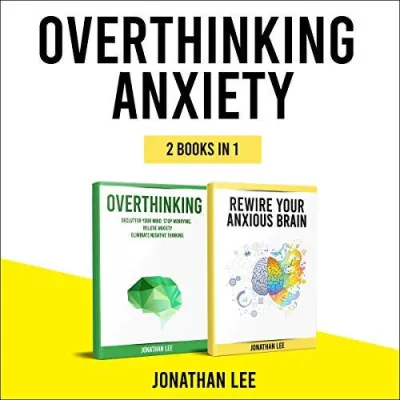
Prices are valid at publication and may change. Please refer to the product page for the latest price.
It is equally important to set realistic expectations for what a self-help book can achieve. Self-guided reading is an excellent tool for psychoeducation, building basic coping mechanisms, and managing mild to moderate stress. However, books are static resources; they cannot diagnose complex conditions, provide real-time feedback, or adapt to severe, acute crises. If your anxiety severely disrupts your daily functioning, sleep, or relationships, reading should serve as a supportive supplement to, rather than a replacement for, professional clinical intervention from a licensed psychologist or psychiatrist.
Matching Psychological Approaches to Your Needs
When browsing self-help literature, you will encounter various therapeutic frameworks. Understanding these approaches allows you to choose a book that aligns with your personal coping goals. One of the most common and highly researched frameworks is Cognitive Behavioral Therapy (CBT). CBT operates on the premise that our thoughts, feelings, and behaviors are interconnected. Books based on CBT focus heavily on identifying cognitive distortions—such as catastrophizing or all-or-nothing thinking—and teaching readers how to actively challenge and restructure these negative thought patterns. This approach is highly practical and action-oriented, making it ideal for those who want concrete tools to change their daily mental habits.

Another prominent framework is Acceptance and Commitment Therapy (ACT). Unlike CBT, which aims to change or challenge negative thoughts, ACT encourages readers to accept their thoughts and feelings rather than fighting them. ACT materials emphasize psychological flexibility, teaching you to observe your anxious thoughts without judgment and commit to actions that align with your core values. This approach is particularly beneficial for individuals who feel exhausted by the constant struggle to control their anxiety and instead want to learn how to live a meaningful life alongside their uncomfortable emotions.
Mindfulness and somatic practices represent a third major category in anxiety literature. These resources focus on the mind-body connection, recognizing that anxiety is deeply registered in the physical nervous system. Books in this genre teach techniques such as deep breathing, progressive muscle relaxation, and sensory grounding to help regulate a hyperactive fight-or-flight response. If your anxiety frequently manifests as physical tension, shallow breathing, or a racing heart, a book centered on somatic regulation and mindfulness can provide immediate, practical relief by calming your physical body.
To identify which framework a book utilizes, look for specific keywords in the book’s description, table of contents, or the author’s professional background. Terms like “cognitive restructuring,” “thought records,” and “behavioral activation” point to CBT. Keywords such as “mindfulness,” “defusion,” “values-based living,” and “acceptance” indicate an ACT-based approach. If you see terms like “nervous system regulation,” “somatic experiencing,” “breathwork,” or “grounding exercises,” the book likely focuses on body-based, somatic practices. Checking these details ensures you do not accidentally purchase a book whose underlying philosophy conflicts with your preferred way of healing.
Sourcing and Verifying Book Editions in the Philippines
Finding physical copies of specific self-help books in the Philippines can sometimes be a challenge due to varying import schedules and stock limitations. When searching for physical books, start by checking major local bookstore chains and independent neighborhood shops. Many local retailers allow you to search their inventory online or contact their customer service branches directly to inquire about stock. If a book is currently out of stock, ask if they offer special order options or reservation lists, which can secure a copy from the next incoming shipment without requiring you to pay high international shipping fees.
If physical copies are unavailable locally, online marketplaces and digital platforms offer excellent alternatives. E-books and audiobooks are highly accessible, eliminating shipping wait times and physical storage needs. When purchasing physical imports from international online retailers, pay close attention to estimated shipping times, customs regulations, and potential import fees, which will be calculated in Philippine Pesos (₱). Be sure to factor these additional costs into your budget, as international shipping can sometimes double the total price of a single paperback.
Before finalizing any purchase, verify the specific edition, language, and content completeness of the book. This is especially critical when buying from second-hand sellers, online marketplaces, or independent importers. Some cheaper editions may be abridged, translated poorly, or missing crucial supplementary materials like worksheets, diagnostic quizzes, or online audio guides. Never infer the exact contents of an edition solely from a title or cover image; always check the publisher details, page count, and ISBN to ensure you are purchasing the complete, authorized version of the text.
If you are hesitant to invest in a book before knowing if it will help you, utilize local library networks, university resources, or digital preview options. Many academic libraries and public community spaces in the Philippines carry foundational self-help and psychology texts. Additionally, digital platforms often allow you to read a sample chapter or listen to an audiobook preview. Utilizing these free resources helps you evaluate the book’s tone and structure before committing your hard-earned ₱ to a permanent purchase.
Pre-Purchase Checklist: Evaluating Quality and Credibility
The self-help market is vast, and not all books are created equal. To protect your mental well-being and ensure you are receiving safe, evidence-based advice, it is crucial to evaluate a book’s credibility before buying. First, review the author’s professional credentials. Prioritize books written by licensed clinical psychologists, psychiatrists, or recognized academic researchers who have extensive experience treating anxiety disorders. While personal memoirs by non-professionals can offer comfort and solidarity, books that prescribe specific therapeutic exercises should be authored by qualified mental health professionals.
Next, take the time to read sample chapters, the introduction, or even the back cover copy to gauge the author’s tone. The tone should feel empathetic, practical, and easy to understand. Avoid authors who use overly academic jargon that leaves you feeling confused, as well as those who adopt a dismissive or overly simplistic attitude. A good self-help book respects the complexity of your experience while breaking down therapeutic concepts into manageable, actionable steps.
Check the publication date of the book to ensure the psychological concepts and research cited are up to date. While classic texts still hold immense value, clinical psychology and neuroscience are constantly evolving fields. A book published within the last ten years is more likely to incorporate modern research on neuroplasticity, trauma-informed care, and diverse cultural perspectives, ensuring you are applying the most current and effective strategies to your life.
Finally, actively avoid titles that promise “quick fixes,” guarantee instant recovery, or use sensationalized marketing language. Anxiety management is a gradual process of building habits and retraining your nervous system; any book claiming to cure anxiety in a few days or offering a single “secret” solution is likely ignoring established clinical evidence. Look for books that emphasize steady, incremental progress and encourage you to work at your own pace.
Applying the Concepts: Reading Without Overwhelm
Reading a self-help book about anxiety can, ironically, sometimes trigger anxiety. Confronting your fears, identifying negative habits, and reflecting on personal struggles requires significant emotional energy. To prevent cognitive overload, pace your reading process. Instead of rushing to finish the book in a weekend, treat it like a study guide or a slow-paced course. Limit yourself to one chapter or even a few pages per day, allowing your mind time to digest the concepts and observe how they apply to your daily life.
To get the most out of your reading, engage actively with the material rather than passively skimming the text. Keep a dedicated journal or notebook nearby to complete workbook exercises, write down reflections, and track your progress. If the book includes physical exercises, such as progressive muscle relaxation or breathing techniques, practice them in a quiet, comfortable space where you feel safe. Active participation helps translate theoretical knowledge into practical, real-world coping skills that you can rely on during moments of high stress.
Lastly, establish clear boundaries for your reading sessions. If a particular chapter or exercise causes intense distress, panic, or overwhelming sadness, give yourself permission to close the book and step away. Self-help should feel supportive, not punishing. If you find that reading about your anxiety consistently worsens your symptoms, it is a clear sign to pause and seek the guidance of a professional mental health counselor who can help you navigate these triggers in a safe, controlled environment.
Frequently Asked Questions (FAQ)
Can self-help books replace professional therapy for anxiety?
No, self-help books cannot replace professional therapy, especially for moderate to severe anxiety. Books are excellent tools for psychoeducation, learning basic coping mechanisms, and managing mild, situational stress. However, they lack the personalized assessment, diagnostic capabilities, and interactive support that a licensed psychologist or psychiatrist provides. If your anxiety is debilitating, chronic, or deeply rooted in trauma, books should be used as a supportive supplement alongside professional clinical treatment.
Are audiobooks as effective as physical books for anxiety management?
The effectiveness of an audiobook depends entirely on your learning style and current mental state. Audiobooks are highly beneficial for passive learning, commuting through busy cities, or when high anxiety makes it difficult to focus visually on printed text. They allow you to absorb comforting concepts while resting your eyes. However, physical books or e-books are generally more effective for interactive workbooks, as they make it much easier to highlight key passages, take notes, and complete written exercises that are crucial for long-term skill retention.

Community discussion
Share your experience or ask a question. Comments are reviewed before publication.