
Finding the perfect piano stand for your Yamaha keyboard in the Philippines requires balancing structural stability, instrument compatibility, and your specific playing environment. Whether you own a lightweight portable keyboard or a heavy, fully weighted 88-key digital piano, matching your instrument with the correct support system prevents costly accidents and enhances your overall playing posture. In a tropical climate where high humidity can affect both metal components and rubber grips, selecting a durable, high-quality stand is essential for protecting your musical investment.
Choosing the wrong stand can lead to distracting wobbles during expressive performances or, worse, structural failures that risk damaging your keyboard. By understanding the physical differences between stand designs, verifying weight capacities, and knowing what to look for when buying from local retailers, you can find a stable and reliable setup that fits your home or stage needs.
Understand the Main Types of Keyboard Stands
Identifying the structural differences and ideal use cases for common stand designs is the first step in narrowing down your search. Keyboard stands generally fall into three main categories, each offering distinct advantages in terms of portability, stability, and aesthetics.
Products mentioned in this guide
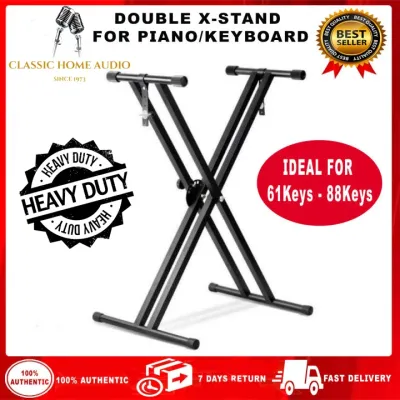
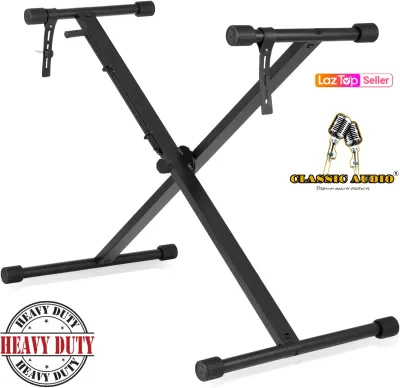
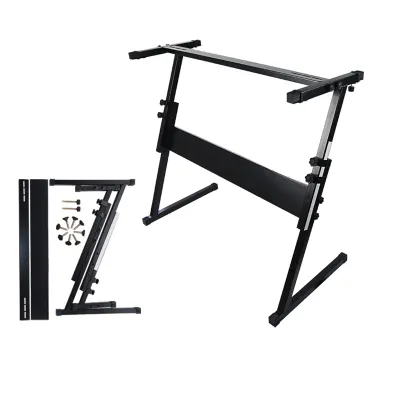
Prices are valid at publication and may change. Please refer to the product page for the latest price.
X-style stands are the most common and recognizable support systems on the market. They feature a simple, intersecting metal frame that folds flat for easy storage and transport, making them highly popular among gigging musicians and students. Single-braced X-stands consist of a single pair of crossing metal tubes, which are lightweight and best suited for smaller, portable keyboards. Double-braced X-stands feature an extra set of parallel bars, significantly increasing lateral stability and weight capacity to support heavier instruments while maintaining a quick setup process.
Z-style and A-frame stands offer enhanced stability and legroom for more demanding setups. Z-style stands are named for their Z-shaped side profiles, which are connected by a heavy-duty horizontal crossbar. This design creates an incredibly rigid frame that resists side-to-side wobbling, even during energetic playing. Because the support structure is pushed to the outer edges of the keyboard, Z-stands provide maximum legroom for seated players, allowing comfortable access to sustain and expression pedals. A-frame stands are typically used for multi-keyboard setups or synthesizers, offering robust vertical support and adjustable tiers for players who perform standing up.
Manufacturer-specific custom stands are designed to match exact digital piano models, transforming a portable keyboard into a permanent piece of home furniture. Often constructed from dense wood or composite materials, these stands bolt directly into pre-drilled threaded inserts on the underside of the keyboard. This direct integration eliminates any risk of the keyboard sliding or tipping. Additionally, custom wooden stands often support integrated three-pedal units, providing a stable platform that replicates the physical layout and pedaling experience of an acoustic grand piano.
Check Keyboard Compatibility and Weight Capacity
Before purchasing any stand, you must verify that it can safely support your specific Yamaha keyboard model. Placing a heavy, full-sized digital piano on an under-rated stand is a safety hazard that can lead to structural failure and expensive damage.

Start by locating your keyboard’s exact model number, which is typically printed on the rear panel or the underside of the chassis. Use this model number to find the official user manual or specifications sheet on the manufacturer’s website. Note the instrument’s exact weight without accessories, as well as its physical width, depth, and height. Keep in mind that accessories like music rests, power adapters, and external speakers add to the total weight, so factor in a small safety margin when calculating the load.
Compare your keyboard’s total weight against the stand’s maximum load capacity label or product description. A reputable stand manufacturer will clearly state the maximum weight the frame can safely bear. Ensure the stand’s rated limit comfortably exceeds the weight of your keyboard. When you play expressively, your hands exert additional downward force on the keys, which momentarily increases the load on the stand; a generous weight margin prevents the metal joints from bowing or slipping under this dynamic pressure.
Finally, check the dimensions of the stand’s supporting arms and compare them to the depth of your keyboard’s base. The keyboard must rest fully on the rubber pads without hanging over the front or back edges, which can cause the instrument to tilt. If you are using an adjustable-width stand, ensure the width can be set so that the support arms align with the reinforced structural points on the bottom of your keyboard rather than resting on delicate plastic battery covers or control panels.
Match the Stand Design to Your Playing Environment
Your physical space, aesthetic preferences, and performance needs should dictate the style of stand you choose. A stand that works perfectly in a permanent living room setup may be entirely impractical for a touring musician.
For home setups where the keyboard remains in a dedicated room, prioritize stability, aesthetics, and integration with your living space. A custom wooden stand blends seamlessly with home decor and provides a permanent, inviting practice station. In the Philippines, high relative humidity can cause condensation on metal surfaces, leading to rust over time. Choosing a wooden stand or a metal stand with a high-quality, rust-resistant powder-coated finish helps ensure long-term durability in tropical environments.
If you are a gigging musician or frequently travel between venues, portability and durability are your primary concerns. Look for heavy-duty metal X-stands or folding Z-stands that feature quick-release pulling pins or clutch mechanisms. These allow the stand to fold completely flat, making it easy to pack into car trunks or transport on public transit. Ensure the stand features thick, non-slip rubber feet to grip uneven stage floors and absorb vibrations from nearby subwoofers or drum kits.
Multi-keyboard players who use a digital piano alongside a secondary synthesizer or MIDI controller should look for multi-tier stands. Many heavy-duty Z-stands and X-stands allow you to attach a second-tier accessory. When selecting a multi-tier system, verify that the angle, height, and depth of the second tier are fully adjustable. This flexibility allows you to position the upper keyboard comfortably, ensuring you can access all control panels without straining your wrists or obstructing your view of the main keys.
Verification Checklist for Buying in the Philippines
When purchasing keyboard stands from local music stores or online marketplaces in the Philippines, taking a systematic approach to verification helps you avoid counterfeit products and shipping damage.
First, verify the seller’s credentials and authorized dealer status. Counterfeit or generic unbranded stands often use thinner metal tubing, weak weld points, and low-grade plastic joints that can fail under pressure. Check the official distributor list on the manufacturer’s local website or look for authorized dealer badges on local e-commerce platforms. Genuine accessories are manufactured to strict quality control standards, using high-grade steel and durable synthetic rubber that will not stain your keyboard’s plastic casing.
Second, review the shipping policies and packaging standards of the retailer. Keyboard stands are heavy, awkwardly shaped metal items that require robust packaging to survive domestic transit. Read customer feedback regarding shipping quality, ensuring the seller uses thick bubble wrap and sturdy cardboard boxes. This prevents the metal parts from clashing together, scratching the finish, or bending the adjustment mechanisms during delivery.
Finally, perform an immediate post-delivery inspection once your package arrives. Unbox the stand and inspect all components before assembling. Check for missing assembly screws, worn or cracked rubber end caps, and any structural bends in the main support bars. Tighten all joints and test the locking mechanism under light manual pressure before placing your valuable Yamaha keyboard onto the stand. If you notice any defects or shipping damage, contact the seller immediately to arrange a replacement under warranty.
Frequently Asked Questions (FAQ)
Can I use a generic X-stand for a heavy 88-key Yamaha digital piano?
While a generic single-braced X-stand might physically hold a heavy 88-key digital piano, it is not recommended due to safety and stability risks. Full-size digital pianos with weighted keys are top-heavy and require a wide, stable base to prevent tipping during expressive play. A single-braced stand can wobble laterally, putting your expensive instrument at risk of falling. For 88-key models, it is highly recommended to use a heavy-duty double-braced X-stand, a Z-stand, or the manufacturer’s designated wooden furniture stand to ensure proper weight distribution.
How do I prevent my keyboard from sliding off the stand during play?
To keep your keyboard secure, first ensure that the stand’s rubber end caps and non-slip pads are fully intact and clean. Dust and humidity can make rubber slick, so wipe them down periodically with a damp cloth. Many Yamaha keyboards feature threaded screw holes on the bottom panel designed to align with specific mounting straps or screws included with compatible stands. If your stand does not have these straps, you can use high-friction non-slip mats placed between the keyboard and the support arms, or adjust the stand’s width so the keyboard’s rubber feet sit snugly against the outer edges of the support bars.

Community discussion
Share your experience or ask a question. Comments are reviewed before publication.