
Finding a reliable pair of drumsticks under ₱500 is entirely possible if you know how to evaluate materials and construction. For students and hobbyists in the Philippines, budget-friendly sticks are essential tools for daily practice, whether on acoustic kits, electronic drums, or rubber practice pads. The key is focusing on material quality, structural straightness, and appropriate sizing rather than premium brand names. By understanding how wood types, dimensions, and manufacturing tolerances affect performance, you can secure durable sticks that protect your wrists and your gear without breaking the bank.
Understanding Drumstick Basics on a Budget
When shopping for affordable drumsticks, your first decision involves selecting the right wood type. Hickory is the industry standard for a reason, offering excellent shock absorption and moderate weight, making it highly versatile for beginners. Maple is lighter and less dense, which allows for larger stick diameters without the added weight, though it tends to splinter faster under heavy use. Oak is dense, heavy, and highly durable, but it transmits more vibration to your hands, which can lead to fatigue during long practice sessions.
Understanding standard sizes and tapers is equally critical for finding a comfortable pair. The 5A size is the middle-of-the-road standard, ideal for most beginners and general rock or pop styles. The 5B size is thicker and heavier, which is excellent for building hand strength or playing louder genres. The 7A size is thin and light, making it perfect for jazz, light acoustic settings, or younger players with smaller hands. The taper—the slope from the shaft to the tip—also affects the stick’s balance; a longer taper feels lighter at the tip and offers more rebound, while a short taper feels front-heavy and delivers more power.
Products mentioned in this guide
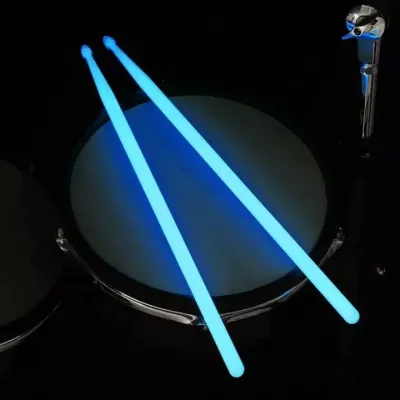
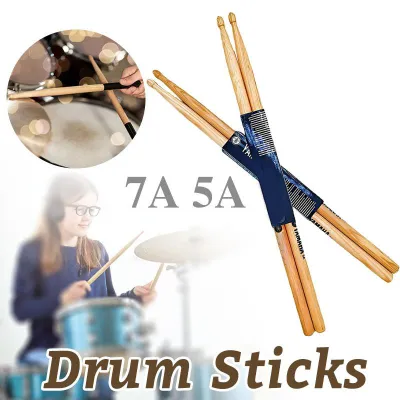
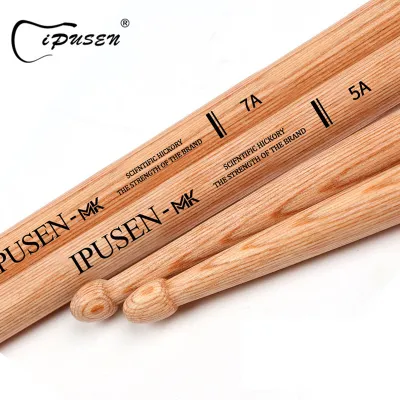
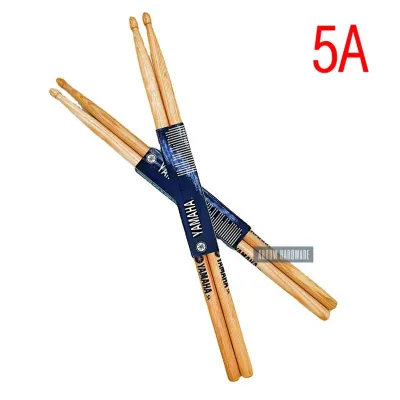
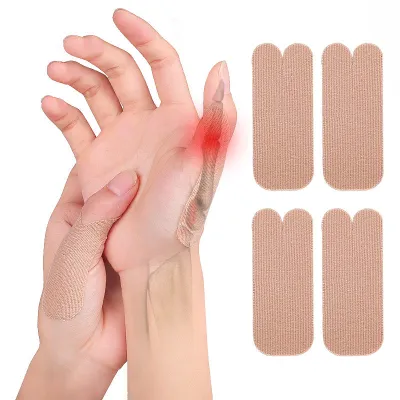
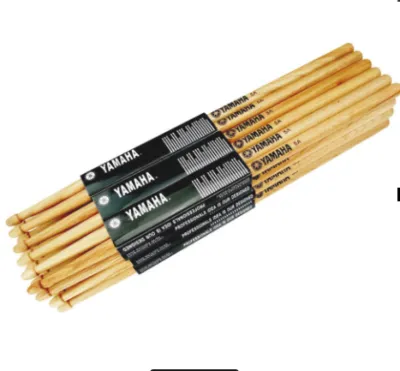
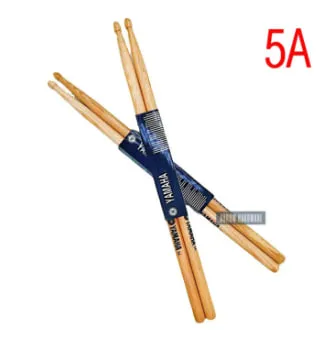
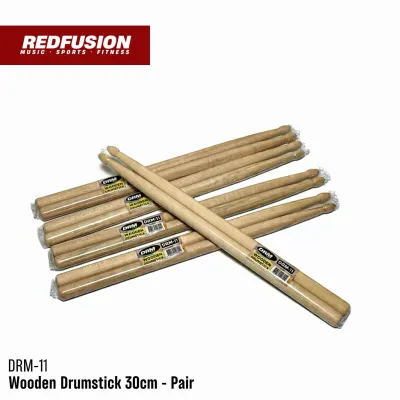
Prices are valid at publication and may change. Please refer to the product page for the latest price.
Finally, you must choose between wood tips and nylon tips. Wood tips provide a warm, natural tone on cymbals but can chip over time, especially on budget models. Nylon tips produce a bright, cutting sound and are virtually indestructible. They are particularly excellent for electronic drum kits with mesh or rubber pads, as chipped wood tips can easily snag and tear expensive mesh heads.
What to Expect from Drumsticks Under ₱500
Premium drumsticks undergo rigorous factory pairing where machines match them by weight within a fraction of a gram and pitch-match them to the same frequency. Under ₱500, you should expect wider variances. One stick in your pair might feel slightly heavier or sound a semi-tone higher when tapped. For a beginner or hobbyist, these minor differences are rarely a dealbreaker, but they are noticeable as your technique develops.

Budget sticks also feature thinner, less consistent lacquer coatings. Some may feel overly slick, while others might feel dry and powdery. In a humid tropical environment like the Philippines, sweat can make poorly finished sticks slippery, prompting players to use grip tape or sand the handle area slightly for a better hold.
To avoid buying a pair that will break immediately, you must learn to spot visual and physical red flags. Inspect the grain of the wood; it should run straight down the length of the stick from the butt to the tip. Grain that runs diagonally across the shaft, known as grain run-out, creates weak points where the stick is highly likely to snap on a rimshot. Look out for warping, rough patches from incomplete sanding, and asymmetrical shoulder tapering, which ruins the stick’s natural balance.
How to Evaluate and Select Your Pair
If you are buying from a local music store, take advantage of physical inspection. Roll the sticks on a flat, smooth surface like a glass display counter or a polished stone floor. If a stick wobbles or shows a gap between the wood and the surface as it rolls, it is warped and should be rejected. Next, hold each stick lightly near the taper and tap them gently against each other or a practice pad. Listen to the pitch of the resonance; try to find two sticks that sound as close in pitch as possible to ensure a balanced feel.
When shopping on an online marketplace, you cannot physically test the sticks beforehand. Therefore, you must rely on seller verification and user feedback. Look for listings that explicitly state the wood type, such as genuine maple or selected hickory, rather than generic hardwood. Read customer reviews specifically looking for complaints about warping, immediate breakage, or mismatched weights. Ensure the seller has a clear return or replacement policy for defective items so you can exchange warped sticks.
It can be tempting to buy a pack of ten unbranded sticks for an incredibly low price. However, these are often factory seconds that failed quality control. They frequently suffer from severe warping, internal structural cracks, and mismatched weights, which can hinder your learning progress and ruin your muscle memory.
Maximizing the Lifespan of Budget Drumsticks
The way you play has a massive impact on how long your sticks last. Beginners often grip the sticks too tightly, which prevents the wood from absorbing shock naturally and forces the energy back into the stick and your wrists, leading to rapid splintering. Maintain a relaxed grip. Additionally, striking cymbals at a harsh angle with the shoulder of the stick will quickly chew through the wood. Instead, slice across the cymbal with a glancing blow to preserve both the stick and the bronze.
Climate and storage play a significant role in stick durability. The high humidity in the Philippines can cause wood to absorb moisture, making it soft and heavy, while sudden dry spells or air conditioning can dry it out, making it brittle. Always wipe down your sticks with a dry cloth after a sweaty practice session to remove hand oils and moisture. Store them in a stick bag or a dry drawer away from direct sunlight, open windows, or air conditioning vents.
Do not wait for a stick to snap completely before replacing it. Deep cracks along the shoulder, heavily chipped tips that can damage drumheads, or a stick that has lost its structural stiffness and feels dead are all signs that it is time to retire the pair. Playing with damaged sticks can ruin your drumheads, puncture electronic mesh pads, and cause hand strain due to altered balance.
Frequently Asked Questions (FAQ)
Are heavier drumsticks always more durable?
Not necessarily. While thicker sticks like 5B or 2B have more mass and can withstand heavier impacts, durability heavily depends on the specific wood type, playing technique, and rimshot frequency rather than weight alone. A poorly made, heavy oak stick with grain run-out can snap much faster than a well-crafted, straight-grained hickory 7A stick played with proper technique.
Should beginners buy multiple pairs at once?
It is generally better for beginners to start with one or two single pairs of different sizes, such as a 5A and a 7A, to determine what feels most comfortable. Buying multi-packs of a single size saves money but carries the risk of committing to a specific size, taper, or finish that may not suit your evolving technique and comfort as you practice.

Community discussion
Share your experience or ask a question. Comments are reviewed before publication.