
Choosing your first pair of drumsticks is a foundational step for anyone starting drum lessons. While it might be tempting to grab the cheapest pair available on an online marketplace, the wrong size, weight, or material can lead to poor technique, hand fatigue, and a frustrating learning experience. For most beginners in the Philippines, a standard 5A hickory stick is the most reliable starting point. This guide breaks down how to choose the correct size, material, and build quality, and how to source reliable options locally.
In a tropical climate where humidity and temperature fluctuate, understanding how wood reacts and how different finishes feel in sweaty hands is crucial for long-term comfort. The right pair of sticks should feel like an extension of your arms, allowing you to focus entirely on rhythm, timing, and grip. By learning what to look for before you buy, you can save money and protect your hands from unnecessary strain.
Why Stick Size and Material Matter for Beginners
Drumstick specifications directly impact a beginner’s grip, control, rebound, and physical comfort. When you are first learning how to hold a stick and strike a drumhead, your muscles are adapting to entirely new movements. A stick that is too heavy will tire your wrists quickly, while a stick that is too light might force you to overcompensate by gripping too tightly, leading to tension and potential injury.
Products mentioned in this guide
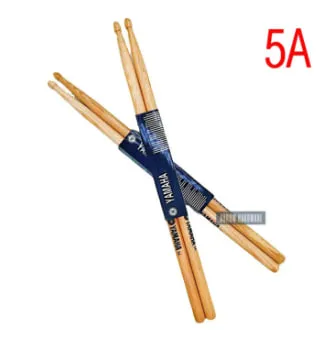
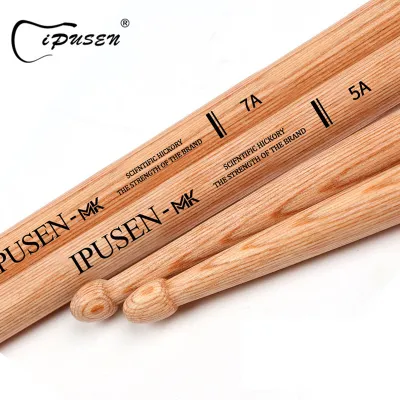
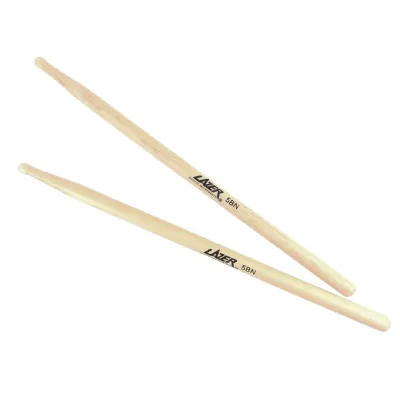
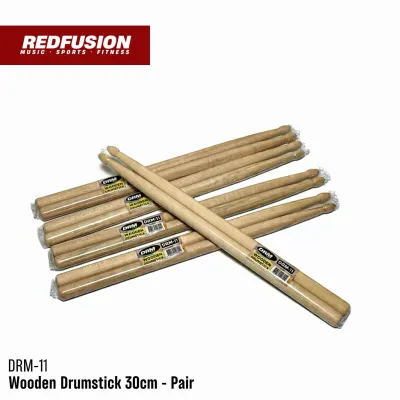
Prices are valid at publication and may change. Please refer to the product page for the latest price.
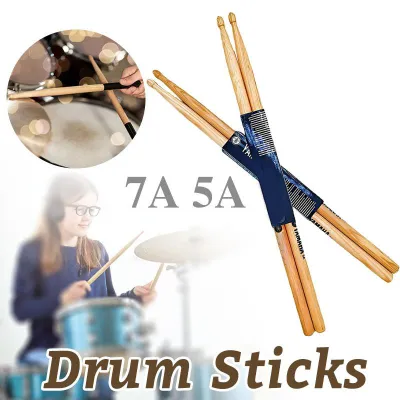
To find the right fit, you must first demystify the traditional numbering and lettering system used by manufacturers. The numbers on a drumstick indicate its thickness or diameter; counterintuitively, a lower number represents a thicker stick. For example, a 5-series stick is thicker and heavier than a 7-series stick. The letters historically indicated the intended musical application. The letter “A” originally stood for orchestra (used in big bands and dance orchestras), “B” stood for band (designed for brass bands and symphonic bands), and “S” stood for street (heavy sticks for marching bands). Today, these letters serve as general indicators of weight and taper, with “A” sticks being lighter and thinner than “B” sticks of the same number.
Wood type is the next critical factor to consider, as different woods offer distinct levels of density, flexibility, and shock absorption. Hickory is the industry standard and the most recommended wood for beginners. It has excellent shock absorption properties, which protect your wrists from the harsh vibrations of hitting practice pads or cymbals, and it is dense enough to resist splitting. Maple is significantly lighter and more flexible than hickory, allowing for fast playing and low-volume practice, but it wears down much quicker under heavy use. Oak is incredibly dense, heavy, and durable, but it does not absorb shock well, transferring high-frequency vibrations directly into the player’s hands, which can cause joint fatigue during long practice sessions.
The shape and material of the drumstick tip also play a major role in cymbal articulation and overall tone. Acorn tips provide a dark, rich sound with a broad contact area, making them highly versatile for beginners. Barrel tips offer a punchy, consistent volume, while teardrop tips allow for versatile tonal control depending on the angle of impact. Wood tips deliver a warm, natural acoustic tone but can chip over time. Nylon tips produce a bright, cutting sound, especially on cymbals, and are highly durable, though they can occasionally fly off if the adhesive fails.
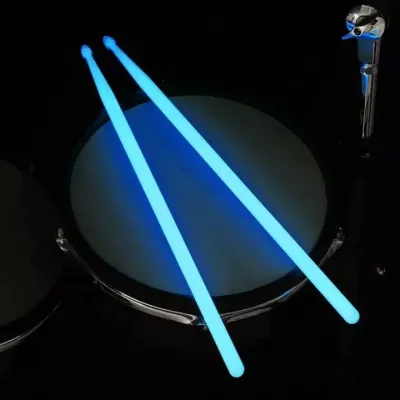
Beginners should generally avoid extreme sizes or synthetic materials, such as carbon fiber or aluminum, until they develop a consistent grip and stroke. Synthetic sticks do not vibrate or flex like natural wood, which can mask poor technique and lead to joint pain if you have not yet learned to maintain a relaxed grip. Staying with traditional wood sticks ensures you develop a natural feel for rebound and dynamics.
Recommended Drumstick Sizes for Different Beginner Needs
Matching stick weight to your physical build and practice environment is essential for a successful start. A player with smaller hands or a lighter physical build will naturally struggle with a heavy, thick stick, while a larger player might find a thin stick difficult to control. Your practice environment also matters; if you are practicing on an electronic drum kit in a small apartment, your stick requirements will differ from someone practicing on a loud acoustic kit in a garage.

Most drum manufacturers offer three standard sizes that cover almost all beginner needs. Understanding the specific use cases for these sizes will help you make an informed decision based on your age, hand size, and musical preferences. As your skills and musical tastes evolve, you can easily transition to different sizes to suit your playing style.
Standard 5A: The Universal Starting Point
The 5A size is the default recommendation for the majority of new drummers worldwide. It features a medium weight and diameter, offering a balanced feel that is neither too heavy for fast patterns nor too light for solid volume. This balance makes it the perfect tool for general practice, helping beginners build wrist strength and control without excessive strain.
This size is incredibly versatile, performing exceptionally well across pop, rock, jazz, and school band settings. Because almost every drumstick manufacturer produces a 5A, it is widely available in music stores across the Philippines. It serves as the ideal baseline for adults and older children to develop proper wrist mechanics and grip habits.
Lighter 7A: For Smaller Hands and Lighter Genres
The 7A size is designed with a thinner shaft and a lighter weight, making it highly manageable for younger players, children, or adults with smaller hands. The reduced weight significantly lowers hand fatigue during long practice sessions, allowing beginners to focus on accuracy rather than fighting the weight of the stick.
This size is particularly suited for jazz, acoustic settings, or electronic drum kits where excessive force is unnecessary and a lighter touch is preferred. However, beginners should be aware that using 7A sticks on loud acoustic kits can lead to faster breakage if they have not yet mastered dynamic control. If you find yourself constantly denting or breaking 7A sticks, it may be a sign to step up to a heavier size.
Heavier 5B: For Larger Hands and Louder Styles
The 5B size is a robust alternative featuring a thicker diameter and heavier weight than the standard 5A. This extra mass provides more volume, power, and durability, making it a favorite for players with larger hands who find thinner sticks difficult to grip comfortably.
If your musical interests lean toward rock, metal, or marching band practice where a strong backbeat is required, the 5B is an excellent choice. The added weight helps you produce a fuller sound with less physical effort. However, beginners using 5B sticks must monitor their grip tension closely, as heavier sticks can cause blisters or joint strain if held too tightly.
Key Features to Check Before Buying
Before purchasing a pair of drumsticks, performing a quick physical inspection will ensure you receive a well-manufactured, matched pair. Wood is a natural, organic material, meaning that even sticks from the same production run can vary in straightness, weight, and density. Taking a few minutes to check these features will prevent you from buying a defective pair that could hinder your practice.
First, perform the roll test to check for straightness. Place the drumstick on a flat surface, such as a glass counter or a smooth table in a music store, and roll it with your hand. Watch the tip of the stick closely as it rolls. If the tip wobbles, hops, or lifts off the surface, the stick is warped. Warped sticks do not rebound straight, which can severely disrupt your hand coordination and make learning consistent strokes much more difficult.
Next, conduct the pitch test to ensure the sticks are weight- and pitch-matched. Hold each stick lightly near the taper and tap them together, or tap them individually on a hard surface near your ear. The pitch of the tap corresponds to the density of the wood. A high-quality pair of sticks should sound almost identical in pitch. If one stick sounds significantly lower than the other, they are mismatched in density and weight, which will make your hands feel unbalanced while playing.
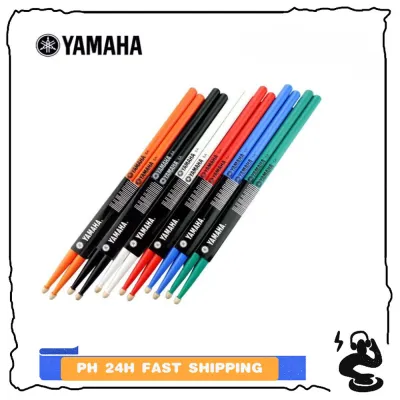
Evaluate the surface finish based on how much your hands sweat and your need for grip security. Lacquered finishes protect the wood from moisture and dirt, but they can become incredibly slippery in the humid tropical climate of the Philippines. Natural or unfinished sticks offer a textured, raw wood grip that absorbs sweat, though they can wear down faster. Painted or rubber-coated sticks provide extra grip, but the coating can sometimes leave marks on your cymbals and drumheads.
Finally, inspect the grain alignment along the shaft of the stick. Look at the grain lines running from the butt end to the tip. Ideally, the grain should run straight down the entire length of the shaft. If the grain lines run diagonally or cut off early along the side of the stick, this is known as a grain cutoff. Sticks with severe grain cutoffs are highly prone to snapping along those diagonal lines under heavy impact, making them a poor investment.
Where to Find Reliable Drumsticks in the Philippines
Sourcing authentic, high-quality drumsticks in the Philippines requires a bit of care, as substandard counterfeits and low-quality generic sticks are common. Visiting a physical music store is always the best option for beginners. Physical stores allow you to hold the sticks, perform the roll and pitch tests, and feel the weight in your hands before spending your money. Major malls in urban centers like Manila, Cebu, and Davao house reputable music retailers where you can find established global brands.
If you prefer to shop on online marketplaces, it is crucial to identify authorized dealers and official brand storefronts. Look for the platform’s official mall or preferred seller badges, which indicate verified businesses. Avoid generic, unbranded listings that offer drumsticks at unusually low prices, such as under ₱100. These cheap sticks are often made of soft, low-density wood like pine, which warps instantly in high humidity and can break within your first few minutes of practice.
When ordering online, always check customer reviews and return policies. Look for reviews that include photos of the actual product, paying close attention to how the seller packages the sticks. Drumsticks should be shipped in sturdy cardboard tubes or boxes to prevent them from bending or warping during transit in humid weather. A flexible return policy is also valuable, allowing you to exchange the sticks if they arrive warped or severely mismatched in weight.
Investing in a reliable, brand-name pair of hickory sticks typically costs between ₱500 and ₱900. While this is more expensive than generic alternatives, a high-quality pair will last significantly longer, feel better in your hands, and protect your wrists as you begin your drumming journey.
Frequently Asked Questions (FAQ)
How long should a pair of drumsticks last for a beginner?
The lifespan of a pair of drumsticks varies widely based on your practice frequency, grip tightness, and striking angle. For a beginner practicing on a rubber practice pad, a single pair of high-quality hickory sticks can easily last several months to a year, as pads do not have sharp metal rims or cymbals to chip the wood. However, if you are practicing on an acoustic drum kit, improper rimshot techniques or excessive grip tension can cause sticks to splinter or break much faster. You should replace your sticks when they become heavily chipped, lose their round tip shape, or feel structurally soft, as worn-out tips can easily dent and damage expensive drumheads and cymbals.
Should beginners use practice pads or real drums with new sticks?
Beginners should ideally use a combination of both, but a practice pad is the most effective tool for developing early technique. Practice pads offer a highly consistent, forgiving rebound that helps you focus entirely on hand mechanics, grip, and rudiments without the distracting volume of a real drum. They also absorb shock efficiently, reducing the physical strain on your hands as you build muscle memory. While a practice pad is perfect for daily technical exercises, you should regularly transition to a real drum kit to learn dynamic control, stick height variation, and how to manage the different rebound profiles of real drumheads and cymbals.
Do I need to buy drumstick tape or grips?
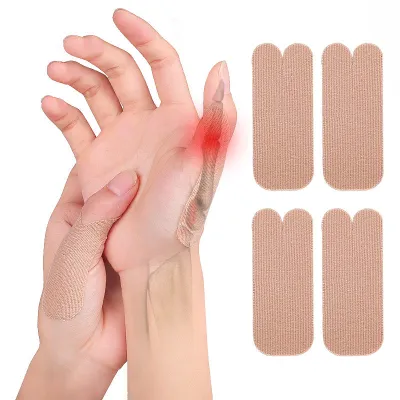
Most beginners should start by playing with bare wood sticks to develop natural calluses and a proper feel for the wood. Relying on aftermarket grips or tape too early can prevent you from learning how to adjust your finger pressure naturally. However, if you practice in a highly humid environment or suffer from excessively sweaty hands, drumstick tape or silicone grip sleeves can be useful additions to prevent the sticks from slipping out of your hands. Keep in mind that adding tape or grips will slightly alter the weight and balance of the stick, which might temporarily affect your muscle memory as you adapt to the new feel.
Community discussion
Share your experience or ask a question. Comments are reviewed before publication.