
Choosing between an electric keyboard and a digital piano comes down to a fundamental choice between sonic versatility and physical authenticity. A digital piano is designed to replicate the exact touch, weight, and acoustic resonance of a traditional grand piano, making it the ideal choice for developing classical finger strength and expressive dynamics. In contrast, an electric keyboard focuses on portability, offering hundreds of instrument voices, auto-accompaniment rhythms, and digital production tools. Your decision should rest primarily on whether your goal is to master traditional piano technique or to explore diverse music genres, songwriting, and portable live performance.
In the tropical climate of the Philippines, where high humidity and temperature fluctuations can affect musical equipment, understanding these physical and electronic differences is crucial before making an investment. While both instruments produce sound electronically, their internal mechanisms, physical builds, and intended use cases differ significantly. By evaluating how each instrument aligns with your daily practice habits, space constraints, and musical aspirations, you can select the perfect keys to support your musical journey.
Key Action and Sound: The Core Playing Differences
The most critical distinction between these two instruments lies in the key action, which directly dictates how the keys feel under your fingers and how the instrument responds to your touch. Digital pianos feature weighted or graded hammer-action keys. This mechanism uses small mechanical hammers or counterweights inside the chassis to mimic the resistance of physical hammers striking strings in an acoustic piano. Graded action means the lower register keys feel heavier to press than the higher register keys, precisely mirroring a traditional piano’s behavior. This physical resistance is essential for building the finger strength, control, and muscle memory required to play acoustic pianos.
Products mentioned in this guide
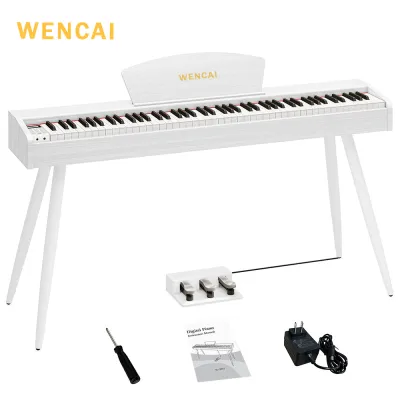
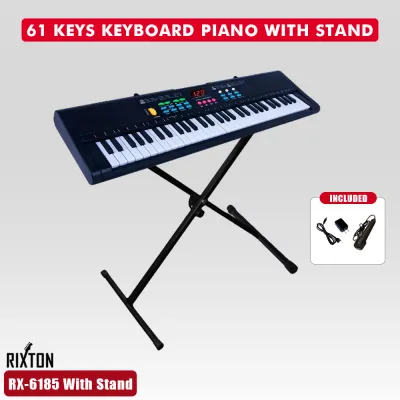
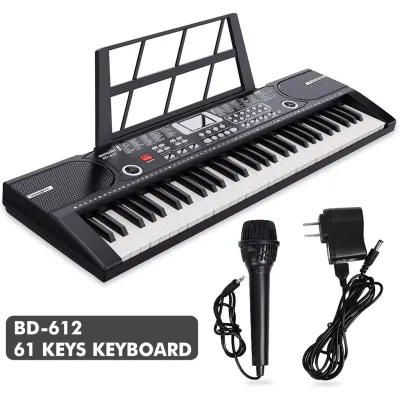
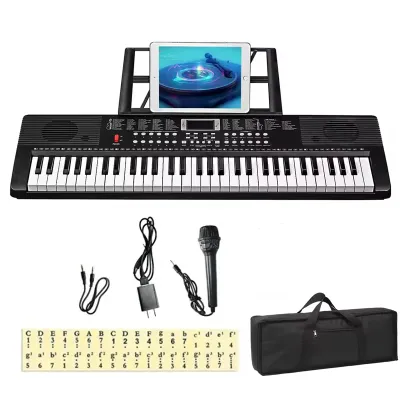
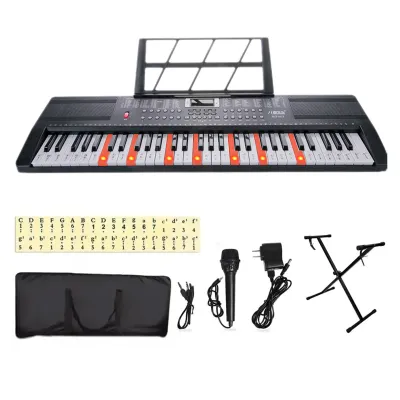
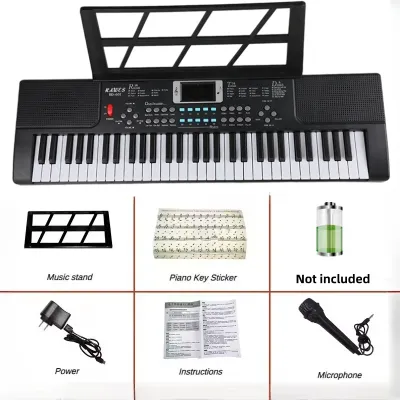
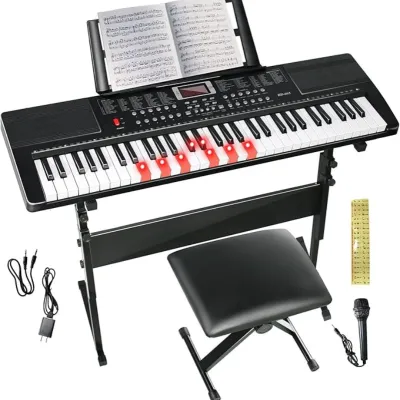
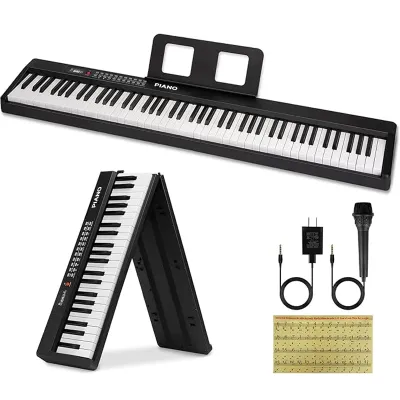
Prices are valid at publication and may change. Please refer to the product page for the latest price.
Electric keyboards, on the other hand, typically utilize unweighted or synth-action keys. These keys rely on simple spring mechanisms rather than weights, resulting in a very light, springy feel with minimal resistance. While synth-action keys are excellent for playing fast synthesizer leads, organ glissandos, or drum patterns, they do not provide the physical feedback necessary to develop nuanced piano dynamics. Some intermediate keyboards offer semi-weighted keys, which provide a slight compromise, but they still lack the true mechanical leverage of a hammer-action system.
Sound generation also follows entirely different design philosophies. Digital pianos focus heavily on the quality and realism of a few core sounds, primarily acoustic and electric pianos. Manufacturers capture these sounds through multi-layered sampling, recording a high-end grand piano at multiple volume levels to ensure that a soft key press yields a gentle tone, while a hard strike produces a bright, powerful sound. The sound engine also simulates complex acoustic behaviors, such as string resonance and damper pedal noise, creating an immersive, organic listening experience.
Conversely, an electric keyboard prioritizes sound variety over singular acoustic realism. A typical keyboard features a vast multi-instrument voice engine containing hundreds of sounds, ranging from brass, woodwinds, and strings to vintage synthesizers, sound effects, and drum kits. While these sounds are highly versatile for arranging music or playing in diverse genres, the individual acoustic piano samples on an entry-level keyboard often lack the multi-layered depth, decay time, and dynamic range found in a dedicated digital piano.
Before purchasing, you should verify these specifications on the manufacturer’s official product sheets. Look closely at the key action terminology: terms like “Graded Hammer Action” or “Progressive Hammer Action” indicate a realistic piano feel, while “Synth-Action” or “Touch-Sensitive” (without mentioning weights) indicate a lighter keyboard style. If possible, test the instrument in-store to observe the sound decay; press a key firmly and hold it down to hear if the sound fades out naturally and smoothly, or if it cuts off abruptly in a synthetic loop.
Portability, Features, and Connectivity Options
The physical design of these instruments dictates where and how you can use them. Digital pianos are often built as furniture-style console units, featuring heavy wooden cabinets, integrated stands, and a fixed three-pedal system (sustain, soft, and sostenuto). These units are designed to be permanent fixtures in a living room or studio, offering excellent stability but weighing anywhere from 30 to over 80 kilograms. While portable digital pianos (often called slab pianos) do exist, they still require a sturdy, heavy-duty stand to support their weighted keybeds safely.

Electric keyboards are engineered for maximum portability and convenience. They feature lightweight plastic chassis, often weighing less than 6 kilograms, making them easy to pack into a gig bag, carry on public transit, or store in a closet when not in use. Many portable keyboards can also run on standard AA batteries, allowing you to practice or perform in outdoor settings where electrical outlets are unavailable. This portability is highly advantageous for gigging musicians, buskers, or students living in compact spaces.
The built-in features and software capabilities also serve different musical goals. Electric keyboards are packed with interactive learning tools, such as light-up keys, built-in chord dictionaries, and auto-accompaniment styles. These accompaniment features act as a virtual backing band, automatically playing drums, bass, and rhythm tracks that follow the chords you play with your left hand. This makes keyboards highly engaging for beginners who want to play full-sounding arrangements quickly. Digital pianos generally offer fewer distraction-free features, focusing instead on basic metronomes, dual-headphone jacks for quiet student-teacher practice, and simple two-track recorders to analyze your performance.
Connectivity is another vital area to verify based on your intended setup. Both instrument types frequently offer USB-to-Host ports, allowing you to send MIDI data to a computer, tablet, or smartphone to control virtual instruments or music notation software. However, if you plan to record high-quality audio directly or perform live, you must check for dedicated line outputs (usually 1/4-inch jacks). Many entry-level keyboards only feature a single headphone output, which requires adapters to connect to external speakers and can introduce unwanted noise. Additionally, ensure the instrument has a dedicated sustain pedal input; a standard 1/4-inch jack is required to connect a realistic damper pedal, which is non-negotiable for expressive piano playing.
Budget Tiers and Value Considerations
Navigating the financial aspect of your purchase requires aligning your budget with your long-term musical goals. In the local market, entry-level instruments under ₱15,000 are predominantly electric keyboards. In this tier, you can expect lightweight builds, unweighted keys, and a wide array of fun, experimental sounds. While these are excellent for young children, casual hobbyists, or those exploring music production on a budget, they are rarely suitable for serious classical piano study due to the lack of weighted keys.
The mid-range tier, spanning from ₱15,000 to ₱45,000, is where you will find high-quality portable digital pianos alongside advanced arranger keyboards. Digital pianos in this bracket offer authentic graded hammer action, realistic piano samples, and robust build quality. For students committed to taking formal piano lessons or preparing for graded exams, this is the recommended starting bracket. Arranger keyboards in this price range offer professional-grade accompaniment styles, advanced sound editing, and multi-track sequencing capabilities for songwriters.
Premium tiers exceeding ₱45,000 consist of high-end console digital pianos with sophisticated wooden cabinets, advanced multi-speaker sound systems, and hybrid key actions that utilize real wooden keys. This tier also includes professional synthesizer workstations used in recording studios and major concert stages. When investing in these higher brackets, it is essential to verify the manufacturer’s warranty terms and ensure there is an authorized local service center in the Philippines to handle potential repairs, especially given the humid tropical climate which can occasionally affect internal sensors and contacts over time.
When evaluating overall value, look beyond the instrument itself. Many packages include essential accessories such as a sturdy stand, a padded bench, a sustain pedal, and a dust cover. Purchasing these items as a bundle can save you significant costs compared to buying them individually. For learners, remember to prioritize key action quality over a high number of built-in voices; a hundred realistic, highly responsive piano tones will serve your technical development far better than a thousand low-quality novelty sounds that you will rarely use.
Final Decision: Which Instrument Fits Your Goals?
To make your final decision, evaluate your musical ambitions, daily lifestyle, and physical space against this practical checklist.
Choose a digital piano if:
- Your primary goal is to learn classical piano, jazz improvisation, or traditional solo piano repertoire.
- You want to develop proper finger strength, hand posture, and dynamic control that will transfer seamlessly to an acoustic grand piano.
- You have a dedicated, permanent space in your home to accommodate a heavier instrument or a furniture-style cabinet.
- You prefer a focused, distraction-free practice environment centered on acoustic realism.
Choose an electric keyboard if:
- You are interested in songwriting, music production, electronic music, or playing in a band with diverse instrument sounds.
- You need a highly portable instrument that you can easily transport to rehearsals, gigs, or school events.
- You want interactive learning features, auto-accompaniment backing tracks, and a wide variety of instrument voices to keep practice sessions playful and varied.
- You are working with a limited budget or want to test your interest in music before committing to a more significant investment.
Verify first if:
- You live in a shared space or apartment where noise is a concern; check that the instrument has dual headphone jacks and that the physical key action itself is quiet when played with headphones on.
- You plan to connect the instrument to a computer or tablet; verify that it features class-compliant USB MIDI connectivity that does not require complex driver installations.
- You live in a highly humid area; consider purchasing a fitted dust cover and placing the instrument away from direct sunlight or damp walls to protect the sensitive internal copper contacts and key sensors from moisture buildup.
Frequently Asked Questions (FAQ)
Can I learn classical piano on an electric keyboard?
While you can learn the basic notes, music theory, and simple melodies on an electric keyboard, it is not suitable for long-term classical piano study. Classical repertoire relies heavily on dynamic expression (playing soft and loud) and subtle touch nuances, which require the physical resistance of weighted hammer-action keys. Practicing exclusively on unweighted keys can lead to weak finger technique and difficulty adjusting to a real acoustic piano. If you start on an electric keyboard, plan to upgrade to a weighted digital piano once you begin practicing pieces that require advanced dynamics and pedaling.
Do I need an external amplifier for a digital piano or keyboard?
For standard home practice, you do not need an external amplifier. Almost all electric keyboards and digital pianos come equipped with built-in stereo speakers that provide ample volume for a typical room. However, if you plan to perform in larger venues, rehearse with a loud band, or play outdoors, the built-in speakers will not be powerful enough. In these scenarios, you will need to connect the instrument’s line outputs to a dedicated keyboard amplifier, a portable PA system, or the venue’s mixing console using standard audio cables.

Community discussion
Share your experience or ask a question. Comments are reviewed before publication.