
Selecting the perfect drum toy for your child is more than just picking the loudest or most colorful option on the shelf. It requires matching the instrument’s physical demands, safety features, and interactive capabilities with your child’s specific developmental stage. A drum set that delights a school-age child can easily overwhelm a toddler, while a simple sensory toy will quickly lose the interest of an older kid. By understanding how children interact with rhythm at different ages, you can choose a toy that fosters a lifelong love for music while keeping playtime safe and constructive.
Core Criteria for Choosing Kids' Drum Toys
Safety is the absolute priority when introducing any musical toy into your home. For the youngest musicians, this means examining the materials used in construction. Look for toys labeled as BPA-free and finished with non-toxic, water-based paints or dyes. Because children often explore toys with their mouths, verifying these material standards on the product packaging or manufacturer’s specifications is an essential first step before purchase.
Volume control is another critical factor, particularly for electronic drum toys. Excessive noise can damage sensitive young ears, so look for toys that feature built-in volume limiters or adjustable decibel settings. For acoustic toy drums, the volume is determined by the materials of the drumhead and mallets; softer mallet heads made of felt or rubber produce a much gentler sound than hard plastic ones.
Products mentioned in this guide
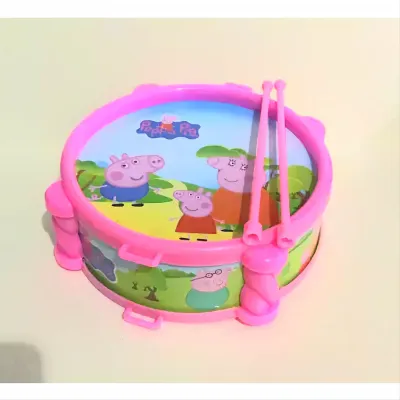
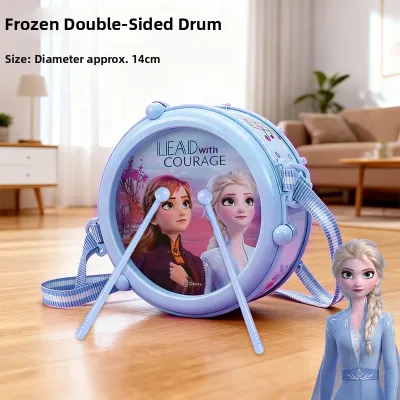
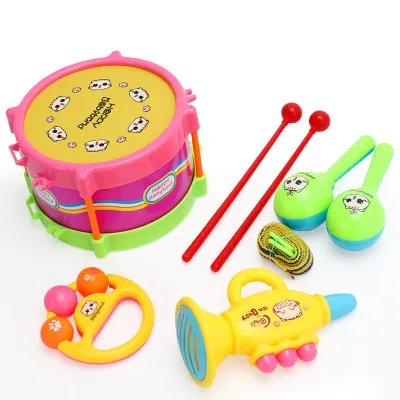
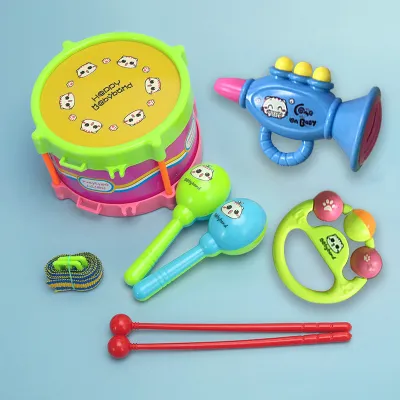
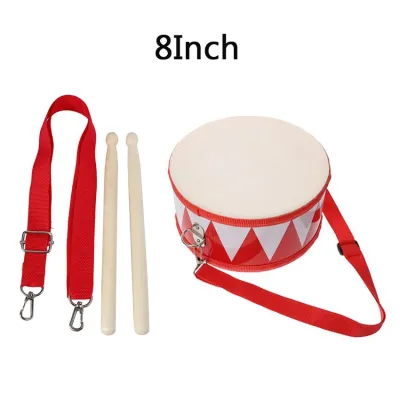
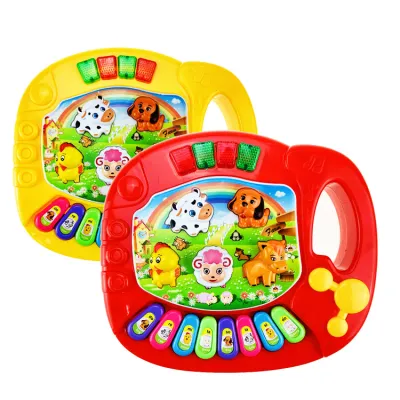
Prices are valid at publication and may change. Please refer to the product page for the latest price.
Build quality and weight must also align with your child’s physical strength. A drum toy should be sturdy enough to withstand enthusiastic strikes but lightweight enough that it will not cause injury if tipped over. Check the assembly instructions and product specifications to ensure there are no small, easily detachable parts that could present a choking hazard for younger children.
Drum Toys for Toddlers (Ages 1–3)
During the toddler years, children are just beginning to explore cause-and-effect relationships and develop basic motor skills. Drum toys for this age group should focus on sensory exploration rather than structured rhythm or complex play patterns. Simple, durable instruments allow toddlers to discover how different physical actions produce unique sounds.

Recommended Types and Features
For toddlers, the most suitable instruments are lightweight hand drums, tambourines, and basic bongo sets. These toys do not require complex coordination or precise stick work; instead, children can use their hands or soft, oversized mallets to strike the surfaces. Look for drums with textured rims and bright, high-contrast colors that stimulate visual and tactile senses during play.
Soft-mallet designs are particularly beneficial for this age group. Mallets should be permanently attached to the drum or designed with large, bulbous ends that cannot be swallowed. These soft tips help dampen the sound, making the toy more tolerable for household members while still providing satisfying auditory feedback for the toddler.
Safety and Developmental Checks
When shopping for toddlers, you must verify the complete absence of small detachable parts. Examine the drumheads, rims, and any decorative elements to ensure they are securely fastened and cannot be pried loose by curious fingers. Any toy that requires batteries must have a secure, screw-locked battery compartment to prevent access to small cell batteries.
Rounded edges are vital to prevent scrapes and bruises during active play sessions. Avoid any metal rims or sharp plastic seams. Additionally, check that the mallets are short and thick, which prevents them from being pushed too far into a child’s mouth or throat, ensuring a completely safe environment for independent musical exploration.
Drum Toys for Preschoolers (Ages 3–5)
Preschoolers are developing more refined motor skills, longer attention spans, and a growing interest in cooperative and imaginative play. Drum toys for this age group should offer more interactive elements that challenge their coordination and introduce basic rhythmic concepts. At this stage, children enjoy mimicking patterns and playing along with simple melodies.
Recommended Types and Features
Mini electronic drum pads and multi-piece junior kits are excellent choices for preschoolers. These toys often feature built-in rhythm games, light-up pads that guide the child where to strike, and multiple pre-programmed sound effects. These interactive elements help sustain a preschooler’s attention by turning rhythm practice into an engaging game.
Look for drum sets that feature adjustable stands so the instrument can grow alongside your child. Having multiple pads, such as a snare, tom, and a basic cymbal, allows preschoolers to practice moving their arms across different targets. This setup introduces them to the physical layout of a traditional drum kit in a simplified, highly engaging format.
Engagement and Skill Building
Playing with light-up drum pads significantly enhances hand-eye coordination. By following visual cues and striking the corresponding pad at the correct time, preschoolers strengthen the neural pathways responsible for spatial awareness and motor planning. This active engagement also helps build focus and cognitive flexibility as they learn to anticipate the next beat.
Because preschoolers are capable of playing with more vigor and for longer periods, noise management becomes a practical consideration for the household. Selecting an electronic drum toy with a headphone jack allows your child to play independently without disturbing others. This feature is especially useful in smaller living spaces or during quiet hours, ensuring that creative expression does not conflict with household peace.
Drum Toys for School-Age Kids (Ages 6+)
As children reach school age, their physical coordination, cognitive capacity, and musical appreciation mature significantly. Drum toys for this group should bridge the gap between simple playthings and real musical instruments. Older kids are capable of learning standard drumming techniques, reading basic notation, and practicing structured patterns.
Recommended Types and Features
For school-age children, roll-up electronic drums, advanced multi-pad drum controllers, and entry-level acoustic junior kits are highly appropriate. Roll-up electronic drums are particularly versatile, offering space-saving portability and realistic sound libraries. Look for models that feature realistic mesh heads, which provide a rebound feel similar to a professional drumhead, helping the child develop proper wrist technique.
Advanced features like MIDI connectivity and compatibility with learning applications add immense value for this age group. These tools allow children to connect their drum pads to a computer or tablet, enabling them to use interactive software that teaches standard drum notation and rhythm theory. This digital integration keeps tech-savvy kids engaged while building foundational musical skills.
Transitioning to Real Instruments
Deciding when to transition from a toy to a standard drum set depends on several observable factors. Look for sustained interest over several months, the physical reach to comfortably access all pedals and cymbals, and the ability to handle standard-sized wooden drumsticks. If your child consistently practices on their toy set and expresses a desire to learn complex songs, they may be ready for a dedicated student instrument.
Keep in mind that transitioning to a real acoustic drum set introduces new maintenance and space requirements. In tropical climates like the Philippines, high humidity can affect wooden drum shells and synthetic drumheads, requiring careful storage and occasional tuning adjustments. Acoustic sets also require a dedicated physical space and produce significant volume, making electronic drum kits a popular and practical alternative for many families.
Pre-Purchase Checklist and Shopping Tips
Before making a final decision, it is wise to run through a practical checklist to ensure you get the best value and a hassle-free experience. First, verify that the final price in ₱ includes all necessary accessories. Some drum toys are sold without essential components like drumsticks, foot pedals, power adapters, or adjustable stools, which can lead to unexpected additional costs.
When deciding where to buy, compare the benefits of specialized local music stores against general online marketplaces. Local music shops often allow you to test the build quality and sound levels in person, and they typically offer reliable after-sales support. Online marketplaces may offer a wider variety of electronic drum pads, but you must carefully read customer reviews and seller ratings to ensure product authenticity.
Always check the warranty terms and return policies, especially when purchasing electronic or battery-operated drum toys. Electronic components can occasionally malfunction, so having a clear return window or a manufacturer’s warranty provides essential peace of mind. Ensure the retailer offers a straightforward process for exchanges or repairs to protect your investment.
Frequently Asked Questions (FAQ)
How loud are electronic drum toys compared to acoustic ones? (FAQ)
Electronic drum toys are generally much quieter than acoustic ones because they allow for direct volume control. Most electronic sets feature built-in volume limiters and headphone jacks, which completely silence the external musical sound, leaving only the quiet tap of plastic or rubber pads. Acoustic toy drums, on the other hand, rely entirely on physical resonance and cannot be muted, though using soft mallets can help reduce their overall volume.
At what age should a child transition from a toy drum to a real drum set? (FAQ)
Most children are ready to transition to a real junior drum set around the age of 6 to 8, depending on their physical size and interest level. Key indicators include the ability to sit comfortably at a drum throne, reach the foot pedals while maintaining balance, and follow structured instructions. Consulting with a local music teacher or checking the manufacturer’s height recommendations can help you determine if your child is physically ready for a standard instrument.

Community discussion
Share your experience or ask a question. Comments are reviewed before publication.