
When searching for a piano keyboard, you will quickly find that the market is divided into two distinct categories: digital pianos and electronic keyboards. While they may look similar at a glance, they are designed for entirely different musical paths. Digital pianos prioritize replicating the authentic touch, weight, and acoustic sound of a traditional piano, making them the preferred choice for classical training and serious piano study. In contrast, electronic keyboards focus on versatility, offering a vast library of instrument sounds, automatic accompaniment styles, and lightweight portability for casual players and music producers.
Choosing between these two instruments requires evaluating your personal musical goals, available space, budget, and how you plan to practice. A mismatch can hinder your progress, as a student aiming for classical proficiency will struggle on unweighted keys, while an aspiring music producer will find a traditional digital piano’s features too limiting. By understanding the core differences in key action, sound engines, and functionality, you can make an informed investment that supports your musical journey for years to come.
Core Differences in Keys, Action, and Sound
The most critical distinction between a digital piano and an electronic keyboard lies in the physical playing experience, specifically the key count and the mechanism beneath each key. A standard acoustic piano has 88 keys, which is the default configuration for almost all digital pianos. This full-range layout allows you to play any piece of classical or modern sheet music without running out of high or low notes. Electronic keyboards, on the other hand, typically feature 61 or 76 keys. While a 61-key layout is highly portable and sufficient for basic pop melodies, synth lines, and chord progressions, it will limit your ability to play advanced classical repertoire or complex jazz arrangements that utilize the extreme ends of the keyboard.
Products mentioned in this guide
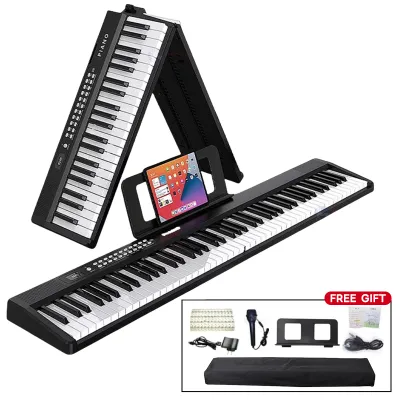
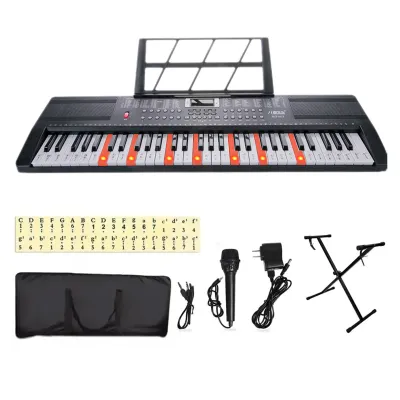
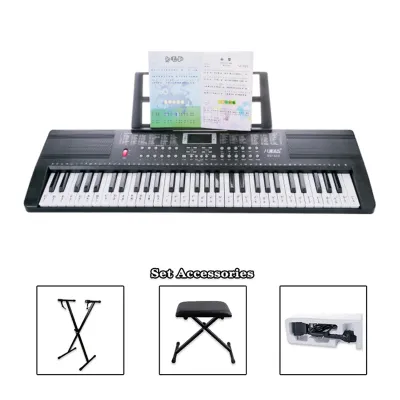
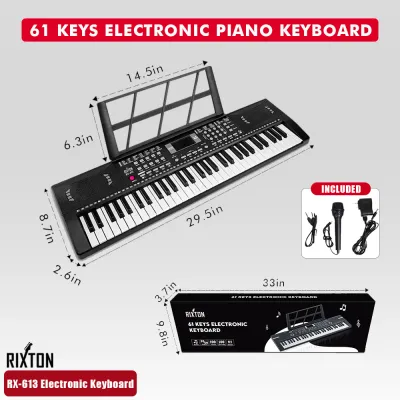
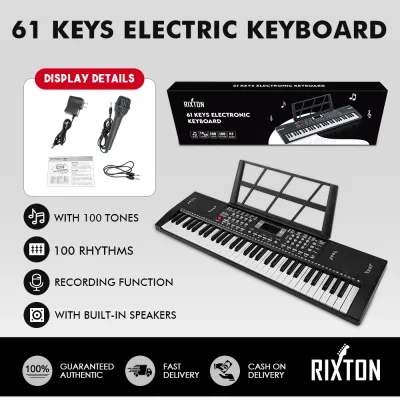
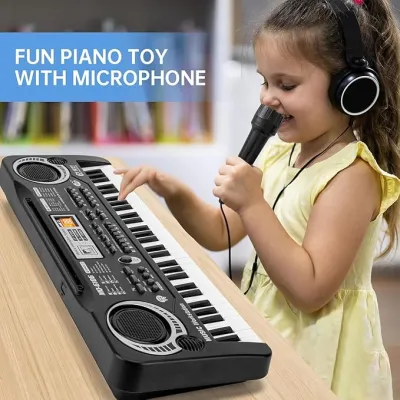
Prices are valid at publication and may change. Please refer to the product page for the latest price.
Beyond the number of keys, the key action mechanism fundamentally shapes how you develop finger strength and dynamic control. Digital pianos utilize weighted or hammer action keys. This design mimics the mechanical resistance of an acoustic piano, where physical hammers strike strings. High-quality digital pianos often feature graded hammer action, meaning the keys on the lower register feel heavier than those on the higher register, just like on an acoustic grand. This resistance is essential for developing the finger muscles and muscle memory required to play expressively, allowing you to control the volume and tone based on how hard you strike the key.
Conversely, electronic keyboards generally use synth-action or unweighted keys. These keys rely on simple springs or rubber dome switches to return the key to its resting position, offering very little resistance. While synth-action keys are excellent for playing fast synthesizer leads, organ glissandos, or drum patterns, they do not build the finger strength needed for traditional piano playing. If you practice exclusively on unweighted keys, you will likely find an acoustic piano’s keys incredibly heavy and difficult to control, leading to hand fatigue and a lack of dynamic expression.
The sound engines of these instruments also reflect their differing priorities. Digital pianos focus heavily on high-fidelity acoustic piano sampling and physical resonance modeling. Manufacturers record premium grand pianos at multiple velocity levels to capture the subtle tonal changes that occur when a key is struck softly versus aggressively. The processing power is dedicated to reproducing realistic string resonance, damper resonance, and key-off samples. Electronic keyboards prioritize sound variety over singular acoustic realism. They contain multi-instrument sound engines packed with hundreds of tones, including electric pianos, organs, brass, woodwinds, guitars, synthesizers, and drum kits. While their acoustic piano sounds may lack the multi-layered depth of a digital piano, their sheer sonic diversity makes them incredibly versatile tools for creative exploration.
Feature and Versatility Comparison
The built-in features of each instrument dictate how you interact with music and integrate the device into your creative workflow. Electronic keyboards are famous for their interactive accompaniment features. They often include hundreds of built-in rhythms and auto-accompaniment styles that follow your left-hand chord changes in real time, essentially giving you a virtual backing band. They also frequently feature built-in lesson suites, chord dictionaries, and multi-track recorders that allow you to build complete arrangements directly on the instrument. These tools are highly engaging for beginners and hobbyists who want to play full-sounding songs quickly without needing advanced solo piano techniques.

Digital pianos tend to have a much cleaner, minimalist interface, focusing on a distraction-free practice environment. While some modern digital pianos offer basic rhythm accompaniment and Bluetooth connectivity for app integration, their primary tools are centered on traditional practice, such as a built-in metronome, a simple two-track recorder for self-evaluation, and a duet mode that splits the keyboard into two identical pitch ranges for student-teacher instruction.
Connectivity options are vital for modern musicians, and both categories offer various ways to interface with external gear. Most modern instruments feature a USB-to-Host port, allowing you to send MIDI data to a computer, tablet, or smartphone to control virtual instruments or educational software. However, dedicated electronic keyboards and stage-focused digital pianos often include dedicated 1/4-inch auxiliary outputs for connecting to external amplifiers, mixers, or PA systems. Budget-friendly digital pianos and portable keyboards may only offer a 3.5mm or 1/4-inch headphone jack, which can double as an audio output but may require adapters and careful gain staging to avoid signal distortion.
Physical design and portability are also major deciding factors. Electronic keyboards are lightweight, often weighing under 5 kilograms, making them easy to pack into a gig bag and transport to rehearsals or school events. Many can also run on standard AA batteries, allowing you to play in outdoor settings or spaces without easy access to a power outlet. Digital pianos are significantly heavier due to their weighted key mechanisms and larger speaker systems. Console-style digital pianos are housed in heavy wooden cabinets designed to be permanent pieces of furniture, while portable digital pianos (often called slab pianos) can be moved but still typically weigh between 11 and 25 kilograms, requiring a sturdy stand and a dedicated AC power source.
Matching the Instrument to Your Playing Goals
To determine which instrument is the right investment, you must align its capabilities with your long-term musical aspirations. A digital piano is the clear choice if your primary goal is to learn traditional piano, study classical repertoire, or prepare for formal music examinations. The weighted 88-key keyboard is non-negotiable for developing the proper hand posture, finger independence, and expressive control required for classical pieces by composers like Bach, Beethoven, or Chopin. Furthermore, learning to use a sustain pedal correctly—including half-pedaling techniques—is only possible on digital pianos that support continuous pedal inputs, a feature rarely found on basic electronic keyboards.
An electronic keyboard is the better fit if your musical interests lie in songwriting, music production, electronic music, or playing in a band where you need to cover multiple instrument parts. If you want to experiment with different genres, create backing tracks, or need a lightweight instrument that can easily travel to band practices, the keyboard’s portability and vast sound library are invaluable. It is also an excellent, low-cost entry point for young children or casual hobbyists who want to explore music without committing to the higher cost and physical space requirements of a digital piano.
However, there are scenarios where neither instrument is the perfect fit. If you plan to work strictly within a computer-based digital audio workstation (DAW) to produce electronic music, a dedicated MIDI controller keyboard might be a better choice. MIDI controllers do not produce sound on their own; instead, they send control data to your computer to play software instruments. They often feature specialized controls like drum pads, faders, and rotary knobs designed specifically for software integration. Alternatively, if you are a performing keyboardist who needs professional-grade sounds, extensive real-time effects, and rugged road durability without the bulk of a wooden cabinet, a high-end stage piano or synthesizer workstation is a more appropriate, albeit more expensive, category to explore.
Pre-Purchase Verification and Setup Checklist
Before finalizing your purchase, it is essential to verify the physical requirements and accessory compatibility of your chosen instrument to avoid unexpected costs or setup issues. First, measure your designated practice space. An 88-key digital piano requires a width of approximately 1.3 to 1.4 meters. If you choose a portable digital piano or a keyboard, you must select a compatible stand. Lightweight keyboards can sit safely on a standard single-X stand, but heavy 88-key digital pianos require a heavy-duty double-X stand, a Z-stand, or a dedicated wooden furniture stand to prevent wobbling or tipping during energetic playing.
Next, check what accessories are included in the box. Many entry-level keyboards and digital pianos do not come bundled with essential items. For example, a basic plastic footswitch is often included as a sustain pedal, but serious players will want to budget an additional ₱1,500 to ₱3,000 for a realistic, heavy-metal piano-style sustain pedal that does not slide across the floor. You should also verify if the package includes a power adapter, a music rest for sheet music or tablets, and a comfortable bench. Purchasing these items separately can quickly inflate your total investment.
Finally, confirm device compatibility if you plan to use educational apps or music production software. Check if the instrument’s USB-to-Host port is class-compliant, meaning it works plug-and-play with iOS, Android, macOS, and Windows without requiring proprietary drivers. If you plan to connect to an iPad or iPhone for interactive lessons, verify whether you need a specific adapter, such as an Apple Lightning-to-USB Camera Adapter or a USB-C multi-port hub, to ensure a stable, low-latency connection.
Frequently Asked Questions (FAQ)
Can I learn proper piano technique on an electronic keyboard?
Learning proper piano technique on an electronic keyboard with unweighted keys is highly difficult and generally not recommended for long-term study. Because synth-action keys lack the physical resistance of weighted keys, you will not develop the finger strength, hand posture, or forearm muscle memory required to play an acoustic piano. Additionally, unweighted keys make it nearly impossible to practice dynamic control; you cannot easily distinguish between soft and loud notes, which is a fundamental element of expressive piano playing. While a keyboard is acceptable for learning basic note reading and simple melodies during the first few months, you should plan to upgrade to a weighted 88-key digital piano as soon as you begin practicing classical repertoire or pieces that require nuanced touch and pedaling.
Do digital pianos and keyboards require different maintenance?
Both digital pianos and electronic keyboards require regular, low-effort maintenance to protect their sensitive electronic components and mechanical parts. To prevent dust and debris from settling between the keys and interfering with the optical or rubber contact sensors, always cover the instrument with a fitted dust cover when not in use. When cleaning the keys, use a slightly damp microfiber cloth; never use harsh chemical cleaners, alcohol, or abrasive pads, as these can strip the textured coating or cause the plastic to yellow and crack over time.
Environmental factors are particularly critical in tropical climates with high humidity, such as the Philippines. Excessive moisture can cause internal metal contacts to corrode, lead to sticky keys, or damage the paper cones of the built-in speakers. To protect your investment, avoid placing the instrument in direct sunlight, which can warp plastic casings and damage internal circuit boards. If you live in a highly humid area, consider using a dehumidifier in your practice room or placing silica gel packs inside the instrument’s dust cover to absorb excess moisture.

Community discussion
Share your experience or ask a question. Comments are reviewed before publication.