
Choosing the right accessories for your keyboard setup can dramatically alter your playing experience, and few tools are as critical to your musical expression as the sustain pedal. When deciding between a continuous sustain pedal and a standard sustain pedal, the correct choice depends entirely on your current playing level, your musical goals, and the specific hardware capabilities of your keyboard. While standard on/off pedals are highly accessible and ideal for beginners, continuous pedals—often referred to as half-damper pedals—provide the nuanced control required for advanced classical and jazz repertoire. However, before making a purchase, you must verify whether your digital piano or keyboard is electronically equipped to support continuous data, as a premium pedal will provide no extra benefit on an incompatible instrument.
Quick Answer: Which Sustain Pedal Should You Choose?
For beginners, casual hobbyists, and musicians playing synthesizers or entry-level portable keyboards, a standard on/off sustain pedal is the most practical and cost-effective choice. These pedals act as simple binary switches, making them easy to use, highly portable, and widely compatible with almost every keyboard brand on the market. They are perfectly suited for pop, rock, and electronic music where complex, nuanced pedaling is rarely required.
If you are an intermediate or advanced pianist, a student preparing for formal graded music exams, or an owner of a high-end digital piano, a continuous sustain pedal is highly recommended. Continuous pedals allow for half-pedaling, which mimics the gradual dampening action of an acoustic piano. This level of control is essential for executing advanced classical pieces and achieving a realistic piano sound.
Products mentioned in this guide
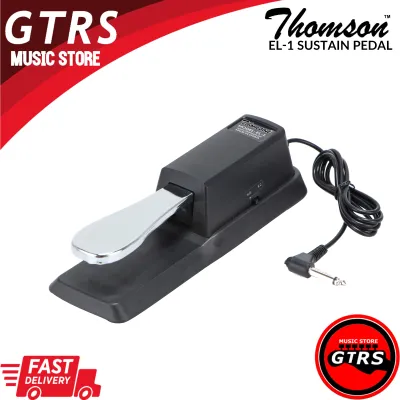
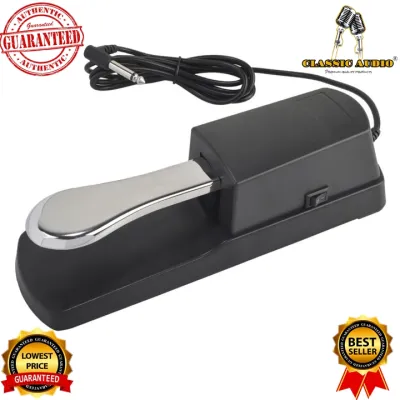
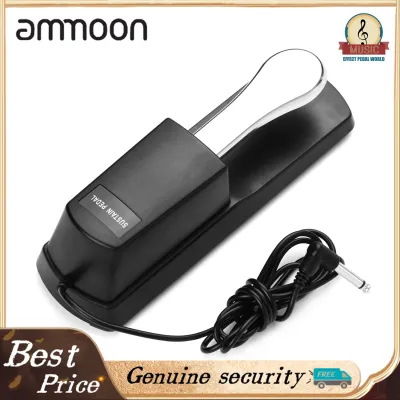
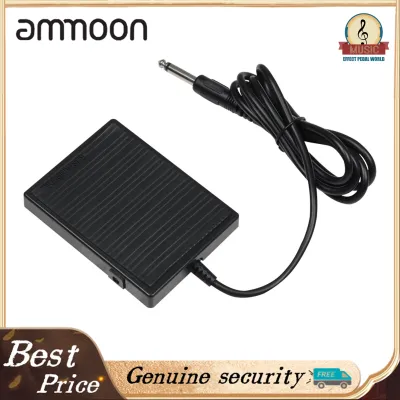
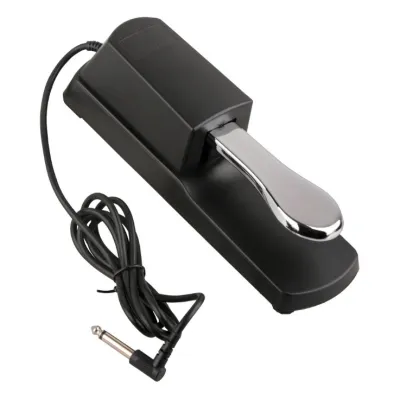
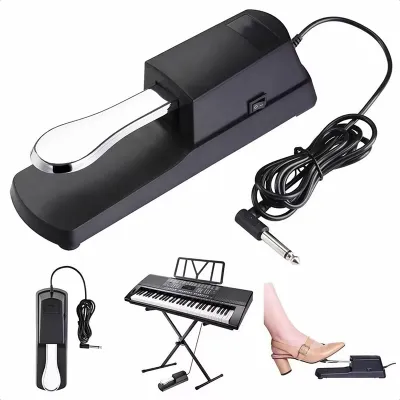
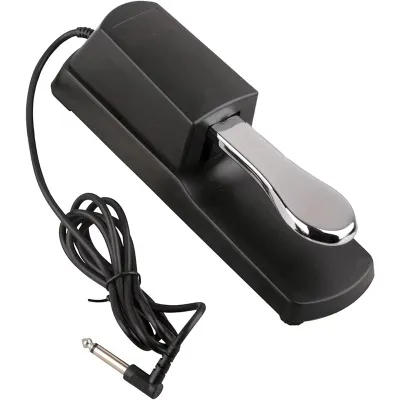
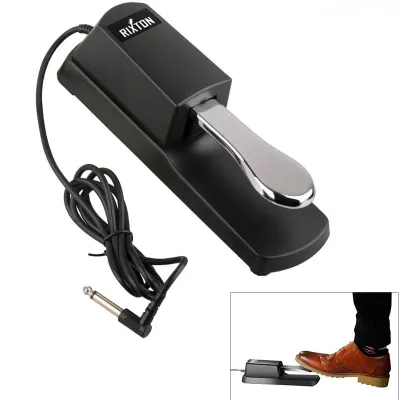
Prices are valid at publication and may change. Please refer to the product page for the latest price.
Ultimately, the deciding factor is your keyboard’s hardware. You must check your instrument’s technical specifications before purchasing; if your keyboard does not explicitly support half-damper or continuous pedal input, a continuous pedal will only function as a standard on/off switch, rendering the extra investment useless.
How Standard and Continuous Sustain Pedals Actually Work
To understand which pedal fits your performance style, it helps to examine the mechanical and electronic differences between these two hardware types. Though they look similar from the outside—often styled like the brass pedals of an acoustic piano—their internal designs serve completely different functions.

A standard sustain pedal operates on a simple momentary on/off switch mechanism, functioning much like a basic household light switch. Inside the chassis, there is a physical contact point and a spring. When you press the pedal down, the contact point closes (or opens, depending on the pedal’s default polarity), sending a single electronic signal to the keyboard. This signal tells the keyboard’s internal synthesizer engine to sustain all played notes at 100% volume decay. When you lift your foot, the circuit breaks, and the sustain cuts off instantly. There is no middle ground; the pedal is either completely on or completely off, regardless of whether you press it down a fraction of a millimeter or push it all the way to the floor.
In contrast, a continuous sustain pedal utilizes a variable resistance sensor, such as a potentiometer or a modern optical sensor, to detect the exact depth of your foot press. Instead of sending a simple binary signal, a continuous pedal transmits a continuous stream of data. In MIDI terms, it sends values ranging smoothly from 0 (completely off) to 127 (fully sustained). This allows the keyboard’s sound engine to calculate intermediate levels of sustain. For example, pressing the pedal halfway down sends a mid-range value, telling the sound engine to apply a partial dampening effect, which allows the notes to decay faster than full sustain but slower than an abrupt cutoff.
These electronic differences also dictate the physical feel of the pedal. Standard pedals are often lighter and springier, requiring very little physical effort to press down. Because they only need to register a single contact point, their internal spring tension is uniform. Continuous pedals, on the other hand, are engineered to mimic the heavier, graded resistance of an acoustic piano’s damper pedal. They often feature stiffer, progressive-rate springs that become increasingly difficult to press as you reach the bottom of the pedal travel, providing the physical feedback necessary for precise foot positioning.
Comparing Expressive Control, Compatibility, and Cost
Selecting the right pedal requires balancing your musical needs against technical compatibility and budget. Evaluating these three dimensions together ensures you do not overpay for features your keyboard cannot use, while also preventing you from outgrowing your gear too quickly.
Expressive Control and Playing Technique
The most significant difference between these two pedal types lies in the level of expressive control they offer the performer. A standard on/off pedal imposes strict limitations on your playing technique. Because it cannot register partial depth, releasing the pedal even slightly will instantly cut off all sustained notes. This binary action often leads to a “muddy” sound when playing complex chord progressions, as players are forced to keep the pedal fully depressed to avoid dry, disconnected notes. Conversely, trying to clear the sound by releasing the pedal entirely can result in harsh, abrupt silences that disrupt the musical flow.
Continuous pedals unlock advanced classical and contemporary techniques that are fundamental to high-level piano performance. The most notable of these is half-pedaling. On an acoustic piano, half-pedaling occurs when the felt dampers lightly graze the strings, dampening high-frequency overtones while allowing the lower fundamental notes to continue vibrating. A continuous pedal allows you to replicate this effect digitally. You can clear partial dissonance from a fast run of notes without losing the deep, resonant bass notes holding the foundation of the piece.
Additionally, continuous pedals enable flutter pedaling (also known as fractional pedaling), a technique where the player rapidly and shallowly pumps the pedal. This is highly utilized in Impressionist music, such as the works of Claude Debussy or Maurice Ravel, to create a shimmering, atmospheric wash of sound without building up an overwhelming, chaotic volume. For students pursuing formal piano education through boards like the Associated Board of the Royal Schools of Music (ABRSM) or Trinity College London, mastering these techniques on a continuous pedal is essential for passing higher-grade practical examinations.
Keyboard Compatibility and Connection Types
Before purchasing any sustain accessory, you must understand that compatibility is determined by the keyboard, not the pedal. A continuous pedal cannot force an entry-level keyboard to support half-pedaling. If you plug a high-end continuous pedal into a keyboard designed only for standard binary switching, the keyboard’s internal firmware will simplify the incoming variable signal, treating any value above a certain threshold as “on” and anything below it as “off.”
To verify if your instrument supports continuous data, consult your keyboard’s manual or the manufacturer’s official specification sheet. Look specifically for terms like “half-damper compatible,” “continuous pedal support,” or “half-pedal recognition.” If the manual only mentions “sustain jack” or “footswitch input,” the keyboard likely only supports standard on/off pedals.
You must also examine the physical connection types. Standard sustain pedals typically use a 1/4-inch TS (Tip-Sleeve) jack, which features a single black insulating ring on the metal plug. This configuration carries only two conductors, sufficient for a simple open/closed circuit. Continuous pedals require a 1/4-inch TRS (Tip-Ring-Sleeve) jack, which features two black insulating rings separating three distinct metal sections (the tip, the ring, and the sleeve). This third conductor is necessary to carry the variable voltage signal from the internal potentiometer back to the keyboard.
Finally, pay close attention to polarity. Different keyboard manufacturers design their sustain circuitry differently. For instance, brands like Yamaha and Roland typically use a normally closed circuit design, while brands like Korg and Casio often use a normally open design. If you plug a pedal with the wrong polarity into your keyboard, it will work in reverse—sustaining when your foot is off the pedal and cutting off when you press down. Many third-party standard and continuous pedals feature a physical polarity switch on the bottom or side of the chassis, allowing you to manually toggle the setting to match your keyboard’s requirements.
Price and Value for Different Skill Levels
In the Philippine market, sustain pedals occupy distinct price tiers that reflect their internal complexity and build quality. Standard on/off pedals are highly affordable, generally ranging from ₱500 to ₱1,500. Because they use simple mechanical switches and lightweight plastic or thin metal enclosures, they are inexpensive to manufacture and widely available in local music stores. For a beginner or a gigging musician who needs a highly portable, easily replaceable backup pedal, a standard pedal offers outstanding value and minimal financial risk.
Continuous pedals represent a more significant investment, typically priced between ₱2,500 and ₱6,000 or more. This premium price is driven by the inclusion of high-precision variable sensors, heavy-duty metal chassis designed to withstand high physical pressure, and specialized licensing or proprietary engineering required to interface with specific digital piano sound engines.
Buying a continuous pedal is only a good value if your keyboard’s sound engine is sophisticated enough to make use of it. If you own a high-end stage piano or a console digital piano with multi-layered string resonance samples, investing in a compatible continuous pedal is highly justified, as it fully unlocks the expressive potential of your instrument. However, if you are playing an entry-level keyboard, spending extra money on a continuous pedal is a poor allocation of resources.
How to Choose the Right Pedal for Your Playing Level
To help you make the correct purchasing decision, use the structured framework below to match your current skill level, musical style, and equipment to the right pedal type.
Choose a Standard Sustain Pedal if:
- You are a beginner or casual hobbyist: If you are in your first year of learning or play primarily for relaxation, a standard pedal is more than sufficient for learning basic hand-foot coordination.
- You play modern genres: Pop, rock, synth-pop, and electronic dance music rarely require half-pedaling. A binary switch is perfect for keeping chords connected in these styles.
- Your keyboard lacks half-damper support: Check your model specifications. If your instrument is an entry-level arranger keyboard or a basic MIDI controller, save your budget and opt for a standard pedal.
- You need maximum portability: Lightweight plastic standard pedals are easy to pack, making them excellent for musicians who travel frequently for rehearsals, church services, or casual gigs.
- You are on a strict budget: If you want to keep your initial investment low, an affordable standard pedal allows you to allocate your funds toward lesson books, a sturdy stand, or a high-quality bench.
Choose a Continuous Sustain Pedal if:
- You are an intermediate or advanced pianist: If you are tackling classical repertoire from the Romantic or Impressionist eras, a continuous pedal is non-negotiable for proper performance.
- You are preparing for graded music exams: Developing precise pedal depth control is a graded technical requirement for classical certifications; practicing on a binary pedal can hinder your exam preparation.
- You own a premium digital piano or stage piano: High-end instruments feature advanced physical modeling engines that generate realistic sympathetic string resonance. A continuous pedal is required to experience these complex acoustic behaviors.
- You prioritize an authentic acoustic feel: If you transition frequently between an acoustic upright or grand piano and your digital keyboard, the progressive resistance of a continuous pedal helps maintain your muscle memory.
Verify first if:
- Your keyboard manual explicitly confirms compatibility: Never assume a continuous pedal will work based on the brand name alone; verify the exact model specifications of both your keyboard and the pedal.
- The pedal features a polarity switch: If you are buying a third-party pedal to use across multiple keyboard brands, a physical polarity switch is essential to prevent reversed operation.
- The connector matches your keyboard's input: Ensure your keyboard has a dedicated 1/4-inch TRS input labeled for continuous or half-damper control, rather than a proprietary multi-pin connector meant only for a matching three-pedal furniture stand.
Getting the Most Out of Your Sustain Pedal
Once you have selected and purchased your pedal, proper setup, calibration, and maintenance are key to ensuring optimal performance and longevity, especially when dealing with the unique environmental conditions of the Philippines.
Polarity Check If you connect your new pedal and find that it sustains notes when your foot is off the pedal and cuts them off when pressed, you are experiencing a polarity mismatch. To fix this, first look for a physical switch labeled “Polarity,” “N.C./N.O.,” or “+/-” on the bottom or sides of the pedal chassis and flip it. If your pedal does not have a physical switch, turn off your keyboard, plug the pedal in completely, and then turn the keyboard back on without touching the pedal. Many modern keyboards run an automatic polarity detection sequence during startup. Alternatively, access your keyboard’s system utility menu and locate the “Pedal Polarity” setting to manually invert the signal.
Calibration Continuous pedals rely on precise voltage measurements to determine foot depth. Over time, or due to temperature and humidity fluctuations, the sensor’s calibration can drift. If you notice that your continuous pedal is not reaching full sustain or is failing to clear completely when released, check your keyboard’s system menu for a pedal calibration function. This process usually involves slowly pressing the pedal to its maximum depth and releasing it while the keyboard registers the minimum and maximum voltage limits. Refer to your keyboard’s manufacturer instructions for the exact button sequence required for calibration.
Placement and Stability Many homes in the Philippines feature smooth ceramic tile, polished marble, or smooth concrete flooring. Lightweight sustain pedals have a tendency to slide away from your foot during intense playing sessions, forcing you to stretch uncomfortably. To prevent this, place a rubberized non-slip mat under your pedal, or use heavy-duty adhesive hook-and-loop strips to secure the pedal to the floor bar of your keyboard stand. Additionally, tropical humidity and dust can cause the internal potentiometers of continuous pedals to become scratchy or unresponsive over time. Keep your pedal free of dust by wiping it down regularly, and avoid placing it in direct sunlight or highly humid areas to protect the sensitive internal electronic components.
Frequently Asked Questions (FAQ)
Can I use a continuous pedal on a keyboard that only supports standard sustain?
Yes, you can physically connect a continuous pedal to a standard keyboard, but it will only function as a basic on/off switch. The keyboard’s internal circuitry lacks the ability to interpret the variable voltage data sent by the continuous sensor. Consequently, the keyboard will ignore all intermediate depth values, meaning you will lose the benefits of half-pedaling despite having purchased a more expensive continuous pedal.
Do all digital pianos support half-damper continuous pedals?
No, they do not. While almost all mid-range to high-end digital pianos, console pianos, and professional stage pianos support half-damper continuous pedals, many entry-level portable keyboards, synthesizers, and basic MIDI controllers only feature binary sustain circuitry. You must always verify your specific keyboard model’s technical specifications on the manufacturer’s official website before purchasing a continuous pedal.
Why does my sustain pedal work in reverse?
This issue is caused by a polarity mismatch between the pedal and your keyboard’s internal firmware. You can easily resolve this by flipping the physical polarity switch located on the bottom or side of the pedal. If your pedal lacks a physical switch, try turning off your keyboard, ensuring the pedal is fully plugged in, and then turning the keyboard back on without resting your foot on the pedal.

Community discussion
Share your experience or ask a question. Comments are reviewed before publication.