
When shopping for a digital piano in the Philippines, finding the right balance between cost, performance, and durability is essential. Rixton digital pianos have emerged as a popular option for budget-conscious buyers, offering an accessible entry point into the world of keyboard instruments. However, determining how they compare to established mainstream brands requires a careful look at technical specifications, build quality, and your personal playing goals.
Choosing a digital piano is never a one-size-fits-all decision. A model that works perfectly for a casual hobbyist in a small condominium might not meet the rigorous demands of a classical student preparing for formal examinations. By understanding what to look for in terms of key action, sound generation, and connectivity, you can objectively evaluate Rixton against other brands available in the local market.
In our tropical climate, environmental factors also play a significant role in the longevity of electronic musical instruments. High relative humidity, dust, and temperature fluctuations can affect everything from the internal sensor boards to the physical keybed mechanism. Therefore, evaluating the materials and construction of your chosen instrument is just as important as comparing its sound library or digital features.
Products mentioned in this guide
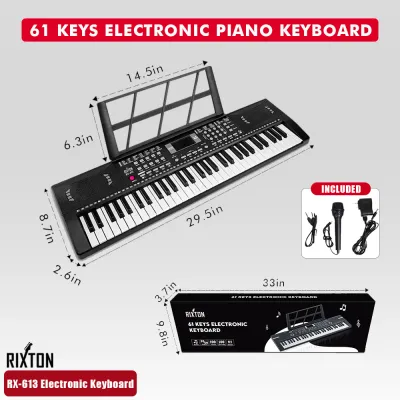
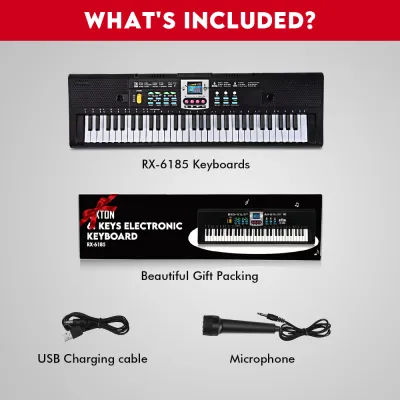
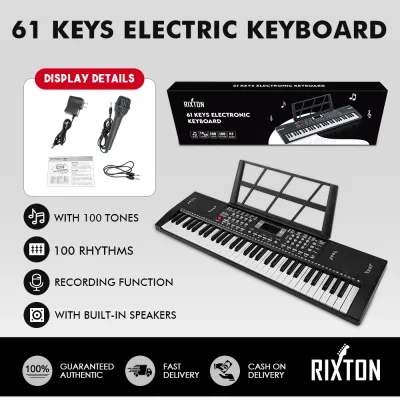
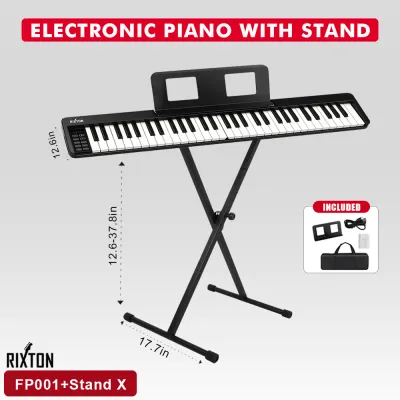
Prices are valid at publication and may change. Please refer to the product page for the latest price.
Establishing Your Baseline: Playing Needs and Comparison Criteria
Before diving into specific brand comparisons, you must define your primary use case and skill level. Beginners, intermediate learners, and experienced performers all require different features from a digital piano. Establishing these baseline requirements early in your search prevents you from overpaying for advanced features you do not need, or conversely, buying an instrument that you will quickly outgrow.
For absolute beginners and casual players, portability and ease of use are often the highest priorities. If you have limited space in your home or need to store the keyboard when it is not in use, a lightweight, slab-style digital piano is highly practical. Rixton models are frequently designed with these space-saving needs in mind, offering compact profiles that fit easily into modern Filipino living spaces without dominating the room.
If your goal is serious classical piano study, your baseline requirements must be more stringent. Classical piano pedagogy relies heavily on developing proper finger strength, hand posture, and expressive control. To achieve this, you will need an instrument with 88 full-sized keys and a weighted key action that closely mimics the physical resistance of an acoustic piano.
Another critical baseline specification is polyphony, which refers to the maximum number of individual notes the piano can produce at the same time. When you play complex chords while holding down the sustain pedal, the instrument quickly uses up its available polyphony. While entry-level keyboards may offer 32 or 64 notes of polyphony, intermediate and advanced players should look for a minimum of 128-note polyphony to prevent notes from cutting off abruptly during performance.
Finally, consider where and how you plan to play. If you intend to use the piano primarily for home practice, built-in speakers with clear projection are essential. If you are a music producer or a gigging musician, you will need to prioritize connectivity options, such as dedicated audio outputs and MIDI interfaces, over cabinet aesthetics.
Key Action and Sound Engine: Evaluating the Core Experience
The core experience of playing any digital piano rests on two main pillars: how the keys feel under your fingers and how realistically the instrument reproduces the sound of an acoustic piano. When comparing Rixton to other brands, you can use manufacturer specification sheets to evaluate these two critical components.

Key action is categorized into several types, ranging from non-weighted synth action to fully weighted graded hammer action. Non-weighted and semi-weighted keys use springs to return the keys to their resting position, offering very little resistance. Fully weighted keys, on the other hand, use actual weights or mechanical hammers to simulate the leverage and inertia of an acoustic piano action. Graded hammer action goes a step further by making the keys in the lower register feel heavier than those in the higher register, just like a real grand piano.
To evaluate the key action of a Rixton piano against competitors, check the product specifications for terms like “hammer action” or “weighted keys.” If you are a beginner, a semi-weighted keyboard may feel easier to play initially, but a fully weighted keybed is essential for long-term technical development. When testing an instrument in person, turn the volume off and play the keys to check for mechanical noise; a high-quality keybed should operate quietly without excessive clicking or lateral wobble.
The sound engine is responsible for generating the tones you hear. Most digital pianos use stereo sampling, which involves recording notes from a high-quality acoustic grand piano at various volume levels. Premium brands often employ advanced physical modeling to simulate the sympathetic resonance of strings and the soundboard. When comparing budget-friendly brands, look at the size of the sound library and whether the model offers multi-layered samples, which provide a more dynamic tonal response depending on how hard you strike the keys.
Speaker configuration and amplifier power also dictate the quality of the sound output. A digital piano with dual 10-watt amplifiers will deliver a fuller, richer sound than one with dual 3-watt speakers, especially in larger rooms. If you live in a humid environment, check if the speaker cones are constructed from durable materials that resist moisture damage over time.
Use this practical checklist to verify the touch and sound quality of any model you are considering:
- Touch Sensitivity: Ensure the model allows you to adjust the touch response (e.g., light, medium, heavy) to match your physical playing strength.
- Sustain Decay: Play a chord, hold the sustain pedal, and listen to how naturally the sound decays; it should fade out smoothly rather than stopping abruptly.
- Dynamic Range: Verify that playing softly produces a gentle, warm tone, while playing firmly produces a brighter, louder sound, rather than just changing the volume level.
- Headphone Output Quality: Plug in a high-quality pair of headphones to ensure the audio signal is clean, clear, and free of background hiss or hum.
Connectivity, Built-in Features, and Build Quality
Beyond the core feel and sound, modern digital pianos offer a range of practical features and connectivity options that can significantly enhance your learning or production workflow. Comparing these features across different brands helps you identify which instrument integrates best with your existing devices and setup.
Connectivity is vital for modern musicians. A standard USB Type-B port, often labeled “USB-to-Host,” is a crucial specification to look for. This port allows you to connect the digital piano to a computer, tablet, or smartphone, turning your instrument into a MIDI controller for music production software or interactive learning apps. Some models also feature Bluetooth MIDI or Bluetooth Audio, allowing for wireless connections, though wired connections remain the most reliable for avoiding latency.
If you plan to practice quietly without disturbing family members or neighbors, look for models with dual headphone jacks. This feature is particularly useful for lessons, as it allows both the student and the teacher to wear headphones simultaneously. For those who want to perform live or connect to a home theater system, check for dedicated auxiliary line-out ports, which provide a cleaner audio signal than standard headphone jacks.
Built-in features can vary widely between entry-level and mid-range models. Standard features to look for in the user manual include a built-in metronome, transpose functions, and a basic track recorder. Some keyboards also offer accompaniment styles or a wide variety of instrument voices (such as electric pianos, organs, and strings), which can make practice sessions more engaging for younger players.
Build quality and physical materials are especially important in tropical climates like the Philippines. High humidity can cause wooden cabinets made of low-grade particle board to swell, warp, or peel over time. If you live in a high-humidity area, a digital piano with a high-quality plastic or composite chassis may offer better long-term durability. Additionally, ensure the music rest and the integrated stand are sturdy enough to support heavy music books or a tablet without shaking while you play.
Assessing Price, Value, and Retailer Verification
When comparing digital piano brands, understanding local price tiers and what features to expect at each level is essential for making a smart financial decision. In the Philippine market, digital pianos generally fall into three broad price categories, each serving different user needs.
The entry-level tier, typically priced under ₱15,000, is where brands like Rixton offer highly competitive options. In this price range, you should realistically expect portable, lightweight designs, semi-weighted or basic weighted keys, standard stereo sound engines, and essential USB-MIDI connectivity. These instruments are ideal for beginners, hobbyists, or those who need a secondary, highly portable keyboard for travel.
The mid-range tier, spanning from ₱15,000 to ₱40,000, introduces fully weighted graded hammer-action keys, higher polyphony limits (typically 128 notes or more), more powerful built-in speaker systems, and more robust cabinet designs. The premium tier, exceeding ₱40,000, features advanced sound modeling, wooden key elements, multi-channel speaker arrays, and elegant console cabinets designed to replicate the look and feel of an acoustic upright piano.
To verify current pricing, stock availability, and promotional offers, avoid relying on unverified social media posts or outdated online listings. Instead, check official brand stores, authorized local distributors, and reputable online marketplaces. Keep in mind that shipping fees for heavy, bulky items like digital pianos can vary significantly, especially if you reside in the provinces outside of Metro Manila.
Before making your purchase, always verify the local warranty terms and after-sales support. Electronic musical instruments contain sensitive circuit boards and mechanical parts that can occasionally require servicing. Ensure the retailer provides an official receipt and a clear warranty policy that is valid at authorized service centers in the Philippines. A reliable local warranty provides peace of mind and protects your investment over the years.
Decision Framework: Choosing the Right Brand for Your Setup
To finalize your decision, use a structured framework that aligns your budget, skill level, and long-term musical goals with the specifications of each brand.
Choose a Rixton digital piano if you are a beginner or intermediate player looking for an affordable, space-saving instrument for home practice or casual playing. If your budget is strictly under ₱15,000 and you prioritize modern digital conveniences—such as lightweight portability, USB connectivity, and a variety of built-in tones—these models provide excellent value without requiring a massive upfront investment.
Choose an established mainstream brand if you require advanced sound modeling, highly realistic graded hammer actions, or specific professional certifications. These instruments are highly recommended if you are pursuing formal classical training, preparing for conservatory exams, or require a highly durable keyboard for professional stage performances and heavy institutional use.
Always verify your specific requirements before buying. If you are purchasing an instrument for a child enrolled in formal piano lessons, consult their teacher first to ensure the model’s key weight and pedal functions meet their curriculum guidelines. By matching your specific needs to the verified technical specifications of each model, you can confidently select the perfect digital piano for your musical journey.
Frequently Asked Questions (FAQ)
Are Rixton digital pianos suitable for beginner piano students?
Yes, certain Rixton models can be highly suitable for beginner students, provided you verify their specific technical features before purchasing. When selecting a model for a beginner, check the manufacturer specifications to ensure it features fully weighted keys and adjustable touch sensitivity. These features are essential for developing proper finger strength and expressive playing habits. It is also highly recommended to consult with your piano teacher to verify if a specific model’s key action and pedal configuration align with their curriculum requirements.
How do I check if a digital piano is compatible with my learning apps?
To verify compatibility, check the product manual or specification sheet for USB-MIDI (often listed as USB Type-B or USB-to-Host) or Bluetooth MIDI support. These protocols allow the digital piano to send note data to external devices. If you plan to use specific interactive learning apps on an iOS or Android device, check the app developer’s system requirements. Whenever possible, test the connection in-store using your own device and cable to ensure seamless integration before finalizing your purchase.

Community discussion
Share your experience or ask a question. Comments are reviewed before publication.