
Finding a reliable musical instrument within a budget of ₱4,000 in the Philippines requires a clear understanding of what the market actually offers. At this price point, you will primarily compare portable electronic keyboards rather than true, fully weighted digital pianos. The best value for your money depends on whether you want to learn basic music theory, produce digital tracks, or simply enjoy casual playing. By focusing on verifiable hardware specifications rather than exaggerated marketing terms, you can find an instrument that fits your musical goals.
Setting Expectations: What ₱4,000 Buys in the Keyboard Market
When browsing instruments in the ₱4,000 price range, it is essential to distinguish between a digital piano and a portable electronic keyboard. A true digital piano mimics the feel and sound of an acoustic piano, featuring 88 fully weighted keys that use graded hammer action to simulate physical hammers striking strings. These complex mechanical assemblies are expensive to manufacture, meaning brand-new, fully weighted 88-key digital pianos are virtually non-existent in this budget tier.
Instead, this price bracket is dominated by portable keyboards, which typically feature 61 keys with synth-action or spring-loaded mechanisms. Synth-action keys offer very little physical resistance and rely on light springs to return the key to its resting position. While they do not feel like an acoustic piano, they are highly portable, lightweight, and perfectly suitable for beginners learning notes, chords, and basic music theory.
Products mentioned in this guide
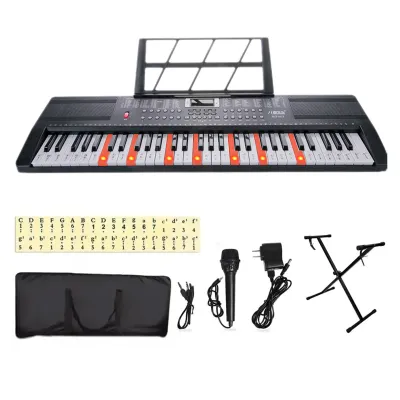
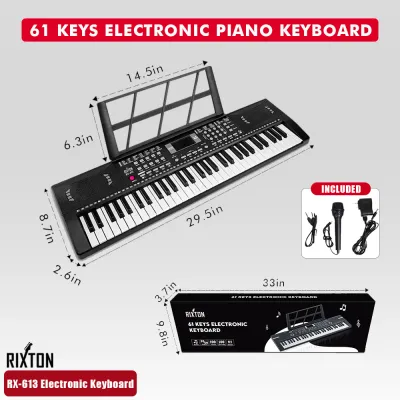
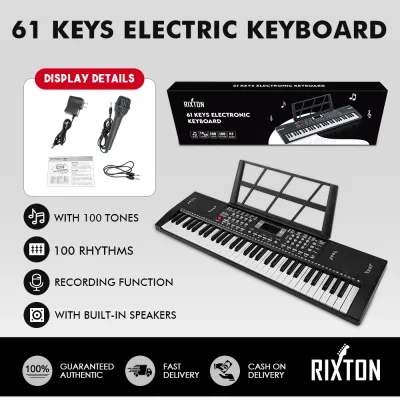
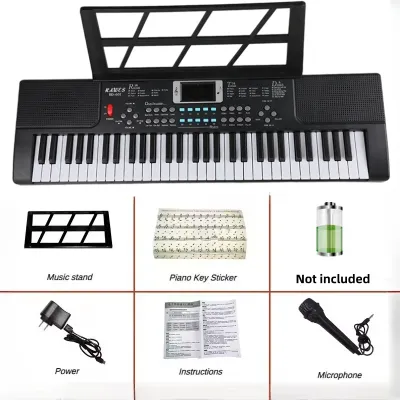
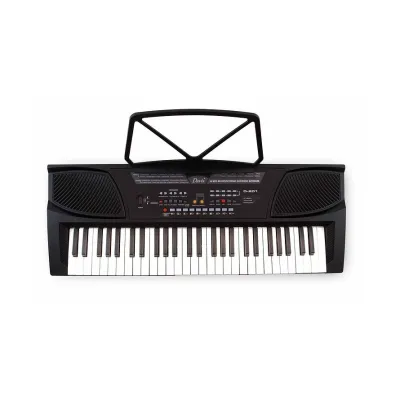
Prices are valid at publication and may change. Please refer to the product page for the latest price.
The build quality of instruments in this price range consists primarily of lightweight plastic chassis. While this makes them easy to move around a home or transport to lessons, it also means they require careful handling. In the tropical climate of the Philippines, high humidity can affect internal electronic contacts over time, making it wise to invest in a simple dust cover. Understanding these material limitations helps you set realistic expectations for the durability and lifespan of your purchase.
Essential Specs to Compare Before You Buy
To make an objective comparison between different models, you must look past promotional descriptions and evaluate specific hardware features. The first specification to check is the number of keys. While a standard piano has 88 keys, most budget keyboards offer 61 keys, which is five octaves. This range is sufficient for playing the vast majority of popular songs, beginner classical pieces, and modern arrangements. Ensure the keys are full-size rather than mini-size, as mini keys can hinder the development of proper finger spacing and muscle memory.

The most critical feature to verify is touch sensitivity, also known as velocity response. A touch-sensitive keyboard detects how hard or soft you strike a key, adjusting the volume of the sound accordingly. This is vital for expressive playing. Non-touch-sensitive keyboards produce the exact same volume regardless of your finger pressure, which severely limits your ability to play dynamically. If your goal is to learn piano technique, touch sensitivity is a non-negotiable feature.
Polyphony is another key specification, representing the maximum number of individual notes or voices the keyboard can produce simultaneously. Budget models often feature 16-note, 32-note, or 48-note polyphony. If you play a complex chord while holding down a sustain pedal, older notes will be cut off prematurely if the polyphony limit is too low. For beginners, a minimum of 32-note polyphony is recommended to prevent noticeable sound dropouts.
Finally, examine the physical connection ports on the back of the instrument. A headphone output (either a 3.5mm or 6.35mm jack) is essential for silent practice in shared living spaces. A USB-MIDI port is highly valuable if you plan to connect the keyboard to a computer, tablet, or smartphone to use learning apps or digital audio workstations. Lastly, ensure there is a dedicated input jack for a sustain pedal, which is necessary for sustaining notes beyond your physical finger reach.
Assessing Sound, Features, and Connectivity
The audio performance of a budget keyboard relies heavily on its built-in speakers and sound engine. Most models in this price range feature dual speakers with a power output of 2 to 5 watts per channel. While this is sufficient for personal practice in a quiet room, it may struggle to compete with ambient household noise, such as electric fans or air conditioning units common in Filipino homes. Checking the speaker wattage helps you determine if you will need to rely on headphones for clear monitoring.
The variety of built-in sounds, or voices, is another point of comparison. While manufacturers often boast hundreds of preset sounds, the quality of the primary acoustic piano sample is what matters most. Listen for a natural decay where the sound fades out smoothly rather than cutting off abruptly. Having a few high-quality piano, electric piano, and organ sounds is far more valuable than having hundreds of low-quality, synthetic sound effects that you will rarely use.
Built-in learning tools can also add value to your purchase. Many entry-level keyboards include a built-in metronome, which is indispensable for developing a steady sense of rhythm. Basic recording functions allow you to capture your practice sessions and listen back to identify mistakes. Some models also feature accompaniment styles or rhythm tracks, which can make practice more engaging by simulating a backing band, though these should not distract from mastering fundamental finger techniques.
Navigating Purchases and Avoiding Counterfeits
Purchasing an instrument safely in the Philippines requires careful selection of your buying channel. While online marketplaces offer convenience, they are also flooded with unbranded, low-quality products that use misleading terminology. It is common to see listings claiming to offer “88-key professional weighted digital pianos” for under ₱4,000. In reality, these are often flexible silicone roll-up pianos or cheap toys with sub-standard electronics.
To avoid these disappointments, prioritize official brand stores on major e-commerce platforms or established physical music retailers with branches in local shopping malls. Buying from authorized dealers ensures you receive a genuine product with a valid manufacturer or distributor warranty. A local warranty is crucial, as it provides a clear path for repairs or replacements if the keyboard develops electronic faults.
When evaluating online listings, look for red flags such as missing brand names, vague specifications, or packages that do not include essential power adapters. If you are considering the second-hand market to get a higher-tier model within your ₱4,000 budget, inspect the instrument in person if possible. Test every single key to ensure they all sound at the correct volume, check that all connection ports are tight and functional, and verify that the power supply is stable.
Decision Framework: Matching the Instrument to Your Goals
To choose the right instrument, you must align its features with your primary musical objectives. If your goal is to learn basic music theory, practice sight-reading, and enjoy casual playing in a compact space, a 61-key portable keyboard with touch-sensitive keys is the most practical choice. It offers the right balance of expressive capability, portability, and affordability within your budget.
If you are interested in music production, songwriting, or creating digital arrangements, prioritize connectivity. A compact keyboard with a reliable USB-MIDI interface allows you to control software instruments on your computer or mobile device. In this scenario, the quality of the keyboard’s internal speakers and built-in sounds is less important, as you will be relying on your computer’s sound library and studio headphones.
If your ultimate goal is to play classical repertoire or transition to a traditional acoustic piano, you must recognize the limitations of this price bracket. The spring-loaded keys of a budget keyboard cannot build the finger strength and control required for weighted keys. In this case, the best decision may be to use a budget keyboard temporarily for basic note reading, explore the second-hand market for an older weighted model, or save up to increase your budget for an entry-level weighted digital piano.
Frequently Asked Questions (FAQ)
Can I learn classical piano on a keyboard under ₱4,000?
You can use a budget keyboard to learn basic note reading, finger coordination, and elementary classical pieces. However, because these instruments lack weighted keys and advanced dynamic response, you cannot develop the proper finger strength, hand posture, or expressive control required for intermediate and advanced classical repertoire. It serves as a helpful starting point, but serious classical students will eventually need to upgrade to a weighted 88-key instrument.
Do I need an external amplifier or speakers?
For personal practice in a typical bedroom, the built-in speakers of a budget keyboard are usually sufficient. However, if you plan to play in larger rooms, perform for small gatherings, or practice in a noisy environment, the low-wattage built-in speakers may sound thin or distorted at high volumes. In these situations, connecting the keyboard’s headphone output to a home stereo system, a portable speaker, or a dedicated keyboard amplifier will significantly improve the sound quality.
What essential accessories should I budget for?
When purchasing a budget keyboard, check if the package includes a power adapter, as some models run only on batteries or require a separate purchase. You should also budget for a sturdy keyboard stand, such as an X-stand, to keep the instrument at the correct playing height. A sustain pedal is highly recommended for expressive playing; ensure you choose a pedal with a polarity switch to guarantee compatibility with your specific keyboard brand.

Community discussion
Share your experience or ask a question. Comments are reviewed before publication.