
Acoustic guitars are highly sensitive to environmental changes. In tropical climates like the Philippines, where shifting humidity levels and temperature fluctuations constantly cause wood to expand and contract, keeping your instrument in tune is a daily task. Whether you are practicing in a quiet bedroom with a loud electric fan running, rehearsing with a band, or performing on an outdoor stage, having a reliable tuner is essential.
There is no single “best” tuner format for every acoustic guitar player; the ideal choice depends entirely on your playing environment, whether your instrument has built-in electronics, and your budget. While smartphone apps offer immediate accessibility for quiet rooms, clip-on tuners provide reliable vibration-based tracking in noisy spaces, and pedal tuners deliver stage-ready muting for amplified setups. This guide breaks down the mechanical differences, environmental limitations, and hardware requirements of each format to help you select the right tool for your specific needs.
How Clip-On, Pedal, and App Tuners Capture Sound
To choose the right tool, you must first understand the physics of how each tuner type detects the pitch of a vibrating guitar string. The three formats rely on completely different mechanical and electronic methods to capture audio signals, which directly dictates their physical limitations and ideal use cases.
Products mentioned in this guide
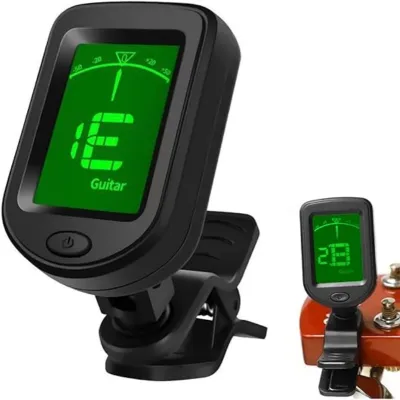
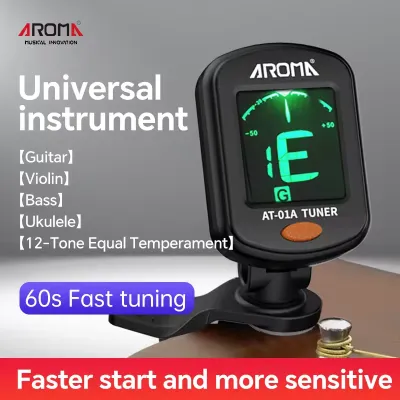
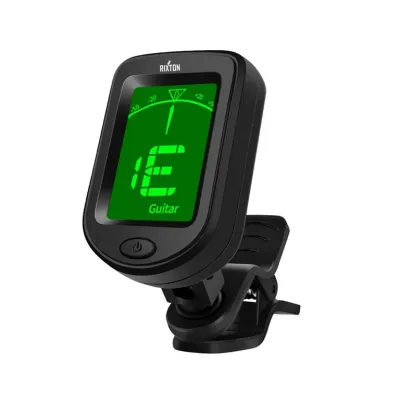
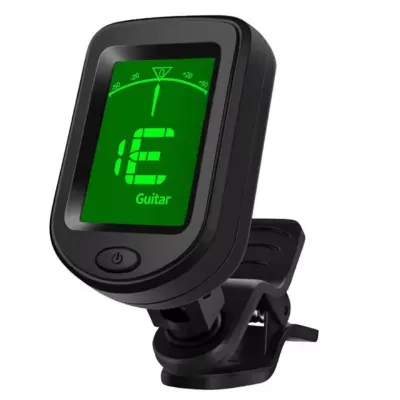

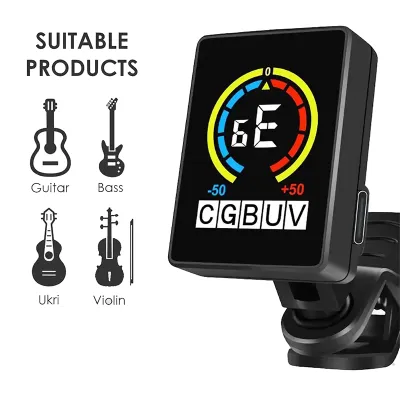
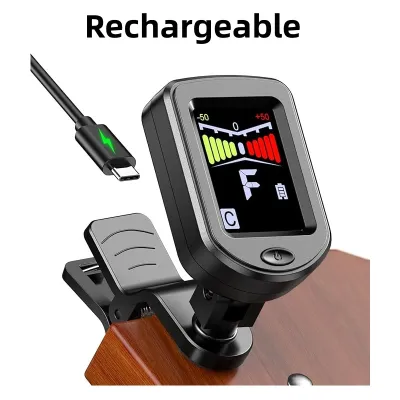
Prices are valid at publication and may change. Please refer to the product page for the latest price.
Clip-on tuners operate using piezoelectric sensors. When you clamp a clip-on tuner onto your acoustic guitar’s headstock, the sensor detects the physical vibrations traveling through the wood rather than the sound waves traveling through the air. Because it relies on direct physical contact, a clip-on tuner effectively ignores ambient room noise. This means you can tune your guitar accurately even if people are talking nearby, music is playing, or a loud air conditioner is humming in the background.
Pedal tuners require a direct electronic audio signal. They do not have built-in microphones or vibration sensors; instead, they receive the guitar’s signal via a standard 1/4-inch instrument cable plugged into an input jack. This design means traditional acoustic guitars without built-in electronics or pickups cannot connect directly to a pedal tuner. To use a pedal tuner with a standard acoustic guitar, you must install an external soundhole pickup or route an external microphone through a preamplifier, making it a more complex and hardware-dependent setup.
Smartphone apps rely entirely on your mobile device’s built-in microphone to listen to ambient sound waves. When you pluck a string, the app captures the sound as it travels through the air, analyzes the frequency, and displays the pitch on your screen. While highly convenient, this method makes app-based tuners exceptionally susceptible to background noise and room acoustics. Any external sound, from a passing vehicle on the street to a nearby conversation, can confuse the app’s pitch detection algorithm, making it difficult to get an accurate reading in anything other than a completely quiet room.
Evaluating Tuner Formats by Playing Environment
Your physical surroundings and performance goals play a massive role in determining which tuner format will serve you best. A tool that excels in a quiet bedroom might fail completely on a busy street corner or a dimly lit stage.

Clip-On Tuners for Quiet Practice and Rehearsals
For everyday unplugged acoustic playing, clip-on tuners offer an outstanding balance of portability and convenience. Once clamped onto the headstock, the tuner remains constantly visible as you play, allowing you to make quick adjustments between songs without changing your posture. Because they are immune to ambient room noise, they are perfect for group rehearsals where other musicians might be tuning or chatting at the same time.
However, clip-on tuners do have a few physical drawbacks. Some players find that leaving a plastic device clamped to the headstock clutters the instrument’s classic aesthetic or interferes with their left-hand technique if they frequently play open chords near the nut. Additionally, if you own an acoustic guitar with a delicate nitrocellulose lacquer finish, leaving a clip-on tuner attached for extended periods can sometimes cause chemical reactions that mar the wood’s finish. It is always wise to remove the tuner when you are done playing to prevent any potential cosmetic damage.
Pedal Tuners for Live Stages and Amplified Setups
If you perform live with an acoustic-electric guitar, a pedal tuner is often the industry standard for stage management. The primary advantage of a pedal tuner is its ability to provide hands-free, silent tuning. When you step on the pedal’s footswitch, it instantly mutes the output signal going to the PA system or acoustic amplifier. This allows you to tune your instrument silently in front of an audience, sparing them the unpleasant sound of open strings being tensioned.
Furthermore, pedal tuners feature large, high-visibility LED or LCD screens designed to be read easily in dark venues or under bright stage lights. They are built into rugged metal chassis that can withstand being stepped on repeatedly during a performance. However, you must keep the strict hardware requirement in mind: your acoustic guitar must have an active or passive pickup system installed to send a signal to the pedal. If you play a purely acoustic instrument, a pedal tuner is impractical unless you are willing to invest in additional pickup hardware.
Smartphone Apps for Casual Beginners and Budget Constraints
For entry-level players or those on a strict budget, smartphone tuning applications are an incredibly appealing option. Most reputable tuning apps are either entirely free or cost a nominal fee, eliminating the barrier to entry for beginners who have just purchased their first acoustic guitar. Since almost everyone carries a smartphone, you always have a tuner on hand, making it a perfect backup option when traveling or visiting a friend’s house.
Despite their convenience, app-based tuners have significant limitations. Because they rely on the phone’s microphone, trying to tune your guitar in a noisy environment—such as a bustling living room, a music classroom, or an outdoor park—can be incredibly frustrating as the needle jumps erratically. Additionally, using an app presents a physical inconvenience; you must find a flat surface to prop up your phone close to the guitar, or awkwardly hold the device in your lap while trying to pluck the strings and turn the tuning pegs simultaneously.
Essential Specifications to Verify on the Product Label
Because specific model performance cannot be guaranteed without independent testing, you should carefully verify the technical specifications on the product packaging or official store page before making a purchase.
First, check the tuning accuracy and calibration range. Most standard tuners are calibrated to a fixed reference pitch of A4 = 440Hz, which is the universal standard for modern music. However, if you plan to play alternate tunings, explore historical temperaments, or collaborate with orchestral instruments, look for a tuner that offers an adjustable calibration range (typically from 430Hz to 450Hz). The accuracy rating is usually measured in “cents” (one-hundredth of a semitone); a rating of +/- 1 cent is standard for general playing, while high-end strobe modes can offer accuracy down to +/- 0.02 cents.
Second, evaluate the display readability features. Look for bright, backlit screens with high-contrast color-changing indicators (such as turning from red to green when the string is in tune). If you plan to play outdoors in bright tropical sunlight or on dimly lit stages, a screen that washes out easily will make tuning nearly impossible. Some tuners also offer a “strobe” display mode, which uses rotating patterns to indicate pitch deviation and can be easier to read in challenging lighting conditions.
Third, consider the power source and battery life preservation. Clip-on tuners typically run on small CR2032 coin-cell batteries, though newer models often feature built-in USB rechargeable lithium-ion batteries. If choosing a battery-powered model, ensure it has an auto-shutoff function that automatically powers down the device after a few minutes of inactivity to prevent draining the battery when left on the headstock. Pedal tuners usually run on a standard 9V battery or an external DC power supply, which is ideal if you already have a pedalboard power distribution system.
Finally, inspect the physical mounting mechanism. For clip-on tuners, verify that the clamp is lined with soft, non-marring rubber or silicone padding to protect your guitar’s wood. Ensure the clamp opening is wide enough to accommodate your specific headstock shape, especially if you play a classical guitar with a thicker, slotted headstock or an instrument with a steep headstock angle.
Decision Framework: Matching the Tuner to Your Needs
To simplify your decision, you can match your specific playing habits and hardware setup to the following condition-based rules:
Choose a clip-on tuner if you play a standard unplugged acoustic guitar, frequently practice in environments with moderate background noise, and want a dedicated, highly portable device that stays attached to your instrument for quick adjustments. It is the most versatile and reliable everyday option for the majority of acoustic players.
Choose a pedal tuner if you play an acoustic-electric guitar, regularly perform live on stage or in church services, and need a durable, hands-free solution that allows you to mute your signal and tune silently between songs. Before buying, verify that your guitar has a built-in pickup or that you are willing to install an external soundhole pickup to facilitate the cable connection.
Choose a smartphone app if you are a casual beginner practicing exclusively in quiet, controlled indoor spaces, want to avoid spending extra money on hardware immediately, and do not mind the minor inconvenience of propping up your phone while tuning.
Frequently Asked Questions (FAQ)
Can I use a pedal tuner if my acoustic guitar doesn't have a pickup?
No, a direct cable connection to a pedal tuner is physically impossible without some form of pickup on your acoustic guitar. Pedal tuners do not have built-in microphones to capture acoustic sound waves. If you own a standard acoustic guitar and want to use a pedal tuner, you must install a temporary or permanent soundhole pickup, or position an external microphone in front of your guitar and route that signal through a preamplifier or direct box into the pedal. For most players without a pickup, switching to a clip-on tuner or a smartphone app is a much simpler and more cost-effective solution.
Are strobe tuners better than standard chromatic tuners for acoustic guitars?
Strobe tuners offer a much higher level of visual precision than standard chromatic tuners, often measuring pitch deviations down to a fraction of a cent. This extreme accuracy is incredibly useful for professional guitar technicians setting up an instrument’s intonation or musicians performing critical studio recording sessions. However, for everyday practice and casual live performances, standard chromatic LED or LCD displays are more than sufficient. They are generally much easier to read quickly, more intuitive for beginners, and significantly more cost-effective than dedicated strobe hardware.

Community discussion
Share your experience or ask a question. Comments are reviewed before publication.