
Learning to play the guitar is an exciting journey, but choosing your first instrument can feel overwhelming. When looking at Takamine, a brand highly regarded for its live performance heritage, beginners should focus on playability, build consistency, and understanding how different series fit their needs rather than searching for a single universal model. A highly suitable guitar is one that feels comfortable in your hands, fits your budget, and inspires you to practice every day. For most beginners, Takamine’s entry-level lineups, particularly the G Series, offer an accessible entry point into the brand’s ecosystem. By evaluating key factors like body shape, tonewoods, electronics, and local authenticity, you can confidently select an instrument that will support your musical growth for years to come.
Exploring Takamine's Beginner-Friendly Series
Takamine organizes its instruments into distinct families, with the G Series serving as the primary gateway for entry-level players. This series is designed to deliver the brand’s signature build quality and acoustic performance at a more accessible price point than their pro-tier, Japanese-made counterparts. Understanding how to navigate this lineup is the first step in narrowing down your choices.
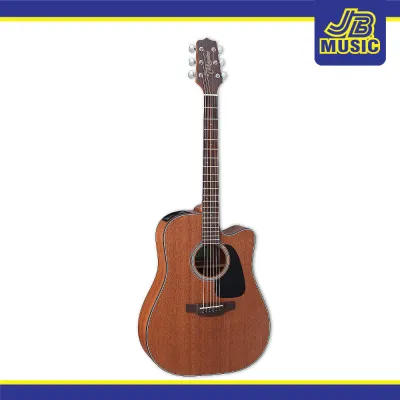
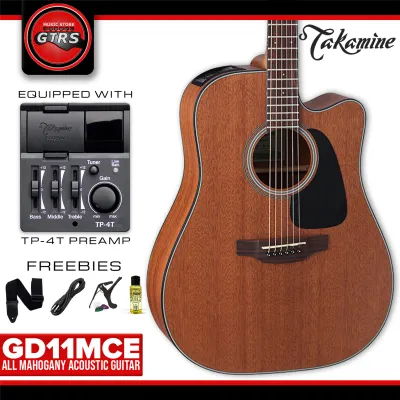
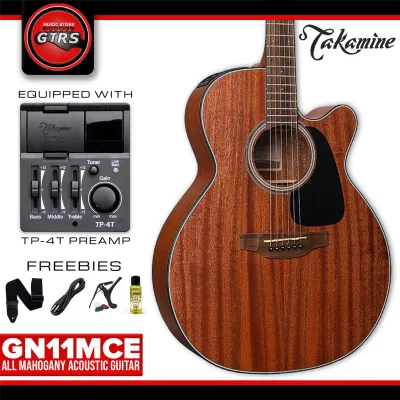
The model numbers on these guitars are not random; they follow a specific naming convention that reveals the instrument’s design and features. Typically, the first letter or letters indicate the body shape, such as “GD” for G-Series Dreadnought or “GN” for G-Series NEX. The numbers that follow, such as 10, 15, 20, or 30, generally represent the level of appointments, wood combinations, and finish options, with higher numbers often indicating upgraded materials like solid tops.
Products mentioned in this guide
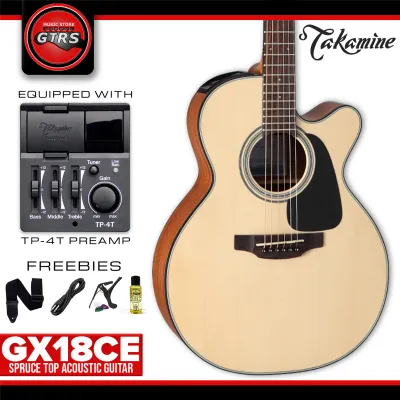
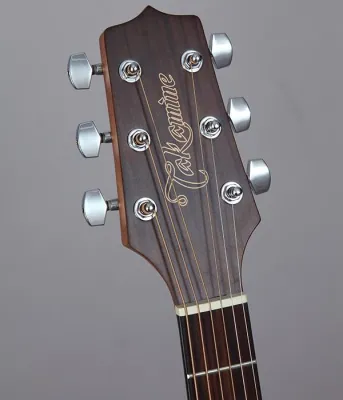
Prices are valid at publication and may change. Please refer to the product page for the latest price.
You will also encounter suffixes at the end of model names, most notably “CE” or “E”. The “C” stands for cutaway, which is a curved scoop out of the body near the neck that allows easier access to the higher frets. The “E” indicates that the guitar is equipped with onboard electronics, meaning it has a built-in pickup and preamp system. If a model lacks these letters, it is a traditional, purely acoustic instrument.
Deciding between a standard acoustic and an acoustic-electric configuration depends largely on your immediate goals and where you plan to play. A standard acoustic is straightforward, slightly lighter, and requires no battery maintenance, making it excellent for pure bedroom practice. An acoustic-electric model, however, gives you the flexibility to plug into an amplifier or sound system later on, which is highly beneficial if you plan to perform at school, church, or local gatherings.
Matching Body Shapes and Sizes to Your Comfort
The physical shape of a guitar body directly influences how comfortable it is to hold and how it projects sound. For beginners, finding a body shape that matches your physical frame is crucial, as an uncomfortable guitar can discourage regular practice. Takamine offers several distinct body shapes within its beginner-friendly lines, each catering to different physical needs and sonic preferences.

The Dreadnought (GD) is the most traditional and common acoustic guitar shape. It features a large, deep body that produces a robust, bass-heavy sound with excellent projection. While it is fantastic for strumming and filling a room with sound, its bulky size can feel cumbersome for younger players, individuals with smaller frames, or anyone who prefers practicing while seated on a low chair or sofa.
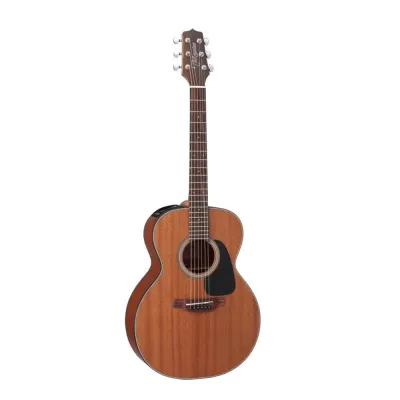
If you find the Dreadnought too large, the NEX shape (GN) is an excellent alternative. Often described as a “scaled-down jumbo,” the NEX features a pinched waist and rounded curves that allow it to sit lower on your lap. This design offers the ergonomic comfort of a smaller guitar while retaining a surprisingly full, balanced acoustic voice that works well for both strumming and fingerstyle playing.
For those seeking an even more compact option, the FXC or Concert shape provides a smaller, shallower body. This shape is highly maneuverable and comfortable, making it a popular choice for fingerpickers and players with smaller hands. Additionally, beginners should look out for 3/4-size or parlor-style models if they are shopping for children or need a highly portable travel companion for commuting around busy metropolitan areas.
Beyond the body outline, pay close attention to the neck specifications, specifically the nut width and scale length. The nut width determines how far apart the strings are spaced at the headstock; a standard width of around 42.8mm to 43mm is typical for Takamine steel-string acoustics, offering a comfortable grip for most hand sizes. A comfortable neck profile ensures you can form basic chords like G, C, and D without straining your wrist or muting adjacent strings.
Evaluating Tonewoods and Build Quality
The materials used to construct a guitar’s body play a significant role in its durability, price, and how its tone evolves over time. When browsing entry-level Takamine models, you will primarily choose between instruments with laminated tops and those with solid wood tops. Understanding this distinction helps you balance your budget against long-term performance.
Laminated tops consist of multiple thin layers of wood pressed together. While they do not vibrate as freely as solid wood—resulting in a slightly quieter, less complex tone—they are incredibly durable and highly resistant to changes in temperature and humidity. Solid tops, on the other hand, are made from a single piece of wood. They vibrate more efficiently, producing a richer, more resonant sound that actually improves and “opens up” as the wood ages and is played.
In the tropical climate of the Philippines, where relative humidity can fluctuate dramatically between the wet and dry seasons, wood care is a vital consideration. High humidity can cause solid wood to swell, potentially leading to high string action or bridge lifting, while sudden dry spells (such as in air-conditioned rooms) can cause cracking. Laminated models offer excellent structural stability in these conditions, making them low-maintenance options for beginners, though a solid-top model is highly rewarding if you are willing to use a simple guitar humidifier or keep the instrument in its case.
Common tonewood combinations in the G Series include spruce tops paired with mahogany or sapele back and sides. Spruce is highly favored for its bright, clear, and versatile tone that handles both heavy strumming and light fingerpicking beautifully. Mahogany and sapele contribute a warm, woody midrange that complements the brightness of the spruce, creating a balanced sonic profile that suits almost any genre of music.
When inspecting a guitar in a local music store, perform a few basic physical checks to ensure the build quality is up to standard. Run your fingers gently along the edges of the fretboard to check for sharp fret ends, which can occur if the wood has shrunk. Look closely at the bridge to ensure there are no visible gaps where it glues to the body, and sight down the neck from the headstock to verify that it is straight and not twisted.
Deciding on Acoustic-Electric Features
Many beginners wonder whether they should spend extra on an acoustic-electric model. While you do not need an amplifier to start learning your first chords, having built-in electronics offers several practical advantages that can make your learning journey smoother and more versatile.
One of the most immediate benefits of a Takamine acoustic-electric model is the built-in chromatic tuner integrated directly into the preamp panel. Keeping your guitar in tune is essential for training your ear and ensuring your chords sound correct. A built-in tuner allows you to tune up silently and quickly without needing to clip an external device onto your headstock or open a tuning app on your phone.
The primary function of the preamp, however, is to allow you to plug the guitar into an acoustic amplifier, a portable PA system, or an audio interface for recording. If you plan to join a school band, play during church services, or participate in casual jam sessions with friends, having a plug-and-play setup saves you from the hassle of trying to position an external microphone in front of your guitar.
However, acoustic-electric models do come with minor trade-offs. They are generally slightly more expensive than their purely acoustic counterparts, and the internal electronics add a small amount of weight to the body. You will also need to manage battery maintenance, as these preamps typically require a standard 9-volt battery to operate; leaving a cable plugged into the guitar’s jack when not in use will drain the battery quickly, so developing good habits is key.
Takamine’s entry-level preamps, such as the TP-4T or TP-3G, are designed with simplicity in mind. They usually feature straightforward controls for volume, a three-band equalizer (bass, middle, treble) to shape your plugged-in tone, and a low-battery indicator light. Before purchasing, check the battery compartment to ensure it is easy to access and that the controls slide or turn smoothly without any crackling noise.
Buying Safely: Authorized Dealers and Warranty Checks
Because Takamine is a highly respected brand worldwide, counterfeit instruments do exist in the market. Purchasing a fake guitar not only wastes your money but also deprives you of the playability and structural integrity that makes a genuine Takamine worth owning. Protecting your investment requires careful shopping habits, especially when buying in the Philippines.
The safest way to purchase a genuine Takamine is through authorized local distributors and established, reputable music retail chains. These stores receive their inventory directly from the manufacturer, ensuring authenticity and proper storage conditions. Be cautious when browsing online marketplaces or third-party classified ads, as these platforms often host unauthorized sellers offering replica instruments.
When evaluating a guitar, always verify the serial number, which is typically printed on a label inside the soundhole or stamped onto the back of the headstock. You can cross-reference this number with official Takamine dating guides or ask the dealer for official warranty documentation. Authorized purchases should come with a valid local warranty card that secures after-sales support, setups, and repairs.
Be alert to common red flags that indicate a counterfeit instrument. A price that is significantly lower than the standard retail rate at authorized dealers is the most obvious warning sign. Additionally, inspect the headstock logo closely for misaligned lettering, poor paint application, or incorrect fonts, and check the overall packaging quality; genuine Takamine guitars are shipped in sturdy, branded boxes with proper protective padding.
Frequently Asked Questions (FAQ)
Is a Takamine guitar a good choice for a complete beginner?
Yes, Takamine guitars are widely considered excellent instruments for beginners due to their consistent build quality and user-friendly neck profiles. The brand is known for designing necks that are relatively slim and comfortable to grip, which helps reduce hand fatigue during long practice sessions. While their factory setups are generally highly playable out of the box, it is always recommended to visit a local store to hold the guitar yourself, ensuring the neck shape and body size feel comfortable in your hands before making a final decision.
How much should I expect to spend on a beginner Takamine in the Philippines?
The cost of a beginner Takamine guitar in the Philippines varies depending on the specific model, body shape, and whether it includes built-in electronics. To get an accurate idea of current pricing, you should check the websites or visit the physical showrooms of authorized local distributors. It is also highly beneficial to look out for bundle offers that include essential accessories like a padded gig bag, a guitar strap, picks, and spare strings, which can provide excellent overall value. Always avoid deals from unverified online sellers that seem unrealistically cheap, as these are often counterfeit products.

Community discussion
Share your experience or ask a question. Comments are reviewed before publication.