
Selecting a Yamaha keyboard requires a clear understanding of how different tiers align with your musical journey, playing environment, and technical demands. The brand’s extensive lineup spans from basic portable instruments designed for absolute beginners to highly sophisticated workstations built for touring musicians. Making the right choice is not about finding the most expensive model, but rather about identifying the specific features that will support your current skills while allowing room for growth. In the Philippines, where factors like tropical humidity, frequent transport, and varied performance venues come into play, choosing an instrument with the appropriate build quality and connectivity is essential. By evaluating key actions, sound engines, and expansion capabilities, you can confidently invest in an instrument that serves your musical goals without overpaying for features you do not need.
Defining the Three Yamaha Keyboard Tiers
Yamaha categorizes its keyboard instruments into three primary tiers, each designed with distinct user profiles, structural materials, and functional priorities in mind. Understanding these divisions helps narrow down your options before diving into specific technical datasheets.
Entry-level keyboards are engineered primarily for beginners, young students, and casual hobbyists who require an accessible, lightweight instrument to start learning. These models emphasize high portability, often featuring compact plastic chassis that are easy to move around a home or transport to lessons. They prioritize user-friendly interfaces with clearly labeled buttons, built-in lesson suites, and a wide variety of pre-programmed sounds and accompaniment styles. To keep these instruments budget-friendly, manufacturers utilize lightweight, unweighted keys and basic internal amplification systems suitable for quiet home practice.
Products mentioned in this guide

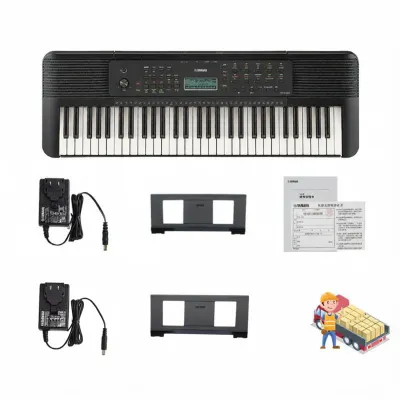
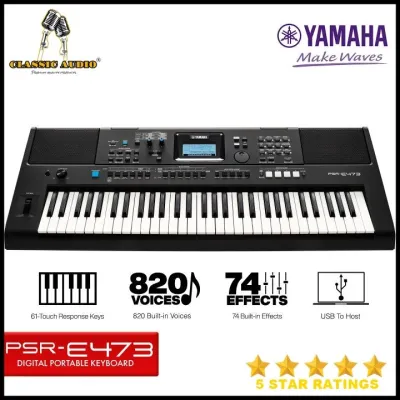
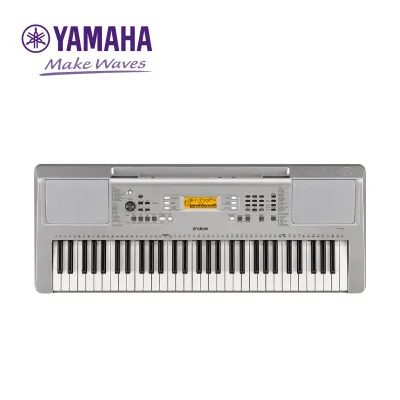
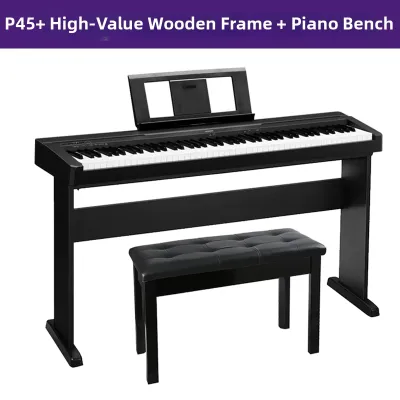
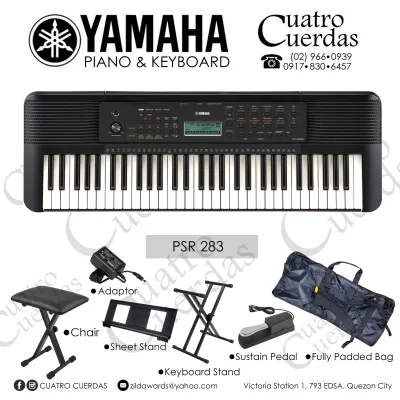
Prices are valid at publication and may change. Please refer to the product page for the latest price.
Mid-range keyboards represent a significant step up, balancing advanced performance features with accessible pricing for intermediate players, gigging musicians, and home studio enthusiasts. In this tier, the focus shifts toward realistic sound reproduction and more expressive key actions. The build quality is more robust, designed to withstand regular transport to local rehearsals, community events, or small venue gigs. You will find more sophisticated sound engines, higher polyphony counts, and practical performance controls like pitch bend wheels and assignable knobs. These instruments serve as excellent tools for players who have outgrown basic learning features and need a reliable, expressive keyboard for public performance or multi-track recording.
Professional keyboards are uncompromising tools built for stage performers, studio producers, and sound designers who demand the highest level of control, durability, and sonic fidelity. These instruments feature road-ready construction, often utilizing metal chassis, premium keybeds, and heavy-duty components designed to survive the rigors of touring. The internal architecture is highly sophisticated, offering massive sound libraries, deep synthesis engines, and extensive real-time physical controllers. Professional models also provide comprehensive analog and digital connectivity to integrate seamlessly with large-scale sound systems, studio gear, and complex software setups.
Core Specifications to Compare Across Tiers
When comparing different tiers of Yamaha keyboards, relying on marketing descriptions can be confusing. To make an objective decision, you must examine specific technical specifications found on product labels or official specification sheets.

Key action and feel dictate how the instrument responds to your physical touch, which directly impacts your playing technique and comfort. Entry-level models typically feature unweighted, synth-action keys that offer very little resistance, making them easy for children to play but lacking the expressive control needed for classical piano pieces. Mid-range models often introduce semi-weighted keys or basic weighted actions, which provide a moderate level of resistance to simulate the feel of an acoustic instrument. Professional models offer fully weighted hammer-action keybeds, which replicate the complex mechanical resistance of an acoustic grand piano, complete with heavier keys in the lower register and lighter keys in the upper register. If your primary goal is to develop proper piano technique, prioritizing a fully weighted keybed is essential.
The sound engine and polyphony determine the realism of the instrument’s voices and its ability to handle complex musical arrangements. Polyphony refers to the maximum number of individual notes or samples the keyboard can play simultaneously. Entry-level keyboards often have limited polyphony, which can cause sustained notes to cut off abruptly during complex passages or when using a sustain pedal. Mid-range and professional models feature advanced sound engines with high polyphony limits, allowing you to layer multiple sounds—such as piano and strings—and play complex chords with heavy pedaling without any loss of audio quality. Additionally, higher-tier sound engines utilize multi-layered samples that change dynamically in tone, not just volume, depending on how hard you strike the keys.
Connectivity and expansion options define how well the keyboard integrates with other equipment and adapts to future needs. Entry-level instruments usually offer basic headphone outputs and a standard USB-to-Host port for basic computer connection. Mid-range models expand on this by adding dedicated auxiliary inputs, line outputs for connecting to external amplifiers, and dedicated sustain pedal jacks. Professional keyboards provide comprehensive connectivity, including balanced XLR outputs for noise-free stage connections, traditional 5-pin MIDI ports for controlling external hardware, multiple assignable pedal inputs, and USB-to-Device ports for loading custom samples or backing tracks directly from a flash drive.
Decision Framework: Which Tier Matches Your Goals?
To select the ideal keyboard, you must evaluate your current playing level, your primary performance environment, and your long-term musical aspirations. This framework helps align your practical needs with the correct product tier.
You should choose an entry-level keyboard if you are just starting your musical journey, purchasing an instrument for a young beginner, or need a highly portable practice tool for a space-constrained home. These models are excellent for learning the basics of note reading, finger placement, and simple chord structures. Their lightweight design makes them easy to pack away when not in use, and their lower price point represents a low-risk investment while you determine if keyboard playing will become a long-term passion.
You should choose a mid-range keyboard if you are an intermediate player looking to upgrade from a basic starter model, a hobbyist who enjoys recording music at home, or a musician performing in local community settings or churches. These instruments provide the necessary sound quality and key response to support more expressive playing techniques. They offer a balanced combination of portability and performance features, allowing you to transition smoothly from home practice to small-scale live performances without feeling limited by your equipment.
You should choose a professional keyboard if you are a working musician, a session player, a music director, or a dedicated sound designer who requires absolute reliability and deep customization. If your work involves touring, playing in large venues, or producing commercial-grade music in a studio, the advanced sound engines, robust build quality, and extensive real-time controls of a professional model are indispensable. These instruments are designed to be the centerpiece of a complex musical setup, offering the durability and flexibility required for high-stakes professional environments.
Before making a final decision, verify if a standard keyboard is actually the right instrument type for your needs. If your primary goal is strictly computer-based music production, a dedicated MIDI controller without internal sounds may offer better software integration and physical control at a lower cost. Conversely, if your sole focus is classical piano training and you require an exact replication of an acoustic piano’s touch, cabinet design, and pedal behavior, a dedicated digital piano is a more suitable choice than a multi-functional portable keyboard or synthesizer.
Pre-Purchase Verification Checklist
Before finalizing your purchase from an online marketplace or a physical retail store in the Philippines, it is crucial to verify several practical details to ensure a smooth setup and avoid unexpected compatibility issues.
First, check the regional power adapter compatibility and the language settings of the instrument’s user interface. Ensure the included power supply is rated for the standard 220V electrical grid used in the Philippines and features the correct plug type (typically Type A or Type B). If you are purchasing an imported model, verify that the system firmware and physical button labels are in English rather than a regional foreign language, as navigating non-English menus can make operation highly difficult.
Second, confirm exactly which accessories are included in the retail box. Many keyboards, especially mid-range and professional models, are sold as standalone units and do not include essential items like a sustain pedal, a keyboard stand, a music rest, or a bench. Read the product description carefully to determine if you need to purchase these accessories separately, and ensure that any third-party stands or pedals you select are fully compatible with the keyboard’s physical dimensions and input jacks.
Third, verify mobile device and operating system compatibility if you plan to use companion apps or software integration. Many modern keyboards offer dedicated apps for interactive lessons, sound editing, or sheet music display. Check the manufacturer’s specifications to ensure these apps are compatible with your specific smartphone or tablet operating system, and verify whether you need specialized cables or wireless adapters to establish a stable connection.
Finally, review the manufacturer’s warranty terms and the availability of authorized service centers in the Philippines. Electronic musical instruments can be sensitive to high humidity and voltage fluctuations, making reliable local service support essential. Confirm that your purchase includes an official local warranty rather than an international or store-only warranty, and verify that there is an authorized service center accessible to you for future maintenance or repairs.
Frequently Asked Questions (FAQ)
Can I upgrade an entry-level Yamaha keyboard with professional sounds?
No, entry-level keyboards generally cannot be upgraded with professional-grade internal sounds. These instruments rely on fixed, factory-installed sound chips with limited internal memory, meaning you cannot load new high-resolution samples or sound libraries directly onto the hardware. If you want to expand your sound palette using an entry-level model, you must connect the keyboard to a computer or mobile device via USB and use it as a MIDI controller to trigger external software instruments and virtual studio technology (VST) plugins.
Do mid-range Yamaha keyboards require an external amplifier for live performances?
Yes, mid-range keyboards typically require an external amplifier or connection to a public address (PA) system for live performances in public venues. While many mid-range models feature built-in speakers, these are designed primarily for personal monitoring and quiet home practice, usually offering low wattage that cannot compete with the ambient noise of a live venue or other acoustic instruments. For rehearsals and performances, you should use the keyboard’s dedicated line output jacks to connect to a keyboard amplifier, a portable PA system, or the venue’s mixing console.

Community discussion
Share your experience or ask a question. Comments are reviewed before publication.