
Finding a stable, secure piano stand for an 88-key keyboard in the Philippines requires balancing structural stability, physical dimensions, and local environmental factors. Because full-size digital pianos are heavy, long, and valuable, choosing a stand is not just about aesthetics; it is a critical safety and performance decision. A weak or poorly matched stand can lead to distracting wobbles during intense play, or worse, a catastrophic fall that damages an expensive instrument. To make an informed choice, musicians must evaluate their specific keyboard’s physical specifications, compare different stand architectures, and verify compatibility details before purchasing from online marketplaces or local music stores.
Understanding the Support Needs of 88-Key Keyboards
To find a stand that can safely support a full-size keyboard, you must first understand the physical demands of an 88-key instrument. Unlike smaller 61-key or 76-key keyboards, an 88-key digital piano has a wide physical footprint, typically stretching between 1.3 and 1.4 meters in length. This extreme width means that any force applied to the outer octaves creates a leverage effect. If the stand’s support arms are too narrow or the base is too small, pressing keys at the far left or far right can cause the entire setup to tilt or sway.
Before evaluating any stand, consult your keyboard’s manufacturer manual to find its exact weight and dimensions. Digital pianos vary wildly in weight depending on their internal action. A lightweight keyboard with semi-weighted keys might weigh around 10 to 12 kilograms, while a professional stage piano with fully weighted wooden keys, internal speakers, and a heavy metal chassis can easily exceed 25 kilograms. Knowing this exact figure is crucial because placing a heavy instrument on a stand rated only for lightweight keyboards risks structural failure over time.
Products mentioned in this guide
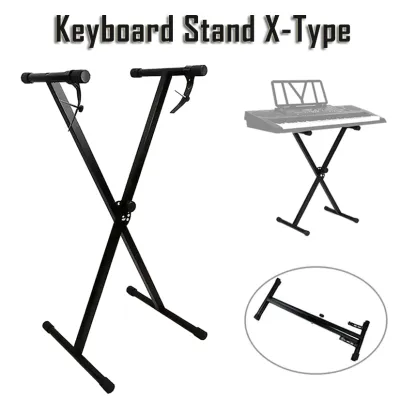
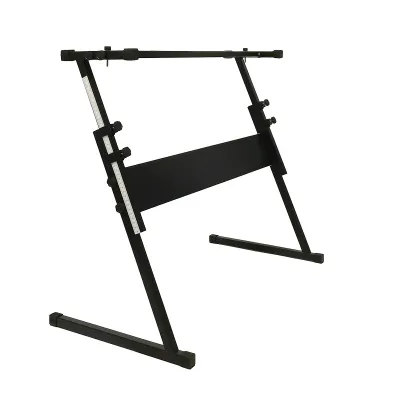
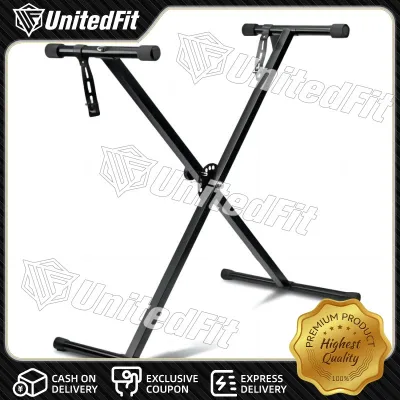

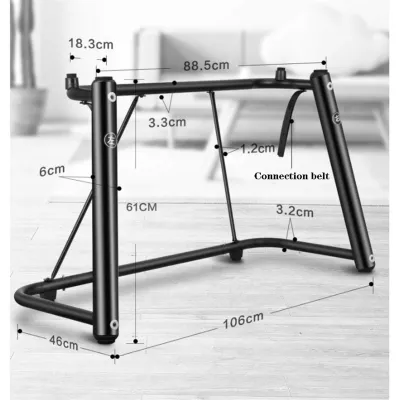
Prices are valid at publication and may change. Please refer to the product page for the latest price.
Additionally, consider the center of gravity of your specific keyboard model. Some digital pianos are front-heavy due to the key action mechanism, while others are back-heavy because of the internal electronics and speaker placement. The stand must have a deep enough top surface to support the keyboard’s center of gravity securely. You should also inspect the bottom surface of your keyboard. Look for any protruding battery compartments, rubber feet, speaker grilles, or proprietary mounting screw holes. These physical features can interfere with how flat the keyboard sits on the stand’s arms, potentially requiring you to adjust the placement of the stand’s rubber pads or seek a stand with adjustable support depths.
Finally, consider the local environment in the Philippines. High relative humidity can affect both the instrument and the stand. Metal stands should have high-quality powder coating to resist rust, while wooden stands must be checked for moisture-resistant finishes to prevent warping over time. If your home has smooth tile floors, which are common in Filipino households, the stand must have high-quality, non-slip rubber feet to prevent the entire setup from sliding around during energetic play.
Comparing Stand Designs for Full-Size Keyboards
Different stand designs offer distinct advantages and trade-offs in terms of stability, portability, legroom, and aesthetic integration. Understanding these differences will help you choose the right design for your playing style and environment.

Double-X stands are a popular choice due to their portability and ease of storage. Featuring two intersecting metal frames in an “X” shape, they offer significantly more stability and weight capacity than single-X designs. They are highly adjustable, allowing you to quickly change the height for sitting or standing play. However, the primary drawback of any X-style stand is the lack of legroom. The intersecting metal bars occupy the space directly beneath the center of the keyboard, making it difficult to sit comfortably with proper posture. Your knees will often bump against the frame, and placing a sustain pedal in a natural position can be challenging. For this reason, double-X stands are generally better suited for standing performers or temporary setups rather than long practice sessions at home.
Z-style stands are widely considered one of the most stable options for heavy 88-key keyboards, especially for home studios and dedicated practice spaces. The Z-shaped side frames distribute the weight of the keyboard vertically down to the floor, providing exceptional stability and resisting lateral wobble during intense playing. Because the support structure is located at the outer edges of the keyboard, Z-stands offer completely unobstructed legroom. This allows you to sit comfortably, maintain proper ergonomic posture, and place your sustain pedal exactly where you need it. Most Z-stands are adjustable in both height and width, making them highly versatile, though they are bulkier to transport than X-stands.
Table-style stands, which resemble a four-legged table, offer another highly stable alternative. These stands feature individually adjustable legs, allowing you to level the stand on uneven floors—a common issue in older buildings or outdoor performance spaces. Table-style stands provide maximum legroom and a very clean, professional appearance. They are incredibly sturdy and can easily support the heaviest stage pianos. The main trade-off is that they can have a slightly larger physical footprint and may take longer to assemble or fold down compared to quick-release X-stands.
Column stands are visually striking and popular among gigging keyboardists who use multi-keyboard setups. They feature a central vertical column with protruding arms to hold one or more keyboards. While they offer a modern aesthetic and take up minimal floor space, they have a higher center of gravity. For a heavy 88-key keyboard, a column stand must be rated specifically for heavy-duty use, as lighter models can suffer from front-to-back sway when you play with force.
Fixed wooden stands, often sold as custom accessories by digital piano manufacturers, offer high aesthetic integration and stability. These stands are designed to match specific keyboard models, turning the instrument into a cohesive piece of furniture that fits beautifully into a living room. They eliminate lateral sway and provide a permanent, rock-solid playing platform. However, they are completely non-portable, lack height adjustability, and are strictly limited to the exact keyboard model they were designed for, meaning you cannot reuse the stand if you upgrade to a different keyboard brand in the future.
Essential Specifications to Verify Before Purchase
Before finalizing your purchase, it is essential to verify several critical specifications to ensure the stand is safe, compatible, and comfortable to use. Do not rely on generic marketing claims; instead, look for precise measurements and ratings.
First and foremost, verify the maximum weight capacity of the stand. This rating must comfortably exceed the weight of your 88-key keyboard. As a rule of thumb, aim for a stand with a weight capacity that is at least 20% to 30% higher than your keyboard’s weight. This safety margin accounts for the additional downward force you exert on the keys during expressive, heavy-handed playing. A stand operating at its absolute weight limit is more likely to flex, wobble, or suffer structural fatigue over time.
Next, check the adjustable width and depth ranges of the stand. The width of the stand should be adjustable to a point where the support arms sit securely under the flat, structural sections of your keyboard’s base, rather than resting on delicate plastic panels, speaker grilles, or battery compartments. The depth of the stand’s top arms should support at least 70% to 80% of your keyboard’s front-to-back depth. If the support arms are too short, the keyboard will be prone to tipping forward or backward if bumped.
The presence and quality of non-slip rubber pads or security straps are also critical. High-quality stands feature thick, textured rubber end caps on the support arms to grip the bottom of the keyboard and prevent it from sliding. Some stands include adjustable nylon security straps with screws that anchor directly into the threaded brass inserts found on the underside of many digital pianos. This physical connection is highly recommended, as it prevents the keyboard from being accidentally knocked off the stand.
Finally, evaluate the clearance and mounting options for your pedals. If you use a standard sustain pedal or a three-pedal unit, ensure the stand’s lower crossbars or floor braces do not block their placement. A comfortable playing posture requires your feet to rest naturally on the floor, with the pedal positioned exactly where your foot falls. If a stand’s crossbar forces you to place the pedal too far forward or backward, it can lead to muscle strain and poor pedaling technique over time.
Building a Compatible Shortlist from E-Commerce Platforms
When shopping for a piano stand on online marketplaces in the Philippines, navigating the sea of listings requires a cautious, methodical approach. Many sellers use generic terms like “heavy-duty” or “universal” to describe stands that may not actually be suitable for a heavy, full-size 88-key keyboard.
Start by cross-referencing the seller’s product description with the official manufacturer’s specification sheet. If a listing claims a stand can support 88-key keyboards, verify the exact model number of the stand and look it up on the brand’s official global website. Check the official weight capacity, dimensions, and materials. If the seller’s description lacks a specific brand or model number, or if the specifications seem exaggerated, it is best to avoid that listing and look for a reputable brand with verifiable technical data.
Filter out stands that lack explicit weight ratings or detailed dimensional drawings. A high-quality stand manufacturer will always provide clear specifications, including the minimum and maximum height, width, and depth, as well as the maximum load capacity. If a listing only shows generic stock photos without these details, it is highly likely the stand is a lightweight model designed for smaller, lighter keyboards.
Pay close attention to return policies and warranty terms. Because metal stands can sometimes arrive with manufacturing defects, such as misaligned screw holes, stripped threads, or uneven legs, you need the assurance that you can easily return or exchange the product. Prioritize local distributors or official flagship stores on ecommerce platforms, as they are more likely to honor warranties and provide reliable customer service.
Lastly, consider the logistics of shipping heavy, bulky items in the Philippines. Metal stands, especially Z-style or table-style designs, are heavy and come in large, awkward packages. Verify the shipping fees and delivery options before checking out. Ensure the courier selected by the platform is capable of handling oversized items safely, and inspect the package immediately upon arrival for any signs of transit damage, such as bent metal parts or chipped paint, which could compromise the stand’s structural integrity.
Frequently Asked Questions (FAQ)
Can I use a single-X stand for a lightweight 88-key keyboard?
While some modern 88-key keyboards are engineered to be lightweight (under 10 kg), using a single-X stand is generally not recommended. The narrow top and bottom bars of a single-X stand do not provide sufficient lateral support for a keyboard that is over 1.3 meters wide. This mismatch creates a high risk of lateral wobble, tipping, or structural collapse if the keyboard is bumped or played energetically.
How do I prevent my keyboard from sliding off the stand?
To secure your keyboard, first ensure the stand’s rubber pads are clean and free of dust, which can reduce friction. If your keyboard has matching threaded holes on the bottom, use the safety straps provided with many Z-style or double-X stands to bolt the keyboard directly to the frame. Alternatively, you can apply non-slip, non-residue silicone pads or grip tape to the contact points on the stand arms, ensuring they do not damage the keyboard’s plastic casing.
Are wooden furniture stands better than metal Z-stands for stability?
Wooden furniture stands offer exceptional structural rigidity and eliminate lateral sway entirely, making them excellent for permanent home setups. However, they are model-specific, expensive, and lack any adjustability. Metal Z-stands, on the other hand, offer comparable heavy-duty stability while providing the flexibility to adjust height and width, making them far more versatile for players who use different keyboards or need to transport their setup.

Community discussion
Share your experience or ask a question. Comments are reviewed before publication.