
Finding the right obligation and contract book in the Philippines depends entirely on how you plan to use this essential legal knowledge. Law students facing daily Socratic recitations require exhaustive, case-heavy treatises, while bar examinees need highly condensed reviewers to memorize black-letter law. Meanwhile, young entrepreneurs starting local businesses need practical, plain-English guides that translate complex Civil Code provisions into actionable business strategies. Selecting the wrong type of text can lead to wasted study hours or, worse, costly legal mistakes in your business agreements. By aligning your book choice with your specific professional or academic goals, you can master the rules of engagement that govern every transaction, partnership, and agreement.
Define Your Goal: Law School, Bar Exam, or Business Practice
Before browsing online marketplaces or local bookstores, you must clarify your primary objective. The depth of legal knowledge required to pass a law school recitation is vastly different from what is needed to run a successful startup. If you are a law student, your primary goal is to understand the deep theoretical foundations of Book IV of the Civil Code of the Philippines. You will need to dissect the historical origins of obligations, analyze the nuances of different types of contracts, and understand how courts resolve complex disputes. This requires a text that does not shy away from academic debates or historical jurisprudence.
For those preparing for the bar exam, the focus shifts from deep academic exploration to high-yield memorization and rapid recall. At this stage, you do not have the luxury of reading hundreds of pages of historical context. Instead, you need a book that presents the law in a highly structured, easily digestible format. Your goal is to quickly identify the elements of a contract, the grounds for liability, and the specific remedies available for breach. The ideal book for this phase prioritizes clarity, brevity, and alignment with the official bar exam syllabus.
Products mentioned in this guide
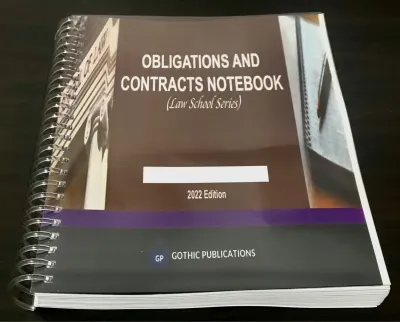
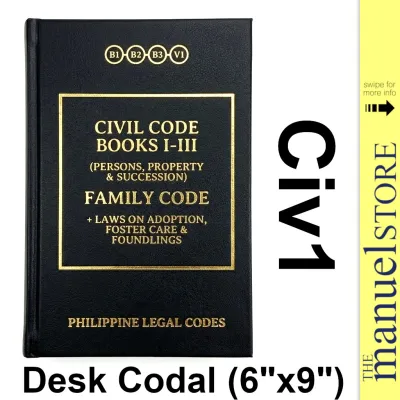
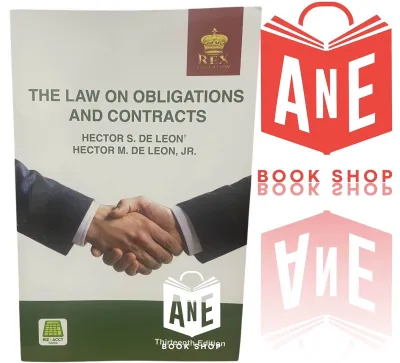
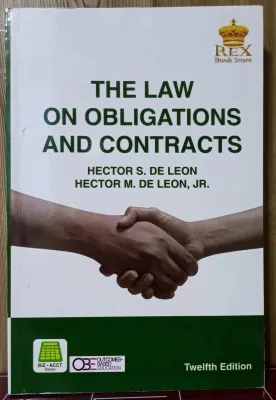
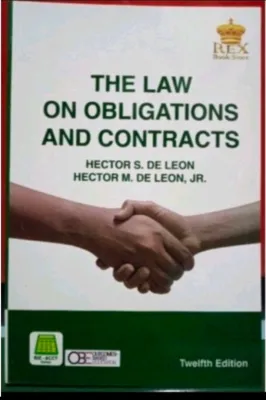
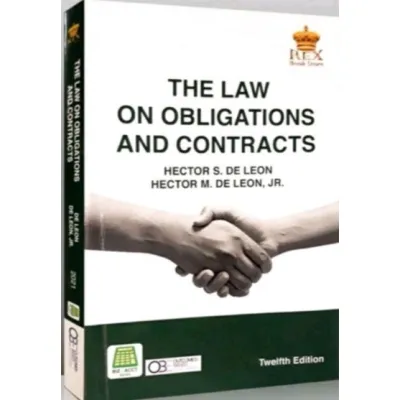
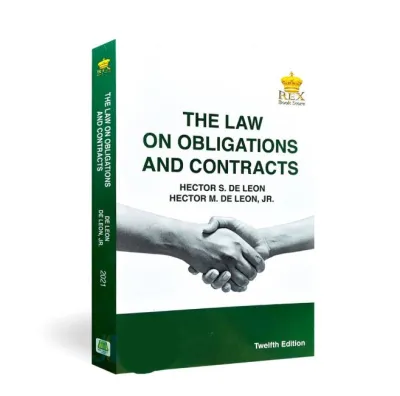
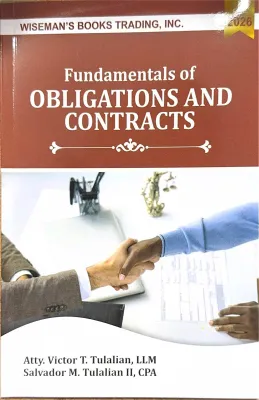
Prices are valid at publication and may change. Please refer to the product page for the latest price.
Young entrepreneurs and business professionals require an entirely different approach. You do not need to memorize Latin legal terms or study obscure historical cases. Instead, your goal is practical application. You need to know how to draft a valid lease agreement, how to protect your intellectual property through non-disclosure agreements, and what steps to take if a supplier fails to deliver on time. For you, the best book is one that translates complex legal jargon into plain, actionable business advice, helping you mitigate risk while keeping your operations running smoothly.
Establishing this baseline early prevents you from buying a book that is either too dense to be useful or too superficial to meet your academic requirements. Aligning your reading material with your current timeline ensures that every hour spent reading directly contributes to your success, whether that means earning a passing grade, passing the bar, or protecting your business assets.
Key Criteria for Evaluating an Obligation and Contract Book
Once you have defined your goal, you need a reliable framework to evaluate potential books. The first criterion to consider is the author’s credentials and professional background. An author who is a seasoned law professor or a former bar examiner will write a book tailored to academic success, focusing on theoretical depth and exam-taking strategies. Conversely, a book written by an active corporate lawyer or business consultant will emphasize practical risk management, commercial clauses, and real-world dispute resolution.

The second critical factor is the currency of the jurisprudence updates. While the core provisions of the Civil Code remain stable, the Supreme Court of the Philippines issues new rulings regularly that clarify, expand, or modify how these laws are applied. A book published a decade ago may contain outdated interpretations of contract validity or breach remedies. Always check the publication year and look for editions that explicitly state they include recent landmark decisions and legislative amendments.
Finally, assess the book’s overall readability and structural design. Legal texts are notoriously dense, but a well-designed book uses formatting to aid comprehension. Look for features like clear section headings, bulleted lists, comparative tables, and case digests that summarize long court rulings. If you are a visual learner, books that incorporate flowcharts to illustrate the life cycle of an obligation or the steps of contract formation will be incredibly valuable. A book with a comprehensive index and clear cross-references will also save you countless hours when you need to verify a specific rule quickly.
Which Book Category Fits Your Needs?
The market for legal and business literature in the Philippines generally falls into three distinct categories. Each category serves a specific audience, offering unique trade-offs between comprehensive academic depth and concise, practical utility. Understanding these categories will help you narrow down your choices and select the perfect resource for your needs.
Comprehensive Treatises for Law Students
Comprehensive treatises are the gold standard for formal legal education. These single-volume or multi-volume textbooks provide an exhaustive analysis of every single article under Book IV of the Civil Code. They trace the historical development of legal concepts, compare Philippine laws with foreign jurisdictions, and offer extensive commentary on academic debates.
For law students, these texts are absolutely indispensable. Philippine law schools heavily utilize the Socratic method, where professors ask detailed questions about specific legal principles and court cases. To survive these intense recitations, you must understand not just what the law says, but why it says it. A comprehensive treatise provides the deep context necessary to answer follow-up questions and demonstrate a thorough grasp of the material.
However, these books come with significant limitations for non-lawyers. Their dense formatting, heavy use of legal terminology, and hundreds of pages of case citations can make them incredibly difficult to navigate. For a busy entrepreneur or a student in a non-law discipline, the sheer volume of information can be overwhelming and highly inefficient for quick reference.
Condensed Reviewers for Bar Examinees
Condensed reviewers are designed specifically for efficiency and rapid revision. These books strip away the historical background, academic discussions, and lengthy case details found in comprehensive treatises. Instead, they focus entirely on black-letter law, presenting the essential rules and principles in a highly streamlined format.
These reviewers frequently employ mnemonic devices, bulleted summaries, and comparative tables to help readers memorize key concepts quickly. They highlight high-yield topics that are frequently tested on the bar exam, such as the differences between various types of defective contracts or the specific grounds for claiming damages. They also include brief summaries of recent landmark Supreme Court cases to ensure examinees are up to date.
While these books are incredibly effective for exam preparation, they should never be used as a primary learning tool. Reviewers assume you already have a foundational understanding of the law. If you attempt to memorize the rules without understanding the underlying principles, you will struggle to apply them to complex, real-world scenarios or novel exam questions.
Practical Guides for Young Entrepreneurs
Practical guides are written specifically for business owners, freelancers, and young professionals who need to navigate contracts without a law degree. These books bypass complex legal theory and focus entirely on the practical aspects of commercial transactions. They explain contract formation, performance, and breach in plain, everyday language.
A high-quality business guide will focus on the types of agreements you are most likely to encounter, such as service agreements, employment contracts, non-disclosure agreements, and commercial leases. They often include practical templates, step-by-step drafting checklists, and real-world business scenarios to illustrate how legal principles apply in daily operations. This hands-on approach helps you understand your rights and obligations without getting lost in academic jargon.
Crucially, these guides also teach you the limits of your own legal knowledge. They emphasize the importance of knowing when a contract is simple enough to handle internally using standard templates, and when a transaction is complex or high-stakes enough to require professional legal counsel. This balance protects your business from costly legal pitfalls while keeping administrative costs manageable.
Pre-Purchase Checklist: Editions, Formats, and Updates
Before finalizing your purchase and spending your hard-earned ₱, there are several practical factors to consider to ensure you get the most value from your book. First, always verify the exact edition and publication year. Using an outdated edition can be a costly mistake, as you might miss critical statutory updates or recent Supreme Court doctrines that change how contracts are interpreted in the Philippines.
Next, weigh the pros and cons of physical versus digital formats. In the tropical climate of the Philippines, physical books require careful maintenance. High humidity can cause pages to warp, yellow, or develop mold over time, meaning you will need to store them in well-ventilated areas or dry spaces. However, physical books offer a tactile experience that many find superior for deep, focused study, allowing you to easily flip between pages, write margin notes, and build spatial memory of the text.
Digital formats, such as e-books, offer unmatched portability and convenience. You can carry an entire legal library on a single tablet, and the ability to perform instant keyword searches is incredibly useful when you need to find a specific Civil Code article during a meeting or study session. The downside is the potential for screen fatigue during long reading sessions and the limitations some platforms place on highlighting and annotation.
Finally, check if the book comes with any bundled supplementary materials. Some publishers offer online access codes that grant access to digital updates, downloadable contract templates, or updated case digests. These extras can significantly enhance the book’s value, providing you with practical tools that you can use directly in your studies or business operations.
Frequently Asked Questions (FAQ)
Can I use a business contract guide instead of a law textbook for my startup?
Yes, a practical business contract guide is highly suitable for the daily operations of a startup. These guides are designed to help you understand standard commercial terms, draft basic agreements, and manage routine transactions without getting bogged down in dense legal theory. However, they are not a substitute for a comprehensive law textbook or professional legal counsel when dealing with complex, high-stakes negotiations, custom joint ventures, or formal dispute resolutions. For major business milestones, always consult a qualified lawyer.
How often should I replace my obligation and contract book?
You should consider replacing your book whenever there are major legislative amendments or landmark Supreme Court decisions that significantly alter how obligations and contracts are interpreted. For academic purposes, such as law school or bar exam preparation, it is best to consult your current course syllabus or the latest bar exam bulletin. If your current edition is more than three to five years old, it may be time to upgrade to ensure you are studying the most current jurisprudence.
Are digital versions of legal textbooks as effective as physical copies?
Digital versions are highly effective for quick reference, portability, and instant keyword searching, making them excellent tools for busy professionals and students on the go. However, for deep, sustained study and memorization, physical books are often superior. They reduce eye strain, eliminate digital distractions, and support spatial memory, allowing you to remember where a specific rule or case was located on a physical page. Many readers also find that physical books allow for more intuitive and unrestricted margin annotation.

Community discussion
Share your experience or ask a question. Comments are reviewed before publication.