
Finding the right keyboard stand is a balancing act between two entirely different environments: the stationary comfort of your home and the fast-paced, unpredictable nature of live performance venues. If you primarily play at home, your stand must support long hours of practice with excellent ergonomics, generous legroom, and rock-solid stability. On the stage, those priorities shift dramatically toward rapid assembly, lightweight portability, and the ability to withstand uneven floors and sudden physical bumps. Choosing the wrong support can lead to physical discomfort during practice or, worse, a catastrophic gear failure mid-performance.
Identifying Core Needs for Home Practice Stands
A stationary home setup allows you to prioritize structural integrity and playing comfort over portability. Because you rarely need to pack up your gear, you can opt for heavier, more robust stand designs that mimic the solid feel of an acoustic piano. When selecting a stand for home use, your first step is to verify the manufacturer’s rated weight capacity against the exact weight of your digital piano or keyboard. Heavy 88-key weighted action keyboards require a foundation that will not wobble or sag under aggressive playing, especially during expressive classical or jazz practice sessions.
Ergonomic adjustability is another critical factor for home practice, where you might spend hours refining your technique. A stand that does not adjust to the correct height can cause wrist fatigue, shoulder tension, and long-term back strain. Look for stands that offer fine-tuned height adjustments so your forearms remain parallel to the floor while playing. If multiple family members share the instrument, the adjustment mechanism should be straightforward to operate, allowing quick transitions between seated children and standing adults.
Products mentioned in this guide
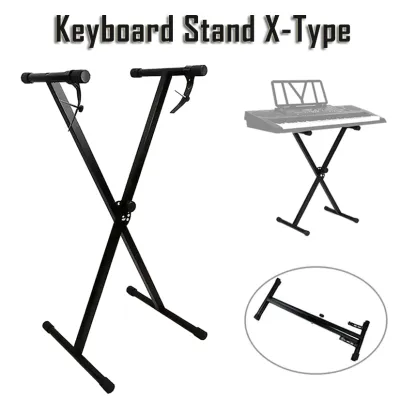
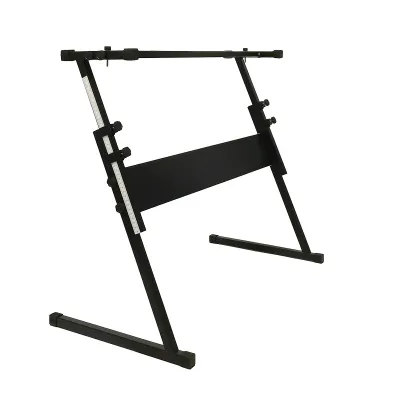
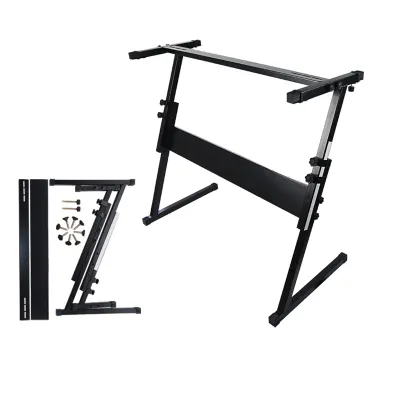
Prices are valid at publication and may change. Please refer to the product page for the latest price.
Finally, consider how the stand integrates into your living space. In a typical home or apartment, floor space is at a premium, and aesthetics matter. You need a stand that leaves plenty of open space underneath for your knees and feet, allowing you to position sustain and expression pedals naturally. If you use studio monitors, sheet music holders, or secondary MIDI controllers, you may also want to look for stands that support modular add-ons without cluttering your room or blocking walkways.
Selecting Essential Features for Live Gig Stands
When you take your music on the road, your keyboard stand must transition from a piece of furniture into a highly mobile, rugged tool. Portability and weight are the primary concerns for gigging musicians who must transport their gear in car trunks, public transport, or local utility vehicles. A great gigging stand folds down into a compact, flat profile that is easy to carry with one hand. However, you must carefully assess the trade-off between physical weight and structural rigidity; a stand that is too light may sway excessively under the energy of a live performance.

Time is of the essence during soundchecks and post-show load-outs. Under the pressure of tight stage schedules, you cannot afford to struggle with complex assembly or loose screws. Look for stands featuring tool-free adjustments, spring-loaded quick-release pins, and intuitive folding mechanisms that let you set up or tear down in under a minute. Avoid stands with numerous small, detachable parts that can easily get lost in dark backstage areas or transport vehicles.
Stage resilience is the final pillar of a reliable gigging stand. Live venues often present challenging environments, from uneven wooden stages to humid outdoor setups where moisture can make surfaces slick. Your stand must feature heavy-duty, non-slip rubber feet that grip the floor securely, even when subjected to stage vibrations from bass amps and drums. High-visibility adjustment markers or locking pins are also incredibly helpful when you need to make quick height adjustments in low-light stage environments.
Comparing Common Keyboard Stand Types by Scenario
Understanding the structural differences between common stand designs is key to matching the right model to your primary playing environment.
X-Brace Stands: These are the most common and affordable stands on the market, characterized by their simple crossing frame. Single-braced versions are highly portable but best suited for lightweight keyboards. Double-braced X-stands offer significantly more stability and are a staple for live gigs due to their quick folding design. However, their primary drawback is the lack of legroom; the crossing bars block your knees, making them uncomfortable for extended seated practice at home.
Z-Stands: Named for their Z-shaped side profiles, these stands offer exceptional stability and completely open legroom, making them highly recommended for home studios. They easily accommodate pedals and allow you to sit comfortably for hours. While some modern Z-stands feature folding joints for transport, they are generally heavier, bulkier, and take longer to assemble than X-stands, making them less convenient for frequent gigging.
A-Frame and Table Stands: Table-style stands resemble a four-legged table and provide a highly stable, wide platform with maximum weight capacity. A-frame stands utilize a wide triangular structure, often supporting multiple tiers for synthesizers and workstations. Both types are excellent for stationary home or studio use because they handle heavy loads without wobbling. However, their large physical footprint and cumbersome assembly make them impractical for fast-paced live gigs.
Column Stands: Featuring a central vertical column with protruding arms, column stands offer a sleek, modern aesthetic that looks fantastic on stage. They provide excellent audience visibility and often support two keyboards. However, because they rely on a single central column, they have a higher center of gravity. You must carefully verify the manufacturer’s weight limits and ensure the base footprint is wide enough to prevent tipping on active stages.
Evaluating Cross-Scenario Compatibility
If your budget or storage space is limited, you might wonder if a single keyboard stand can successfully serve both home practice and live gigs. While a dual-use setup is entirely possible, it requires a careful balance of compromises. For instance, a heavy-duty, double-braced X-stand can transition from home to stage easily, but you will have to tolerate restricted legroom during your daily practice sessions. Alternatively, a folding Z-stand offers great home ergonomics but will require more effort and trunk space to transport to every gig.
The feasibility of a single-stand solution largely depends on your instrument’s weight and your gigging frequency. If you play a lightweight 61-key keyboard and gig only once a month, a versatile, lightweight stand is a highly practical choice. However, if you perform multiple times a week with a heavy, 88-key digital piano, the constant packing, unpacking, and transport will quickly wear down a lightweight stand’s joints, while a heavy-duty stand will exhaust you during transport.
For active musicians, investing in two dedicated stands is often the safest and most comfortable approach. Keeping a sturdy Z-stand or table stand permanently set up at home ensures your practice space is always ready and ergonomically optimized. Meanwhile, keeping a lightweight, rapid-setup double-braced X-stand or column stand packed in your gig bag saves valuable time and physical energy, protecting your premium home setup from the inevitable wear and tear of the road.
Performing Safety and Setup Checks
Regardless of the stand you choose, establishing consistent safety protocols protects both your physical health and your valuable musical equipment. Always cross-reference your keyboard’s actual weight with the stand manufacturer’s official load capacity. Never rely on visual estimation; a stand that looks sturdy may have internal joints or pins rated for far less weight than your digital piano.
Before placing your instrument on the stand, perform a physical inspection of all locking mechanisms. Ensure that spring-loaded pins are fully engaged in their slots and that hand knobs are tightened securely. In tropical climates like the Philippines, high humidity can cause metal threads to corrode or rubber grips to degrade over time. Regularly check these components for signs of wear, rust, or slippage to prevent sudden collapses.
Proper cable management is another essential safety step for both home and stage. Route your power adapters, sustain pedal cables, and audio lines cleanly along the stand’s frame, securing them with reusable cable ties. This prevents tripping hazards for you and your bandmates on dark stages and keeps cables from tangling with your feet or pets during home practice sessions.
Frequently Asked Questions (FAQ)
How do I measure the correct height for my keyboard stand?
To find your ideal playing height, sit or stand at your instrument with your shoulders relaxed and your upper arms hanging naturally. Bend your elbows so your forearms are parallel to the floor, or angled slightly downward toward the keys. Measure the distance from the floor to the underside of your elbows. When adjusting your stand, remember to subtract the physical thickness of your keyboard—from its base to the top of the white keys—from this measurement to ensure your hands rest at the perfect ergonomic level.
Are double-braced X-stands safe for heavy digital pianos?
Double-braced X-stands are significantly safer and more rigid than single-braced models, but they still carry inherent design limitations. The X-shape naturally raises the center of gravity, making the setup more prone to tipping sideways if bumped. If you plan to use a double-braced X-stand for a heavy 88-key digital piano, you must strictly adhere to the manufacturer’s specified weight limits. For maximum safety with heavy instruments, especially in active environments, a Z-stand or table stand remains the more stable choice.

Community discussion
Share your experience or ask a question. Comments are reviewed before publication.