
Choosing the right King James Version (KJV) Bible for your daily devotional practice requires balancing your personal spiritual goals with the physical and typographical characteristics of the book. Because the KJV has been printed in countless formats since its landmark 1769 standardization, finding the ideal copy involves looking beyond the cover design. You must evaluate how you intend to interact with the text—whether through quiet, continuous reading, active note-taking, or deep cross-referential study—and match those habits to specific physical specifications that can withstand daily use.
By taking the time to understand the differences in layouts, paper quality, and bindings, you can select an edition that not only enhances your daily quiet time but also serves as a durable companion for years to come. This guide will help you navigate the key decisions involved in selecting the perfect English KJV Bible for your spiritual journey.
Understanding Your Devotional Goals and Reading Habits
Before exploring the vast array of available KJV editions, it is essential to clarify how you plan to use your Bible during your daily devotions. A reader who prefers to sit at a desk with a notebook and multiple commentary volumes will have very different requirements from someone who reads during a daily commute or slips a compact volume into a bag for lunchtime reflection. Identifying your primary reading environment is the first step toward narrowing down your choices.
Products mentioned in this guide
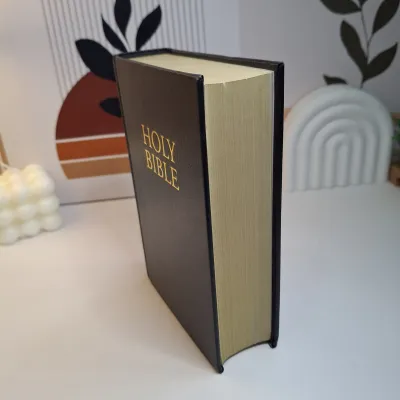
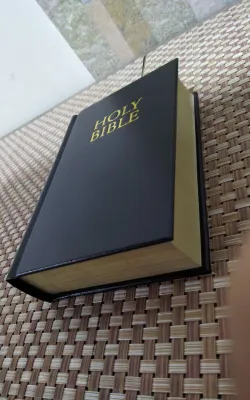
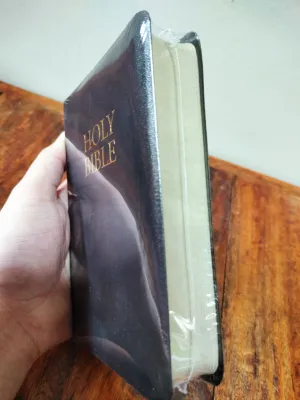

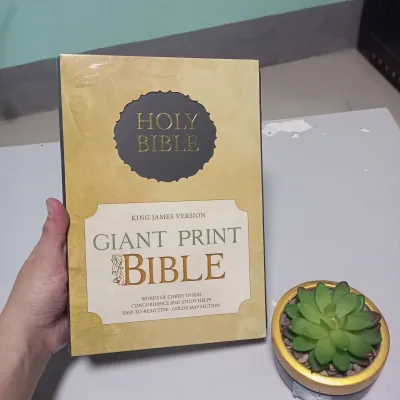
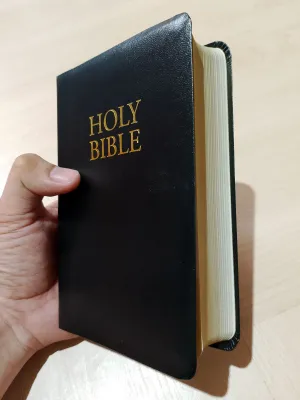
Prices are valid at publication and may change. Please refer to the product page for the latest price.
If your devotional practice centers on uninterrupted, meditative reading, you may want to prioritize a clean, uncluttered layout. Some readers find that extensive study notes, cross-reference chains, and concordance indexes distract from the poetic flow of the Elizabethan English. For these individuals, a text-only edition or a reader’s Bible—which often removes verse numbers and column dividers—allows for a more immersive experience of the scripture.
Conversely, if your spiritual growth relies on deep theological analysis and historical context, a pure text edition may feel insufficient. You might find yourself constantly pausing to look up archaic words or historical backgrounds on your phone, which can disrupt your focus. In this case, integrating study aids directly into your Bible layout becomes a necessity rather than a distraction.
Physical accessibility is another critical factor that directly influences your reading consistency. If you struggle with eye strain, especially during early morning or late-night reading sessions, a small font will quickly become a barrier to your daily practice. Similarly, if you enjoy writing down prayers, insights, or linguistic observations directly on the page, you must ensure the physical format provides the necessary space and paper quality to support writing.
Finally, consider the climate and environment in which you will use your Bible. In tropical regions like the Philippines, high humidity and ambient heat can take a toll on book materials. A Bible that travels with you in a backpack through humid commutes needs to be constructed differently from one that remains in an air-conditioned study. Balancing these environmental factors with your personal reading style will guide you toward the right physical format.
Matching KJV Bible Editions to Your Spiritual Needs
Study Bibles
Study Bibles are designed for readers who want an all-in-one resource for deep theological exploration. These editions surround the biblical text with explanatory notes, historical introductions for each book, detailed maps, and character profiles. They are invaluable for clarifying the meaning of archaic King James vocabulary and explaining the cultural context of ancient Israel and the early Church.

However, the wealth of information in a study Bible comes with significant physical trade-offs. These volumes are typically thick, heavy, and difficult to hold comfortably in one hand for extended periods. Additionally, the study notes reflect the specific theological perspectives of the editors or scholars who compiled them. Before purchasing, it is wise to research the editorial background of the study Bible to ensure its commentary aligns with your personal learning goals and denominational traditions.
Reference Bibles
Reference Bibles offer an excellent middle ground for readers who want to explore the interconnectedness of scripture without the bulk of full commentary notes. These editions feature cross-references, usually arranged in a center column or along the margins, which point you to related verses throughout the Old and New Testaments. This layout allows you to trace themes, prophecies, and theological concepts across different books at your own pace.
Because they lack extensive explanatory footnotes, reference Bibles are generally slimmer and lighter than study Bibles. They often include a concordance at the back, which serves as a mini-dictionary and index for locating specific words. This format is ideal for thematic devotions, allowing the scripture to interpret itself through comparison.
Large Print and Giant Print Editions
Visual comfort is paramount for maintaining a consistent daily reading habit. Large print and giant print editions are specifically designed to reduce eye strain and make the text highly readable in various lighting conditions. These editions are particularly beneficial for older readers, those with visual impairments, or anyone who enjoys reading by soft bedside light.
When shopping for these editions, it is important to look for the actual font point size listed in the product specifications rather than relying on marketing labels. What one publisher calls “large print” might be a 10-point font, while another’s “giant print” could be 14-point or larger. Keep in mind that larger text naturally increases the overall dimensions and weight of the book, so you will need to balance readability with portability.
Paperback and Thinline Editions
If your devotional practice is highly mobile, a thinline or paperback KJV Bible is worth considering. Thinline editions are engineered to be exceptionally slim, often measuring less than an inch in thickness. This makes them incredibly easy to slip into a tote bag, briefcase, or backpack, ensuring you always have your scriptures close at hand during travel or daily errands.
The primary compromise with thinline and paperback editions lies in durability and paper quality. To achieve a slim profile, publishers must use very thin paper, which can result in significant text ghosting. Paperback covers are highly affordable, often costing under ₱500, but they will show wear quickly, with corners curling and spines creasing under daily use. They are best suited as secondary, highly portable copies rather than primary lifetime study volumes.
Hardcover and Premium Leather
For a primary devotional Bible intended for decades of daily use, investing in a high-quality hardcover or premium leather edition is highly recommended. Hardcover Bibles provide excellent structural support, protecting the pages from bending and allowing the book to stand upright on a shelf. They offer a stable, durable option at a moderate price point.
Premium leather covers, such as genuine calfskin or goatskin, represent the pinnacle of durability and tactile comfort. Unlike synthetic materials or bonded leather—which is made from glued leather scraps and tends to crack and peel in warm, humid climates—high-grade natural leather becomes softer and more supple over time. These premium editions are often designed to be family heirlooms, built with superior craftsmanship that can be passed down through generations.
Key Specifications to Check Before Buying
Typography and Layout
When evaluating a KJV Bible online or in-store, pay close attention to the typographical layout. Look for editions that feature “line-matching,” a printing technique where the lines of text on the front of a page align perfectly with the lines on the back. This alignment significantly reduces the distracting shadow or “ghosting” of text showing through from the other side, making the page look much cleaner and easier to read.
Another layout choice is the distinction between red-letter and black-letter editions. Red-letter editions print the spoken words of Jesus Christ in red ink. While many readers appreciate this visual emphasis, others find that low-quality red ink can be difficult to read under dim light or can vary in consistency throughout the book. If you prefer a uniform, classic look, a traditional black-letter edition may be the more reliable choice.
Paper Quality and Opacity
The quality of the paper used in a Bible affects both the reading experience and how you can interact with the text. Bible paper is traditionally thin to keep the book manageable in size, but thinness should not mean poor quality. Look for specifications that mention high opacity and a smooth texture. Higher opacity prevents the text on the reverse side of the page from distracting your eyes while reading.
If you plan to use highlighters, gel pens, or pencils to mark meaningful passages or write prayers, paper quality becomes even more critical. Standard, low-cost Bible paper will easily bleed or tear under the pressure of a pen. For active journaling, seek out editions specifically designated as “Journaling Bibles,” which utilize thicker, coated paper designed to handle writing inks without bleeding through to the next page.
Binding and Margins
How a Bible is bound determines how easy it is to use and how long it will last. Avoid glued bindings, where the pages are simply cut and glued directly to the spine. Glued bindings stiffen over time, making it difficult for the Bible to stay open on a flat surface, and the pages are prone to falling out as the glue degrades in warm, humid weather.
Instead, look for a Smyth-sewn (also called section-sewn) binding. In a Smyth-sewn Bible, the pages are folded into sections called signatures and physically sewn together with thread before being attached to the spine. This method allows the Bible to lay completely flat on a desk or your lap from the very first page of Genesis to the last page of Revelation, preventing spine damage and ensuring maximum durability.
Additionally, check the margin width. If you like to write personal notes, cross-references, or dates next to specific verses, standard margins will quickly feel cramped. Wide-margin editions provide an inch or more of blank space on the outer edges of the page, giving you ample room to document your spiritual insights without crowding the biblical text.
Textual Editions
While the King James Version is a historic translation, not all KJV Bibles contain the exact same supplementary text. Most modern printings use the 1769 standard text edited by Benjamin Blayney for the Oxford University Press, which modernized the spelling and punctuation of the original 1611 translation. However, some specialized publishers offer editions that retain the original 1611 spelling, which can be challenging for daily devotional reading due to archaic typography.
Furthermore, you should verify whether the edition includes the Apocrypha or any specific historical prefaces, such as the original translators’ preface, “The Translators to the Reader.” Depending on your personal study goals or denominational background, these historical texts can provide valuable context, but they will also add to the physical thickness of the volume.
Where to Buy and How to Verify Authenticity
When purchasing a KJV Bible in the Philippines, choosing the right retail channel is key to ensuring you receive a genuine, high-quality product. Local Christian bookstores are excellent options because they allow you to physically handle the Bibles before buying. You can feel the weight, test how flat the book lays when opened, inspect the font size under natural light, and examine the quality of the cover material.
If you prefer the convenience of online shopping, established online book distributors and official publisher stores are generally safer than unverified third-party sellers on general e-commerce platforms. When browsing online marketplaces, look for listings that clearly state the publisher (such as Cambridge, Oxford, Thomas Nelson, or Holman), the ISBN, the binding type, and the specific cover material. Avoid vague listings that use generic titles without providing technical specifications.
Before finalizing your online purchase, read customer reviews carefully. Look for reviews that focus on the physical construction of the book rather than the spiritual content. Pay attention to comments regarding the thinness of the paper, the accuracy of the product description, and whether the cover material matches what was advertised. Reviews with photos can be incredibly helpful for assessing the actual font size and layout.
Once your Bible is delivered, perform a thorough physical inspection before accepting the order or discarding the packaging. Open the book to the middle and look closely at the spine to verify if the pages are sewn in sections or simply glued. Flip through the pages to check for any printing defects, such as smeared ink, blank pages, or misaligned text columns. Taking these steps ensures that your investment in a daily devotional Bible is protected and that you receive a volume built to support your spiritual practice for years to come.
Frequently Asked Questions (FAQ)
What is the difference between a standard KJV and a Study Bible?
A standard KJV Bible focuses almost exclusively on the biblical text itself, occasionally accompanied by basic cross-references or a brief concordance. This clean layout is designed for straightforward, meditative reading without external commentary. A KJV Study Bible, on the other hand, includes extensive supplementary materials on every page, such as explanatory footnotes, historical introductions, theological essays, and detailed maps. While study Bibles provide deep educational context, they are significantly heavier, bulkier, and contain interpretive notes that reflect the specific theological views of their editors.
Does the publisher matter when choosing a KJV Bible?
Yes, the publisher matters significantly when choosing a KJV Bible. While the core 1769 King James text remains highly consistent across different brands, publishers differ greatly in their craftsmanship, design choices, and materials. Different publishers use unique font styles, page layouts, paper weights, and binding methods. Furthermore, the theological stance of the study notes in a Study Bible is determined entirely by the publisher and their editorial team. Choosing a reputable publisher known for high-quality printing and durable Smyth-sewn bindings ensures your Bible will withstand daily use.

Community discussion
Share your experience or ask a question. Comments are reviewed before publication.