
Choosing the right translation of Marcus Aurelius’ Meditations is the most important decision you will make before starting your Stoic journey. Because these writings were never intended for publication—they were the private, daily journal entries of a Roman emperor practicing self-discipline—the translator’s voice heavily shapes how easily you can apply these ancient lessons to your modern life. For readers in the Philippines seeking personal growth, the ideal edition must bridge the gap between ancient Roman philosophy and the practical realities of navigating a fast-paced, often stressful modern environment.
Whether you are reading during a long, humid commute in transit, finding a quiet moment in a local coffee shop, or reflecting at home on a rainy afternoon, the language needs to resonate immediately. A translation that is too academic or archaic can turn a daily reflection routine into a tedious chore, while a translation that is too loose might lose the philosophical precision of the original text. By understanding the distinct styles of the most widely available English translations, you can select an edition that feels like a personal mentor guiding you through life’s daily challenges.
Meet the Most Popular English Translations
To find the right marcus aurelius book for your shelf, it helps to understand the four most prominent English translations available in bookstores and online platforms today. Each translator approaches Marcus Aurelius’ original Koine Greek with a different philosophy, resulting in vastly different reading experiences.
Products mentioned in this guide
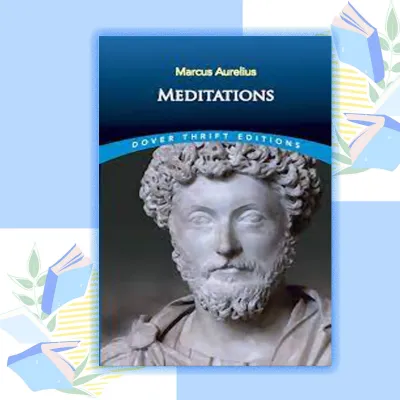


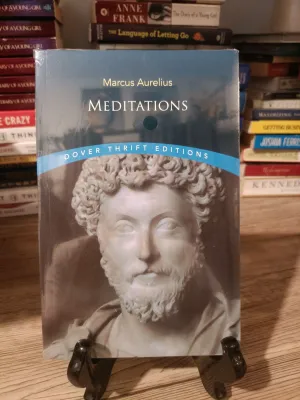
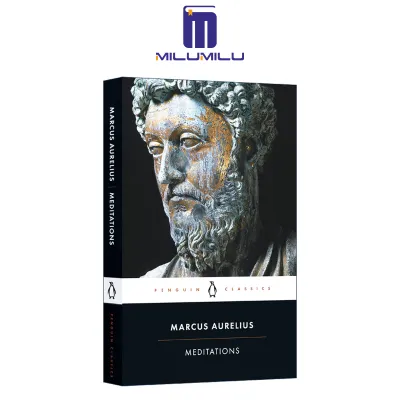
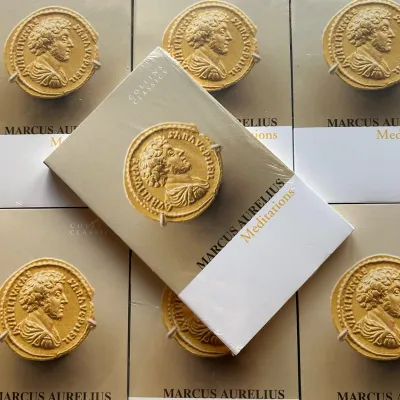
Prices are valid at publication and may change. Please refer to the product page for the latest price.
Gregory Hays’ 2002 translation, published by Modern Library, is widely considered the most accessible version for modern readers. Hays strips away the formal, Victorian language of older translations, opting instead for a direct, spare, and conversational style. His translation reads like a series of sharp, modern journal entries, making it incredibly popular for daily reflection, journaling prompts, and self-improvement.
In contrast, George Long’s 1862 translation represents the classic, traditional approach. As a 19th-century scholar, Long translated the text into Victorian English, utilizing formal sentence structures and archaic pronouns like “thee” and “thou.” While academically significant and historically respected, this version can feel dense and slow to read, often requiring you to re-read passages multiple times to grasp the practical advice.
Martin Hammond’s 2006 translation for Penguin Classics offers an excellent middle ground. Hammond maintains a formal, dignified tone that respects the imperial stature of the author, yet he uses clear, modern prose that avoids archaic phrasing. It feels literary and structured, providing a smooth reading experience without sacrificing the philosophical weight of the original thoughts.
Robin Waterfield’s 2012 translation, published by Oxford World’s Classics, is highly regarded for its scholarly depth. Waterfield focuses on precision and provides extensive annotations, footnotes, and historical context. This edition is ideal for readers who want to understand not just what Marcus Aurelius wrote, but the specific historical events, military campaigns, and personal losses that influenced his daily reflections.
How to Evaluate Translations for Personal Growth
When selecting a translation specifically for self-help and personal development, your primary goal is to find an edition that integrates seamlessly into your daily routine. The first factor to evaluate is the language style and readability. If you plan to read a few passages every morning before starting a busy day, a conversational translation like Hays’ allows you to absorb the core message quickly and apply it to your immediate tasks without getting bogged down by complex syntax.

The presence of comprehensive introductions and contextual essays is another crucial element. Stoicism is frequently misunderstood as a philosophy of suppressing all emotion, which can lead to unhealthy habits if practiced incorrectly. A well-written introduction frames Marcus Aurelius’ life, his struggles with chronic illness and political betrayal, and the core tenets of Stoicism, helping you interpret his words with the proper psychological context.
You should also consider how footnotes and annotations affect your reading flow. For personal growth, minimal interruptions are often preferred so you can maintain a reflective, meditative state. However, if you enjoy diving deep into the philosophical definitions of Greek terms like hegemonikon (the ruling center of the mind) or apatheia (freedom from destructive passions), an annotated edition like Waterfield’s will enrich your understanding.
Finally, do not overlook the physical format and portability of the book. In the tropical climate of the Philippines, high humidity can cause cheap paperbacks with low-grade paper to warp, yellow, or develop mold over time. If you plan to carry your book in a backpack or tote bag during daily travel, look for a compact, durable paperback with high-quality binding, or consider a sturdy hardcover edition that can sit permanently on your desk as a dedicated journaling companion.
Which Translation Fits Your Reading Goals?
Your choice should ultimately align with your personal reading habits and what you hope to gain from the text. If your primary goal is practical self-improvement, emotional resilience, and daily journaling, the Gregory Hays translation is highly recommended. The directness of his prose makes the emperor’s advice feel incredibly modern, as if a contemporary mentor is speaking directly to your current anxieties and struggles.
If you prefer a balance of literary beauty and historical context, the Martin Hammond or Robin Waterfield editions are excellent choices. These translations preserve the philosophical nuances of the original Greek while remaining highly readable, making them perfect for those who want to study Stoicism more deeply without feeling overwhelmed by archaic language.
If you are on a strict budget, the George Long translation is often the most accessible, as it is in the public domain and frequently available in very inexpensive editions or free digital formats. However, you should only choose this version if you are comfortable navigating complex, Victorian sentence structures and do not mind a slower reading pace.
Before making your final decision, always verify that the edition you are purchasing includes the complete 12 books of the Meditations. Some budget or mass-market editions may be abridged, omitting crucial passages or the entire first book, which contains Marcus’s expressions of gratitude toward his teachers, family, and friends—a section that sets a vital tone for the rest of his philosophical practice.
What to Verify Before You Buy
With many different editions of the marcus aurelius book available on the market, taking a few moments to verify the details of your purchase will ensure you receive a high-quality copy. First, check the publisher and the publication date listed on the product page. Online marketplaces are often flooded with low-cost, print-on-demand editions created by automated systems that copy public-domain translations (usually George Long’s) and print them with poor formatting, tiny fonts, and numerous typographical errors. Stick to established publishers like Penguin Classics, Oxford World’s Classics, or Modern Library to guarantee a professionally edited text.
Next, confirm the medium and device compatibility if you are purchasing a digital version. If you prefer reading on an e-reader, ensure the file format is optimized for your specific device so that footnotes and chapter breaks render correctly. For those who prefer audiobooks, listen to a sample first to ensure the narrator’s tone and pacing match your reflective preferences, as a poorly narrated philosophical text can be difficult to follow.
It is also wise to compare current prices in Philippine Pesos (₱) across reputable physical bookstores and authorized online distributors. A standard, high-quality paperback edition from a major publisher typically ranges from ₱400 to ₱800, while premium hardcovers or heavily annotated editions may cost more. Be cautious of listings priced significantly lower than this range (such as under ₱150) on online marketplaces, as these are often unauthorized, low-quality physical reprints with thin paper that easily warps in humid conditions.
Frequently Asked Questions (FAQ)
Do I need to read the original Greek to understand Stoicism?
No, you do not need to read the original Koine Greek to fully understand and apply Stoic philosophy to your life. Reputable modern English translations are highly accurate and successfully convey the practical psychological tools, ethical frameworks, and daily exercises that Marcus Aurelius practiced. While academic researchers study the original Greek to analyze specific linguistic nuances, a well-translated English edition is more than sufficient for personal growth, self-reflection, and daily mental training.
Are audiobook versions effective for personal growth?
Audiobook versions can be highly effective for absorbing Stoic concepts passively, especially during daily routines like exercising, doing household chores, or navigating long commutes. Listening to the calm, reflective passages of the Meditations can help ground your mind during stressful moments. However, for deep personal growth, physical books or e-books are often superior because they allow you to easily pause, highlight key passages, re-read complex ideas, and take written notes in a journal, which is essential for active philosophical practice.

Community discussion
Share your experience or ask a question. Comments are reviewed before publication.