
Selecting the right piano keyboard for a seven-year-old beginner requires balancing developmental needs, budget, and long-term musical goals. At this age, a child’s hands are still growing, and their attention span is developing. The ideal instrument should provide a solid technical foundation without causing physical strain. By prioritizing standard key dimensions and a responsive action, you ensure that your child builds correct muscle memory from their very first practice session, making future transitions to acoustic pianos much smoother.
Key Size and Touch Sensitivity: Building Proper Technique
When shopping for a young beginner, the physical characteristics of the keys are the most critical factors. Many entry-level keyboards designed for children feature mini-keys or narrow key beds. While these might seem easier for small hands, they can hinder proper finger spacing and hand posture. Standard, full-sized keys are essential because they teach the child the correct physical distances between notes, preventing the development of bad habits that are difficult to correct later.
Touch sensitivity, also known as velocity sensitivity, is another indispensable feature. A touch-sensitive keyboard responds to how hard or soft a key is pressed, producing a louder or quieter sound accordingly. This feature is vital for teaching a seven-year-old dynamic control and musical expression. Without touch sensitivity, every key press sounds at the same volume, which can make practice feel mechanical and discourage expressive playing.
Products mentioned in this guide
![99.9 BUY MORE SAVE MORE Toys (32-Keys Electronic Keyboard Piano Set with Microphone) for Kids with Battery Included [TX6632A-D/Q-199/SD-333]](https://img.lazcdn.com/g/p/d47224e7251b13fc10c144760c1bfff3.jpg_400x400q80.jpg_.webp)
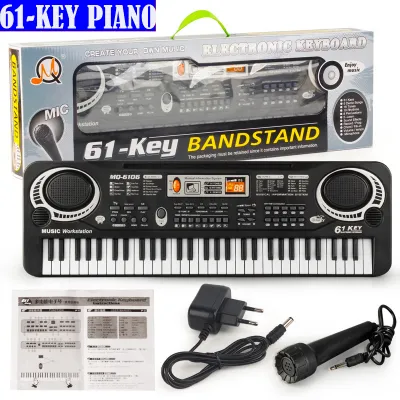
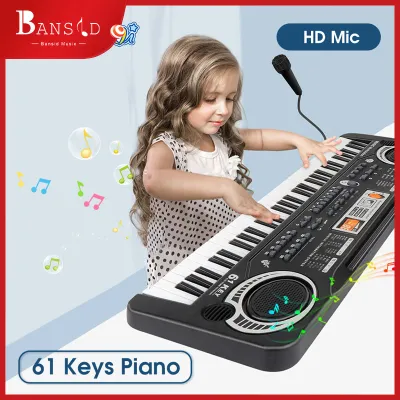
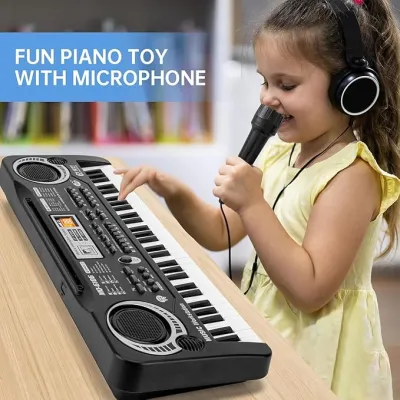
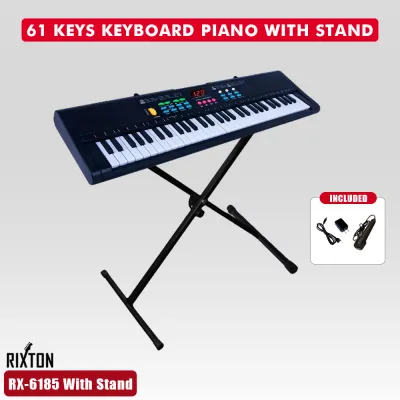
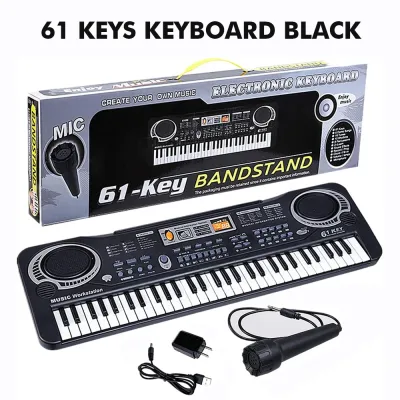
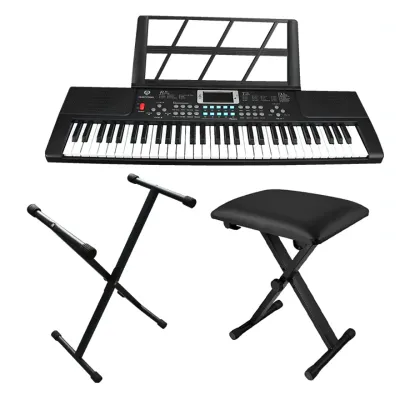
Prices are valid at publication and may change. Please refer to the product page for the latest price.
Key action—how keys feel when pressed—comes in three types: unweighted, semi-weighted, and fully weighted. Unweighted keys offer little resistance and are easy for small fingers, but they do not build finger strength. Semi-weighted keys use a spring mechanism to provide slight resistance, offering a practical middle ground for casual exploration. Fully weighted keys simulate the physical resistance of an acoustic piano’s hammers. If your child is enrolled in formal classical lessons, a fully weighted keyboard is highly recommended to build proper hand strength.
Key Count: 61 vs. 88 Keys for Beginners
The number of keys on a keyboard determines its range and physical size, which directly impacts portability and space requirements in your home. A standard acoustic piano has 88 keys, but beginners do not always need the full range immediately.

A 61-key keyboard is an excellent starting point for early exploration. These models cover five octaves, which is more than enough for the simple melodies, basic chords, and single-hand exercises found in introductory method books. They are lightweight, highly portable, and fit easily on a small desk or in a compact bedroom. For families testing the waters to see if a child’s interest in music will last, a 61-key model is a practical, space-saving choice.
For students committed to standard classical training and long-term progression, an 88-key digital piano is the gold standard. This full-size range ensures the student will never run out of keys as they progress to advanced two-handed classical pieces. While these instruments require more dedicated space and a larger initial investment, they eliminate the need to purchase an upgrade a few years down the line.
Some manufacturers offer 76-key models as a middle ground. While these provide a slightly wider range than a 61-key keyboard, they are still a compromise. They may handle intermediate pieces, but they will eventually limit a student who progresses to advanced classical literature.
Built-In Features: Helpful Tools vs. Distractions
Modern electronic keyboards come packed with digital features, but not all of them support effective learning. For a seven-year-old, too many sound effects, backing tracks, and flashing lights can easily turn a practice session into a playtime distraction. Identifying which features genuinely aid learning helps keep your child focused on developing their skills.
Essential practice tools include a built-in metronome, a basic recording function, and a headphone jack. A metronome is crucial for helping young students develop a steady sense of rhythm. A recording function allows children to record their playing and listen back, which is an excellent way for them to self-correct. A headphone jack is highly practical for quiet home practice, allowing your child to practice at any time of day without disturbing the rest of the household.
Connectivity options, such as USB or MIDI ports, add significant educational value. These ports allow the keyboard to connect to a tablet or computer, enabling the use of interactive music learning apps and games. These digital tools can make sight-reading and theory practice highly engaging. Before purchasing, always check the manufacturer’s specifications to ensure the keyboard’s interface is compatible with your family’s existing devices.
Some keyboards feature light-up keys that guide the player’s fingers. While these can make the initial introduction to the instrument fun, they should be used with caution. Relying too heavily on visual cues can prevent a child from learning to read sheet music. Similarly, extensive auto-accompaniment styles should be treated as occasional motivational rewards rather than a substitute for disciplined practice.
Pre-Purchase Checklist: Verifying Specs and Accessories
Before making a final decision, verify the technical specifications and physical setup of the keyboard to ensure a safe and comfortable learning environment. Marketing descriptions on online marketplaces can sometimes be misleading, making a careful double-check of the official manufacturer documentation essential.
First, verify the key dimensions and touch sensitivity claims directly on the manufacturer’s official specification sheet. Ensure the keys are explicitly listed as full-sized and touch-sensitive or velocity-sensitive rather than relying on vague promotional titles. While basic models can start around ₱5,000, verifying these specifications ensures you are paying for actual touch sensitivity rather than superficial digital effects.
Second, evaluate the physical setup and ergonomics. A seven-year-old is still growing, making an adjustable keyboard stand and an adjustable bench vital accessories. A sturdy double-X stand provides the stability needed to prevent the keyboard from tipping over. Adjust the bench height so that the child’s elbows are level with the keys and their forearms are parallel to the floor, which prevents wrist strain and promotes healthy posture.
Finally, confirm the warranty terms and the availability of local support. The tropical climate and high humidity in the Philippines can affect electronic instruments over time. Purchasing from an authorized dealer ensures you receive a valid local warranty and access to authorized service centers.
Frequently Asked Questions (FAQ)
Is a 61-key keyboard enough for a 7-year-old?
Yes, a 61-key keyboard is generally sufficient for a seven-year-old’s first year or two of lessons. This range easily accommodates basic note reading, single-hand melodies, and early two-handed chords found in beginner method books. However, as your child advances to intermediate classical pieces that require a wider range of octaves, you will eventually need to upgrade to an 88-key instrument.
Do beginners need weighted keys right away?
Beginners do not strictly need fully weighted keys immediately, but the choice depends on their learning goals. If your child is taking formal classical piano lessons with the intention of transitioning to an acoustic piano, starting with fully weighted keys is highly beneficial for building finger strength and proper technique. For casual playing, learning pop songs, or exploring electronic music, semi-weighted or unweighted keys are perfectly acceptable and offer a lighter, more budget-friendly starting point.

Community discussion
Share your experience or ask a question. Comments are reviewed before publication.