
To set a young beginner up for musical success, the ideal piano set must balance physical comfort, engaging learning tools, and structural durability. For a young girl starting her musical journey, the key features to prioritize are standard-sized keys to build proper finger mechanics, touch-sensitive keys to develop expression, and a sturdy, adjustable stand that accommodates her growing height. While colorful, toy-like designs might seem appealing, prioritizing a reliable instrument with standard finishes ensures the set remains useful as her skills mature.
Key Count and Key Size: Finding the Right Fit for Small Hands
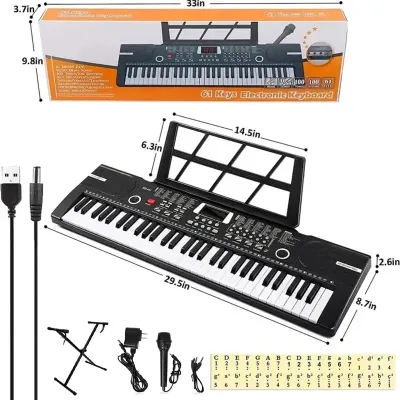
When shopping for a beginner keyboard, the physical dimensions of the keys are the most critical factor for long-term skill development. Many children’s toys feature mini-keys, which are narrower and shorter than standard piano keys. While these may seem easier for small hands initially, they can hinder progress. Training on mini-keys prevents a child from developing the muscle memory and spatial awareness needed to transition to a standard acoustic piano later on.
The number of keys on the instrument also dictates what kind of music she can play. A 61-key keyboard is an excellent starting point for casual exploration, playing simple melodies, and learning basic pop songs. It is lightweight, compact, and fits easily into smaller bedrooms. However, if she is embarking on formal classical training, a 76-key or 88-key digital piano is highly recommended. Classical pieces quickly expand beyond a five-octave range, making a full-sized keyboard necessary for advanced lessons.
Products mentioned in this guide
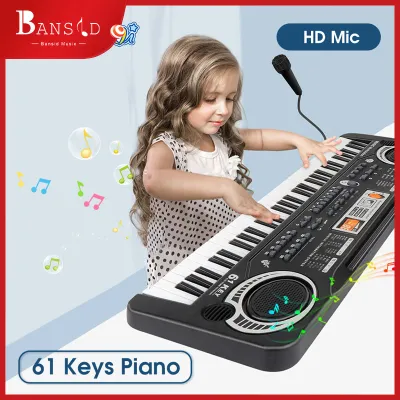
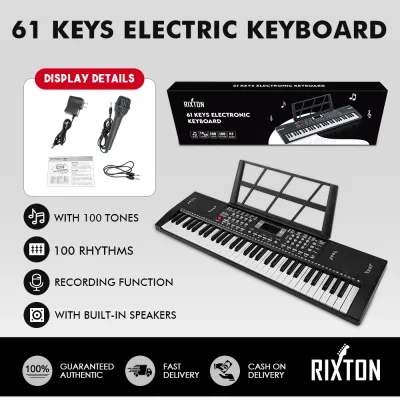
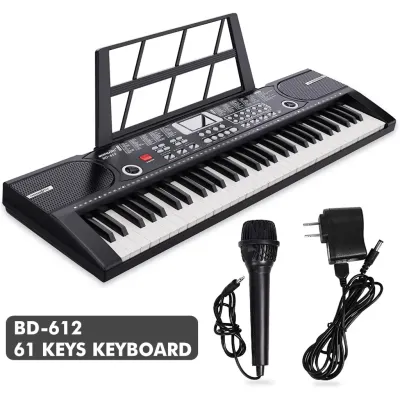
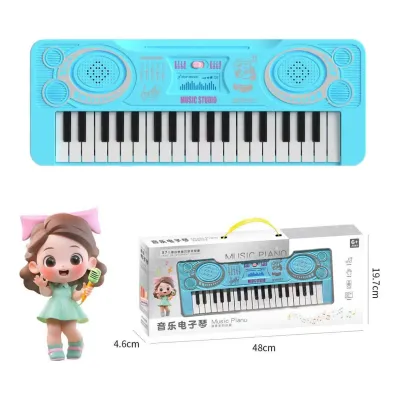
Prices are valid at publication and may change. Please refer to the product page for the latest price.
Beyond size and count, the action of the keys determines how the instrument responds to a child’s touch. Non-weighted synth-action keys offer very little resistance, which can be easy on young fingers but fails to build hand strength. Touch-sensitive, or velocity-sensitive, keys are a crucial middle ground. They respond to how hard or soft a key is pressed, allowing the young player to experiment with dynamics and musical expression from day one.
Built-in Lessons and Connectivity: Enhancing the Learning Experience
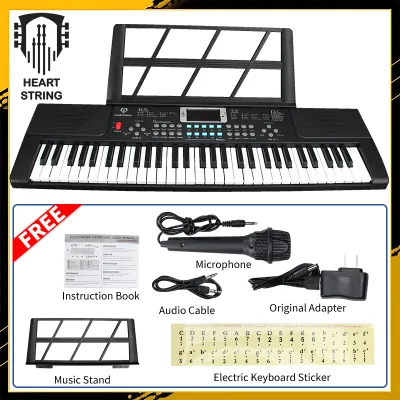
Sustaining a child’s interest during the early stages of practice can be challenging. Modern electronic keyboards and digital pianos address this by incorporating interactive educational tools directly into the hardware. A built-in metronome is an indispensable feature that helps young learners develop a steady sense of rhythm and timing. Basic recording functions are also highly beneficial, allowing her to record her playing and listen back to identify areas that need improvement.

Connectivity options open up a world of interactive learning. Look for a piano set that features USB/MIDI or Bluetooth connectivity. This allows the keyboard to link seamlessly with tablets or smartphones, enabling the use of interactive piano learning applications. Many of these apps gamify the learning process, offering instant feedback and visual guides that turn repetitive practice sessions into engaging challenges.
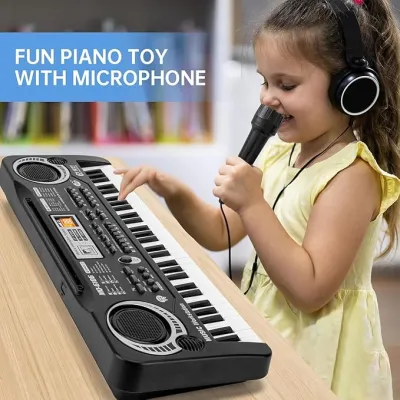
In a busy household, quiet practice is essential for both the student and the family. A standard headphone jack is a must-have feature for any beginner piano set. Using headphones allows her to practice at any time of day or night without disturbing others, while also helping her focus entirely on her music without external distractions. In tropical climates like the Philippines, where open-window ventilation is common to combat humidity, silent practice also prevents household noise from leaking into the neighborhood.
Durability, Accessories, and Setup: Ensuring Long-Term Use
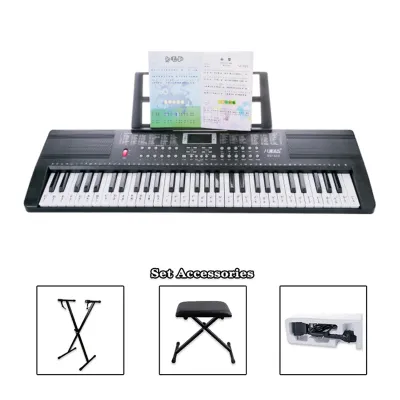
The physical setup of a beginner piano set directly impacts a child’s physical health and posture. A complete set should include a sturdy, wobble-free stand and an adjustable bench. Proper posture is vital to prevent wrist strain and back fatigue, especially for growing children. An adjustable bench ensures her elbows remain at the correct height relative to the keyboard, promoting a relaxed, natural hand position.
Material durability is another key consideration when selecting an instrument for a young child. While lightweight plastic models are highly portable, they must be robust enough to withstand daily use. Look for models with solid construction and, if possible, spill-resistant control panels to protect the internal electronics from accidental liquid damage. In humid environments, high-quality plastics and sealed electronic components also resist moisture buildup better than cheap, unbranded alternatives.
Aesthetic choices can be tempting when buying for a young girl, with many brands offering bright colors or themed designs. However, prioritizing structural longevity and standard finishes, such as matte black or white, is often the wiser choice. Standard finishes blend easily into any room decor as she grows older, maintaining a professional appearance. Furthermore, a classic-looking instrument holds its resale value much better should you decide to upgrade to an acoustic piano in the future.
Specs and Features You Can Safely Skip for Now
When browsing online marketplaces, it is easy to get overwhelmed by extensive feature lists. Many beginner keyboards boast massive sound banks containing hundreds of different instrument voices, sound effects, and complex auto-accompaniment rhythms. While these can be fun to explore initially, they often become major distractions during dedicated practice sessions. A high-quality piano sound and a handful of essential instrument tones are more than enough for a beginner.
Professional audio outputs, multi-track sequencers, and advanced mixing controls are other features you can safely ignore. These tools are designed for music production and live performances, offering little to no value to a young student learning her first scales. Paying extra for these advanced capabilities simply inflates the cost without contributing to her foundational learning.
Finally, premium graded hammer-action key beds, which replicate the heavy feel of an acoustic grand piano, may not be necessary immediately. If you are unsure of her long-term commitment, a lighter, touch-sensitive keyboard is a more practical and cost-effective starting point. You can always upgrade to a fully weighted key bed once she has demonstrated a sustained interest in her musical studies.
Frequently Asked Questions (FAQ)
Is a 61-key keyboard enough for a beginner, or should I buy 88 keys?
Yes, a 61-key keyboard is generally sufficient for the first year or two of learning. It provides enough range for basic melodies, finger exercises, and introductory pop or folk songs. However, as she progresses to classical repertoire or begins taking formal exams, she will eventually need to transition to an 88-key instrument to access the full range of notes required for advanced pieces.
Do I need to buy a separate sustain pedal for a beginner set?
A separate sustain pedal is not necessary during the first few months of lessons, as beginners focus primarily on finger placement and rhythm. Many beginner sets include a basic plastic footswitch, which is perfectly adequate for early practice. You should consider upgrading to a more durable, piano-style metal sustain pedal once her teacher introduces pedaling techniques into her curriculum.

Community discussion
Share your experience or ask a question. Comments are reviewed before publication.