
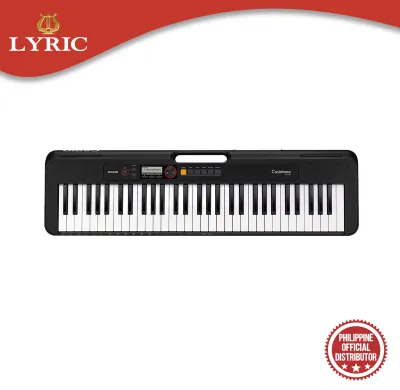
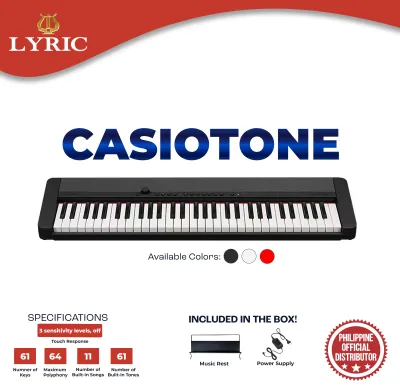
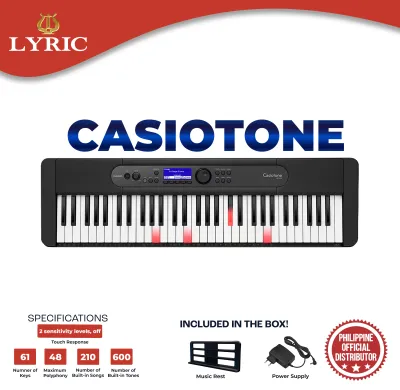
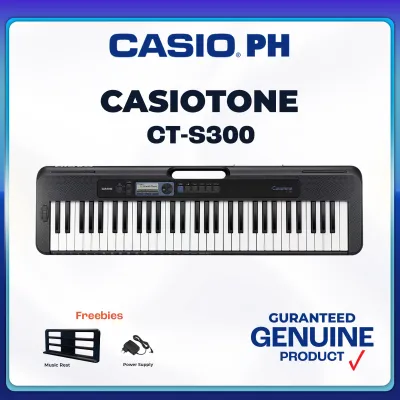
Choosing between Casio’s Casiotone and Privia series depends on your current playing level, musical goals, and how you plan to use the instrument. The Casiotone line is designed primarily for beginners, casual hobbyists, and players who prioritize extreme portability and lightweight designs. These instruments offer a straightforward, user-friendly introduction to music-making without requiring a massive upfront investment.
In contrast, the Privia series targets intermediate students, serious learners, and performing musicians who require the authentic feel and sound of an acoustic piano. Privia models focus heavily on realistic key action, advanced sound engines, and elegant designs suitable for dedicated home practice or stage performances.
If your goal is to learn proper piano technique, practice classical pieces, or perform in settings where dynamic expression is critical, the Privia series provides the necessary mechanical feedback. If you are exploring music for the first time, need a highly portable keyboard for casual sing-alongs, or want a compact tool for basic songwriting, a Casiotone model serves as an excellent, budget-friendly starting point.
Products mentioned in this guide
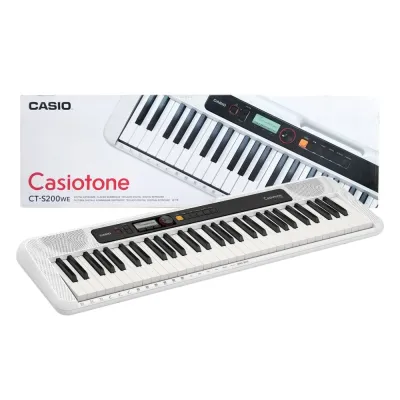
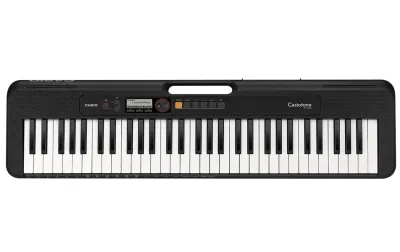
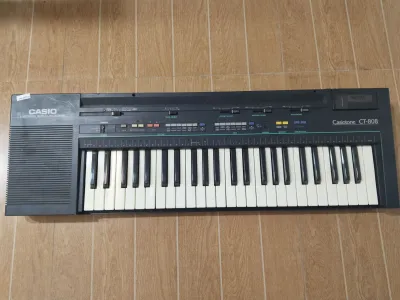
Prices are valid at publication and may change. Please refer to the product page for the latest price.
Key Action and Playability: What to Expect from Each Series
The physical response of the keys is the most significant differentiator between these two lineups, directly impacting how you develop your playing technique. Casiotone keyboards typically feature unweighted or synth-action keybeds. These keys offer very little resistance, making them incredibly easy to press down, which can be advantageous for young children or casual players who do not want to fatigue their fingers quickly. However, because they lack the mechanical weight of an acoustic piano, they do not build the finger strength or control required for advanced classical or jazz repertoire.
Privia digital pianos, on the other hand, utilize weighted or hammer-action keybeds designed to replicate the physical hammers of an acoustic grand piano. This means the keys feel heavier in the lower register and lighter in the upper register, providing realistic resistance. This mechanical feedback is essential for learning how to control dynamics—playing softly (piano) or loudly (forte) based on the force of your strike.
When evaluating either series, it is crucial to check the manufacturer’s specifications for touch sensitivity. While almost all Privia models feature highly sensitive, multi-sensor keybeds, only select Casiotone models offer touch-sensitive keys. Playing a keyboard without touch sensitivity means the volume remains constant regardless of how hard you strike the key, which severely limits your expressive capabilities. Always verify the specific keybed technology listed in the product manual before making your final choice.
Sound Quality and Built-in Features: Matching Tones to Your Style
The internal sound engines of these two series cater to very different musical expectations. Casiotone models generally utilize basic sound modules designed to offer a wide variety of tones, rhythms, and accompaniment patterns. These keyboards are often packed with hundreds of fun sounds, ranging from synthesizers and brass to drum kits, making them highly versatile for creative experimentation and casual entertainment.

Privia instruments focus on acoustic realism, utilizing advanced multi-dimensional sound engines that recreate the complex resonances of a physical piano. These engines simulate how strings vibrate against each other and how the soundboard behaves when the damper pedal is pressed. While Privia models may offer fewer total sounds than some Casiotone keyboards, the quality of their primary piano tones is significantly more detailed and authentic.
Another critical specification to verify is polyphony, which refers to the maximum number of individual notes the instrument can play simultaneously. Entry-level Casiotone models often have lower polyphony limits, which can lead to sustained notes cutting off abruptly during complex passages or when layering multiple sounds. Privia models offer much higher polyphony, ensuring that sustained chords and expressive pedaling remain seamless. Additionally, you should check the speaker output wattage and available audio outputs; Privia models generally feature more powerful built-in speakers and dedicated line-out ports for external amplification, whereas many Casiotone models rely on lower-wattage speakers and standard headphone jacks.
Portability, Design, and Setup Considerations
Your physical space and lifestyle play a major role in determining which series fits your home. Casiotone keyboards are designed with ultra-slim, lightweight profiles, often featuring built-in carrying handles that make them incredibly easy to transport. Many of these models can run on standard AA batteries, allowing you to play in outdoor settings, during travel, or in spaces without easy access to a wall outlet. This makes them highly adaptable to the tropical climate and active, mobile lifestyles of players in the Philippines, where outdoor gatherings and beach trips are common.
Privia digital pianos are heavier and more substantial, designed to serve as semi-permanent fixtures in a living room, bedroom, or studio. While there are highly portable stage-oriented Privia models, they still require a sturdy stand and a dedicated power source, as battery operation is either unavailable or highly limited compared to the Casiotone line.
When planning your setup, always verify stand and pedal compatibility. A lightweight Casiotone can easily sit on a basic, portable X-stand or even a table. A weighted Privia digital piano requires a heavy-duty Z-stand, a double-braced X-stand, or a dedicated wooden console stand to prevent wobbling during intense practice sessions. Furthermore, ensure the model you choose supports a standard sustain pedal or a three-pedal unit, which is essential for proper piano study.
Price and Value: Evaluating Your Budget and Long-Term Investment
When budgeting for your instrument in ₱, understanding the price-to-feature ratio helps prevent unexpected expenses down the road. Casiotone models represent a highly accessible entry point, allowing you to start playing without a major financial commitment. This makes them ideal for parents testing their child’s long-term interest in music or adults looking for a low-risk hobby.
However, a lower initial price tag can sometimes lead to quicker upgrade cycles. If a student progresses rapidly, they may outgrow the unweighted keys of a Casiotone within a year, necessitating a second purchase. Investing in a Privia model from the start offers better long-term value for dedicated learners, as its weighted action and advanced sound quality will support several years of intermediate to advanced study.
Additionally, remember to factor in the total cost of ownership. A complete setup often requires accessories that may not be bundled with the keyboard. Budget for a sturdy stand, an adjustable bench to maintain proper playing posture, high-quality headphones for silent practice in humid tropical weather, and a reliable damper pedal. Verifying what accessories are included in the box versus what must be purchased separately is key to managing your overall budget.
Decision Framework: Which Series Should You Buy?
To finalize your decision, evaluate your goals against this straightforward framework:
Choose Casiotone if:
- You are a complete beginner or casual hobbyist exploring music for the first time.
- You require a highly portable, lightweight keyboard that can run on batteries for travel or outdoor use.
- You want a wide variety of fun sounds, rhythms, and built-in learning features rather than a strict focus on classical piano.
- You are working with a limited budget and want to minimize upfront costs.
Choose Privia if:
- You are a serious student, intermediate player, or classical pianist who needs realistic weighted key action to build finger strength.
- Your primary focus is playing acoustic piano music with high dynamic expression and authentic sound quality.
- You plan to perform on stage, record in a home studio, or keep the instrument as a semi-permanent fixture in your home.
- You want an instrument that will remain suitable as your playing skills advance over several years.
Verify first if:
- You need specific connectivity options, such as Bluetooth audio, dedicated MIDI routing, or compatibility with particular educational apps.
- The physical dimensions of the instrument will fit comfortably within your designated practice space.
- The package includes essential accessories like a power adapter, music stand, and sustain pedal, or if you need to purchase them separately.
Frequently Asked Questions (FAQ)
Can I use an entry-level Casiotone for live stage performances?
While you can physically bring a Casiotone to a gig, entry-level models often lack the dedicated line-out ports required to connect directly to a venue’s sound system. Instead, you may have to rely on the headphone jack, which can introduce unwanted noise or signal loss. Additionally, lower polyphony limits and basic sound engines may not cut through a live band mix effectively. For professional stages, it is highly recommended to verify the venue’s sound requirements and consider an instrument with dedicated audio outputs.
Is it worth upgrading from a Casiotone to a Privia later?
Yes, upgrading becomes essential once you begin to feel limited by unweighted keys. As your technique develops, you will need the weighted hammer action of a Privia to practice proper dynamics, articulation, and finger control. If you find yourself unable to play softly or expressively on a Casiotone, or if your music teacher notes a lack of finger strength when you play on an acoustic piano, it is time to transition to a weighted digital piano.
Do both series support external MIDI controllers and music software?
Most modern models in both the Casiotone and Privia lines offer USB MIDI capabilities, but you must check the specific manufacturer specifications for your chosen model. Some models support wireless Bluetooth MIDI, while others require a standard USB Type-B cable. Always verify compatibility with your specific computer operating system, mobile device, or digital audio workstation (DAW) before attempting to use the keyboard as a MIDI controller.

Community discussion
Share your experience or ask a question. Comments are reviewed before publication.