
To navigate the stock market successfully as a young beginner in the Philippines, your most valuable initial investment is not capital, but knowledge. The ideal starting point is a curated combination of global classics that build a strong psychological foundation and local guides that explain the practical mechanics of the Philippine Stock Exchange (PSE). By reading the right stock market trading book, you can avoid costly beginner mistakes, understand how compounding works in pesos, and build a sustainable strategy that fits your lifestyle and income.
How to Choose the Right Stock Market Book as a Beginner
First, distinguish between “trading” and “investing.” Trading is a short-term, technical endeavor. It involves analyzing price charts, identifying patterns, and buying and selling shares within days, hours, or even minutes to capture quick price movements. Investing, on the other hand, is a long-term, fundamental strategy. Investors buy shares of fundamentally strong companies and hold them for years, relying on the company’s business growth and dividend payouts. Choosing the wrong book can lead to a mismatch between your financial goals and your actual market activities.
Second, look for books that address the local context of the Philippines. While global financial theories are universal, the operational mechanics of the PSE are highly specific. A foreign book will not teach you about local stock transaction taxes, the 8% unilateral tax considerations, or the specific registration processes for local online brokerages. Understanding how to execute trades in Philippine Pesos (₱) and navigating local market hours (from 9:00 AM to 3:00 PM local time) requires insights from authors who have actively traded within the domestic regulatory landscape.
Products mentioned in this guide
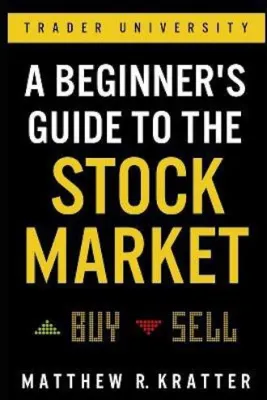
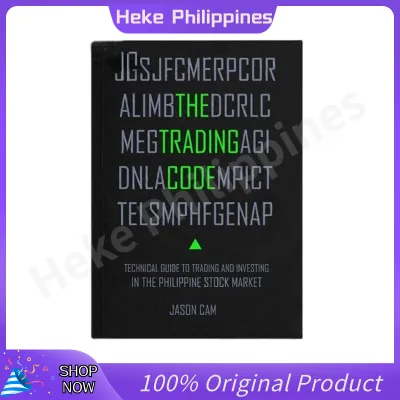
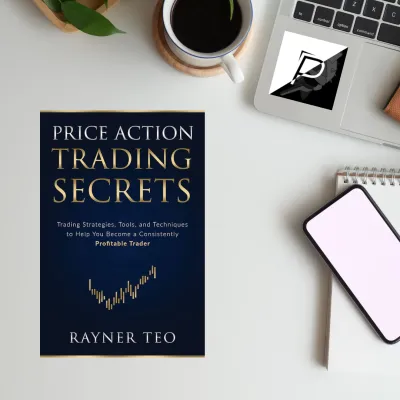
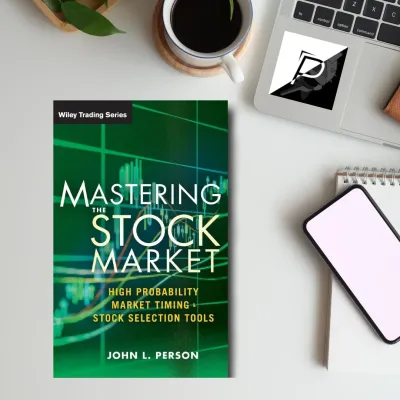
Prices are valid at publication and may change. Please refer to the product page for the latest price.
Third, prioritize readability and author credibility. If you do not have a background in finance or accounting, a textbook dense with complex algebraic formulas will likely end up gathering dust on your shelf. Seek out books written in clear, conversational English or Taglish that focus on actionable frameworks rather than abstract academic theories. Verify the author’s background: they should be established financial educators, registered financial planners, or experienced market practitioners with a transparent track record of teaching financial literacy.
Finally, manage your expectations. No stock market trading book possesses a secret formula that guarantees immediate wealth or risk-free profits. The primary objective of any high-quality beginner book is to teach you how to manage risk, preserve your hard-earned capital, and build a resilient psychological mindset. Understanding how to minimize losses is far more critical to your long-term survival in the market than learning how to chase high-flying speculative stocks.
Global Classics to Build a Winning Investor Mindset
The Psychology of Money by Morgan Housel
This book shifts the focus of investing from mathematical formulas to human behavior. Through 19 short, narrative-driven chapters, Morgan Housel explains that doing well with money is not necessarily about what you know, but about how you behave. The book explores the psychological traps of greed, envy, and fear, showing how easily these emotions can disrupt long-term compounding. It emphasizes that financial success is achieved by making highly rational, quiet decisions over a lifetime rather than chasing erratic market highs.

For young beginners in the Philippines, this book is exceptionally accessible. It does not require any prior knowledge of financial statements, balance sheets, or technical charting. The storytelling is engaging and highly relatable, making it an easy read for students or young professionals who are just starting to earn their own income. It helps reframe wealth not as a display of expensive possessions, but as the flexibility and freedom to control your own time.
However, readers must keep in mind its limitations. This is strictly a mindset and behavioral guide. It does not contain any technical instructions on how to read stock charts, analyze corporate earnings, or open a brokerage account. It serves as an excellent philosophical foundation, but you will need to pair it with more practical manuals to execute your first trade.
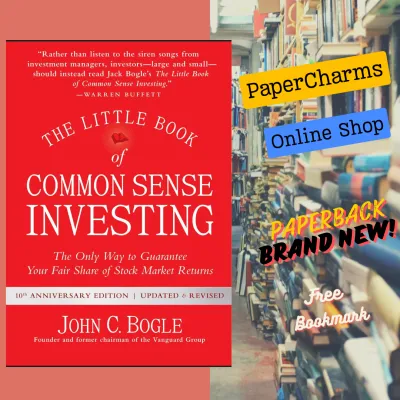
The Little Book of Common Sense Investing by John C. Bogle
Written by the founder of the Vanguard Group, this book presents a powerful, evidence-based argument for low-cost index fund investing. John C. Bogle demonstrates how active stock picking and frequent trading often fail to beat simple market averages over the long run. He details how high management fees, broker commissions, and transaction taxes quietly erode an investor’s returns over time, making a strong case for buying and holding a highly diversified portfolio of stocks.
This book is ideal for young professionals in the Philippines who want to grow their wealth but cannot afford to monitor stock price charts throughout the busy workday. It provides a realistic, low-stress baseline strategy that leverages the power of compounding without the emotional roller coaster of active trading. By focusing on index funds, beginners can secure their share of overall economic growth with minimal effort and expense.
The primary limitation of this classic is its heavy reliance on US-centric examples, particularly focusing on the S&P 500 index. While the core principles of low-cost index investing are universally applicable, Filipino readers will need to do supplementary research to apply these concepts locally. You must investigate local Philippine index mutual funds, Unit Investment Trust Funds (UITFs) that track the PSEi, or global Exchange-Traded Funds (ETFs) accessible through international brokerage accounts available to Philippine residents.
A Random Walk Down Wall Street by Burton Malkiel
This highly influential book introduces the “random walk” theory, which suggests that short-term stock price movements are completely unpredictable and that attempting to time the market is generally a flawed strategy. Burton Malkiel guides readers through the history of financial bubbles, technical analysis, and fundamental analysis, using decades of historical data to support long-term, diversified holding strategies over active, speculative trading.
For young beginners, this book serves as a vital reality check against get-rich-quick schemes and aggressive day trading myths often popularized on social media. It teaches the value of patience, systematic investing (such as peso-cost averaging), and broad diversification across different asset classes. Reading it helps build a mature perspective on how markets behave over multiple decades.
On the downside, some chapters carry an academic tone and feature dense historical data that may require slower, more deliberate reading. Absolute beginners who do not have a basic understanding of financial terms might find certain sections challenging. Taking notes and researching unfamiliar terms as you read will help you fully absorb the wealth of information Malkiel provides.
Local Guides to Master the Philippine Stock Exchange
Investing in the Stock Market by Marvin Germo
This book is designed specifically to demystify the local equity market for everyday Filipinos. Marvin Germo breaks down the structural mechanics of the Philippine Stock Exchange, explaining how to identify blue-chip companies within the Philippine Stock Exchange Index (PSEi) and how to interpret basic financial metrics. He also introduces basic chart patterns and technical indicators, bridging the gap between fundamental analysis and technical analysis within the local market environment.
The book is highly valuable for young beginners because of its straightforward, textbook-like structure. It is written in an easy-to-understand style that is widely utilized in local financial literacy seminars and university finance courses. It directly addresses the practical steps of setting up a local brokerage account, understanding the local board lot system, and executing buy and sell orders on domestic trading platforms.
However, readers should note that mastering the technical analysis sections requires significant screen time and practical application on live charts. Additionally, because local market regulations, transaction fees, and brokerage interfaces can change over time, it is highly recommended to seek out the latest edition of the book to ensure all administrative details and fee structures are fully up to date.
The Filipino Investor by Randell Tiongson
This guide takes a holistic approach to wealth building, positioning stock market investing as one component of a broader, structured personal finance plan. Randell Tiongson emphasizes that before you buy your first share of stock, you must secure your financial foundation by managing everyday peso expenses, eliminating high-interest debt, and establishing a robust emergency fund. The book addresses unique cultural spending habits, family obligations, and economic realities that young Filipinos face.
It is incredibly well-suited for young professionals and students because it prevents the common mistake of investing money that should have been kept for emergencies. By framing stock market participation within the context of local life milestones—such as buying a home, starting a business, or preparing for future family needs—it makes the concept of investing deeply personal and highly practical.
The main limitation is that this book is a general personal finance and introductory investing guide rather than a specialized manual for active, short-term day trading. If your primary goal is to learn advanced technical charting, day-trading indicators, or complex derivatives trading, you will need to look for supplementary technical books once you have mastered the foundational concepts presented here.
What to Verify Before Buying Your First Finance Book
When choosing your format, consider how you intend to study the material. Physical books are highly recommended for technical guides like Marvin Germo’s, as they allow you to easily study stock charts, highlight key formulas, and write notes in the margins. E-books offer excellent portability and are often more budget-friendly, making them ideal for reading during daily commutes on the MRT or while traveling. Audiobooks are fantastic for narrative-driven mindset books like The Psychology of Money, but they are highly ineffective for books that rely heavily on visual aids, charts, and mathematical tables.
Before finalizing your purchase, verify the book’s edition and relevance, especially for local titles. The financial landscape in the Philippines is dynamic; changes in tax laws—such as updates to the stock transaction tax or capital gains regulations—can directly impact your investment returns. Ensure the edition you are buying reflects current PSE trading rules and fee structures. Check the publisher’s official product specifications to confirm you are not buying an outdated printing that references obsolete regulatory frameworks.
To ensure you are receiving complete and accurate information, purchase only from legitimate sources. Major local book retailers like National Book Store and Fully Booked, official publisher websites, or established online bookstores are the safest options. Avoid downloading pirated PDFs or purchasing unauthorized digital copies from unregulated online marketplaces. These illegal files are frequently plagued by formatting errors, missing pages, and low-resolution charts that can severely disrupt your learning process and lead to dangerous misunderstandings of critical financial data.
Finally, remember that reading is only the first step. To truly master the concepts in these books, you must pair your reading with official, free resources. The Philippine Stock Exchange (PSE) website offers official guides, market reports, and educational webinars. Additionally, utilize paper-trading apps or simulated trading platforms to practice executing trades, reading charts, and managing virtual portfolios in real-time. This allows you to gain practical experience and test the strategies you have read about without risking your actual peso savings.
Frequently Asked Questions (FAQ)
Do I need to read books about the US stock market if I only trade in the Philippines?
Yes, reading global books is highly beneficial. While the specific trading mechanics, tax laws, and market hours of the US stock market differ from those of the Philippine Stock Exchange, the fundamental principles of market psychology, risk management, and long-term compounding remain identical. Global classics help you build a disciplined investor mindset that protects you from emotional decision-making. Combining these global insights with local guides ensures you understand both the universal concepts of wealth creation and the practical steps required to execute them successfully in the local market.
Are stock trading books enough to start making money in the PSE?
No, books alone are not enough to guarantee profitability. A stock market trading book provides you with the essential theoretical framework, historical context, and risk management strategies, but it cannot replicate the emotional reality of trading with real money. To become a profitable trader or investor, you must combine book learning with hands-on practice. Start by using simulated trading platforms to understand order execution, and when you are ready to use real capital, start with a small amount that you can afford to lose while you build your confidence and refine your strategy.
Should I focus on day trading books or long-term investing books as a beginner?
As a beginner, it is highly recommended to focus on long-term investing books first. Long-term investing strategies, such as peso-cost averaging into index funds or blue-chip stocks, require far less daily screen time, carry lower transaction costs, and are much easier to manage alongside a full-time job or university studies. Day trading requires advanced technical analysis skills, strict emotional discipline, constant market monitoring during trading hours, and a high tolerance for risk. Starting with a long-term investing foundation allows you to grow your capital safely while you gradually learn the complexities of active trading.

Community discussion
Share your experience or ask a question. Comments are reviewed before publication.