
Selecting the right support for a full-size, 88-key keyboard is a critical decision that directly impacts your playing posture, instrument safety, and overall performance. Unlike smaller, lightweight MIDI controllers, an 88-key digital piano features a wide chassis and weighted hammer-action keys that demand a highly stable foundation. The ideal stand style—whether X-frame, Z-frame, or table-style—depends entirely on your primary playing environment, portability requirements, and ergonomic needs. While touring musicians often favor the rapid setup of a double-braced X-frame, home players and studio producers usually benefit more from the open legroom of a Z-frame or the rock-solid stability of a table-style platform. Understanding how these designs handle the physical forces of expressive playing will ensure your investment remains secure and comfortable to play for years to come.
Baseline Requirements for 88-Key Keyboard Stands
Before comparing specific frame designs, you must understand the physical demands an 88-key keyboard places on a stand. A standard 88-key digital piano or stage keyboard typically weighs between 12 and 25 kilograms, with some premium console models exceeding this range. This static weight is only part of the equation; when you play expressively, especially during fortissimo passages or rapid octave jumps, you exert significant downward and lateral dynamic force. A stand must be rated to handle both the static load of the instrument and these dynamic playing forces without flexing or bowing.
Width and depth dimensions are equally critical. An 88-key keyboard spans approximately 130 to 140 centimeters in length. If a stand’s support arms are too narrow, the keyboard will overhang excessively on both sides, creating a high risk of tipping if the outer keys are struck hard. The depth of the support arms must also match or closely align with the depth of the keyboard’s base. A mismatch can cause the instrument to slide forward or backward during use.
Products mentioned in this guide
Prices are valid at publication and may change. Please refer to the product page for the latest price.
Furthermore, the center of gravity of a weighted keyboard is often concentrated toward the rear, where the internal power supplies, speakers, and heavy keybed mechanisms reside. A high-quality stand must distribute this weight evenly across its base. If the stand’s footprint is too shallow, any accidental bump from a passerby or a pet can easily destabilize the entire setup, risking catastrophic damage to your instrument.
X-Frame Stands: Evaluating Portability and Stability Trade-Offs
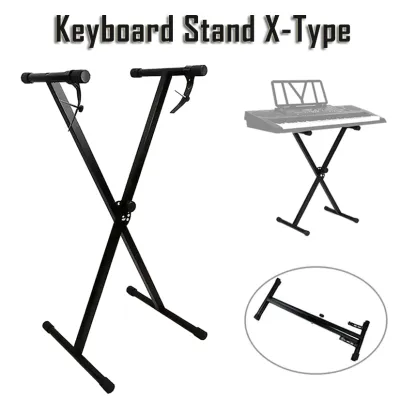
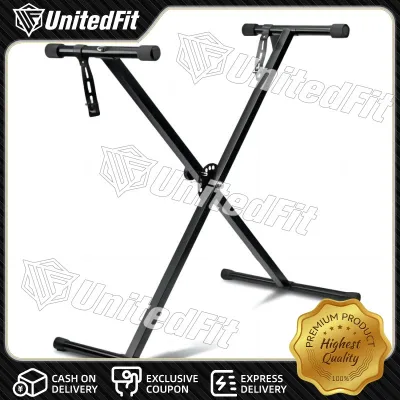
X-frame stands are the most common and recognizable keyboard supports on the market, largely due to their simplicity and affordability. However, they are not all created equal, especially when tasked with supporting a heavy 88-key instrument. Single-braced X-stands, which feature a single metal bar on each side of the crossing point, are generally unsuitable for full-size keyboards. They lack the torsional rigidity required to prevent lateral sway, causing the keyboard to wobble side-to-side during energetic play. For an 88-key keyboard, a double-braced X-frame is the absolute minimum requirement. These designs utilize parallel metal tubes on each brace, significantly increasing weight capacity and reducing lateral movement.

The primary drawback of any X-frame stand is its inherent lack of legroom. Because the support bars cross directly in the center, they block the space beneath the keyboard. If you prefer to play in a seated position, you will quickly find that your knees and shins constantly collide with the metal frame. This forces you to sit further back, leading to poor posture, hunched shoulders, and eventual back strain. This ergonomic limitation makes X-frames highly problematic for long practice sessions at home or in the studio.
Conversely, X-frames excel in portability and ease of storage. They fold completely flat in seconds, making them the preferred choice for gigging musicians in the Philippines who frequently transport their gear in compact vehicles or public transit. They are also highly adjustable in height, allowing you to transition quickly from a seated to a standing performance. If your priority is a quick setup at a local venue or a church service, and you primarily play standing up, a heavy-duty double-braced X-frame offers unmatched convenience.
Z-Frame Stands: Maximizing Legroom and Seated Ergonomics
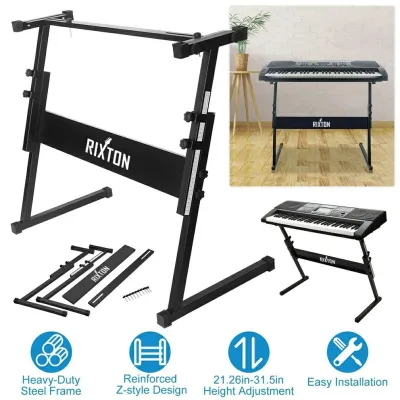
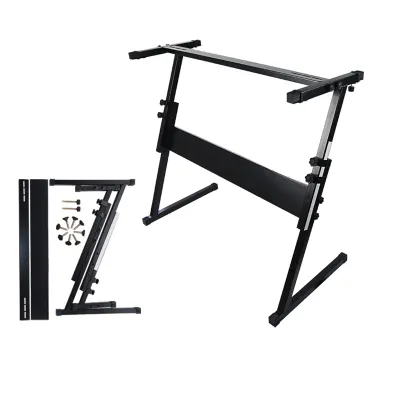
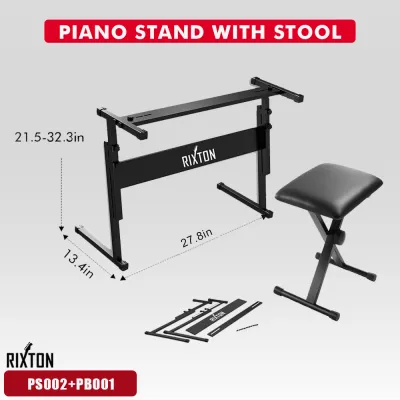
Z-frame stands offer a compelling middle ground, combining the structural rigidity of heavy-duty supports with the open space required for comfortable seated playing. Named for their Z-shaped side profiles, these stands feature a wide, open center that leaves the space directly beneath the keyboard completely unobstructed. This design is a major advantage for classical pianists, students, and anyone who spends hours practicing in a seated position. You can slide your bench fully under the keyboard, maintaining a natural, ergonomically correct posture where your elbows are at a comfortable angle and your feet rest flat on the floor.
This open space also accommodates complex pedal setups. Whether you use a single sustain pedal, a dual-pedal unit, or a full three-pedal board, a Z-frame allows you to position these accessories exactly where you need them without metal bars getting in the way. Additionally, Z-frames are exceptionally rigid. The welded joints and wide base tubes resist lateral sway far better than X-frames, ensuring that even the most aggressive glissandos or heavy chord strikes will not cause your digital piano to shake.
The trade-off for this stability and legroom is a larger physical footprint and a more involved assembly process. Z-frames do not fold flat as easily or compactly as X-frames. While some models feature breakdown designs with hand-tightened knobs, they still require more time to disassemble and take up more space in transit. They are best suited for semi-permanent setups, such as home studios, music classrooms, or dedicated practice spaces where the stand will remain assembled for long periods.
Table-Style Stands: Ensuring Maximum Stability and Home Integration
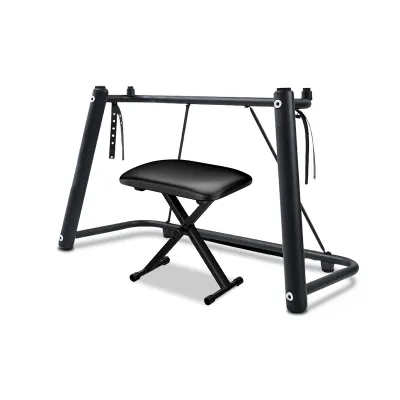
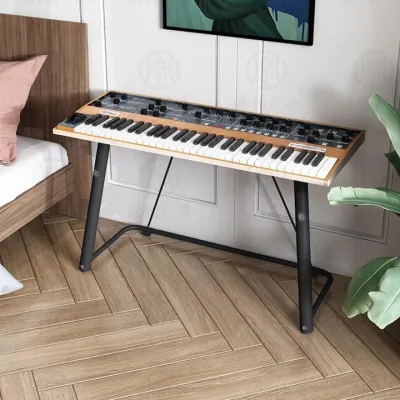
Table-style stands, also known as platform or four-legged stands, provide the ultimate level of stability and weight capacity for 88-key keyboards. Mimicking the design of a traditional table, these stands feature four independent legs connected by a heavy-duty perimeter frame. This configuration distributes the weight of the keyboard evenly to all four corners of the footprint, virtually eliminating the risk of tipping or sliding. For exceptionally heavy stage pianos or vintage-style digital keyboards, a table-style stand is often the safest and most reliable option.
Most high-quality table-style stands offer independent height adjustments for each leg. This feature is incredibly useful for leveling the stand on uneven floors, such as rustic tiles or outdoor stages. The open space beneath a table stand is completely clear, providing even more legroom than a Z-frame and allowing for unrestricted placement of multiple pedals, power strips, and cable runs.
In terms of aesthetics, table-style stands integrate beautifully into home environments. In the tropical climate of the Philippines, where high humidity can affect wooden furniture, a high-quality metal table stand with a rust-resistant powder coating offers a durable, modern alternative to traditional wooden console stands. While they do not fold down as instantly as an X-frame, many table stands feature legs that fold inward against the top frame, making them surprisingly flat and portable for transport. They represent a premium choice for players who refuse to compromise on stability, ergonomics, or aesthetic integration in their living or studio spaces.
Decision Framework: Matching the Right Stand to Your Playing Style
Choosing the right stand requires matching these structural designs to your specific lifestyle, playing habits, and budget. If you are a gigging musician who needs to load gear in and out of venues quickly, or if you have limited storage space at home, a double-braced X-frame is the most practical choice. It offers the speed and portability required for a fast-paced lifestyle, provided you are comfortable with the legroom limitations during seated play or plan to perform standing up.
For home studios, dedicated practice rooms, and players who prioritize physical comfort during long seated sessions, a Z-frame is highly recommended. It delivers the perfect balance of rock-solid lateral stability and open legroom, allowing you to position your pedals naturally and maintain proper playing posture. It is an excellent investment for intermediate to advanced players who require a stable platform for expressive, dynamic performances.
If you are setting up a permanent digital piano in your living room or a dedicated music space, a table-style stand or a manufacturer-specific wooden console stand is the ideal solution. These options provide maximum stability, a clean aesthetic that complements home decor, and completely unobstructed legroom. They are particularly suited for heavy, high-end digital pianos that rarely leave the house.
Before making your final choice, always verify if your specific keyboard model features proprietary mounting points on the underside. Some digital pianos are designed to bolt directly onto matching wooden console stands or specific metal frames. Using a generic stand with these models is still possible, but a dedicated, bolted connection always provides the highest level of safety and structural integration.
Pre-Purchase Compatibility and Safety Checklist
To ensure a successful purchase and avoid the hassle of returns, always run through a physical compatibility checklist before buying. First, locate the exact weight of your 88-key keyboard in its user manual and compare it to the maximum weight capacity of the stand. Remember to account for the weight of any accessories you plan to place on the keyboard, such as music rests, heavy books, or clip-on lights.
Next, measure the depth of your keyboard’s rubber feet. The support arms of the stand must be long enough to accommodate these feet securely; if the feet hang off the front or back edges, the keyboard will slide during play. If you plan to use a dust cover or a gig bag, ensure the stand’s dimensions can accommodate the added bulk.
Finally, consider the floor surface in your practice area. In many homes in the Philippines, smooth tile or polished wood floors are common. To prevent the stand from sliding or scratching the floor, look for models equipped with thick, non-slip rubber end caps or leveling feet. If your floor is uneven, adjustable leveling feet are essential to prevent the stand from rocking. For added protection, placing a thin, non-slip utility mat beneath the stand can safeguard your floors while enhancing overall stability.
Frequently Asked Questions (FAQ)
Can I use a standard 61-key stand for an 88-key keyboard?
Using a stand designed specifically for a 61-key keyboard to support a full-size 88-key instrument is highly discouraged. Standard 61-key stands are typically narrower and have a much lower weight capacity. An 88-key keyboard will overhang significantly on both sides, shifting the center of gravity outward. This makes the entire setup highly unstable and prone to tipping over if you play keys at either end of the keyboard. Always verify that the stand’s width and weight ratings are explicitly certified for 88-key instruments.
Do Z-frame stands wobble more than X-frames?
No, high-quality Z-frame stands generally wobble significantly less than X-frames. The Z-shape design utilizes thick, welded steel tubing and a wider base footprint, which provides superior resistance to lateral (side-to-side) forces. While a single-braced or cheap X-frame will sway noticeably during energetic playing, a Z-frame remains rigid and stable. To minimize wobble in any stand, ensure all adjustment knobs are tightened securely and the stand is placed on a level surface.

Community discussion
Share your experience or ask a question. Comments are reviewed before publication.