
Choosing your first electric guitar is a pivotal step in your musical journey, and Ibanez consistently stands out as one of the most reliable and accessible brands for beginners in the Philippines. Known for their exceptional playability, ergonomic designs, and versatile electronics, these instruments allow new players to explore various musical genres without facing the physical frustration often caused by bulkier, traditional guitars. By understanding what makes these guitars unique and how to navigate the local market, you can confidently select an instrument that supports your learning goals and fits your budget.
Why Ibanez Guitars Suit Beginner Players
For decades, Ibanez has been celebrated for prioritizing player comfort and ergonomics, making their instruments highly accommodating for those just starting out. The standout feature of most Ibanez guitars is their remarkably thin neck profile, often referred to as the Wizard style or its entry-level equivalent, the GRG neck. Unlike the thick, rounded necks found on vintage-style guitars, these slim profiles allow players with smaller hands to wrap their fingers comfortably around the fretboard. This design reduces hand fatigue and makes it significantly easier to transition from acoustic guitars, where high string action and thick necks often discourage beginners.
In addition to slim necks, Ibanez bodies are engineered with deep contours and generous double cutaways. These deep cutaways are not merely aesthetic choices; they provide unhindered access to the upper frets, allowing you to practice scales, exercises, and solos across the entire fretboard without straining your wrist. The lightweight materials used in their construction, such as poplar, basswood, or okoume, ensure that the guitar remains comfortable during long practice sessions. This lightweight design is especially beneficial when practicing while standing up or during warm, humid days when a heavy instrument would quickly become exhausting to hold.
Products mentioned in this guide
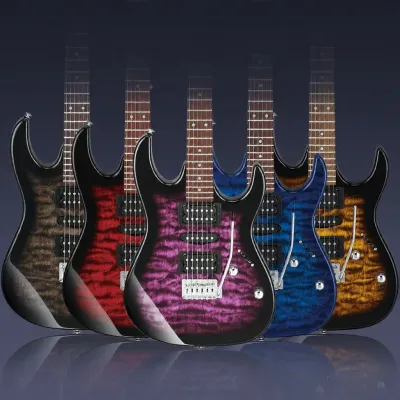
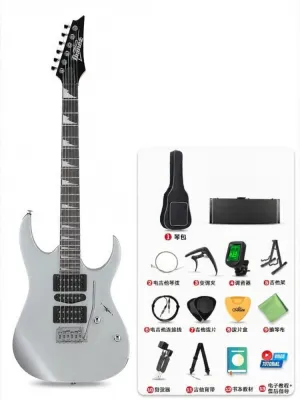

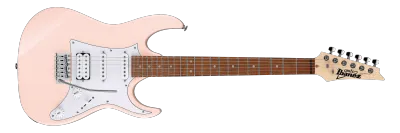
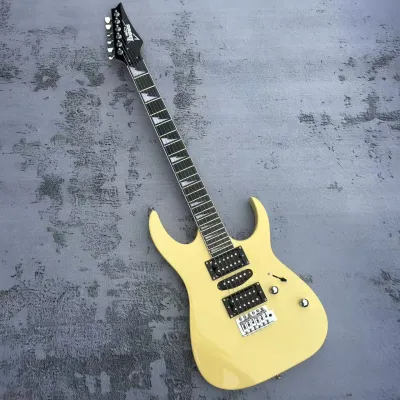
Prices are valid at publication and may change. Please refer to the product page for the latest price.
Another major advantage for beginners is the brand’s reputation for tonal versatility. Ibanez guitars are designed to handle a wide range of musical styles, from clean pop and jazz to high-gain rock, metal, and fusion. Instead of locking you into a single signature sound, an Ibanez instrument serves as an open canvas. This adaptability allows you to experiment with different genres as you develop your musical identity, ensuring that your first guitar remains relevant and inspiring even as your tastes evolve over time.
Core Specifications to Evaluate Before Buying
To choose the right Ibanez model, you must first decode the core specifications that dictate how the guitar sounds, feels, and behaves. The pickup configuration is the primary driver of your guitar’s voice. Pickups generally come in two styles: single-coils, which offer bright, crisp, and clear tones suitable for funk, blues, and clean pop; and humbuckers, which produce a thicker, warmer, and noise-free sound ideal for rock and metal. Ibanez models frequently utilize versatile configurations such as HSH (Humbucker-Single-Humbucker) or HSS (Humbucker-Single-Single). These setups, controlled by a five-way selector switch, allow you to split and combine pickups to achieve a massive variety of tones from a single instrument.

Another critical decision is choosing between a fixed bridge and a tremolo system. A fixed bridge, often called a hardtail, is highly recommended for beginners because of its simplicity and exceptional tuning stability. With a fixed bridge, the strings are anchored directly to the body, making the guitar easy to tune, simple to restring, and highly stable when you want to experiment with alternate tunings. Tremolo systems, or whammy bars, allow you to bend the pitch of your strings for expressive effects. However, budget-friendly tremolo systems can sometimes compromise tuning stability, and advanced double-locking tremolos can be incredibly frustrating for a beginner to restring and tune properly. Starting with a fixed bridge or a simple non-locking synchronized tremolo is usually the safest path to avoid maintenance headaches.
Finally, pay attention to the scale length and fretboard radius. The scale length—the distance between the nut and the bridge—is typically 25.5 inches on most Ibanez electrics, providing a snappy string tension and clear note definition. The fretboard radius refers to the curvature of the playing surface. Ibanez is famous for its flatter fretboards, which feature a larger radius compared to traditional brands. A flatter fretboard allows for a lower action, meaning the strings sit closer to the frets. This reduces the finger pressure required to fret notes and prevents strings from “choking out” or buzzing when you attempt to bend them during solos.
Understanding Ibanez Entry-Level and Mid-Tier Series
Navigating the Ibanez catalog becomes much easier once you understand how their product tiers are structured. The GIO series is the brand’s dedicated entry-level lineup, designed specifically to offer classic Ibanez aesthetics and playability at an affordable price point. While GIO models utilize more cost-effective tonewoods and standard hardware, they undergo strict quality control to ensure they are fully functional, highly playable instruments. Moving up to the Standard series or the AZ Essentials (AZES) line introduces upgraded hardware, more refined pickups, and superior wood selection, offering a noticeable jump in build quality and tonal clarity for players willing to invest a bit more from the start.
Ibanez uses a systematic alphanumeric naming convention that helps you identify a guitar’s features at a glance once you know how to read the suffixes. For example, in a model name like GRG121DX, the “G” indicates it belongs to the entry-level GIO series, while “RG” denotes the iconic, sharp-edged body shape. The numbers that follow typically represent the tier and pickup configuration, where a “1” at the end often signifies a fixed bridge. Suffixes like “DX” point to deluxe cosmetic appointments, such as sharktooth fretboard inlays or bound necks. Learning to decode these model numbers allows you to browse online catalogs or physical store racks with confidence, identifying the exact bridge and pickup layout without relying solely on product descriptions.
When planning your purchase in the Philippines, it is helpful to establish a realistic budget framework. Entry-level GIO models generally range from ₱8,000 to ₱15,000, making them highly accessible for students and hobbyists. Mid-tier options, such as the AZES or Standard RG models, typically sit between ₱15,000 and ₱30,000, offering enhanced durability and better components that can easily last through years of gigging. When setting your budget, remember to reserve a portion of your funds for essential supporting gear, as an electric guitar requires an amplifier and accessories to be fully functional.
Buying Authentically in the Philippines
To ensure you receive a genuine instrument backed by a manufacturer’s warranty, it is crucial to purchase through authorized channels. In the Philippines, authorized local distributors and reputable physical music stores are the safest places to buy. Visiting a physical store allows you to hold the guitar, feel the neck profile, and inspect the build quality in person before making a commitment. Store staff can also assist you with basic questions and ensure the instrument is properly unboxed and inspected.
If you prefer the convenience of online shopping, you must exercise caution on major ecommerce platforms and online marketplaces. Counterfeit guitars are a persistent issue, and suspiciously low prices are the most common red flag. If a listing offers a brand-new Ibanez guitar for ₱3,000 to ₱5,000, it is almost certainly a counterfeit or a low-quality imitation. Other warning signs include listings that rely solely on low-resolution stock photos, sellers who refuse to provide actual photos of the specific instrument, or listings where the seller cannot verify the serial number printed on the back of the headstock.
When your guitar is delivered or when you purchase it in-store, take the time to verify the package contents and inspect the instrument’s physical condition. Ensure that the official warranty card is included and stamped by the seller. Check that the package contains the necessary adjustment tools, such as the truss rod wrench and bridge saddle hex keys, which are essential for routine maintenance. Inspect the guitar for any shipping damage, such as hairline cracks near the neck joint, loose control knobs, or scratchy electronics when plugged into an amplifier.
Completing Your Beginner Rig: Amps and Accessories
An electric guitar is only half of the equation; you will need a reliable practice amplifier to hear your instrument properly. For home practice in the Philippines, a compact, low-wattage digital modeling amplifier (typically 10 to 20 watts) is an excellent choice. These modern amplifiers come packed with built-in effects like reverb, delay, and various distortion models, allowing you to explore different sounds without buying separate pedals. Crucially, look for an amplifier with a dedicated headphone output. This feature is invaluable for practicing quietly at night or in shared living spaces, ensuring you can hone your skills without disturbing your family or neighbors.
Beyond the amplifier, several essential accessories are required to keep your rig running smoothly. A reliable clip-on chromatic tuner is indispensable for keeping your guitar in perfect pitch, as learning on an out-of-tune instrument can hinder your ear development. You will also need a comfortable, adjustable guitar strap to support proper playing posture, a selection of guitar picks in various thicknesses to find your preferred grip, and a high-quality shielded instrument cable to prevent unwanted hum and static. Finally, invest in a padded gig bag to protect your guitar from dust, minor bumps, and the high relative humidity characteristic of the Philippine climate.
As you progress, you might find yourself wanting to experiment with a wider array of sounds. Instead of purchasing individual, expensive stompbox pedals, consider investing in an entry-level multi-effects processor. These compact units pack dozens of virtual pedals, amplifiers, and cabinet simulations into a single affordable device. A multi-effects pedal is a highly cost-effective way for beginners to learn how different effects—such as chorus, flanger, delay, and overdrive—interact with one another, helping you define your signature sound before committing to a complex and expensive pedalboard setup.
Frequently Asked Questions (FAQ)
How often should I change the strings on my new Ibanez guitar?
You should generally change your guitar strings every one to three months, depending on how often you play. Over time, strings lose their brightness, begin to feel rough or rusty, and struggle to hold their tuning. In the Philippines, the high relative humidity and ambient heat accelerate the oxidation process, causing strings to rust much faster than they would in drier climates. To prolong the life of your strings, always wipe them down thoroughly with a clean, dry microfiber cloth after every practice session to remove sweat and finger oils.
Is it necessary to get a professional setup for an entry-level Ibanez?
While Ibanez guitars undergo a factory setup before leaving the manufacturing facility, getting a professional setup from a local luthier or guitar technician is highly recommended. Changes in climate, temperature, and humidity during shipping to the Philippines can cause the wood of the neck to shift slightly. A professional setup involves adjusting the truss rod, setting the optimal string height (action), and calibrating the intonation. This ensures the guitar is as easy and comfortable to play as possible, preventing fret buzz and reducing finger fatigue for a beginner.
Can I upgrade the pickups on a GIO series guitar later?
Yes, you can easily upgrade the pickups on an Ibanez GIO series guitar later. GIO models use standard pickup routings, making them compatible with a wide variety of aftermarket humbuckers and single-coils from major brands. Upgrading your pickups is an excellent way to improve the guitar’s clarity and output as your playing skills advance. However, it is important to weigh the financial aspect: a set of premium pickups plus professional installation can sometimes approach the cost of the GIO guitar itself. If you love the physical feel of the neck and body, upgrading is highly rewarding; otherwise, saving those funds toward a mid-tier Ibanez model may offer better long-term value.

Community discussion
Share your experience or ask a question. Comments are reviewed before publication.