
For young Filipinos looking to build long-term wealth, the foreign exchange market offers an exciting, highly liquid avenue for financial growth. However, diving into the charts without a structured education is one of the fastest ways to lose hard-earned Philippine Pesos. While social media is flooded with self-proclaimed gurus selling expensive courses and signal groups, the most reliable and cost-effective foundation is a well-chosen forex trading book written by established market veterans. Starting from zero knowledge requires a systematic approach to learning, where you build your understanding of market mechanics, technical analysis, and risk management step-by-step before risking a single cent of real capital.
How to Choose the Right Forex Book as a Complete Beginner
When you are entirely new to the financial markets, selecting your first educational materials can be overwhelming. The primary goal is to find a book that explains complex economic systems without drowning you in dry, academic jargon. A high-quality beginner book must cover three core pillars: basic market mechanics (such as pips, lots, leverage, and margin), the fundamentals of technical and fundamental analysis, and the strict rules of risk management. Without these three pillars, any trading strategy is incomplete and highly dangerous for a novice.
Equally important is a focus on trading psychology. Many beginners mistakenly believe that trading is 90% strategy and 10% execution; in reality, managing your emotions, dealing with losses, and maintaining discipline are the hardest parts of the craft. Therefore, look for authors who dedicate significant space to the mental challenges of trading.
Products mentioned in this guide
Prices are valid at publication and may change. Please refer to the product page for the latest price.
Be highly skeptical of “get-rich-quick” literature or books that promise guaranteed daily returns, automated wealth, or complex high-frequency algorithmic setups. These concepts are entirely unsuitable for beginners and often mask high-risk gambling behaviors. Additionally, check the publication date and edition of the book. While the core principles of supply, demand, and human psychology are timeless, the technical landscape changes rapidly. A modern edition will ensure that the discussions around trading platforms, broker regulations, and retail market structures reflect the current state of the global financial system.
Finally, always verify the edition, language, and medium of the book before purchasing. If you are buying an e-book, ensure it is compatible with your device (such as a Kindle or Kobo reader) and that there are no regional licensing restrictions preventing you from accessing the full content in the Philippines. Always purchase from authorized, reputable sellers to ensure you receive complete, high-quality diagrams and charts, which are essential for learning technical analysis.
Best Forex Trading Books for Absolute Beginners
To help you navigate the vast sea of financial literature, we have curated a list of four essential books. Each of these titles serves a distinct purpose, addressing different stages of your early learning curve from basic terminology to market psychology.

Currency Trading for Dummies by Kathleen Brooks and Brian Dolan
If you have absolutely no background in finance, economics, or business, Currency Trading for Dummies is the ideal starting point. Written in the signature, highly structured, and jargon-free style of the “Dummies” series, this book breaks down the massive global currency market into highly digestible, bite-sized lessons. It demystifies how the market operates 24 hours a day and explains the foundational mechanics that every trader must understand.
The book excels at teaching the absolute basics. You will learn how to read currency quotes, understand the relationship between base and quote currencies, and interpret major economic indicators like gross domestic product (GDP) and employment reports. It also introduces basic charting techniques, helping you understand how price movements are visualized on a screen.
However, readers should note that this book is a broad overview rather than a deep dive into advanced strategic frameworks. It acts as a map of the terrain, showing you what exists without giving you a highly specialized weapon to trade with. It is a perfect first read, but you will need to supplement it with more tactical guides as you progress. To purchase, look for physical copies at major Philippine bookstores like Fully Booked, or check reputable international e-book platforms, making sure to select the latest revised edition to get the most up-to-date market insights.
Forex For Beginners by Anna Coulling
Once you understand the basic definitions, the next step is to understand why the market moves. Forex For Beginners by Anna Coulling is designed to bridge the gap between simple terminology and real-world market behavior. Coulling focuses heavily on the actual mechanics of the market, explaining the dominant forces that drive currency fluctuations.
A major strength of this book is its explanation of the roles played by central banks, large commercial institutions, and market makers. Instead of presenting the market as a random collection of price ticks, Coulling teaches readers how to interpret market sentiment and volume. This helps beginners look past lagging indicators—which often give delayed signals—and focus instead on the underlying volume and price action that reveal where institutional money is moving.
By reading this book, you will transition from a passive observer who simply knows what a “pip” is to an active analyzer who understands how global economic policy and institutional flow shape daily chart patterns. It provides a solid, logical framework that prepares you for the practical realities of live market analysis.
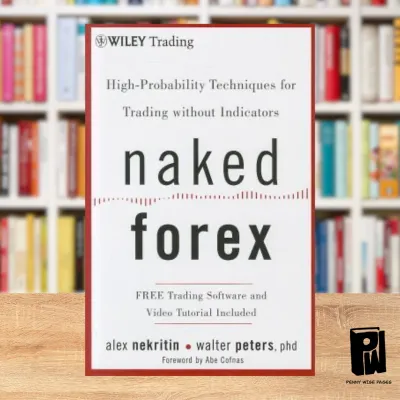
Naked Forex: High-Probability Techniques for Trading Without Indicators by Alex Nekritin and Walter Peters
A common trap for young Filipino traders is “analysis paralysis,” where they clutter their charts with dozens of colorful indicators, moving averages, and oscillators. Naked Forex offers a refreshing and highly effective antidote to this problem. The authors advocate for “naked trading,” which means analyzing clean charts based entirely on raw price action, support and resistance zones, and candlestick patterns.
This book is incredibly valuable for beginners because it forces you to develop a clean, intuitive understanding of market structure. Instead of waiting for an indicator to tell you to buy or sell, you learn to read the immediate story that the price candles themselves are telling. The authors break down specific, high-probability setup patterns that are easy for beginners to identify and execute.
While the strategies outlined in the book are straightforward, the authors emphasize that executing them consistently requires immense discipline. They strongly advise readers to practice these price action setups on a demo account for several months before risking any real money. This ensures you build visual familiarity with the setups without the emotional stress of financial risk.
Trading in the Zone by Mark Douglas
Even if you master technical analysis and have a flawless strategy, you will fail as a trader if you do not master your own mind. Trading in the Zone by Mark Douglas is widely considered the holy grail of trading psychology. While it is not exclusively focused on the forex market, its lessons are universally applicable to any financial instrument.
Douglas addresses the deep-seated psychological barriers that prevent traders from succeeding, such as the fear of being wrong, the urge to revenge-trade after a loss, and the hesitation to pull the trigger on a valid setup. He teaches readers how to accept risk completely and how to think in terms of probabilities rather than certainties. You will learn that any single trade has a random outcome, but over a series of one hundred trades, a disciplined strategy with a positive edge will yield profitable results.
This book should be read alongside a technical manual. While Naked Forex or Forex For Beginners will give you the tools to analyze the charts, Trading in the Zone gives you the mental framework required to execute those tools without emotional interference. Reading this early in your journey will save you from the painful cycle of blowing trading accounts due to psychological errors.
Bridging Book Theory with Real-World Practice in the Philippines
Acquiring knowledge from books is only the first step; the real challenge lies in translating those universal concepts into daily practice while living in the Philippines. One of the most critical factors for Filipino traders is time zone alignment. The global forex market operates 24 hours a day, but the most volatile and profitable trading sessions are the London and New York sessions.
For traders in the Philippines, the London session typically opens around 3:00 PM or 4:00 PM Philippine Standard Time (PHT), while the New York session begins around 8:00 PM or 9:00 PM PHT, depending on daylight saving time adjustments in the West. This timing is highly advantageous for young Filipino professionals or students, as it allows them to study the markets and execute trades in the evening after their regular school or office hours, without interfering with their daytime commitments.
To safely apply what you have learned from your books, you must open a demo account with a reputable broker. A demo account allows you to trade in real-time market conditions using virtual funds, meaning you can test strategies from Naked Forex or analyze volume trends as suggested by Anna Coulling without any financial risk. Treat your demo account as if it were real money; practice risk management rules, calculate your lot sizes carefully, and keep a detailed trading journal.
When you are eventually ready to transition to a live account, do not rely on books for broker recommendations, as market regulations and broker offerings change over time. Instead, carefully verify the regulatory status of any broker you consider. Ensure they are regulated by highly respected international financial authorities (such as the FCA in the UK, ASIC in Australia, or CySEC in Cyprus) and check local advisories from the Securities and Exchange Commission (SEC) of the Philippines to ensure compliance and safety. Finally, consider joining reputable, educational local trading communities. Sharing your chart analyses and discussing book concepts with fellow Filipino learners can accelerate your growth and provide valuable peer support as you navigate your trading journey.
Frequently Asked Questions (FAQ)
Can I learn forex trading entirely from books without taking a paid course?
Yes, you can absolutely learn the core principles, technical strategies, and psychological frameworks of forex trading entirely from books. Most high-priced courses simply repackage the timeless concepts found in classic trading literature. Books written by verified industry professionals offer a highly structured, cost-effective foundation. However, book knowledge alone is not enough. You must pair your reading with extensive screen time on a demo trading platform to develop the practical, real-time decision-making skills that no book or course can fully transmit.
Should I buy physical copies or e-books for trading study?
The choice between physical books and e-books depends heavily on your personal study habits and lifestyle. Physical books are highly recommended for technical manuals like Naked Forex because they allow you to easily flip back and forth between strategy explanations and complex chart diagrams, and they make highlighting and note-taking much simpler. On the other hand, e-books offer unmatched portability, lower costs, and instant delivery to your device in the Philippines. Many successful traders use a hybrid approach: they keep physical copies of core study manuals on their desks for deep, focused study, and use e-books on their phones or tablets for quick reference while monitoring the live markets.

Community discussion
Share your experience or ask a question. Comments are reviewed before publication.