
For a complete beginner, the ideal drumsticks to start with are standard 5A hickory drumsticks with an oval wood tip. This specific combination provides the most balanced weight, length, and durability, making it highly versatile for practicing rudiments on a pad or playing on a full drum kit. If you have smaller hands, are a younger player, or prefer a lighter touch, a pair of 7A drumsticks is the recommended alternative.
Choosing your first pair of drumsticks can feel overwhelming with the sheer volume of numbers, letters, wood types, and tip shapes available. However, focusing on a few physical characteristics will help you select a pair that prevents hand fatigue and supports proper technique. By understanding how size, material, and construction affect your playing, you can confidently choose a pair that fits your hands and your budget.
Decoding Drumstick Sizes: Where Beginners Should Start
Drumstick sizes are designated by a combination of numbers and letters, such as 5A, 7A, 2B, and 5B. Historically, the numbers represented the diameter of the stick, while the letters indicated the intended musical application. For example, “A” stood for orchestral or acoustic playing, “B” for band or concert use, and “S” for street or marching bands. Today, these codes serve as standardized size categories across almost all manufacturers, though exact dimensions can still vary slightly.
Products mentioned in this guide
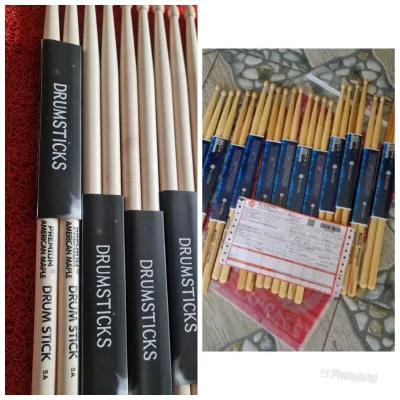
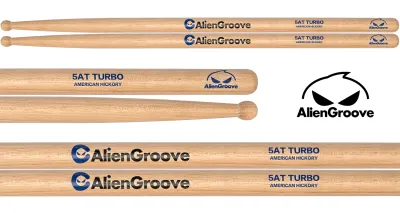
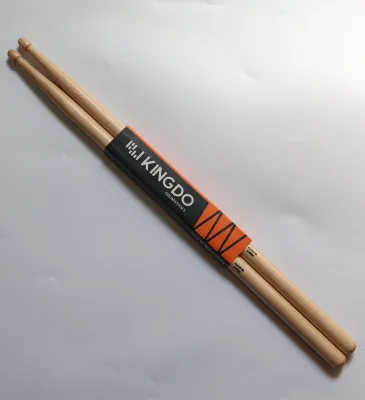
![[ammoon]5A Drum Sticks Maple Wood Sticks](https://img.lazcdn.com/g/p/8eb1818eecca3e23152aec9875227a83.jpg_400x400q80.jpg_.webp)
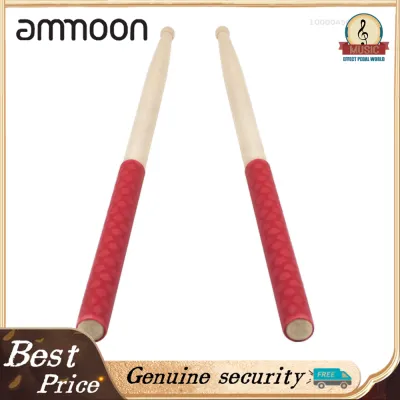
Prices are valid at publication and may change. Please refer to the product page for the latest price.
For the vast majority of beginners, the 5A size is the universal starting benchmark. A standard 5A stick typically measures around 16 inches (40.6 cm) in length with a diameter of approximately 0.565 inches (1.43 cm). This middle-of-the-road profile offers enough weight to help you feel the natural rebound of the drumhead without straining your wrists. It is heavy enough to build hand strength but light enough to allow for controlled, rapid strokes during practice sessions.
If you find the 5A feels too bulky or heavy, the 7A is your best alternative. Thinner and slightly shorter, a 7A stick usually has a diameter of around 0.540 inches (1.37 cm) and a length of 15.5 inches (39.4 cm). This lighter profile is highly suited for younger students, players with smaller hands, or those focusing on softer musical styles like jazz and light acoustic pop. The reduced mass allows for a faster rebound with less physical effort, though it delivers less volume and power.
When shopping for your first pair, it is essential to read the size codes and check the physical dimensions printed on the packaging sleeve rather than relying solely on the brand name. Different manufacturers may have minor variations in taper—the section of the stick that narrows toward the tip. A longer taper makes the stick feel lighter at the front and provides more rebound, while a shorter taper shifts the weight forward, offering more power but requiring more wrist control. Checking these physical specifications on the label ensures you know exactly what you are holding.
Wood Types and Materials: Balancing Durability and Rebound
The material of your drumsticks directly influences how much shock is transmitted to your hands, how the stick rebounds off the drumhead, and how long the pair will last before splintering. While synthetic materials exist, wood remains the preferred choice for beginners due to its natural flex and organic feel.

Hickory is the industry standard for drumsticks and is highly recommended for beginners. It is a dense, heavy wood with excellent shock-absorption properties. When you strike a drum or cymbal, the impact creates vibrations that travel up the shaft of the stick. Hickory naturally dampens these vibrations, protecting your wrists and fingers from fatigue and repetitive strain injuries. Its structural resilience also means it can withstand accidental rimshots and heavy hitting during standard practice without breaking prematurely.
Maple is another common wood type, known for being significantly lighter and softer than hickory. Because maple is less dense, manufacturers can produce a thicker stick (like a 2B or 5B profile) that still feels incredibly light in the hand. This makes maple excellent for players who want a thicker grip without the added weight, allowing for faster response and reduced hand fatigue during long, low-volume practice sessions. However, the trade-off is durability; maple dents and splinters much faster than hickory under heavy impact.
For players seeking extreme durability, synthetic or alternative composite materials are available, such as carbon fiber or aluminum-core sticks. While these options rarely break, they do not absorb shock as effectively as wood, which can lead to joint discomfort for beginners who are still developing proper grip technique. If you are considering synthetics, always check the manufacturer specifications to ensure they are safe for your specific drumheads and cymbals, as some rigid materials can damage acoustic gear.
Tip Shapes and Their Impact on Cymbal Articulation
The tip of the drumstick is the primary point of contact with your instruments, and its geometry plays a critical role in shaping your sound, particularly on cymbals. For a beginner, choosing a versatile, forgiving tip shape is key to developing a consistent ear for tone.
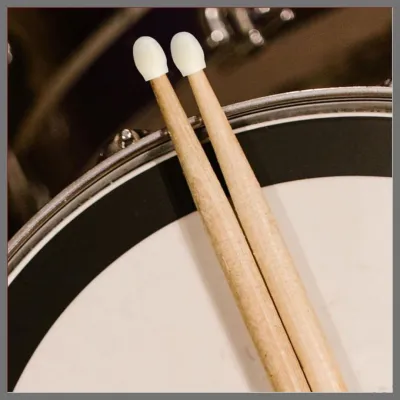
Round and oval tips are the most versatile options for new players. Round tips produce a bright, highly consistent sound regardless of the angle at which the stick strikes the surface. This consistency is incredibly helpful for beginners who are still working on maintaining a uniform hand position. Oval tips have a slightly larger surface area, which distributes the impact to yield a warmer, fuller, and more balanced tone on both drums and cymbals. This makes them highly forgiving as you learn to control your dynamics.
Acorn and teardrop tips offer a more focused and defined sound. Acorn tips have a large, tapered surface area that allows you to change the tone of a cymbal simply by altering the angle of your strike, offering rich, dark undertones. Teardrop tips provide a focused, low-end punch on drumheads. While these shapes offer excellent acoustic versatility, they require a more consistent striking angle to get the best sound, which can be challenging for absolute beginners to maintain.
Before purchasing any pair of sticks, take a moment to inspect the tip symmetry and structural integrity. Look closely at the wood grain on the tip to ensure there are no pre-existing splits, chips, or flat spots. A symmetrical, unblemished tip ensures a consistent rebound off the drumhead, helping you build muscle memory without compensating for physical defects in the wood.
Assessing Hun Drumsticks for Your First Setup
Hun drumsticks have become a widely visible option for beginners looking for an affordable entry point into drumming. Whether you are browsing local music retailers in the Philippines or exploring online marketplaces, evaluating these sticks against standard beginner requirements will help you get the most value for your money.
First, verify the printed size code and wood type on the Hun packaging. Ensure the sleeve explicitly states “5A” or “7A” and identifies the wood source, such as American hickory or maple. Checking these details prevents you from accidentally purchasing specialty or marching sticks that are too heavy for a beginner’s hands.
Next, perform a physical quality check on the pair before you buy or immediately upon unboxing:
- The Roll Test: Place both sticks side-by-side on a completely flat surface, such as a glass counter or a smooth table. Roll them forward and backward with your palm. If a stick wobbles, lifts, or makes an uneven clicking sound, it is warped and should be exchanged.
- Weight Balance: Hold one stick in each hand using a loose grip. Gently bounce them on a practice pad or a hard, protected surface. They should feel identical in weight and produce a similar pitch when tapped. A significant difference in weight between the left and right stick can disrupt your learning progress.
- Grain Consistency: Inspect the wood grain running along the shaft of the stick. The grain lines should run straight from the butt end all the way to the tip. If the grain lines run diagonally across the shaft (known as grain run-out), the stick is highly vulnerable to snapping along those diagonal lines when you strike a rim.
Finally, compare the physical dimensions of the Hun model against standard industry benchmarks. A reliable beginner stick should feel balanced in your hand, with the center of gravity sitting roughly three to four inches from the butt end. This balance allows the stick to pivot naturally in your grip, making your early practice sessions much more comfortable.
Inspecting Wear and Knowing When to Replace
Drumsticks are consumable tools; they are designed to wear down over time to protect your drumheads and cymbals from absorbing the full force of your strikes. Knowing how to monitor their condition will keep your playing safe and protect your equipment from damage.
As you practice, keep an eye out for immediate replacement signals. Deep dents along the shoulder (the tapered area below the tip), severe splintering along the shaft, or exposed core fibers are clear signs that the stick’s structural integrity is compromised. Playing with a severely splintered stick can cause it to snap mid-stroke, potentially sending sharp wood fragments toward your face or puncturing a drumhead. More importantly, a chipped or cracked tip will produce a dull sound and can easily slice through plastic drumheads or delicate electronic drum pads.
To extend the overall lifespan of your sticks, practice rotating them regularly. During a practice session, one hand (usually the one playing the hi-hat or ride cymbal) will subject its stick to much more abrasive wear than the hand playing the snare drum. By swapping the left and right sticks halfway through your practice, you distribute the impact wear evenly across both sticks, preventing one from breaking prematurely.
Proper storage is also vital, especially in tropical climates like the Philippines where high humidity and temperature fluctuations are common. Wood is highly sensitive to moisture; excess humidity can cause drumsticks to absorb water, making them heavy, soft, and prone to warping. Store your sticks in a dry, temperature-stable environment, preferably inside a dedicated stick bag. Avoid leaving them on damp concrete floors, near open windows, or inside a hot car, as these conditions will quickly ruin the straightness of the wood.
Frequently Asked Questions (FAQ)
Do I need different drumsticks for electronic drum kits?
You do not necessarily need a different size of drumstick for an electronic kit, but you must pay close attention to the condition of the tips. Always check your electronic kit manufacturer’s manual for specific recommendations regarding stick types and materials.
If you choose to use wood-tipped sticks, they must be kept exclusively for your electronic kit. Using sticks that have previously been played on acoustic cymbals can transfer microscopic metal shards or rough wood splinters to your electronic pads. These sharp edges can easily tear delicate mesh drumheads or scratch rubber pads. Many electronic drum players prefer nylon-tipped sticks because they do not splinter, ensuring a smooth surface that protects the kit over long-term use.
How can I tell if a drumstick is warped before buying?
The most reliable way to identify a warped drumstick is by performing a quick physical roll test at the point of purchase. Place the stick on a flat, hard surface—such as a glass display case, a smooth wooden counter, or a tiled floor—and roll it gently with your hand.
As the stick rolls, watch the tip closely. If the tip wobbles up and down, or if the shaft of the stick daylight-filters unevenly against the flat surface, the wood has warped. A straight stick will roll smoothly and maintain consistent contact with the surface. Additionally, visually inspect the wood grain; straight, parallel grain lines running the entire length of the stick are a strong indicator of a stable, high-quality cut of wood that is unlikely to warp over time.

Community discussion
Share your experience or ask a question. Comments are reviewed before publication.