
When evaluating the Bansid 88-key piano against other entry-level digital pianos available in the Philippines, determining the best value requires looking beyond the initial price tag. Budget 88-key instruments vary significantly in their internal mechanisms, sound generation, and build quality. To determine if the Bansid model or a competing budget alternative is right for you, you must verify the exact key mechanism, polyphony limits, and connection ports listed by the seller before making a purchase.
While these instruments look similar in online listings, their actual performance, feel, and sound quality can vary dramatically. The value of the Bansid 88-key piano depends entirely on how its specific features align with your learning goals, space constraints, and expectations for realistic piano playability. By focusing on verifiable specifications rather than marketing claims, you can avoid the common pitfalls of buying an instrument that fails to support your musical growth.
This comparison guide breaks down the critical factors you need to evaluate—ranging from key weight and touch sensitivity to polyphony and physical stability—so you can confidently compare the Bansid piano with other budget-friendly options in the local market.
Products mentioned in this guide
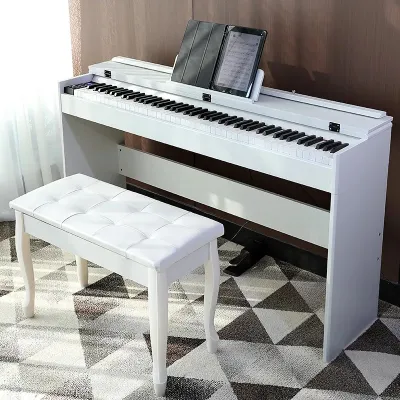
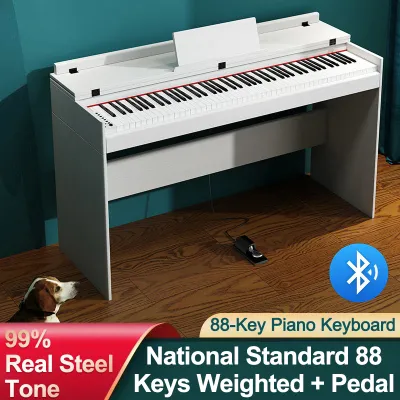
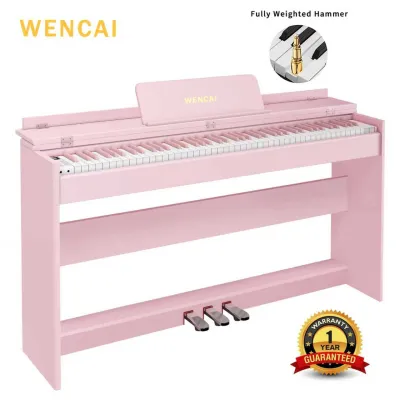
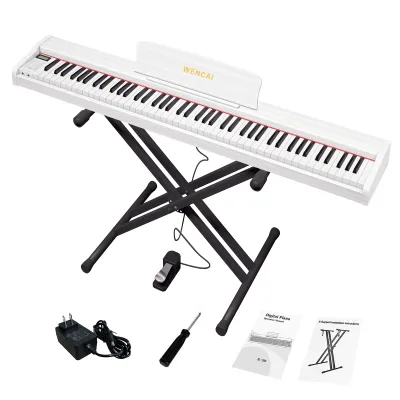
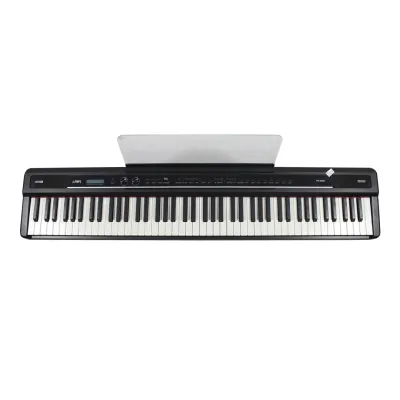
Prices are valid at publication and may change. Please refer to the product page for the latest price.
Setting the Baseline for Budget 88-Key Digital Pianos
In the Philippine market, budget 88-key digital pianos generally fall into a specific price tier, often ranging from around ₱5,000 to ₱15,000. Within this range, manufacturers must balance production costs, which directly affects the quality of the internal components and the materials used for the outer shell. Understanding what is typical for this price bracket helps you set realistic expectations and spot listings that might be overpromising on features.
A key distinction to make early in your search is the difference between a portable 88-key keyboard and a dedicated digital piano with a fixed wooden stand. Portable models are designed for easy storage and transport, making them popular for smaller living spaces or apartments where a permanent setup is not feasible. On the other hand, digital pianos with integrated stands offer greater physical stability and often include a built-in three-pedal unit, though they require a dedicated space and are much harder to move around.
To hit these lower price points, budget models inevitably introduce specific trade-offs. The most common compromise is found in the sound engine, which may use simplified audio samples that lack the depth and resonance of more expensive instruments. Additionally, the key mechanisms in budget keyboards are often lighter and less complex than the heavy, graded hammer actions found in premium digital pianos, which can affect how closely the instrument mimics an acoustic piano.
Evaluating Key Action and Playability Across Budget Models
The way the keys feel under your fingers is the most critical aspect of any digital piano, as it directly influences your ability to develop proper playing technique. When comparing the Bansid 88-key piano to other budget alternatives, you must carefully check the product specifications to identify the exact type of key action used. Many budget models use the terms “weighted” or “semi-weighted” loosely, so verifying the mechanical design is essential.

Semi-weighted keys use springs and light weights to provide some resistance, offering a feel that is heavier than a standard synthesizer but much lighter than an acoustic piano. Fully weighted keys, or those featuring hammer action, use actual mechanical weights to simulate the physical hammers of an acoustic instrument. If you are a beginner looking to transition to an acoustic piano in the future, prioritizing a model with a verified weighted hammer action will help you build the necessary finger strength and control.
Touch sensitivity, or velocity response, is another vital feature to verify in any budget digital piano listing. This technology ensures that the volume and character of the sound change depending on how hard or soft you strike the keys. Without reliable touch sensitivity, the piano will produce the same volume regardless of your finger pressure, making it impossible to play with expression or dynamics.
When you cannot test the instrument in person before purchasing from an online marketplace, user feedback can provide valuable clues about playability. Look for specific comments regarding key noise, such as clicking or clacking sounds when the keys are pressed and released, which can be distracting during quiet practice sessions. Also, pay attention to reports of excessive mechanical resistance or keys that feel mushy, as these issues can hinder fast finger movements and lead to hand fatigue.
Comparing Sound Engines, Polyphony, and Speaker Output
The quality of the sound engine determines how realistic and inspiring your practice sessions will be. Budget digital pianos typically rely on sample-based synthesis, where recorded sounds of acoustic pianos are triggered when you press a key. When evaluating the Bansid piano and its competitors, look closely at the polyphony count, which is the maximum number of individual notes or voices the instrument can produce simultaneously.
For a beginner, a polyphony count of 64 notes is generally sufficient for basic pieces, but a count of 128 notes is highly recommended as you progress. High polyphony is crucial when you begin using the sustain pedal, as it prevents older notes from being abruptly cut off when you play rapid passages or complex chords. If a budget model does not explicitly state its polyphony count in the technical specifications, it is often safer to assume it has a lower limit that may restrict advanced playing.
The physical speakers built into the keyboard also play a major role in your listening experience. Check the product specifications for the speaker wattage, which is typically expressed as something like “2 x 5W” or “2 x 10W” for budget models. While higher wattage generally translates to a fuller, louder sound that can easily fill a room, very low-wattage speakers may sound thin or distort at higher volumes, requiring you to rely on external audio solutions.
For many players in the Philippines, especially those living in shared spaces or quiet neighborhoods, silent practice is a daily necessity. Verify that the digital piano features at least one standard headphone jack, preferably a 1/4-inch or 3.5mm port, and check if the package includes a compatible pair of headphones. Additionally, if you plan to perform or record, look for dedicated auxiliary line-out ports that allow you to connect the piano to external amplifiers or audio interfaces without disabling the internal speakers.
Assessing Build Quality, Connectivity, and Bundle Value
The physical construction of a budget digital piano affects both its durability and your overall playing experience. Most instruments in this price range feature a plastic chassis to keep the weight manageable and production costs low. When reviewing the Bansid piano or similar models, look for details about the overall weight of the keyboard; extremely lightweight 88-key models may slide around on a stand or flex under heavy playing, while heavier models tend to feel more robust and stable.
Digital connectivity is another area where budget models can vary significantly. A USB-to-Host port is an essential feature to look for, as it allows you to connect the piano to a computer, tablet, or smartphone. This connection enables you to use the keyboard as a MIDI controller for music production software, learning apps, or interactive piano tutorials, greatly expanding the utility of a budget instrument.
The overall value of a budget digital piano package is often determined by the accessories included in the bundle. Many online marketplace listings in the Philippines package the keyboard with essential items such as an X-stand or Z-stand, a sustain pedal, a music sheet stand, and a bench. When comparing prices, calculate the cost of buying these accessories separately; a slightly more expensive piano that includes a sturdy, adjustable stand and a responsive sustain pedal may offer better overall value than a cheaper keyboard that comes with no accessories.
Be sure to inspect the quality of the included sustain pedal in the product photos. Many budget bundles include a small, plastic footswitch style pedal that easily slides around on tiled floors and does not feel like a real piano pedal. If possible, look for bundles that feature a classic, chrome-plated piano-style sustain pedal, or budget to purchase one separately to ensure a more authentic pedaling experience.
Decision Framework: Choosing the Right Budget Digital Piano
To make the final decision between the Bansid 88-key piano and other budget digital pianos available in the Philippines, you should use a structured verification process. Start by defining your primary musical goals and your physical practice environment. If you are on a very strict budget and need a highly portable instrument for casual practice or MIDI controller use, the Bansid model may be a suitable choice, provided its listed specifications for key action and connectivity meet your basic requirements.
However, if your goal is to develop formal piano skills or prepare for classical examinations, you should prioritize instruments with verified fully weighted hammer action and higher polyphony. In this case, it may be worth saving for established entry-level models from brands that offer robust local warranty support and authorized service centers in the Philippines. Having access to official customer service and replacement parts can save you significant hassle if the instrument encounters mechanical or electronic issues down the road.
Before finalizing your purchase on any online marketplace, carefully audit the specific listing you are viewing. Ensure the seller clearly details the exact technical specifications, the precise items included in the bundle, and the terms of any warranty they offer. Checking the seller’s rating, reading recent customer reviews specifically mentioning shipping packaging, and verifying their authorized dealer status will help ensure you receive a genuine, undamaged instrument that is ready to support your musical journey.
Frequently Asked Questions (FAQ)
Is an 88-key budget digital piano suitable for learning classical piano?
An 88-key budget digital piano can serve as a starting point for absolute beginners, but its suitability for classical piano depends heavily on the key action. Classical repertoire requires a wide dynamic range and rapid key repetition, which are difficult to execute on semi-weighted or non-weighted keys. To support classical training, you must verify that the model features a true fully weighted hammer action that accurately mimics the resistance of an acoustic piano’s keys.
Do budget 88-key pianos require external amplifiers?
Most budget 88-key digital pianos come equipped with built-in stereo speakers that are sufficient for personal practice in a quiet room. However, because these built-in speakers typically have low wattage, they may struggle to deliver clear, undistorted sound in noisy environments or larger spaces. If you plan to perform for an audience or practice in a loud setting, you can connect the piano’s headphone or auxiliary line-out port to an external keyboard amplifier, active PA speaker, or home audio system.

Community discussion
Share your experience or ask a question. Comments are reviewed before publication.