
Finding a reliable digital piano under ₱25,000 in the Philippines requires balancing your musical goals with realistic hardware expectations. Within this price bracket, Alesis offers several entry-level instruments designed for beginners, hobbyists, and gigging musicians who need portability. By understanding the key differences in key action, connectivity, and overall package contents, you can secure a highly functional instrument that fits your budget without sacrificing essential learning features.
Setting Expectations for Alesis Pianos Under ₱25,000
When shopping for a keyboard instrument within a strict budget, the first step is distinguishing between a portable keyboard and a dedicated digital piano. Portable keyboards are generally designed with a vast library of synthesized sounds, automatic accompaniment rhythms, and lightweight, unweighted keys. They excel at music production, casual playing, and sound experimentation. In contrast, a digital piano focuses heavily on replicating the acoustic piano experience, prioritizing high-quality grand piano samples and a key action that mimics physical piano keys. Alesis manufactures instruments in both categories, so you must identify which style aligns with your musical journey before making a purchase.
The choice between a 61-key and an 88-key configuration is another critical decision that impacts both playability and space management. A 61-key keyboard covers five octaves, which is highly compact and convenient for small apartments, condominium units, or shared bedrooms in urban areas. It is perfectly adequate for learning basic music theory, playing simple pop melodies, or producing electronic music. However, if you intend to study classical piano or play complex arrangements, you will quickly run out of keys. An 88-key instrument provides the full range of a traditional acoustic piano, allowing you to play any piece of sheet music without restriction, though it requires a larger physical footprint and a sturdier support structure.
Products mentioned in this guide
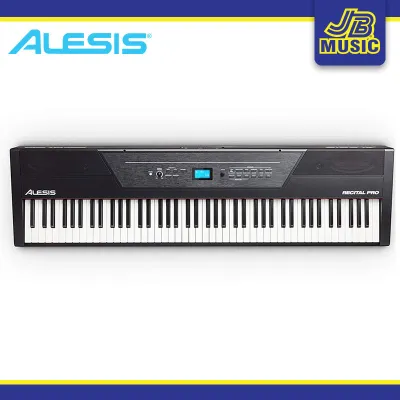
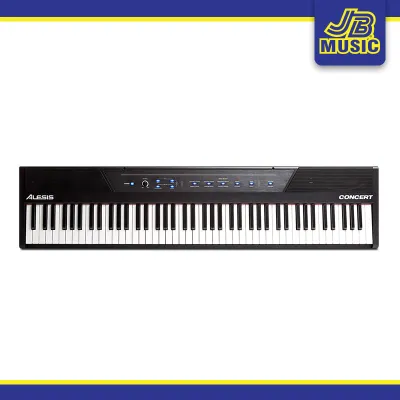
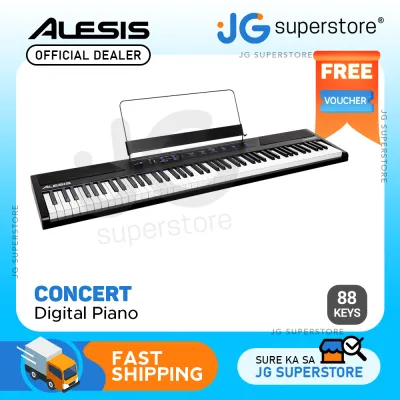
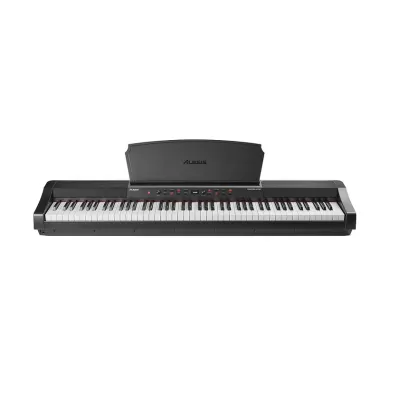
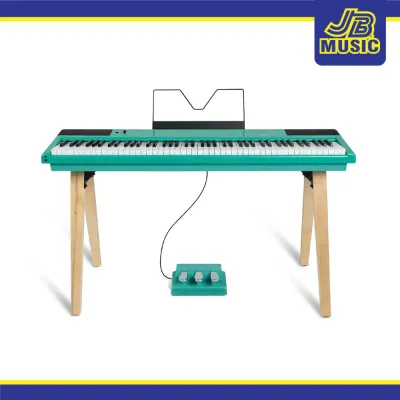
Prices are valid at publication and may change. Please refer to the product page for the latest price.
Understanding the physical and tactile differences in key action is vital for managing your expectations in this price range. Under ₱25,000, most available instruments feature either semi-weighted or fully weighted hammer action keys. Semi-weighted keys use a combination of spring tension and light weights to provide some resistance. While they do not feel like a real piano, they are incredibly lightweight, making the instrument highly portable and easy to transport to gigs or rehearsals. They are also gentler on the fingers of young children or absolute beginners who have not yet developed hand strength.
Fully weighted hammer action keys, on the other hand, utilize a mechanical system of levers and weights to replicate the physical resistance of an acoustic piano’s hammers. This action is essential for anyone serious about developing proper finger strength, hand technique, and dynamic control. While fully weighted models are highly desirable, they are mechanically complex and expensive to manufacture, placing them at the very top of or slightly beyond the ₱25,000 price limit. If your primary goal is classical training or transitioning to an acoustic piano in the future, prioritizing a fully weighted action is highly recommended, even if it means choosing a model with fewer extra sounds or features.
Essential Specifications to Evaluate
As you compare different models, polyphony is one of the most critical technical specifications to evaluate. Polyphony refers to the maximum number of individual notes or voices that the instrument can sound at the exact same time. When you play a chord while holding down the sustain pedal, every single note continues to ring out, consuming polyphony. If you exceed the instrument’s limit, older notes will be cut off abruptly to make room for new ones. For basic practice, a 64-note polyphony count is generally sufficient. However, if you plan to layer multiple sounds—such as combining a grand piano sample with a soft string pad—or play complex, fast-tempo classical pieces, looking for an instrument with 128-note polyphony will ensure a seamless and natural sound.

The quality of the built-in sound engine and speaker system directly determines how enjoyable your practice sessions will be. Alesis utilizes proprietary sampling technology to capture the acoustic characteristics of grand pianos, but the realism of these sounds depends heavily on the model’s processing power. Beyond the sound engine itself, the physical speakers play a massive role in projecting that sound. For typical home or bedroom use, a dual-speaker system with a combined output of 10 to 20 watts is standard. It is also worth considering the local environment; the high humidity levels in the Philippines can affect electronic components and speaker cones over time. Keeping your instrument in a well-ventilated room and covering it when not in use can help preserve the integrity of the speakers and internal circuitry.
Connectivity options are essential for modern musicians and should be checked thoroughly before buying. A dedicated headphone output is a must-have feature, allowing you to practice silently at any hour without disturbing family members or neighbors in close-quarters residential areas. Look for a USB-to-Host or USB-MIDI port, which allows you to connect the piano directly to a computer, tablet, or smartphone to interface with learning software or recording programs. Additionally, if you plan to perform at local church services, school events, or small venues, having dedicated stereo line outputs (1/4-inch jacks) is highly beneficial, as it allows you to connect directly to a mixing console or external amplifier without degrading the sound quality.
Calculating the True Cost of Your Setup
When budgeting for a digital piano, many buyers make the mistake of looking only at the price tag of the keyboard itself. To avoid unexpected expenses, you must calculate the true cost of a complete, playable setup. Most budget-friendly digital pianos are sold as standalone “slabs” without a built-in stand or bench. Placing a heavy 88-key keyboard on a standard study desk or dining table is rarely ergonomic and can lead to poor playing posture. A sturdy, double-braced X-stand or a heavy-duty Z-stand is a mandatory purchase to keep your instrument secure. Additionally, a dedicated, height-adjustable keyboard bench is highly recommended to ensure your elbows and wrists are positioned correctly relative to the keys.
The quality of the included accessories can also impact your overall budget. Many entry-level digital piano packages include a basic, plastic square foot-switch to act as a sustain pedal. While functional, these lightweight switches tend to slide around easily on tiled, polished concrete, or wooden floors common in local homes. They also lack the physical travel and resistance of a real piano pedal, making expressive playing difficult. Budgeting an extra amount to upgrade to a heavy-duty, chrome-plated damper pedal with a slip-resistant rubber base will significantly improve your playing experience and help you develop proper pedaling habits from day one.
Finally, do not forget to factor in shipping fees, local taxes, and potential handling charges when ordering online. Because 88-key digital pianos are bulky and heavy, shipping costs can escalate quickly, especially if you live outside major metropolitan areas. Some online retailers may display a low base price but charge substantial shipping fees that push the total cost beyond your ₱25,000 limit. Always add the item to your cart and input your delivery address to view the final checkout total, including any local taxes or import duties, before making your final decision.
Navigating Warranties and Retailer Reliability
Protecting your investment is crucial when purchasing electronic musical instruments, making warranty coverage a top priority. When browsing local retailers, always check if the instrument comes with an official distributor warranty or a store-specific guarantee. An official distributor warranty ensures that if your piano develops a technical fault, it can be repaired by authorized technicians using genuine replacement parts. Store-specific warranties or parallel imports may offer a slightly lower purchase price, but they often leave you with limited options if the instrument requires complex repairs down the line.
E-commerce platforms offer incredible convenience, but they also require a high level of vigilance. When shopping on online marketplaces, watch out for red flags such as sellers with extremely low prices compared to the market average, shops with very few ratings, or listings with poorly translated product descriptions. Unauthorized third-party sellers may ship refurbished units, older models, or items intended for different regions with incompatible power adapters. Always read customer reviews, check the seller’s overall rating, and ask direct questions about warranty coverage and power supply compatibility before clicking the buy button.
Understanding the retailer’s return policy and testing period is equally important. When your digital piano arrives, inspect the packaging immediately for any signs of rough handling during transit. Unbox the instrument carefully and test every single key to ensure there are no dead keys, sticky mechanisms, or uneven velocities. Test all the buttons, the headphone jack, the power port, and the included accessories within the seller’s designated return window. Having a clear, hassle-free return policy gives you peace of mind, ensuring you can easily exchange the unit if any manufacturing defects or shipping damages are discovered.
When to Reassess Your Budget or Options
While a ₱25,000 budget can secure a highly capable entry-level instrument, there are scenarios where it might be wiser to reassess your options. If your primary goal is to study classical piano seriously or prepare for formal music examinations, the semi-weighted keys and basic sound engines found in this price bracket may eventually hinder your progress. Advanced classical techniques require a high level of dynamic control and key responsiveness that only a high-quality, graded hammer action keyboard can provide. If you fall into this category, saving up a bit longer to invest in a higher-tier digital piano may save you money in the long run by avoiding an early upgrade.
If your budget is strictly capped at ₱25,000 but you require professional-grade features, exploring the second-hand market is a viable alternative. Many musicians sell gently used, higher-end Alesis models at a fraction of their original retail price. When buying pre-owned, always arrange to test the instrument in person. Play every key at different volumes, test the pedal inputs, and check the stability of the physical chassis. While buying used carries some risk due to the lack of a warranty, it can allow you to acquire a superior instrument that would otherwise be far out of your budget’s reach.
Lastly, keep an open mind and compare Alesis models with entry-level offerings from other reputable brands in the same price range. If a specific Alesis model is out of stock or does not meet your exact requirements, look at competing instruments to see how their key action, polyphony, and included accessory packages compare. Every brand has its own unique sound profile and key feel, so trying out different options at a local music store can help you find the perfect instrument that inspires you to play every single day.
Frequently Asked Questions (FAQ)
Do budget Alesis pianos include a realistic sustain pedal?
Most entry-level Alesis digital pianos in this price range ship with a basic, plastic square foot-switch rather than a traditional piano-style pedal. While this switch is functional for absolute beginners, it lacks the physical weight and travel of an acoustic piano pedal. For a more realistic feel and better control over your expression, it is highly recommended to purchase a separate, heavy-duty chrome sustain pedal with a non-slip rubber base.
Can I use these instruments with digital learning apps?
Yes, most modern Alesis digital pianos feature a USB-to-Host port that transmits MIDI data. This allows you to connect the keyboard directly to a laptop, tablet, or smartphone using a standard USB cable. Once connected, the instrument can interface with popular interactive piano learning applications, music notation software, and digital audio workstations (DAWs) without requiring additional drivers. Always check the product specifications to confirm the presence of a USB-MIDI port before purchasing.

Community discussion
Share your experience or ask a question. Comments are reviewed before publication.