
Choosing your first gitara is an exciting milestone, but the differences between acoustic, classical, and electric models can be confusing for new players. Rather than looking for a single universal option, the right choice depends on how the instrument’s physical design aligns with your comfort, the music you want to play, and the gear you are prepared to manage. By understanding how these instruments differ in construction, sound, and maintenance, you can select a guitar that keeps you motivated to practice every day.
Decoding Guitar Specs: Strings, Necks, and Playability
Classical guitars use nylon strings, which have lower tension and feel softer on your fingertips. This makes them highly approachable for beginners who want to avoid initial finger soreness during long practice sessions. Acoustic and electric guitars use steel strings, which require higher tension to tune to pitch. While steel strings produce a brighter tone, they will cause temporary fingertip tenderness until you develop calluses.
Electric guitars typically use lighter gauge steel strings than acoustic guitars, making them easier to press down despite the steel material. Classical guitars feature a wide, flat neck with generous spacing between the strings. This design is optimized for complex fingerstyle playing, preventing your fingers from accidentally muting adjacent strings, but it can be challenging for players with smaller hands to wrap around comfortably.
Products mentioned in this guide
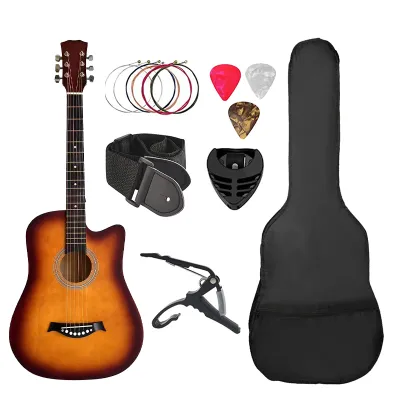
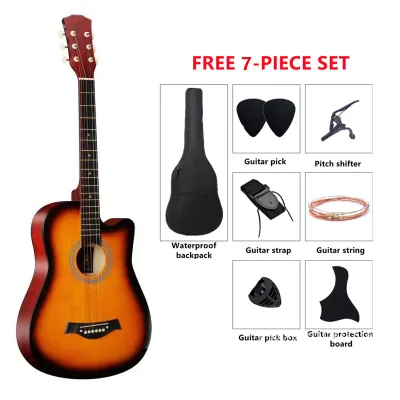



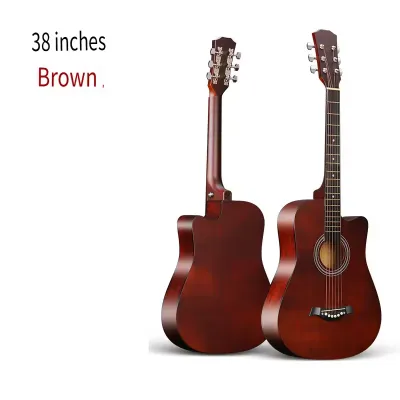
Prices are valid at publication and may change. Please refer to the product page for the latest price.
Acoustic and electric guitars have narrower, slightly curved necks. This profile makes it much easier to grip chords and reach across the fretboard, though the closer string spacing requires more precision to avoid buzzing. Action refers to the height of the strings above the fretboard. High action requires more physical effort to press down notes, which can quickly fatigue a beginner’s hand.
Electric guitars generally have the lowest action, followed by acoustics, while classical guitars often have higher action to allow the nylon strings to vibrate freely without buzzing. Scale length—the distance between the nut and the bridge—also affects string tension; a shorter scale length generally feels slightly looser and easier to play.
Matching Sound Profiles to Your Musical Goals
The acoustic gitara is celebrated for its bright, resonant, and projecting tone. Because the hollow body naturally amplifies the vibrating steel strings, it provides an immediate, organic sound ideal for strumming chords, acoustic pop, folk, and singer-songwriter styles. If your goal is to sing along while playing or perform in casual acoustic settings, the acoustic guitar is a natural fit.

Equipped with nylon strings, classical guitars produce a warm, mellow, and highly articulate sound. The tone is less bright and has less sustain than a steel-string acoustic, but it offers excellent note separation. This makes it the traditional choice for classical compositions, flamenco, and intricate fingerstyle arrangements where individual notes need to stand out clearly.
Electric guitars are incredibly versatile because their sound is not limited by the physical body. Instead, magnetic pickups capture the string vibrations and send them to an amplifier. This setup allows you to shape your tone using gain, overdrive, and various effects. Whether you want the clean, warm tones of jazz, the gritty crunch of blues, or the heavy distortion of rock and metal, the electric guitar can adapt to almost any genre.
Equipment Requirements and Hidden Costs
When planning your budget, consider the total cost of ownership. Acoustic and classical guitars are ready to play right out of the box, requiring no external gear to produce a full volume. An electric guitar, however, is nearly silent on its own. To practice effectively, you must budget for an amplifier, an instrument cable, and guitar picks.
All guitars require regular string replacements as sweat and dirt degrade the metal or nylon over time. However, environmental factors play a massive role in instrument longevity, especially in tropical climates with high humidity. Solid wood acoustic and classical guitars are highly sensitive to moisture changes, which can cause the wood to swell or warp. You may need to invest in silica gel packs or a dehumidified storage case.
Electric guitars are generally more structurally resilient, but their metal components and electronics can corrode in humid air, requiring periodic cleaning. Additionally, steel-string guitars feature an adjustable metal truss rod inside the neck to counteract string tension, which may require occasional professional adjustment. Acoustic and classical guitars have a fixed volume that cannot be turned down, which might disturb family members or neighbors in close living quarters.
Electric guitars offer excellent volume control; you can plug headphones directly into most modern practice amplifiers or multi-effects pedals, allowing you to practice silently at any hour of the day or night.
Frequently Asked Questions (FAQ)
Is it true that beginners must start on an acoustic or classical guitar?
No, this is a common myth. You should start with the type of guitar that plays the music you love, as personal motivation is the most critical factor in sticking with the instrument. While classical guitars are gentle on the fingers and acoustics are highly portable, electric guitars actually have thin necks and low string tension, making them physically very easy for beginners to play.
Can I put steel strings on a classical guitar?
No, you should never put steel strings on a classical guitar. Classical guitars are built with lightweight internal bracing and do not have an adjustable metal truss rod inside the neck to handle high tension. The immense tension of steel strings will warp the neck, lift the bridge off the body, or permanently crack the soundboard, ruining the instrument.

Community discussion
Share your experience or ask a question. Comments are reviewed before publication.