
Choosing between the authentic resonance of an acoustic grand piano and the versatility of a high-quality digital piano is a significant investment decision. In the Philippines, this choice is shaped not only by your musical goals and budget but also by practical factors like tropical humidity, residential space, and neighborhood density. There is no universal winner; the right choice depends entirely on your living situation, maintenance willingness, and specific playing needs. This guide breaks down the practical and sensory differences to help you evaluate which instrument truly aligns with your daily life.
Core Differences in Sound and Touch Experience
An acoustic grand piano produces sound through a complex mechanical process. When you press a key, a felt-covered hammer strikes high-tension steel strings, transferring vibrations through the bridge to the wooden soundboard. This physical process creates an organic sound rich in sympathetic resonance, complex overtones, and physical vibrations that you can feel through the keys and the cabinet. The acoustic action is highly sensitive, offering an infinite gradient of dynamic expression and tonal color based entirely on the speed and weight of your touch.
Digital pianos replicate this experience using electronic components. Instead of physical strings, they play back high-resolution digital samples of acoustic grand pianos or use advanced physical modeling algorithms to synthesize the sound in real time. To simulate the feel of an acoustic keyboard, quality digital pianos utilize weighted keys with graded hammer actions, meaning the keys on the lower register feel heavier than those on the higher register. Many premium digital models also simulate “escapement” or “let-off,” which is the subtle mechanical click felt when pressing an acoustic key down slowly.
Products mentioned in this guide
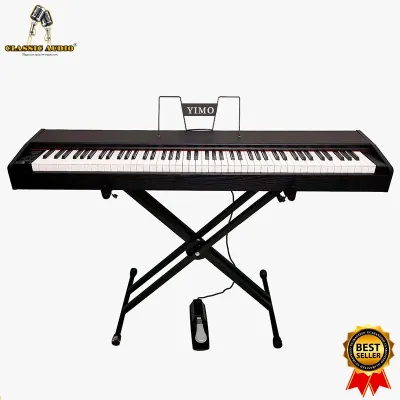
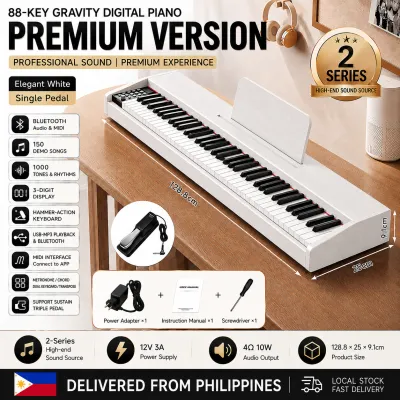
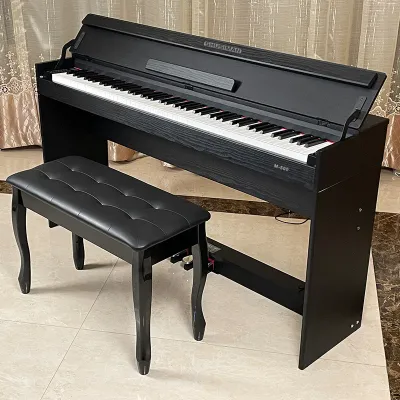
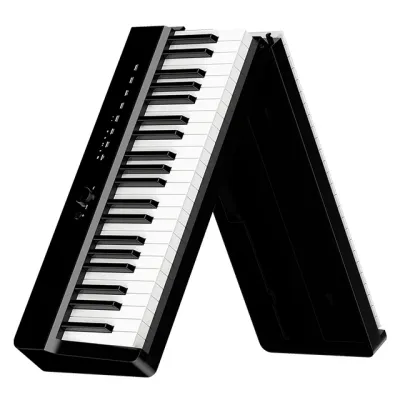
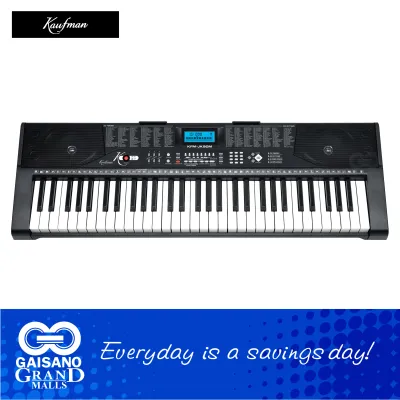
Prices are valid at publication and may change. Please refer to the product page for the latest price.
Because touch and tone are highly subjective, you should test these instruments in person rather than relying solely on manufacturer specification sheets. Visit a local showroom to evaluate key repetition speed, dynamic range from pianissimo to fortissimo, and tonal decay—how naturally the sound fades away when you hold a key. Pay close attention to how the keys respond to your specific playing style and whether the digital sound engine feels expressive or static.
Space, Acoustics, and Living Situation Constraints
An acoustic grand piano is a massive instrument that requires a dedicated environment. Even a small baby grand typically measures around five feet in length, while parlor and concert grands can exceed seven to nine feet. They also weigh hundreds of kilograms, which requires careful consideration of floor load capacity, especially on the upper floors of wood-framed homes or older structures. In contrast, a digital console piano has a compact footprint, often measuring less than two feet in depth, and is light enough to be moved easily by two people.

Room acoustics and soundproofing are critical when placing an acoustic instrument. Grand pianos are designed to project sound, and in typical Philippine homes featuring concrete walls and tiled or hardwood floors, the sound can bounce intensely, creating harsh acoustics. Furthermore, the natural volume of a grand piano can easily penetrate walls, which may lead to noise complaints if you live in a dense subdivision, townhouse, or high-rise condominium in Metro Manila or other urban centers.
Digital pianos solve these environmental challenges through adjustable volume controls and headphone jacks. This allows you to practice at any hour of the day or night without disturbing family members or neighbors. Some digital models even feature dual headphone jacks, which are highly convenient for quiet student-teacher instruction or duet practice in shared living spaces.
Budget, Maintenance, and Long-Term Ownership Costs
When planning your budget in Philippine Pesos (₱), it is important to recognize that acoustic grand pianos represent a premium, long-term investment. Entry-level acoustic grand pianos generally start in the mid-to-high six-figure range and can easily reach millions of pesos for premium Japanese or European models. High-quality digital pianos offer a much wider range of entry points, from portable weighted keyboards in the tens of thousands of pesos to advanced digital consoles that cost several hundred thousand pesos. Before making a purchase, consult authorized local distributors to verify current price lists, warranty terms, and delivery fees.
Ongoing maintenance is a mandatory cost for acoustic grand pianos, particularly in a tropical climate. The high relative humidity and seasonal temperature fluctuations in the Philippines pose a constant threat to wood, felt, and metal components. High humidity causes wooden parts to swell, leading to sticky keys, sluggish action, and warped soundboards, while also accelerating string rust. To protect an acoustic grand, you must invest in continuous climate control, such as dedicated room dehumidifiers, air conditioning, or specialized piano dehumidifier rods installed inside the cabinet. Additionally, acoustic pianos require professional tuning at least twice a year, along with periodic action regulation, which adds a recurring maintenance cost.
Digital pianos are virtually immune to the tuning issues caused by tropical humidity, as their pitch is electronically generated. They require no regular tuning or action regulation. However, buyers should consider the long-term lifespan of electronic consumer goods. Over a decade or more, digital components may face electronic obsolescence, and finding replacement parts for worn-out key sensors or mainboards can be challenging once a model is discontinued. Out-of-warranty circuit repairs can also be complex and require specialized electronic technicians.
Practice Features, Connectivity, and Learning Tools
Digital pianos offer a wide array of modern technology designed to assist with practice and learning. Most models include built-in metronomes, transpose functions, and recording capabilities that allow you to record your playing and listen back to analyze your progress. Many also feature built-in rhythm accompaniments, metronome variations, and pre-loaded classical lesson songs for practice.
Connectivity is another major advantage of digital instruments. Modern digital pianos often feature USB-to-Host ports, MIDI terminals, and Bluetooth audio/MIDI capabilities. This allows you to connect the instrument to tablets, smartphones, or computers to interact with educational apps, notation software, or digital audio workstations (DAWs) for music production. When evaluating digital models, always verify the specific model’s specifications for device compatibility, supported audio codecs, and interface types, as these features vary widely and cannot be assumed based on brand name alone.
An acoustic grand piano focuses purely on raw musical expression and does not contain built-in digital technology. If you wish to record an acoustic grand, you must invest in high-quality external microphones, audio interfaces, and a quiet room with good acoustics. While some manufacturers offer hybrid “silent” acoustic pianos—which feature physical mutes and digital sound modules—these instruments are significantly more expensive and require specialized maintenance for both the mechanical and electronic systems.
Decision Framework: Choosing the Right Piano for You
To make an informed decision, evaluate how your living situation and musical goals align with the characteristics of each instrument type.
Choose an acoustic grand piano if:
- You have a dedicated, climate-controlled room with sufficient space and structural floor support.
- You are pursuing advanced classical or professional training where authentic key action, sympathetic resonance, and physical feedback are critical to developing advanced technique.
- You have the budget for both the initial premium purchase and ongoing professional tuning, action regulation, and climate maintenance.
Choose a digital piano if:
- You live in an apartment, condominium, or shared household where volume control and silent headphone practice are essential.
- You want a low-maintenance instrument that is immune to tropical humidity and never needs tuning.
- You want to utilize modern technology, such as MIDI connectivity, recording software, and interactive educational apps.
Verify first if:
- Delivery Access: Measure all doorways, hallways, stairwells, and elevator dimensions to ensure a grand piano can be safely delivered to your room.
- Floor Load: Consult a structural engineer or building administrator regarding floor load limits if placing a heavy grand piano on an upper floor.
- Authorized Source: Verify the authorized source of the instrument to ensure valid warranty coverage, complete accessory packages (such as power adapters and pedals), and regional compatibility for electronic components.
- Local Technicians: Confirm the availability of qualified piano tuners and technicians in your area if you choose an acoustic grand.
Frequently Asked Questions (FAQ)
Do digital pianos need tuning?
No, digital pianos do not require tuning. Their sounds are digitally sampled or modeled and played back through electronic speakers or headphones. The pitch remains perfectly stable regardless of temperature, humidity, or how often the instrument is played.
Can I learn classical piano on a digital piano?
Yes, you can successfully learn classical piano on a high-quality digital piano, provided it features 88 fully weighted, graded hammer-action keys. This action simulates the resistance of an acoustic piano, allowing beginners and intermediate players to develop proper finger strength and technique. However, advanced classical pianists performing highly complex repertoire may eventually require an acoustic grand piano to master the finest nuances of pedaling, dynamic control, and tonal coloring.

Community discussion
Share your experience or ask a question. Comments are reviewed before publication.