
Finding a reliable 88-key keyboard piano in the Philippines within a strict ₱30,000 budget is entirely achievable if you know which technical compromises to accept. At this price point, you are looking at the entry-level tier of serious digital instruments, where manufacturers must balance the cost of key action mechanisms against digital features. The key to maximizing your investment is identifying your primary use case—whether that is formal classical piano training, casual home entertainment, or portable music production—and matching it to the right set of hardware specifications.
By focusing on verifiable physical attributes and essential electronic capabilities, you can avoid overpaying for marketing gimmicks or under-specced instruments that hinder your musical progress. This guide outlines how to evaluate key actions, interpret technical spec sheets, calculate the complete cost of ownership including local logistics, and navigate the Philippine retail landscape safely.
Defining Your Must-Haves vs. Compromises
When shopping for an 88-key keyboard piano under ₱30,000, the most critical decision you will make is the type of key action. For students learning traditional piano, a fully weighted hammer action is non-negotiable. These keys simulate the physical resistance of an acoustic piano’s hammers, which is essential for developing proper finger strength, hand posture, and expressive control. Without weighted keys, a student may struggle to transition to an acoustic piano, as their fingers will not be accustomed to the physical effort required to produce sound.
Products mentioned in this guide
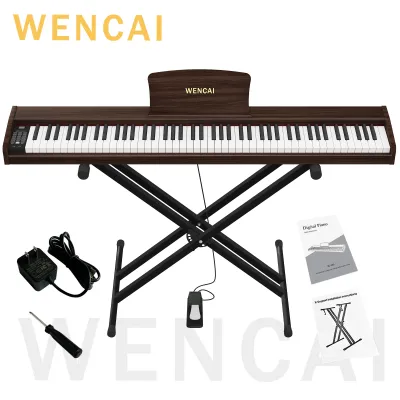
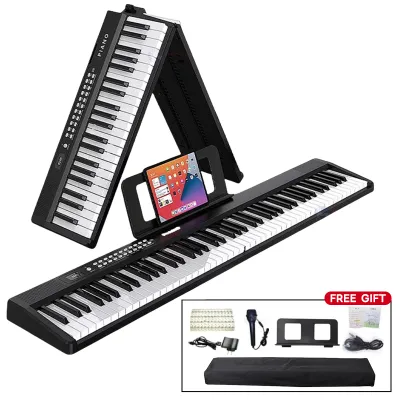
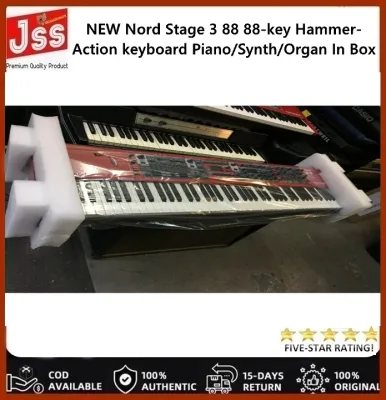
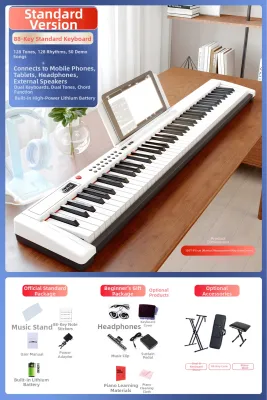
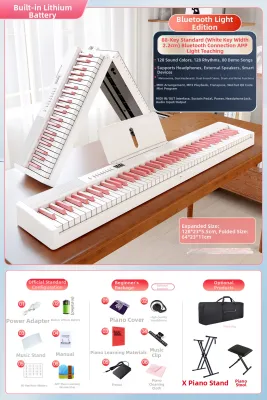
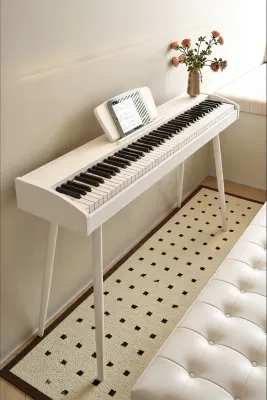
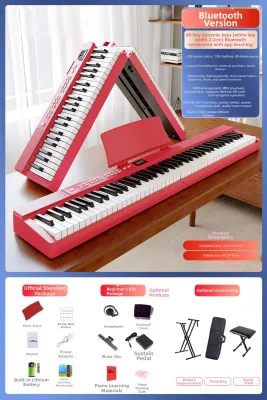
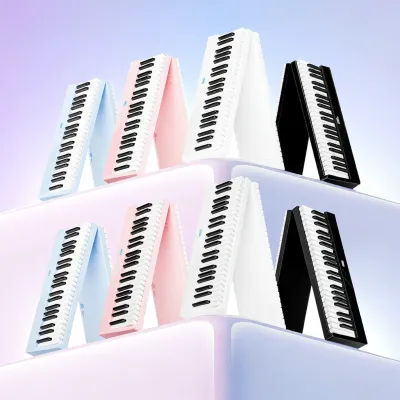
Prices are valid at publication and may change. Please refer to the product page for the latest price.
Conversely, if your primary goal is casual playing, synthesizer work, or basic MIDI sequencing, semi-weighted or synth-action keys may be a practical compromise. Semi-weighted keys use springs and light weights to provide some resistance, making them easier to play for beginners or those accustomed to organ-style keyboards. Choosing a semi-weighted model often lowers the purchase price significantly, allowing you to allocate more of your budget to other features or accessories.
Another major area of compromise is the built-in speaker system. Many budget-friendly 88-key keyboards feature modest, low-wattage internal speakers that may sound thin or distort at higher volumes, especially in humid tropical environments where acoustic properties can vary. If you plan to practice primarily with high-quality headphones or connect the keyboard to external studio monitors, you can comfortably compromise on internal speaker wattage. This allows you to prioritize key action and sound engine quality over built-in amplification.
Finally, consider your connectivity needs. Advanced features like wireless Bluetooth MIDI and integrated USB audio interfaces are convenient but often drive up the price of the instrument. For most users, standard USB-to-Host ports and traditional MIDI terminals are entirely adequate for connecting to computers, tablets, or external sound modules. Prioritizing these standard, reliable wired connections over wireless protocols can help keep your total expenditure well below the ₱30,000 threshold.
Essential Specifications to Verify on the Product Label
Before finalizing any purchase, it is vital to verify the technical specifications on the manufacturer’s official product label or spec sheet. The first specification to check is polyphony, which refers to the maximum number of individual notes or voices the keyboard can play simultaneously. For an 88-key instrument, look for a minimum polyphony of 64 notes, though 128 notes is highly recommended. Low polyphony can lead to frustrating note dropouts, where older notes are abruptly cut off when you play complex chords while holding down the sustain pedal.

The sound engine is another critical component that dictates the realism of your playing experience. Budget keyboards often rely on basic General MIDI presets, which can sound artificial and static. Instead, look for instruments that feature multi-sampled acoustic piano sounds. Multi-sampling captures the distinct tonal characteristics of an acoustic grand piano at various dynamic levels, ensuring that a soft key press sounds gentle and warm, while a hard strike sounds bright and powerful.
Key action mechanisms are frequently described with proprietary marketing terms, which can make direct comparisons difficult. To cut through the marketing jargon, look for specific technical classifications on the official spec sheet, such as “graded hammer action” or “scaled hammer action.” Graded action means the keys on the lower register feel heavier than those on the higher register, mimicking the physical reality of an acoustic piano’s graded strings and hammers. Verify these terms directly on the manufacturer’s global website rather than relying solely on online retail descriptions.
Lastly, pay close attention to pedal compatibility and the included accessories. Many entry-level 88-key keyboards ship with a basic, plastic square foot switch that slides easily on tiled floors and does not support half-damper techniques. Check the product specifications to see if the keyboard’s sound engine supports continuous or half-damper pedal inputs. This compatibility is essential if you plan to upgrade to a more realistic, metal sustain pedal that allows for nuanced pedaling techniques as your playing skills advance.
Calculating the True Cost: Accessories and Hidden Fees
The sticker price of an 88-key keyboard piano is rarely the final cost of getting the instrument ready to play in your home. To avoid exceeding your ₱30,000 budget, you must account for several essential accessories that are often sold separately. A sturdy keyboard stand is the first requirement; a standard double-braced X-stand or a heavy-duty Z-stand is necessary to support the weight of an 88-key instrument safely. Placing a heavy keyboard on an unstable table can lead to accidental falls and costly damage.
A dedicated, adjustable piano bench is another important accessory that directly impacts your playing posture and long-term comfort. Using a standard household chair can lead to poor wrist alignment and back strain during extended practice sessions. Additionally, if the bundled sustain pedal is a basic plastic switch, you should budget for an upgraded, weighted metal sustain pedal to ensure a more realistic pedaling experience.
Logistics and shipping fees can also add a substantial amount to your total checkout price, particularly in the Philippines. An 88-key keyboard piano, along with its packaging, typically weighs between 12 and 20 kilograms and measures over 1.3 meters in length. Shipping such a bulky, heavy item from a central warehouse to provincial areas can incur significant freight charges. Always calculate these shipping fees before committing to an online purchase to ensure the total cost remains within your budget.
Finally, consider the long-term maintenance and warranty support. Electronic instruments can be sensitive to the high humidity and ambient temperatures common in tropical climates. Ensure that the retailer provides an official local warranty that is honored by authorized service centers in the Philippines. Purchasing a gray-market import might save you money upfront, but the lack of local warranty coverage can make future repairs incredibly difficult and expensive if a mainboard or key sensor fails.
Evaluating Retailers and Avoiding Quality Traps
Navigating the marketplace requires vigilance to avoid counterfeit products, refurbished units sold as new, or gray-market items. The safest approach is to purchase directly from authorized musical instrument distributors or official brand stores on reputable e-commerce platforms. These sellers are authorized by the manufacturers to distribute their products locally, ensuring that you receive a genuine instrument with a valid local warranty and access to official spare parts.
Be highly skeptical of online listings that offer prices significantly below the standard market rate for popular models. These listings often feature gray-market imports that have been bypassed by official distribution channels. While these units may be genuine, they typically do not carry a local manufacturer’s warranty, meaning you will have to pay out of pocket for any repairs. Furthermore, some of these low-priced listings may actually be refurbished units or older floor models with worn-out key sensors.
Another critical detail to verify before purchasing is the power adapter specification. Many imported keyboards are bundled with power adapters designed for foreign electrical systems, such as 110V standards. In the Philippines, the standard domestic voltage is 220V at 60Hz. Connecting a 110V adapter directly to a local wall outlet will destroy the adapter and potentially damage the keyboard’s internal circuitry. Always confirm with the seller that the included power adapter is rated for 220V input or that they provide a compatible, safety-certified local power supply.
Frequently Asked Questions (FAQ)
Can I find a fully weighted 88-key keyboard under ₱30,000?
Yes, it is entirely possible to find a fully weighted 88-key keyboard piano within this budget, though your options will generally be limited to entry-level models from reputable manufacturers. At this price point, brands focus their engineering budgets on the physical key action and the primary grand piano sound, often omitting extra features like extensive rhythm libraries, Bluetooth connectivity, or advanced digital displays. To stay under ₱30,000, look for previous-generation models that are still sold new, or consider purchasing bundle deals from authorized local dealers that include a stand and pedal at a discounted package price.
Is a 61-key keyboard a better value if I am on a strict budget?
Whether a 61-key keyboard offers better value depends entirely on your musical goals. If your primary objective is to learn classical piano, play traditional repertoire, or take formal piano lessons, a 61-key keyboard is not a suitable substitute. Classical music frequently utilizes the full range of an 88-key instrument, and practicing on a shorter keyboard will quickly limit your progress. However, if your focus is strictly on modern music production, synthesizer playing, or electronic music where you can easily transpose octaves digitally, a 61-key keyboard can offer excellent value, often providing more advanced sound engines and controller features for the same price.

Community discussion
Share your experience or ask a question. Comments are reviewed before publication.