
Choosing the right keyboard piano for kids involves balancing your child’s current physical development with their musical potential. An instrument that is too large can overwhelm a young child, while one that is too small will quickly limit their progress and lead to frustration. By understanding how key counts align with specific age groups, physical milestones, and learning stages, you can select an instrument that keeps your child engaged and motivated.
For toddlers and preschoolers who are just beginning to explore sounds, a compact 37-key keyboard offers a manageable, lightweight introduction to music. As children reach school age and begin coordinating both hands, a 49-key model serves as a practical transitional instrument. For older children or those starting formal music lessons, a 61-key keyboard provides the standard five-octave range necessary to play beginner to intermediate pieces. Evaluating these options alongside your household space and long-term musical goals will guide you to the perfect fit.
37-Key Keyboards: When to Start Small
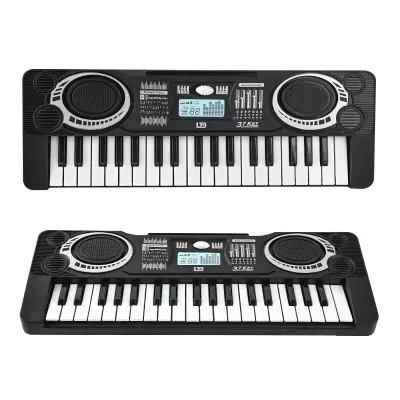
A 37-key keyboard is designed primarily for toddlers and early preschoolers, typically ranging from ages 2 to 4. At this developmental stage, music education is less about formal instruction and more about sensory play, rhythm exploration, and cause-and-effect discovery. The three-octave range of a 37-key instrument is perfect for young children to experiment with high and low pitches without feeling overwhelmed by a massive row of keys.
Products mentioned in this guide
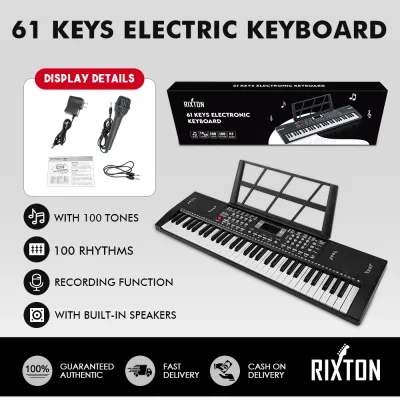
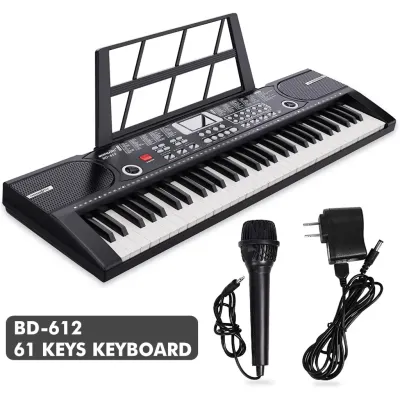
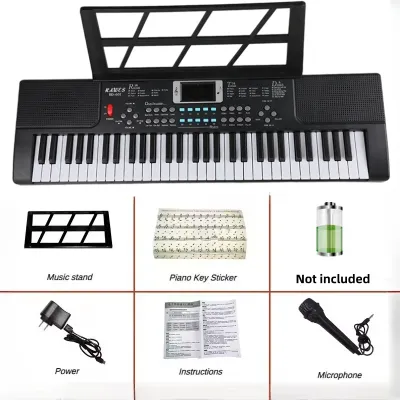
Prices are valid at publication and may change. Please refer to the product page for the latest price.
One of the primary benefits of a 37-key model is its highly compact physical footprint and lightweight design. These instruments easily fit on a small play table, a bedroom floor, or even a child’s lap. In tropical climates like the Philippines, where heavy monsoon rains often keep children indoors, having a portable, easily storable musical toy provides an excellent creative outlet that does not clutter living spaces. The keys on these models are almost always “mini-keys,” which are specifically scaled to fit the limited reach of tiny hands.
However, the limitations of a 37-key layout become apparent very quickly as a child grows. With only three octaves, it is virtually impossible to play standard two-handed songs, as there is simply not enough physical space for both hands to operate independently without colliding. Clear signs that your child has outgrown this size include their attempts to play melodies that run out of keys on either end, or a growing interest in replicating songs they hear in school or on television that require a wider range of notes.
49-Key Keyboards: The Transitional Choice for Early Learners
For children aged 5 to 7, a 49-key keyboard serves as an excellent transitional instrument. At this age, children are developing better fine motor skills and can begin learning basic two-handed coordination. A four-octave range provides just enough space for the left hand to play simple, stationary chord accompaniments while the right hand plays basic melodies, making it a true entry-level musical instrument rather than a toy.

This size is highly practical for families living in urban apartments, condominiums, or shared family homes where space is limited. A 49-key keyboard can sit comfortably on a standard study desk alongside schoolbooks, eliminating the immediate need for a dedicated keyboard stand. When practice time is over, its moderate weight allows it to be easily stored in a closet or slid under a bed, keeping communal living areas tidy.
Despite these advantages, parents should view the 49-key keyboard as a temporary stepping stone. While it is perfect for early childhood music programs and basic method books, it cannot support classical repertoire, complex modern chords, or formal music school curricula. If your child shows sustained interest and begins preparing for formal music grading examinations, they will quickly hit the physical boundaries of a 49-key layout.
61-Key Keyboards: The Standard for Growing Students
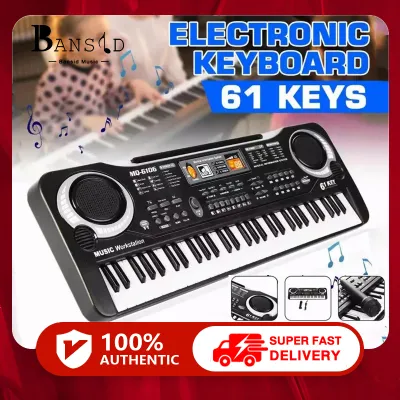
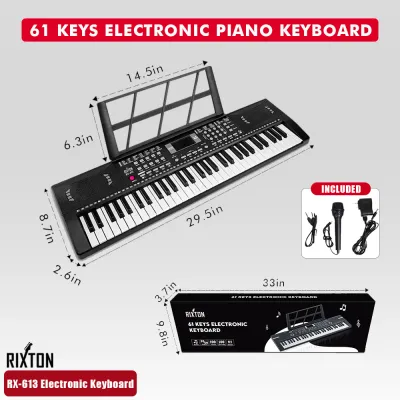
For children aged 8 and older, or any child enrolled in structured, formal music lessons, a 61-key keyboard is the recommended starting standard. This size provides five full octaves, which is the minimum range required to play the vast majority of beginner and intermediate piano literature, popular song arrangements, and educational exercises found in standard method books.
At this stage of physical growth, a child’s hands are approaching adult proportions, making standard-width keys essential. Practicing on full-size keys helps students build correct muscle memory and finger span, ensuring that when they transition to an acoustic piano in a teacher’s studio, the keys do not feel unfamiliar or uncomfortably wide. A 61-key instrument encourages proper hand placement and independent movement across a wider physical space.
Additionally, 61-key models are typically the entry point for critical learning features such as touch sensitivity. Touch-sensitive keys respond to the velocity of the child’s touch, producing a quieter sound when pressed gently and a louder sound when struck firmly. This capability is vital for teaching students how to play with expression and dynamics, transforming their practice from mechanical key-pressing into genuine musical performance.
Quick Comparison: Matching Key Count to Age and Skill
To help visualize how these different sizes compare, the table below outlines the key differences in age suitability, skill level, and typical use cases.
| Key Count | Recommended Age | Skill Level | Portability | Primary Use Case |
|---|---|---|---|---|
| 37 Keys | 2 to 4 Years | Toddler / Play | Extremely High | Sensory play, sound exploration, single-note melodies |
| 49 Keys | 5 to 7 Years | Early Beginner | High | Basic two-handed play, simple melodies, space-saving practice |
| 61 Keys | 8 Years & Up | Beginner to Intermediate | Moderate | Formal music lessons, standard repertoire, learning dynamics |
Choose a 37-key keyboard if:
- Your child is a toddler or preschooler who is primarily interested in musical toys, sound effects, and simple rhythm games.
- You need an extremely lightweight instrument that can be easily packed in a backpack or moved around the house by a young child.
- You want to test your child's initial interest in keys without making a significant financial or space commitment.
Choose a 49-key keyboard if:
- Your child is between 5 and 7 years old and is starting to show an interest in playing simple, two-handed melodies.
- You have limited space in your home and need an instrument that can easily share a study desk or be stored away daily.
- Your child is enrolled in a casual, early-childhood music group that does not require a full-size keyboard.
Choose a 61-key keyboard if:
- Your child is 8 years or older and is beginning formal, one-on-one music lessons with a private instructor or music school.
- You want an investment that will comfortably support your child's practice for the first three to five years of their musical journey.
- You want to ensure your child learns proper finger spacing, hand posture, and dynamic expression from the very beginning.
Indicators That It Is Time to Upgrade
If your child is currently using a 37-key or 49-key model, watch for specific signs that they are ready for a larger instrument. If their music teacher notes that they are running out of keys during practice, or if your child expresses frustration because they cannot play the lower bass notes of a song, an upgrade is necessary. Furthermore, if your child is progressing into classical music that requires advanced pedaling and complex hand movements, it may be time to bypass the 61-key stage entirely and transition to a full-size, 88-key digital piano with weighted keys.
Essential Features to Verify Beyond Key Count
While selecting the right key count is a crucial first step, several other physical and technical specifications directly impact your child’s learning experience, safety, and comfort.
First, pay close attention to key size. Many beginner keyboards designed for younger children feature mini-keys. While these are excellent for toddlers on a 37-key board, older children on a 49-key or 61-key board should use standard full-size keys. Practicing on mini-keys for too long can cause older children to develop cramped hand postures and incorrect finger spacing habits that are difficult to correct later.
Second, verify whether the keyboard features touch sensitivity, also known as velocity response. Some budget-friendly keyboards produce the exact same volume regardless of how hard the key is pressed. For a student taking formal lessons, a lack of touch sensitivity makes it impossible to learn musical shading and expression. Always check the product specifications to confirm that the keys respond dynamically to touch.
Third, consider the power and connectivity options. In areas prone to power fluctuations or during family trips, having a keyboard that supports dual power options—both an AC wall adapter and battery power—is incredibly convenient. Additionally, look for a USB-to-Host or MIDI port. This connection allows you to link the keyboard to a tablet or computer, enabling your child to use interactive learning apps that make daily practice feel like an engaging game.
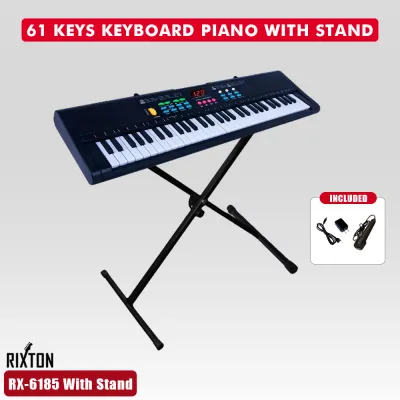
Finally, do not overlook ergonomics and physical safety. Placing a keyboard on a standard dining table or a desk that is too high can force a child to raise their shoulders and bend their wrists awkwardly, leading to physical strain. If you purchase a 61-key keyboard, invest in a sturdy, adjustable keyboard stand and a matching bench. Adjust the height so that your child’s elbows sit at a comfortable 90-degree angle to the keys, promoting a relaxed, upright posture that prevents fatigue during practice.
Frequently Asked Questions (FAQ)
Do kids need weighted keys for their first keyboard?
No, young children do not absolutely need fully weighted keys when they are first starting out. Keyboards generally come with three types of key actions: synth-action (very light with no resistance), semi-weighted (slight spring resistance), and fully weighted (which mimics the heavy feel of an acoustic piano’s hammers). For toddlers and young beginners aged 2 to 7, synth-action or semi-weighted keys are actually preferred because their finger muscles and hand joints are not yet strong enough to press down heavy, fully weighted keys without straining. However, once a child reaches age 8 or 9 and has committed to formal classical piano lessons, transitioning to a digital piano with fully weighted keys becomes essential to build the necessary finger strength, control, and technique required for advanced playing.
Can a child learn proper piano technique on a 37-key keyboard?
No, a child cannot develop proper, formal piano technique on a 37-key keyboard. A 37-key board is an excellent tool for early childhood play, ear training, and learning basic musical concepts like high versus low pitches, but its physical limitations prevent proper technical development. Because these compact boards feature narrow mini-keys, they do not allow for correct finger placement or hand arching. Furthermore, the lack of physical space makes it impossible to practice correct body alignment, as the child cannot sit centered in front of the instrument while playing with both hands. To prevent the development of poor physical habits—such as flat fingers, collapsed wrists, and hunched shoulders—it is best to transition your child to a standard-width 61-key keyboard as soon as they begin structured music lessons.

Community discussion
Share your experience or ask a question. Comments are reviewed before publication.