
Choosing between a Z-type and an X-type keyboard stand depends on whether you prioritize rock-solid stability and legroom or quick portability and budget-friendliness. For home studios, permanent practice spaces, or heavy digital pianos, the Z-type stand offers superior structural support and completely open leg clearance. For gigging musicians who travel frequently, players with lightweight keyboards, or those with limited storage space, the X-type stand provides unmatched convenience and rapid setup times.
Selecting the wrong stand can lead to distracting keyboard wobble during intense performances or, worse, a costly fall for your instrument. By evaluating how each design handles weight, space, and ergonomics, you can select a support system that keeps your keyboard secure and your playing posture comfortable.
Core Differences in Design and Stability
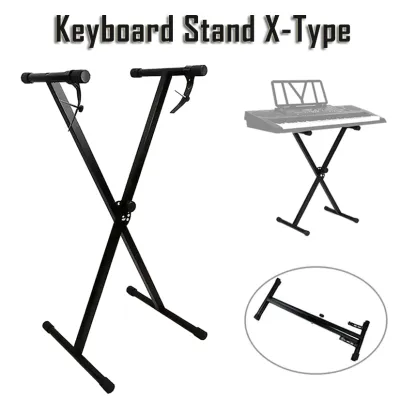
The fundamental structural difference between these two designs lies in how they distribute weight and resist lateral movement. An X-type stand utilizes a classic scissor mechanism, where two metal tubes cross at a central pivot point. This design concentrates the weight of your keyboard onto a single central joint, which can introduce a slight sway when you play with high energy. The stability of an X-stand depends heavily on the thickness of its steel tubing and the strength of its central locking clutch.
Products mentioned in this guide
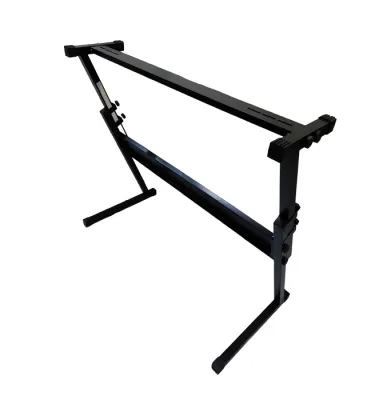
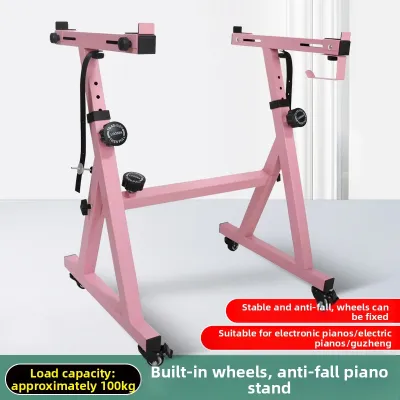
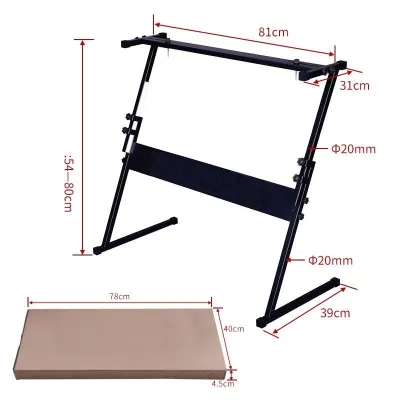
Prices are valid at publication and may change. Please refer to the product page for the latest price.
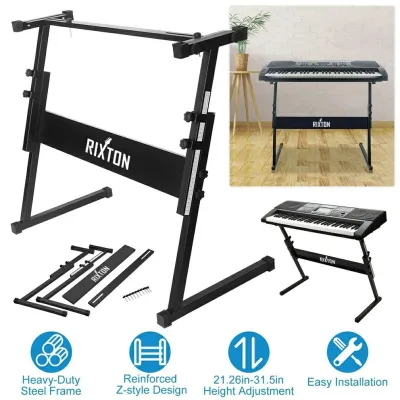
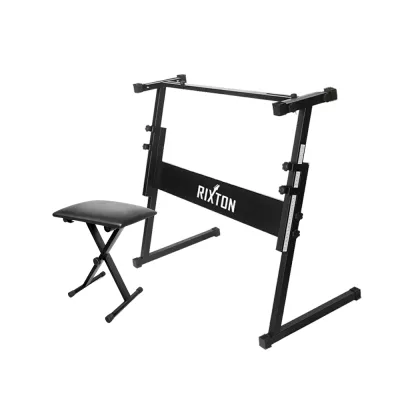
In contrast, a Z-type stand features a frame shaped like the letter Z on each side, connected by a solid horizontal crossbar. This structure creates a highly stable rectangular footprint with two distinct vertical columns. Because the weight of the keyboard is distributed directly down these solid columns to wide base plates, Z-stands offer exceptional resistance to side-to-side wobbling. The lower center of gravity makes the Z-frame inherently more stable, even when placed on slightly uneven floors.
When evaluating these stands in a retail store or on an online marketplace, it is essential to check the product specifications for joint locking mechanisms and base weight. High-quality Z-stands typically feature heavy-duty steel plates and secure hand-tightened knobs at the adjustment points. For X-stands, look for reinforced double-braced legs rather than single-braced options, as the extra metal bars significantly reduce twisting forces. Additionally, check the welding quality at the joints; clean, continuous welds indicate a much stronger frame than simple spot welds.
Space, Portability, and Setup Constraints
Portability is where the X-type stand excels. Because of its scissor design, an X-stand can fold completely flat in a single motion by releasing the central pull-pin. Once collapsed, it takes up minimal depth, allowing you to slide it under a bed, store it behind a wardrobe, or pack it easily into the trunk of a compact car. This rapid folding mechanism makes it the preferred choice for musicians who need to set up and tear down their gear quickly at different venues.

Z-type stands are considerably bulkier and less convenient to transport. While many modern Z-stands are adjustable and can be disassembled, doing so usually requires loosening several hand screws and breaking the stand down into multiple separate metal pieces. This process takes time and increases the risk of losing small adjustment knobs during transit. If you frequently travel to gigs using public transportation or compact vehicles, a fully assembled Z-stand can be awkward to carry and load.
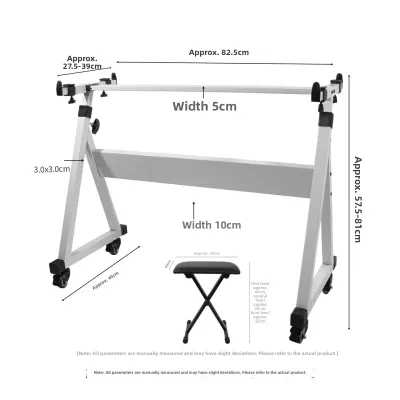
Floor space requirements also differ significantly between the two designs. The footprint of an X-stand changes depending on how high you set it; setting it higher makes the base narrower, while setting it lower spreads the legs wider. This variable footprint can make it difficult to position the stand precisely against a wall or in a tight corner. A Z-stand, however, maintains a fixed, predictable rectangular footprint regardless of height adjustments, allowing it to sit flush against walls and maximize available floor space in small rooms or home studios.
Ergonomics and Playing Comfort
Ergonomics play a vital role in preventing muscle strain during long practice sessions, and this is where the Z-type stand offers a clear advantage. Because the Z-frame places its structural support columns at the far left and right sides of the keyboard, the space directly beneath the instrument remains completely open. This design provides unlimited knee and foot clearance, allowing seated players to sit close to the keyboard with natural posture, just like playing a traditional acoustic piano.
An X-type stand, on the other hand, presents significant ergonomic challenges for seated players. The crossing metal bars of the X-frame occupy the exact space where your knees and shins need to go. To avoid constantly bumping your knees against the metal bars, you may find yourself sitting further back from the keyboard, which can force you to hunch forward and strain your back. This “knee-knock” issue is particularly problematic for taller players or those who practice for hours at a time.
Pedal placement is another crucial factor influenced by stand design. With a Z-type stand, you can place sustain pedals, expression pedals, or complete multi-pedal units exactly where you want them on the floor without any structural interference. On an X-type stand, the lower crossbars often block the ideal path for pedal cables and limit where you can comfortably rest your feet. This can cause your pedals to slide away from you during play, requiring you to awkwardly stretch your legs to reach them.
Weight Capacity and Keyboard Compatibility
Before purchasing any stand, you must verify its weight capacity against the actual weight of your instrument. Heavy 88-key digital pianos with weighted hammer-action keys can easily weigh between 15 and 25 kilograms. While many X-stands claim high weight capacities on paper, single-braced X-stands can bow or flex under the weight of a heavy professional keyboard, leading to a bouncy, unstable playing experience.
If you own a heavy synthesizer, workstation, or digital piano, a Z-type stand is generally the safer and more robust choice. The vertical support columns of a Z-stand are designed to handle high downward pressure without flexing. If you must use an X-stand for a heavier keyboard, ensure it is a double-braced model, which features two parallel metal bars on each leg to distribute the load more effectively and prevent the frame from twisting.
Regardless of the stand type you choose, pay close attention to the safety features designed to keep your instrument in place. Look for thick, high-quality rubber end caps on the top support arms to prevent the keyboard from sliding. In warm, humid tropical climates, cheap rubber can degrade quickly, becoming sticky or brittle; checking for durable, non-slip silicone or textured rubber grips is highly recommended. Many stands also include safety straps that screw directly into the underside of compatible keyboards, providing an extra layer of security against accidental bumps.
Decision Framework: Which Stand Should You Buy?
To make your final decision, evaluate your specific playing environment, instrument weight, and budget against the following practical guidelines.
Choose a Z-Type Stand if:
- You play a heavy 88-key digital piano: The rigid vertical columns provide the necessary structural integrity to support heavy, weighted-action instruments without flexing.
- You primarily play while seated: The open space beneath the keyboard ensures excellent legroom, proper posture, and comfortable pedal placement.
- Your setup is permanent: If your keyboard stays in a dedicated home studio, bedroom, or living room corner, the fixed footprint and superior stability outweigh any portability concerns.
- You use multiple pedals: The absence of central crossbars allows you to arrange sustain and expression pedals exactly where your feet naturally rest.
Choose an X-Type Stand if:
- You are a gigging musician: The ability to fold the stand completely flat in seconds makes it incredibly easy to transport in cars or carry to rehearsals.
- You have limited storage space: When not in use, an X-stand can be tucked away in narrow closets, under beds, or behind doors.
- You are on a tight budget: Simple X-stands are generally more affordable than Z-stands, making them an excellent entry-level option for beginners.
- You play a lightweight keyboard: Portable keyboards, MIDI controllers, and slim synthesizers do not require the heavy-duty support of a Z-frame.
Verify First Before Purchasing:
- Check the dimensions: Measure the depth of your keyboard and compare it to the length of the stand's top support arms to ensure a secure fit.
- Inspect the adjustment mechanism: Look for secure pull-pin or locking knob systems rather than simple friction-based clamps.
- Review return policies: Ensure the retailer allows returns or exchanges in case the stand does not fit your specific keyboard model or height requirements.
Frequently Asked Questions (FAQ)
Can I use an X-type stand for a heavy 88-key digital piano?
You can use an X-type stand for a heavy 88-key digital piano, but you should strictly avoid single-braced models. A heavy instrument requires a heavy-duty, double-braced X-stand to minimize wobbling and prevent structural failure. Always check the manufacturer’s specification sheet to ensure the stand’s rated weight capacity comfortably exceeds the weight of your digital piano. If you play aggressively or perform classical pieces with wide dynamic ranges, a Z-type stand remains the safer option to prevent distracting side-to-side movement.
Are Z-type stands adjustable for standing performances?
Yes, most modern Z-type stands feature adjustable height settings that can accommodate standing performances. However, because Z-stands are inherently wider and heavier, you must verify the maximum height limit on the product label before buying, especially if you are tall. When extending any keyboard stand to its maximum height, the center of gravity rises, which can slightly reduce overall stability. Always ensure that all adjustment knobs are tightened securely and that the stand is placed on a flat, level surface before performing in a standing position.
Community discussion
Share your experience or ask a question. Comments are reviewed before publication.