
Choosing your first keyboard is a critical step in your musical journey, especially when navigating the diverse options available in the Philippines. The Yamaha PSR-E383 and the Casio CT-S300 are two of the most popular entry-level 61-key keyboards designed to help beginners build solid foundational skills. Both instruments offer touch-sensitive keys, portable designs, and a variety of learning tools, but they approach the beginner experience from different angles.
To make the right choice, you must evaluate how each model fits your daily practice routine, your physical living space, and your long-term musical goals. Factors such as local climate conditions, space constraints in typical urban homes, and the availability of authorized service centers also play a role in your final decision. This comparison breaks down their design, playability, sound engines, connectivity, and overall value to help you select the ideal keyboard for your home.
Core Differences in Design and Portability
When living in a bustling urban area or a cozy apartment, the physical footprint of your musical instrument is a primary consideration. The Casio CT-S300 is engineered with extreme portability in mind, featuring a highly compact chassis and a built-in carrying handle integrated directly into the top frame. This design makes it exceptionally easy to carry to music lessons, school performances, or casual gatherings without requiring a bulky gig bag.
Products mentioned in this guide
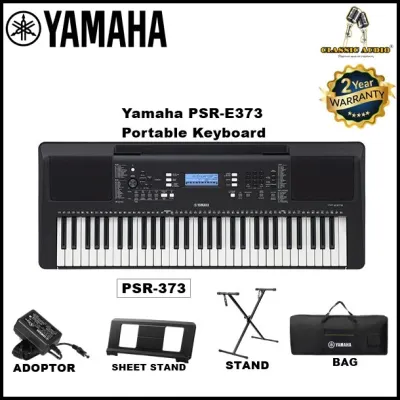
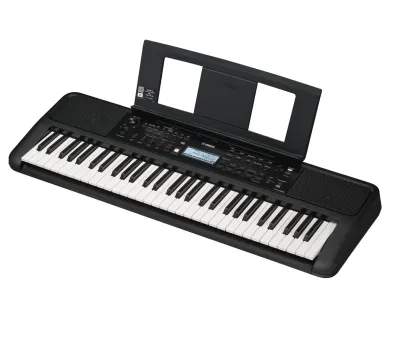
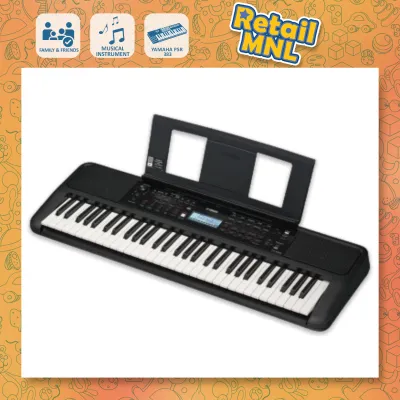
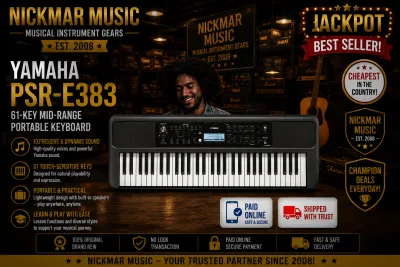
Prices are valid at publication and may change. Please refer to the product page for the latest price.
In contrast, the Yamaha PSR-E383 adopts a more traditional, rectangular keyboard shape. While it remains lightweight and manageable for most players, it lacks an integrated handle and occupies a slightly larger footprint on your desk or keyboard stand. If you plan to keep your keyboard in a fixed location, such as a dedicated study room or living area, the Yamaha’s classic form factor provides a sturdy, traditional presence.
Power options are equally important, especially in areas prone to seasonal power interruptions or when practicing outdoors. Both models can run on standard AA batteries or an AC power adapter. When purchasing in the Philippines, always verify that the included AC adapter is compatible with the local 220V electrical standard. Additionally, the tropical climate and high humidity levels mean that a lightweight plastic chassis must be kept clean; using a dedicated dust cover when the instrument is not in use will protect the internal electronics of either model from dust and moisture buildup.
Key Action and Playability for Beginners
The feel of the keys is the most direct point of contact between you and your music, shaping how you develop finger strength and expressive control. Both the Yamaha PSR-E383 and the Casio CT-S300 feature 61 full-sized keys, which is the standard layout for entry-level keyboards, providing enough range to play most beginner and intermediate pieces. However, the physical design of the keys differs significantly between the two brands.

The Casio CT-S300 features piano-style block keys that mimic the appearance of traditional acoustic piano keys. This design helps beginners get used to the visual spacing of a real piano, though the keys themselves retain a light, synth-action resistance. The Yamaha PSR-E383 utilizes a more traditional synth-style key shape, which is slightly thinner but offers a smooth, responsive action that is highly comfortable for fast-paced melodies and organ voices.
Touch response, or velocity sensitivity, is a non-negotiable feature for any serious beginner, as it allows the volume of the sound to change based on how hard or soft you press the keys. Both models include this feature, enabling you to practice dynamics and emotional expression. The Yamaha PSR-E383 allows you to adjust the touch sensitivity levels (such as Soft, Medium, Hard, or Fixed) to match your finger strength, which is highly beneficial for younger players or those transitioning from other instruments. The Casio CT-S300 also offers adjustable touch response, ensuring that your early practice sessions translate well to traditional acoustic pianos later on.
Sound Engine and Built-in Learning Tools
A keyboard’s sound engine determines how realistic and inspiring the instrument sounds during practice. The Yamaha PSR-E383 leverages Yamaha’s proprietary AWM (Advanced Wave Memory) Stereo Sampling, delivering rich, detailed acoustic piano tones and a vast library of instrument voices, including strings, brass, and synthesizers. The Casio CT-S300 utilizes Casio’s own high-quality sound source, offering a clean, bright acoustic piano sound alongside a unique Dance Music Mode that lets beginners easily create electronic tracks by combining different drum, bass, and synthesizer patterns.
Polyphony is another crucial specification to check before buying. Polyphony refers to the maximum number of individual notes the keyboard can play simultaneously before older notes are cut off. The Yamaha PSR-E383 features 48-note polyphony, which is highly capable for complex chords, layered sounds, and sustained passages. The Casio CT-S300 also offers 48-note polyphony, ensuring that beginners will not experience dropped notes during standard practice or when using the sustain pedal.
For self-guided learners, built-in educational tools can make a significant difference in daily progress. The Yamaha PSR-E383 comes equipped with the “Keys to Success” lesson system, which breaks down built-in songs into manageable steps, allowing you to practice one hand at a time or slow down the tempo. The Casio CT-S300 integrates seamlessly with Casio’s companion apps, such as Casio Music Space, which provides interactive visual lessons on a connected tablet or smartphone, making practice feel more like an engaging game.
Connectivity and External Integration
Modern learning often relies on digital tools, making connectivity a vital aspect of your new keyboard. Both the Yamaha PSR-E383 and the Casio CT-S300 feature a USB-to-Host port, allowing you to connect the keyboard directly to a computer, tablet, or smartphone. This connection enables you to use the keyboard as a MIDI controller for digital audio workstations (DAWs), music notation software, or interactive learning apps.
For quiet practice in dense residential neighborhoods or shared family spaces, a dedicated headphone jack is essential. Both models feature a standard headphone output that mutes the built-in speakers when plugged in, allowing you to practice at any hour without disturbing others. Additionally, check for an auxiliary input (Aux In) jack, which lets you connect an external audio source, such as a phone or music player, so you can play along with your favorite backing tracks directly through the keyboard’s speakers or headphones.
While neither model features built-in Bluetooth audio or MIDI out of the box, they can be adapted using external wireless adapters if you prefer a cable-free setup. When setting up your practice space, ensure you have the correct cables—typically a USB Type-B to USB Type-A or Type-C cable—to connect your specific mobile device or computer to the keyboard’s host port.
Value and Pricing Considerations
When budgeting for your first keyboard in the Philippines, it is important to look beyond the initial price tag of the instrument itself and consider the total cost of ownership. The Casio CT-S300 is generally positioned as a highly budget-friendly option, making it an attractive choice for families or students who want to test their interest in music without a major financial commitment. The Yamaha PSR-E383 typically commands a slightly higher retail price, reflecting its expanded voice library and advanced lesson features.
To get the best value, check what accessories are included in the standard retail package. Most authorized local music stores and reputable online retailers bundle these keyboards with a basic music rest, a compatible AC power adapter, and a user manual. However, you will likely need to purchase several essential add-ons separately to create a complete, ergonomic practice setup.
A sturdy keyboard stand (either an X-stand or a double-braced stand) is necessary to keep the instrument at the correct playing height, preventing wrist strain. An adjustable bench ensures proper posture during long practice sessions. Finally, a standard 1/4-inch sustain pedal is highly recommended for learning how to sustain notes smoothly, and a simple dust cover will protect your investment from the tropical humidity and dust common in local households.
Decision Framework: Which Keyboard Fits Your Needs?
To finalize your decision, align the unique strengths of each keyboard with your personal learning style, space limitations, and budget. Both instruments are excellent entry points into the world of music, but they cater to slightly different beginner profiles.
You should choose the Yamaha PSR-E383 if you prioritize a traditional keyboard experience with a focus on rich, acoustic instrument voices and structured, step-by-step onboard lessons. Its adjustable touch sensitivity and robust polyphony make it an excellent long-term investment for students who plan to take formal music lessons and want an instrument that can grow with their developing technique.
You should choose the Casio CT-S300 if your primary concerns are ultra-portability, space-saving design, and modern, interactive learning. Its built-in carrying handle, lightweight frame, and integration with mobile learning apps make it the ideal companion for active students, frequent travelers, or anyone with limited space at home who needs to pack the keyboard away after every practice session.
Before making your final purchase, visit an authorized local music distributor in the Philippines to test the key action and sound quality in person. Verify the specific warranty terms offered by the local distributor, and look for bundle deals that include essential accessories like stands, benches, or sustain pedals, as these packages can significantly lower your overall startup costs.
Frequently Asked Questions (FAQ)
Do I need a sustain pedal for either keyboard?
Yes, a sustain pedal is highly recommended as you progress past the very basic stages of learning. Both the Yamaha PSR-E383 and the Casio CT-S300 feature a standard 1/4-inch sustain pedal jack on the rear panel. Before purchasing a third-party pedal, verify its polarity compatibility or choose a pedal with a polarity switch to ensure it functions correctly with your specific keyboard model.
Can I use these keyboards as MIDI controllers?
Yes, both models can function as MIDI controllers. By using the USB-to-Host port, you can connect either keyboard to a computer or mobile device to control virtual instruments, record MIDI data into a digital audio workstation (DAW), or interact with educational software. Most modern operating systems will recognize these keyboards automatically without requiring manual driver installations.

Community discussion
Share your experience or ask a question. Comments are reviewed before publication.