
Choosing between the Yamaha PSR-E373 and the Casio CT-S300 depends on whether you prioritize advanced sound quality and deep editing features or an ultra-portable, space-saving design. Both are excellent entry-level instruments for aspiring musicians in the Philippines, but they serve slightly different learning styles and living spaces. The Yamaha PSR-E373 offers a more robust sound engine and traditional layout, while the Casio CT-S300 focuses on streamlined portability, a built-in carrying handle, and a highly intuitive interface.
In the Philippines, beginner keyboard players often face specific environmental and spatial challenges. High humidity levels, limited desk space in urban apartments, and the need to transport instruments to lessons, church services, or school performances make physical design and durability critical factors. Understanding how these two models compare in keybed feel, sound generation, connectivity, and power options will help you make an informed investment at local music stores.
Core Specifications and Design Differences
When evaluating the physical build of these two keyboards, the first feature to consider is the keybed design. Both the Yamaha PSR-E373 and the Casio CT-S300 feature 61 standard-size keys equipped with touch sensitivity. Touch response is a critical feature for beginners because it allows the volume of the notes to change depending on how hard or soft the keys are pressed, mimicking the expressive dynamics of an acoustic piano. This prepares students for classical piano lessons or expressive modern playing. You can adjust or disable the touch sensitivity levels on both models; refer to the manufacturer user manuals to verify the exact steps for adjusting these settings.
Products mentioned in this guide
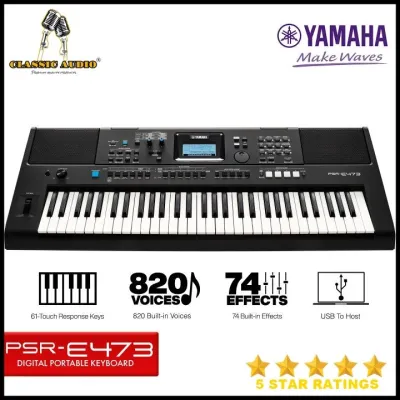
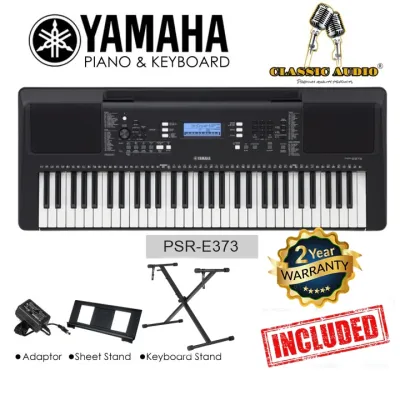
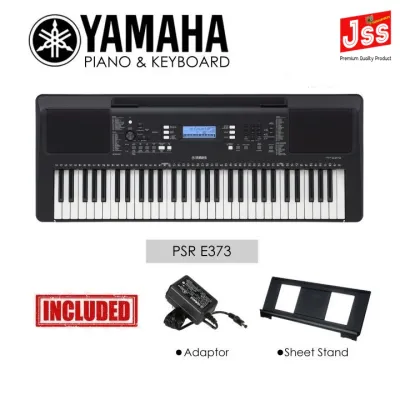
Prices are valid at publication and may change. Please refer to the product page for the latest price.
The physical dimensions and weight of the two instruments highlight their differing design philosophies. The Casio CT-S300 is part of the Casiotone series, which emphasizes an ultra-slim, compact profile. It features a unique, molded carrying handle integrated directly into the top of the chassis, making it exceptionally easy to carry with one hand. The Yamaha PSR-E373 has a more traditional, slightly bulkier footprint. While this larger design feels highly stable on a double-braced keyboard stand, it takes up more desk space in a small room. Check the official product specifications for the exact weight and dimensions of each model to ensure they fit your designated practice area or keyboard bag.
The control panel layout and display screen readability also differ significantly between the two models. The Yamaha PSR-E373 features a larger, backlit LCD screen that displays notation, chords, and active settings, which is highly beneficial for visual learners who are still learning to read sheet music. Its control panel is populated with dedicated buttons for voice categories, styles, and functions, allowing for direct access to various settings. In contrast, the Casio CT-S300 utilizes a minimalist design with a smaller, non-backlit display and a central dial to scroll through tones and rhythms. This reduces button clutter but requires a bit more menu navigation to find specific sounds.
Sound Engine and Built-in Features
The sound engine is the heart of any electronic keyboard, determining the realism and quality of the instrument voices. Yamaha equips the PSR-E373 with its proprietary AWM (Advanced Wave Memory) Stereo Sampling engine, which delivers highly detailed and realistic instrument samples. This engine includes a vast library of voices, ranging from grand pianos and electric pianos to strings, brass, and woodwinds. The Casio CT-S300 uses Casio’s stereo sound source, offering a curated selection of tones that cover all the essential instrument categories. Review the official voice lists in each manual to see which categories align with your musical preferences.

Polyphony is another crucial technical specification to compare. Polyphony refers to the maximum number of notes the keyboard can play at the same time before older notes are cut off. Both the Yamaha PSR-E373 and the Casio CT-S300 offer 48-note polyphony. This is ample headroom for beginners, ensuring that notes will not drop out prematurely when playing complex chords, using a sustain pedal, or playing along with built-in auto-accompaniment styles.
Speaker wattage and audio projection are also important, especially for home practice in typical Philippine living rooms or bedrooms. Both models feature dual 2.5-watt built-in stereo speakers, which provide sufficient volume for personal practice and small family gatherings. However, the physical chassis design affects how the sound projects. The Yamaha’s larger body allows for slightly deeper bass resonance, while the Casio’s compact frame projects a clear, bright sound. In humid tropical environments, it is wise to keep your keyboard in a well-ventilated room to protect the speaker cones and internal electronics from moisture buildup over time.
Learning Tools and Connectivity
For self-study, built-in educational features can make a significant difference in how quickly a beginner progresses. The Yamaha PSR-E373 includes the “Keys to Success” lesson system, which breaks down built-in songs into individual steps for left-hand, right-hand, and both-hands practice. It also features a built-in metronome and chord study guides to help students develop rhythm and harmony. The Casio CT-S300 offers basic lesson features and integrates seamlessly with Casio’s dedicated learning application. This app integration allows users to learn interactively via a tablet or smartphone, making practice feel more like a game. Verify current app compatibility and system requirements on the official Casio website before purchasing.
Digital connectivity is a major differentiator between these two models, particularly for those interested in music production or online learning. Both instruments feature a USB-to-Host port to connect to computers, tablets, or smartphones. However, the Yamaha PSR-E373 stands out by supporting both MIDI and digital audio transfer over its USB port. This means you can record the keyboard’s actual sound directly into a computer or mobile device without needing a separate external audio interface. The Casio CT-S300 supports USB MIDI, allowing you to control virtual instruments in music software, but requires an external audio cable or interface to record its internal sounds.
For silent practice during quiet hours in dense residential areas, both keyboards feature a standard headphone output. This is highly recommended to avoid disturbing family members or neighbors. Both models also include an auxiliary input (Aux In) jack, enabling you to plug in a smartphone or media player. This allows you to play along with your favorite backing tracks, tutorial videos, or online lessons directly through the keyboard’s speakers or connected headphones.
Portability and Power Options
Portability is a major consideration for students and musicians in the Philippines who may need to transport their instrument to school, church, or music lessons. The Casio CT-S300 is designed with extreme portability in mind, weighing significantly less than the Yamaha model. Its integrated carrying handle eliminates the need for a bulky gig bag for short trips, making it easy to carry on public transportation or walk with. The Yamaha PSR-E373, while still portable, lacks an integrated handle and has a deeper, heavier body, making a dedicated padded keyboard bag highly recommended if you plan to travel frequently.
Power options are also critical, especially in areas where power outlets may be limited or during occasional power interruptions. Both keyboards can run on six AA batteries (alkaline or rechargeable metal-hydride), allowing you to practice anywhere without being tethered to a wall outlet. The Casio CT-S300 is known for its highly efficient power consumption, offering hours of mobile play on a single set of batteries. Check the user manual for exact battery life estimates and recommended battery types.
When purchasing from authorized music stores in the Philippines, standard retail packages typically include the keyboard itself, a music rest, and an AC power adapter. Some local dealers offer bundle packages that include a keyboard stand, bench, headphones, or a sustain pedal. Always verify the exact contents of the retail box with the seller before finalizing your purchase to ensure you have all necessary power and support accessories.
How to Choose the Right Keyboard for Your Goals
To make the best decision, align your choice with your specific learning environment, transport needs, and musical goals.
Choose the Yamaha PSR-E373 if your primary goal is to develop traditional keyboard skills with a focus on acoustic piano realism, rich instrument voices, and deep educational features. The PSR-E373’s advanced sound engine, larger backlit display, and integrated USB audio interface make it an excellent choice for beginners who plan to keep the keyboard in a dedicated practice space and eventually explore home recording or music production.
Choose the Casio CT-S300 if you prioritize maximum portability, space-saving design, and a streamlined user interface. The CT-S300 is ideal for students who need to carry their instrument to school or lessons, players with limited desk space, or those who enjoy interactive learning via mobile apps and want a simple, distraction-free layout with a built-in handle.
Before making your final decision, visit an authorized musical instrument distributor in the Philippines to compare the physical key feel and sound projection in person. Confirm the current retail price in Philippine Pesos (₱), as prices can fluctuate based on dealer promotions and shipping costs. Additionally, check the local warranty terms (typically 12 months for authorized units) and verify that your mobile device or computer is fully compatible with the keyboard’s USB interface and companion learning applications.
Frequently Asked Questions (FAQ)
Do I need a separate keyboard stand and bench?
Yes, investing in a dedicated keyboard stand and an adjustable bench is highly recommended to maintain proper playing posture and prevent wrist strain. Proper ergonomic alignment requires your elbows to be slightly above the keybed when your shoulders are relaxed. A sturdy double-braced X-frame or Z-frame stand provides the necessary stability to prevent the keyboard from wobbling or tipping over during practice. When shopping at local music retailers in the Philippines, look for bundle deals that include a compatible stand and bench to save on overall costs.
Can I connect these keyboards to a computer for recording?
Yes, both keyboards can connect to a computer or mobile device using a standard USB cable to transmit MIDI data, allowing you to control digital audio workstations (DAWs) or educational software. However, their audio recording capabilities differ. The Yamaha PSR-E373 features a built-in USB audio interface, allowing it to send both MIDI and high-quality digital audio directly through the USB cable without extra equipment. The Casio CT-S300 transmits MIDI over USB, but to record its actual internal sounds, you will need to connect its headphone or audio output to an external audio interface or computer line-in port. Always check the manufacturer’s website for the latest driver downloads and class-compliant status for your specific operating system.

Community discussion
Share your experience or ask a question. Comments are reviewed before publication.