
Quick Answer: Is the Yamaha P-225 the Right Choice for You?
Choosing a digital piano requires balancing your current skill level with your long-term musical goals. The Yamaha P-225 is a strong candidate if you prioritize a compact, space-saving design, a streamlined interface, and integration with official brand companion apps. It is particularly suited for players who want a reliable instrument that fits easily on a standard desk or a lightweight stand in smaller living spaces.
However, alternative models in this class might be more suitable if you prefer a heavier, more traditional key resistance, or if you require specific physical connectivity options like dedicated stereo outputs for live performances. Rather than looking for a single absolute winner, your decision should depend on whether you value a slim, modern footprint or specific tactile and acoustic characteristics that match your personal playing style.
Key Comparison Dimensions for Beginners and Intermediates
When transitioning from basic finger exercises to more complex intermediate repertoire, the technical limitations of your instrument can either hinder or accelerate your progress. Beginners need an instrument that helps them build correct finger strength and hand posture, while intermediate players require nuanced dynamic control and realistic pedal response. To find the right fit, you must evaluate how different models perform across three primary decision-making axes: physical playability, audio generation, and physical footprint.
Products mentioned in this guide
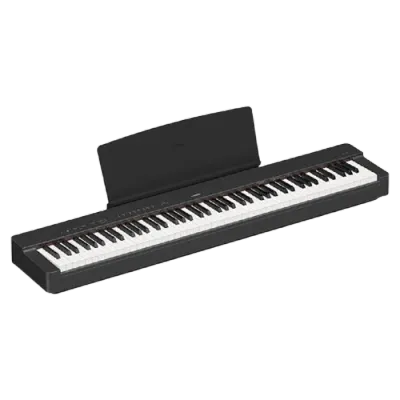
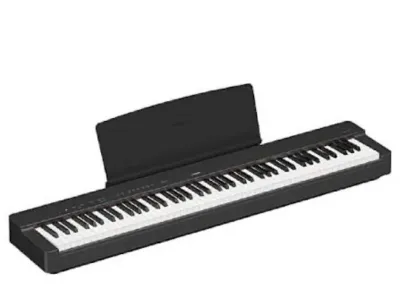
Prices are valid at publication and may change. Please refer to the product page for the latest price.

These dimensions directly influence how closely the digital piano mimics the behavior of an acoustic instrument. A digital piano that excels in one area might compromise in another, making it essential to understand how these specifications translate to daily practice sessions in your home.
Key Action and Playability
The physical feel of the keys is the most critical factor for developing proper piano technique. When comparing models, you should check the manufacturer’s official specifications for the specific key action technology used, such as graded hammer action. Graded action means the keys in the lower register feel heavier than those in the higher register, replicating the physical hammer mechanism of an acoustic grand piano.
For beginners, a graded action helps build the necessary finger endurance and muscle memory. Intermediate players should look closely at the key texture, such as synthetic ivory or matte finishes, which prevent fingers from slipping during fast passages. You should also verify whether the key action supports half-pedaling, a technique essential for advanced pieces where subtle control over sustain is required.
Sound Engine and Audio Quality
A digital piano’s sound engine determines how realistically it reproduces the complex tones of an acoustic piano. You should verify the polyphony count in the official specifications; a higher polyphony count, such as 192 or 256 notes, ensures that sustained notes do not cut off abruptly during complex, fast-tempo pieces. Additionally, look for details on the acoustic piano sampling technology used, which captures the multi-layered dynamics of a physical grand piano.
The speaker system is equally vital for home practice. You must check the total speaker wattage and the physical placement of the speakers on the instrument body. Upward-facing or downward-facing speakers distribute sound differently depending on whether the piano is placed against a wall, on a wooden table, or on an open stand, directly affecting your listening experience in different room sizes.
Portability, Design, and Connectivity
The physical footprint of a digital piano determines how easily it integrates into your living space. You should check the exact weight and dimensions of the keyboard unit to ensure it can be safely moved or stored when not in use. In tropical climates like the Philippines, where high humidity can affect electronic components and physical key mechanisms, choosing a design with a sealed chassis or using a high-quality dust cover is highly recommended.
Connectivity options are crucial for modern learning workflows. You should verify whether the instrument supports Bluetooth audio and MIDI, which allow you to stream backing tracks or connect to educational software wirelessly. Furthermore, check if the USB port supports both MIDI and digital audio transfer, as this simplifies recording your practice sessions directly to a computer or smartphone without needing an external audio interface.
Specification Checklist: What to Verify Before You Decide
To make an objective decision, you should compare the exact technical specifications of the Yamaha P-225 against its direct competitors. Relying on general marketing terms can be misleading, as different brands use proprietary names for similar technologies. Use the template below to organize your research using official product manuals or authorized dealer specifications.
Table: Digital Piano Specification Checklist
| Specification Dimension | Yamaha P-225 Details | Competitor Model A Details | Competitor Model B Details |
|---|---|---|---|
| Key Action Technology | Verify official key action name | Fill in competitor key action name | Fill in competitor key action name |
| Key Surface Texture | Check for matte or textured finish | Check for matte or textured finish | Check for matte or textured finish |
| Maximum Polyphony | Verify exact polyphony count | Verify exact polyphony count | Verify exact polyphony count |
| Speaker Output (Watts) | Check wattage and speaker count | Check wattage and speaker count | Check wattage and speaker count |
| Physical Dimensions | Check width, depth, and height | Check width, depth, and height | Check width, depth, and height |
| Weight (Keyboard Only) | Verify weight in kilograms | Verify weight in kilograms | Verify weight in kilograms |
| USB Audio/MIDI Support | Check if USB port supports audio | Check if USB port supports audio | Check if USB port supports audio |
| Bluetooth Connectivity | Verify Bluetooth audio/MIDI support | Verify Bluetooth audio/MIDI support | Verify Bluetooth audio/MIDI support |
When filling out this checklist, ensure you are looking at the exact model variant available in your region. Some specifications, such as included accessories or power adapter models, can vary depending on local distribution standards.
Decision Framework: Choosing the Right Digital Piano
To synthesize these technical dimensions into a clear path forward, you can apply a condition-based decision framework tailored to your specific playing environment and goals.
Choose the Yamaha P-225 if:
- You have limited space: The compact chassis design is optimized for smaller rooms, making it easy to place on a slim desk or transport to different locations.
- You prefer a lighter key touch: If you find heavy key actions fatiguing or if the instrument will be shared with young beginners who are still developing finger strength, the specific key action design of this model offers a comfortable middle ground.
- You use brand-specific learning ecosystems: If you plan to use official companion apps for interactive lessons, sheet music display, and quick setting adjustments, the integration with this model is highly streamlined.
Choose Alternatives if:
- You prefer a highly resistant, heavy key feel: If your primary goal is to transition frequently to a traditional acoustic upright or grand piano, you might prefer a competitor model that features a more resistant key action.
- You require extensive physical outputs: If you plan to perform live or connect the piano to external amplifiers regularly, look for models that include dedicated left and right line-out ports rather than relying solely on headphone jacks.
- You want built-in physical controls: If you prefer adjusting settings like metronome speed, transpose, and sound selection via physical buttons or an LCD screen rather than using a smartphone app, certain competitors offer more tactile interfaces.
Verify first if:
- You need specific third-party app integration: Some educational apps require specific MIDI protocols or Bluetooth profiles. Always check the app developer's compatibility list before assuming a wireless connection will work seamlessly.
- You plan to upgrade to a three-pedal system: If you intend to practice advanced classical pieces that require soft and sostenuto pedaling, verify whether the model supports a dedicated three-pedal unit and if that unit requires a specific matching wooden stand.
Where to Verify Specifications and Purchase Safely
When you are ready to make a purchase, safety and authenticity should be your top priorities. Always verify the technical specifications on the official manufacturer website or through authorized local distributors in the Philippines. This ensures you are receiving accurate information regarding local voltage compatibility, as digital pianos require specific power adapters that match local electrical standards.
Compare current pricing in ₱ across reputable online marketplaces and physical music stores. Be cautious of deals that seem unusually low, as they may involve parallel imports that lack a valid local warranty or omit essential accessories. Before finalizing your order, confirm that the package includes the music rest, the basic sustain pedal, and the correct power adapter. If you plan to purchase a matching wooden stand or a three-pedal unit, verify that these items are explicitly listed as compatible with your specific model variant.
Frequently Asked Questions (FAQ)
Do I need a dedicated stand and pedal unit for the P-225?
Whether you need a dedicated stand and pedal unit depends on your playing space and skill level. A basic portable X-stand and the included single sustain pedal are sufficient for beginners who need to store the instrument after practice. However, as you progress to intermediate pieces, a dedicated wooden stand provides essential stability, preventing the keyboard from wobbling during energetic playing. Furthermore, intermediate classical repertoire often requires a dedicated three-pedal unit to practice advanced pedaling techniques like half-pedaling, which cannot be replicated accurately on a basic plastic foot switch.
How do I check if a digital piano supports my learning apps?
To verify if a digital piano is compatible with your preferred learning apps, you should check the instrument’s MIDI and audio routing capabilities. Look at the official specifications to see if the USB port supports both MIDI and digital audio, or if the instrument features Bluetooth MIDI. Next, visit the official website of the app developer and search for their supported device list. Do not rely solely on the piano’s marketing materials, as app updates can occasionally alter compatibility. If wireless connection compatibility is uncertain, a wired USB connection using the appropriate adapter for your tablet or phone is generally the most reliable method.

Community discussion
Share your experience or ask a question. Comments are reviewed before publication.