
When shopping for a reliable entry-level instrument, the yamaha p225 piano and the Roland FP-10 are two of the most popular options available. These models represent two distinct philosophies of instrument design from industry giants. If you are looking for a highly portable, slim instrument with a bright, clear tone that cuts through modern mixes, the Yamaha P-225 is your ideal choice. Conversely, if your goal is to replicate the heavy, textured feel of an acoustic grand piano for classical training within a budget, the Roland FP-10 stands out as the superior option.
Both instruments feature 88 fully weighted keys, making them excellent choices for beginners and intermediate players alike. However, their physical action, sound generation, and overall footprints differ significantly. Understanding these differences will help you make an informed decision based on your specific practice environment, musical style, and budget.
Quick Verdict: Is the Yamaha P225 Piano or the Roland FP-10 Better for You?
There is no single “best” digital piano; rather, the right choice depends on your physical space, touch preference, and sonic taste. Both options serve as highly capable entry-level instruments, but they cater to very different priorities.
Products mentioned in this guide
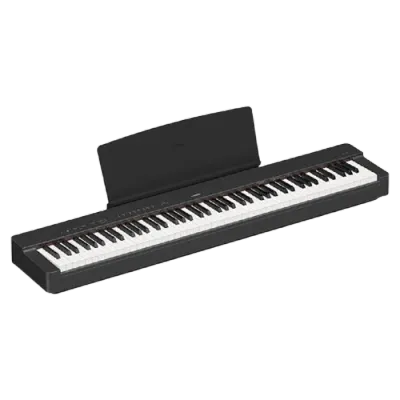
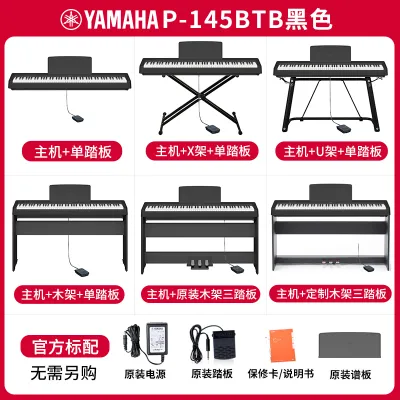
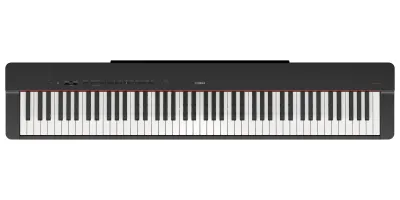
Prices are valid at publication and may change. Please refer to the product page for the latest price.
The Yamaha P-225 is optimized for modern spaces, such as urban condominiums or shared apartments in Metro Manila, where floor space is at a premium. It features the Graded Hammer Compact (GHC) action, which reduces the physical depth of the keyboard while maintaining a graded weighting that is slightly lighter and quieter than its competitors. Combine this with the bright, articulate tone of the Yamaha CFX concert grand sample, and you have an instrument that excels in contemporary pop, jazz, and daily practice.
The Roland FP-10, on the other hand, prioritizes physical realism. It utilizes Roland’s PHA-4 Standard action, which offers a heavier touch, synthetic ivory keytops, and a realistic escapement feel. This action mimics a traditional acoustic piano more closely than almost any other model in its price range. Coupled with the warm, expressive SuperNATURAL sound engine, the FP-10 is tailored for classical students and purists who value dynamic expression and physical feedback over portability.
Key Action and Feel: Compact GHC vs. Traditional PHA-4
The physical interface of a digital piano—its key action—is the most critical factor for developing proper finger strength and technique. Yamaha’s Graded Hammer Compact (GHC) action is a relatively new development, designed specifically to address the needs of players who require a more compact instrument. By redesigning the internal hammer mechanism, Yamaha succeeded in reducing the physical depth of the keyboard chassis. This compact design does not compromise the “graded” aspect of the keys; the lower register still feels heavier than the higher register, mimicking an acoustic piano. However, the overall touch of the GHC action is noticeably lighter than Yamaha’s older GHS action or Roland’s PHA-4. The key return is quick and springy, and the mechanical noise of the keys is remarkably quiet, which is highly beneficial for late-night practice sessions using headphones.

Roland’s PHA-4 Standard action is widely regarded as one of the most realistic key actions available in an entry-level digital piano. It features a longer pivot length, meaning it requires less effort to play keys near the back of the keybed compared to shorter actions. The PHA-4 also includes an escapement mechanism, which replicates the subtle “let-off” click felt when gently pressing a key on an acoustic grand piano. Furthermore, the keys are coated with a synthetic ivory material. This matte, textured surface is highly practical in warm, humid tropical climates like the Philippines, as it absorbs moisture from your fingertips and prevents slipping during long practice sessions.
When choosing between these two actions, consider your physical playing style and environment. If you are a beginner, a young child, or someone who prefers a lighter touch that is easy on the joints, the Yamaha GHC action offers an accessible, comfortable playing experience. If your goal is to transition frequently between your digital piano and an acoustic upright or grand piano—such as for recitals—the heavier, more resistant PHA-4 action on the Roland FP-10 will build the necessary finger strength and muscle memory more effectively. Note that the PHA-4 action is mechanically louder; the physical thud of the keys bottoming out is more pronounced, which might be audible to others in a quiet room even if you are wearing headphones.
Sound Engines: Sampled Clarity vs. Modeled Complexity
How a digital piano translates your physical keystrokes into sound defines its musical character. Yamaha and Roland use fundamentally different technologies to achieve this. The Yamaha P-225 utilizes Yamaha’s Advanced Wave Memory (AWM) stereo sampling, featuring high-fidelity recordings of the flagship Yamaha CFX concert grand piano. This sound engine delivers a bright, clear, and highly articulate tone. The CFX sample is characterized by its sparkling high-end and clean, punchy bass, making it exceptionally well-suited for pop, jazz, rock, and modern worship music. It cuts through a band or a backing track with ease. The P-225 also includes Virtual Resonance Modeling (VRM) Lite, which digitally simulates the complex sympathetic vibrations of strings and the soundboard in an acoustic piano, adding a layer of realism to the sampled sound.
The Roland FP-10 features Roland’s SuperNATURAL Piano sound engine. Unlike pure sampling, which plays back static audio recordings at different volume levels, the SuperNATURAL engine combines high-resolution sampling with physical modeling. This technology calculates the complex physical interactions of the piano’s components in real-time. The resulting sound profile is warm, dark, and highly complex. It offers a smooth, seamless transition between soft and loud playing, without the audible “steps” or velocity layers sometimes heard in basic sampled instruments. This makes the FP-10 highly expressive and responsive to subtle changes in touch, which is a major advantage for classical repertoire.
Beyond the primary piano tones, both instruments offer a selection of secondary sounds, such as electric pianos, organs, strings, and harpsichords. The Yamaha P-225 features 24 voices, providing a broader palette for creative exploration. The Roland FP-10 offers a more streamlined selection of 15 voices.
The built-in speaker systems also play a significant role in how these sounds are projected. The Yamaha P-225 is equipped with a two-way speaker system (7 watts per channel, total 14W) that fires both upward and downward, producing a spacious, well-balanced soundstage. The Roland FP-10 features a dual 6-watt speaker system (total 12W) that fires downward. Because the FP-10’s speakers point downward, placing the keyboard on a solid desk or a closed wooden stand can sometimes muffle the high frequencies, whereas the P-225’s design ensures clear high-frequency projection regardless of placement.
Design and Portability: Space-Saving vs. Traditional Footprint
The physical dimensions and weight of a digital piano affect where it can live in your home and how easily you can transport it. The Yamaha P-225 is specifically engineered for maximum space efficiency. It measures approximately 1,326 mm in width, 272 mm in depth, and 129 mm in height, and weighs 11.5 kg. Its remarkably slim depth makes it one of the most compact 88-key digital pianos on the market. If you are living in a compact studio unit, a dormitory, or need to place the piano on a narrow desk, the P-225’s minimal footprint is a massive benefit.
The Roland FP-10 has a more traditional, deeper footprint. It measures 1,284 mm in width, 258 mm in depth, and 140 mm in height, and weighs 14.1 kg. While it is slightly narrower than the Yamaha, it is noticeably thicker and heavier. The extra 2.6 kg of weight, combined with its bulkier chassis, makes the FP-10 less convenient to carry around for gigs, rehearsals, or music lessons.
For players in the Philippines, environmental factors such as high humidity and dust are worth considering. The slim cabinet design of the P-225 has fewer deep crevices, making it slightly easier to clean and cover. Regardless of your choice, using a high-quality dust cover is highly recommended to protect the sensitive internal key sensors from tropical dust and moisture. If you plan to move your piano frequently between rooms or transport it in a car, the lighter weight and sleeker profile of the Yamaha P-225 give it a clear advantage in portability.
Digital Features: Apps, Connectivity, and Practice Tools
Modern digital pianos offer a suite of electronic features designed to enhance your learning experience and integrate with digital workflows. Yamaha’s companion app, Smart Pianist, is highly regarded for its intuitive user interface. When connected to the P-225 via a tablet or smartphone, Smart Pianist allows you to visually adjust voice settings, layer sounds, configure the metronome, and even generate chord charts from songs in your music library. The P-225 also features built-in Bluetooth Audio, allowing you to stream music from your phone directly through the piano’s speakers to play along with backing tracks. Additionally, the P-225 supports USB Audio and MIDI connectivity, meaning a single USB cable can transmit both digital audio and MIDI data to your computer or mobile device. This simplifies recording into a digital audio workstation (DAW) without needing an external audio interface.
Roland’s companion app, Roland Piano App, provides comprehensive control over the FP-10’s features. It includes practice diaries, a built-in metronome, and interactive learning games. The FP-10 features Bluetooth MIDI, which allows you to connect wirelessly to the app or other MIDI-compatible software. However, the FP-10 does not support Bluetooth Audio streaming, nor does it have a built-in USB audio interface (it only supports USB MIDI). If you want to play along with external tracks on the FP-10, you must connect your playback device via a physical 3.5mm auxiliary cable or listen to the external source through separate speakers.
Hardware connectivity also differs in practical ways. The Yamaha P-225 features dedicated Left and Right auxiliary outputs (1/4-inch jacks), allowing you to connect directly to external PA systems or keyboard amplifiers without cutting off the internal speakers. The Roland FP-10 lacks dedicated line outputs; you must use its single 3.5mm headphone jack to connect to external amplification, which automatically mutes the built-in speakers. For home practice, the P-225 offers two headphone jacks (one 1/4-inch and one 3.5mm), making it easy for a teacher and student to monitor simultaneously. The FP-10 features only one 3.5mm headphone jack.
Pedal compatibility is another key differentiator. The Yamaha P-225 is compatible with the optional L-200 wooden stand and the LP-1 triple pedal unit (which supports half-damper pedaling), allowing it to look and function like a traditional upright piano. The Roland FP-10 is compatible with the KSCFP10 wooden stand, but its pedal input only supports a single sustain pedal (such as the included DP-2 switch or the upgraded DP-10 damper pedal). It does not support a dedicated triple pedal unit. If you plan to progress to advanced classical pieces that require soft (“una corda”) and sostenuto pedaling, the FP-10’s lack of triple pedal support is a notable limitation.
Pricing and Value: What to Expect from Your Budget
When planning your purchase in the Philippines, it is essential to consider the total cost of ownership, which goes beyond the base price of the keyboard itself. The Roland FP-10 is generally positioned as a highly competitive, budget-friendly entry point. Its base price is typically lower than that of the Yamaha P-225. This makes the FP-10 an incredibly attractive option for budget-conscious beginners who want a premium key action without a hefty initial investment. The Yamaha P-225 sits at a slightly higher price tier, reflecting its more advanced connectivity options (like USB Audio and Bluetooth Audio), dual-way speaker system, and triple-pedal compatibility.
When purchasing either model, verify what is included in the box. Typically, both packages contain the keyboard, a basic music rest, a power adapter, and a simple plastic foot switch (sustain pedal). For a complete and comfortable setup, you will need to budget for several essential accessories:
- Sustain Pedal: The basic plastic foot switches included with both models tend to slide around on tiled or wooden floors, common in Philippine homes. Upgrading to a more substantial, slip-resistant piano-style pedal (such as the Yamaha FC4A or Roland DP-10) is highly recommended for a realistic pedaling experience.
- Keyboard Stand: A sturdy stand is crucial. While portable double-X metal stands are affordable and easy to store, they can sometimes wobble during vigorous playing. If your budget and space permit, investing in the manufacturer's matching wooden stand (the Yamaha L-200 or Roland KSCFP10) provides superior stability and a more aesthetic, furniture-like appearance. Note that these stands are brand-specific and cannot be interchanged.
- Adjustable Bench: Maintaining the correct seating height is critical for preventing wrist strain and developing proper posture.
Always purchase from authorized local musical instrument dealers in the Philippines to ensure you receive a genuine product and a valid local warranty. Authorized distributors typically offer a one-year warranty covering parts and labor, which is vital for protecting your investment against potential manufacturing defects.
Final Recommendation: How to Make Your Choice
To finalize your decision, let us summarize which digital piano aligns best with your specific circumstances and goals.
Choose the Yamaha P-225 if:
- You have limited space and require a slim, highly portable instrument.
- You prefer a bright, clear, and articulate acoustic piano tone that blends well with pop, jazz, and contemporary music.
- You want a lighter, springier key action that is quiet and comfortable for long practice sessions.
- You value advanced digital convenience, such as Bluetooth Audio streaming and direct USB Audio recording into a computer or phone.
- You plan to upgrade to a complete furniture-style setup with a dedicated triple pedal unit in the future.
Choose the Roland FP-10 if:
- You prioritize a heavy, highly realistic key action with textured synthetic ivory keys that mimic an acoustic grand piano.
- You prefer a warm, rich, and physically modeled piano sound that responds dynamically to classical playing techniques.
- You are on a stricter budget and want the best possible touch-to-cost ratio.
- You do not mind a slightly heavier, deeper cabinet and do not require advanced features like Bluetooth Audio or a built-in USB audio interface.
Verify first if:
- You are buying the instrument for a young child. The heavier key action of the Roland FP-10 might tire out very young fingers more quickly than the lighter Yamaha GHC action.
- You are purchasing from an authorized dealer in the Philippines to guarantee local warranty coverage and after-sales support.
Frequently Asked Questions (FAQ)
Can I use either piano with third-party virtual instruments or a DAW?
Yes, both the Yamaha P-225 and the Roland FP-10 can function as MIDI controllers. You can connect them to a computer, tablet, or smartphone via their respective USB-to-Host ports. Once connected, they will transmit MIDI data to your digital audio workstation (DAW) or virtual instrument (VST) software. However, note that while the Yamaha P-225 can transmit both MIDI and digital audio over a single USB cable, the Roland FP-10 only transmits MIDI. If you use the FP-10 with a computer-based virtual instrument, the sound generated by the software will play through your computer’s speakers or an external audio interface, not through the piano’s built-in speakers, unless you run a separate audio cable from your computer back into the piano’s auxiliary input or use external monitors.
Do the Yamaha P-225 and Roland FP-10 have built-in rhythm patterns?
Neither of these models functions as an arranger keyboard, meaning they do not have extensive built-in rhythm sections, auto-accompaniment styles, or backing bands directly accessible from the physical control panel. They are designed primarily as dedicated digital pianos. However, you can access basic metronome functions on both instruments. To play along with drum beats or backing tracks, you can connect the Yamaha P-225 to its Smart Pianist app (which offers some rhythm accompaniment features) or stream backing tracks via Bluetooth Audio. For the Roland FP-10, you can use the Roland Piano App to access interactive practice rhythms and accompaniment tracks, which will play through your connected mobile device or can be routed physically to the piano.
Which piano is better for classical piano students?
For students focusing strictly on classical piano pedagogy, the Roland FP-10 is generally considered the superior choice. Its PHA-4 Standard key action provides a heavier, more realistic resistance, complete with an escapement mechanism and textured keytops that closely replicate the feel of a real acoustic grand piano. This helps classical students build the finger strength and control required for acoustic instruments. Additionally, the SuperNATURAL sound engine offers a highly expressive dynamic range suitable for classical nuances. However, the Yamaha P-225 remains an excellent and highly capable alternative, especially if the student has limited space or requires a lighter touch for comfort.
Community discussion
Share your experience or ask a question. Comments are reviewed before publication.