
Choosing between the Yamaha P-145 and the Roland FP-10 comes down to a fundamental choice between two distinct design philosophies. The Yamaha P-145 offers a streamlined, highly compact design with a bright, clear sampled acoustic tone, making it an excellent option for those who value simplicity and a smaller physical footprint. On the other hand, the Roland FP-10 leans into a heavier, more expressive key action with simulated escapement and a modeled sound engine that appeals to players seeking a highly realistic tactile response.
Neither instrument is universally superior; instead, the ideal choice depends on your personal preference for key resistance, tonal character, and how you plan to integrate the piano into your living space. Before committing to a purchase, it is highly recommended to visit an authorized local music store in the Philippines to test both actions in person, verify current local pricing in ₱, and confirm the warranty coverage provided by official distributors.
Key Action and Playability: Comparing the Keyboard Mechanisms
The feel of the keys is often the most critical factor for a beginner, as it directly shapes how you develop finger strength and proper playing technique. The Yamaha P-145 features the Graded Hammer Compact (GHC) keyboard action, which is designed to save space while still offering a weighted feel that is heavier in the low end and lighter in the high end. In contrast, the Roland FP-10 utilizes the PHA-4 Standard keyboard action, which incorporates simulated escapement—the subtle “let-off” click felt when pressing a key slowly on an acoustic grand piano—along with textured key surfaces that mimic the feel of real ivory.
Products mentioned in this guide
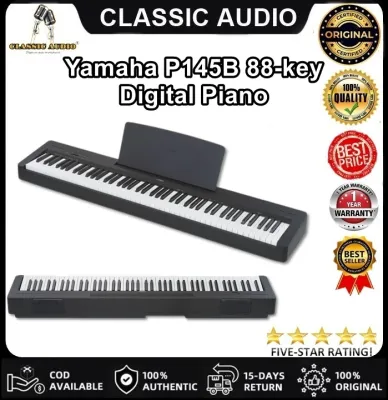
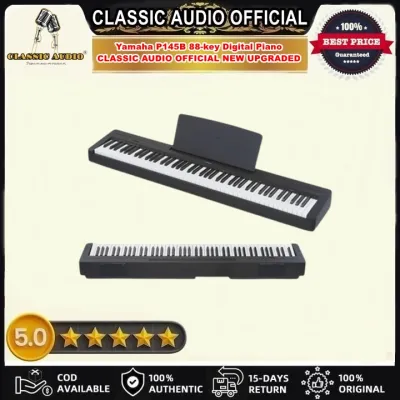
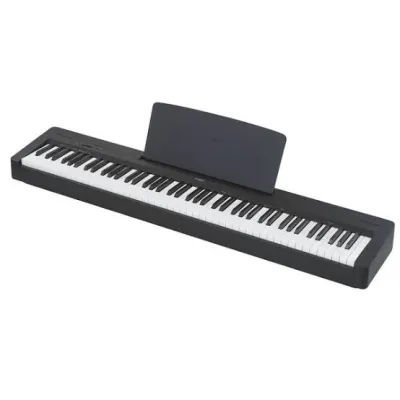
Prices are valid at publication and may change. Please refer to the product page for the latest price.
When conducting an in-store test, pay close attention to how your fingers react to the weight and return speed of each keybed. Some beginners find the Roland PHA-4 action to feel slightly heavier and more substantial, which can be highly beneficial for building classical technique but may feel tiring during long initial practice sessions. The Yamaha GHC action often presents a slightly lighter, springier response that some players find more approachable for casual playing or modern pop styles. Additionally, turn the volume down completely and play the keys to assess the mechanical noise level of the keybed, ensuring it will not be distracting during quiet practice.
Before finalizing your choice, check the official manufacturer specification sheets for the polyphony limits of each model. Polyphony determines how many individual notes or voices can sound simultaneously before older notes are cut off. While basic pieces require very little polyphony, advanced classical compositions utilizing heavy sustain pedaling demand higher limits. Verifying these technical specifications ensures that the keyboard mechanism and sound engine can comfortably support your musical growth as your repertoire becomes more complex.
Sound Engines and Audio Output: Sampled vs. Modeled Tones
The sonic character of a digital piano heavily influences your practice experience and musical expression. Yamaha utilizes its proprietary Advanced Wave Memory (AWM) stereo sampling technology in the P-145, capturing the actual acoustic sound of a physical concert grand piano. This results in a bright, clean, and highly defined tone that cuts through clearly and sounds familiar to most listeners. Roland, conversely, employs its SuperNATURAL sound engine, which combines high-quality sampling with physical modeling to recreate the complex acoustic interactions that occur within a piano cabinet, producing a warmer, more organic sound with smooth tonal transitions.

To evaluate these sound engines effectively, do not rely solely on marketing descriptions; instead, focus on how the sound responds to your touch. Play a single key very softly and then gradually strike it with increasing force. Listen for a smooth transition in both volume and tonal character, as a quality sound engine should transition from a mellow, dark tone at low velocities to a bright, resonant ring at high velocities. This dynamic range is essential for learning how to play with emotion and expression.
Additionally, verify the physical speaker specifications, including total wattage and physical placement on the instrument chassis. In tropical climates like the Philippines, where homes may feature high ceilings, tiled floors, or open windows that let in ambient street noise, speaker projection is highly important. If you plan to practice quietly, test the headphone output quality with a high-quality pair of headphones to ensure the spatial imaging of the piano sound remains rich, clear, and immersive.
Learning Tools, Connectivity, and App Integration
Modern digital pianos offer a variety of digital features designed to make daily practice more engaging and productive. The Yamaha P-145 integrates with the Smart Pianist app, which provides an intuitive visual interface for selecting voices, adjusting metronome settings, and even analyzing audio files on your device to generate chord charts. The Roland FP-10 connects to the Roland Piano App, offering similar remote-control functionality alongside built-in companion exercises, sight-reading games, and a practice diary to track your progress over time. Before purchasing, check the current app store compatibility for your specific smartphone or tablet to ensure a seamless connection.
Connectivity options are also vital if you plan to use interactive learning software or connect the piano to a computer. Both models feature a USB-to-Host port, allowing you to establish a stable wired MIDI connection to a computer or tablet. The Roland FP-10 also includes built-in Bluetooth MIDI, which allows for a wireless connection to compatible devices, reducing cable clutter around your practice space. Note that Bluetooth audio—which lets you stream music from your phone through the piano’s speakers—is generally not supported on these entry-level models, so verify the exact Bluetooth specifications on the manufacturer’s official product page.
Finally, look for essential built-in practice tools that can assist your daily routine. A reliable built-in metronome is crucial for developing a steady sense of rhythm. Dual or layer modes allow you to combine two different sounds, such as piano and strings, for creative exploration. Additionally, check for a duet or twin piano mode, which splits the keyboard into two identical pitch ranges, allowing a teacher and student to play side-by-side during lessons.
Physical Design, Portability, and Accessory Compatibility
Before bringing a digital piano home, it is essential to assess your physical space and how the instrument will fit into your daily routine. The Yamaha P-145 is designed with a highly compact and lightweight chassis, making it exceptionally easy to move, store, or transport if you have limited space or need to pack the instrument away after practice. The Roland FP-10 is also relatively compact but carries slightly more depth and weight, largely due to the robust construction of its weighted keybed. Consider your living arrangements, such as whether you live in a compact condominium or a spacious house, to determine which physical footprint is more practical.
Environmental factors should also play a role in your setup decisions. High humidity levels in tropical regions can affect electronic components and key mechanisms over time. Keeping your digital piano in a well-ventilated room, away from direct sunlight, and using a fitted dust cover when the instrument is not in use can help protect the internal sensors and prolong the lifespan of the keybed.
Additionally, verify the compatibility of official accessories to ensure a stable and comfortable playing experience. While both models are compatible with portable X-stands or double-braced stands, they also support dedicated wooden furniture stands (such as the Yamaha L-100 or Roland KSC-FP10) that provide a more stable, acoustic-like aesthetic. Check whether the model supports a dedicated three-pedal unit or if you are limited to a single sustain pedal. Always confirm what accessories are included in the retail box—such as the music rest, power adapter, and basic sustain switch—so you can budget for any necessary upgrades from the start.
How to Decide: Matching the Piano to Your Learning Goals
To make your final decision, align the unique strengths of each digital piano with your personal learning priorities and physical space constraints.
Choose the Yamaha P-145 if:
- You prefer a bright, clear, and traditional acoustic piano tone that sounds defined right out of the box.
- You have limited space and require a highly compact, lightweight instrument that is easy to store or transport.
- You prefer a straightforward, user-friendly interface that allows you to turn the instrument on and start playing immediately without navigating complex menus.
Choose the Roland FP-10 if:
- Your primary goal is to develop classical piano technique, and you want a key action with simulated escapement and textured keytops that closely mimics an acoustic grand piano.
- You prefer a warmer, more organic sound engine that responds dynamically to subtle changes in your playing velocity.
- You want the convenience of wireless Bluetooth MIDI connectivity to integrate with interactive learning apps on your tablet or smartphone.
Before making your final purchase, verify several practical factors to ensure long-term satisfaction. If you are buying the instrument for a young child, test the key weight resistance in-store, as some children may find the heavier Roland action tiring for extended practice. Measure your designated room space carefully, accounting for the width of the stand and the clearance needed for a bench. Finally, check the warranty terms and after-sales support offered by authorized dealers in the Philippines to ensure your investment is fully protected.
Frequently Asked Questions (FAQ)
Can I use third-party piano learning apps with both models?
Yes, both the Yamaha P-145 and Roland FP-10 can connect to popular third-party learning applications. You can establish this connection using a standard USB-to-Host cable connected directly to your tablet or computer. The Roland FP-10 also offers Bluetooth MIDI, which allows for a wireless connection to compatible devices. However, app compatibility can vary depending on your device’s operating system and the specific app requirements, so always verify the connection specifications on the app developer’s website before subscribing.
Do these entry-level models support half-pedaling for classical pieces?
To utilize half-pedaling—which allows for more nuanced control over sustain, mimicking how an acoustic piano’s dampers gradually touch the strings—you must verify if the keyboard supports continuous pedal input. The basic plastic foot switches included in the box with both models do not support half-pedaling; they function only as simple on/off switches. To use this technique, you will need to purchase a compatible upgraded sustain pedal (such as the Roland DP-10 or Yamaha FC3A) or a dedicated multi-pedal unit, depending on the specific model’s hardware compatibility.
What should I inspect when buying a used P-145 or FP-10?
When purchasing a second-hand digital piano, perform a thorough physical inspection. Power on the unit and play every single key individually at different velocities to ensure there are no dead keys, inconsistent volume jumps, or excessive mechanical clicking noises. Test all input and output ports, including the headphone jacks, power input, and USB ports, to confirm they establish a stable connection. Verify that the original power adapter is included and functioning correctly, and ask the seller for the original purchase receipt to check if any local warranty remains with authorized service centers in the Philippines.

Community discussion
Share your experience or ask a question. Comments are reviewed before publication.