
Quick Answer: Which Yamaha Sustain Pedal Fits Your Playing Style?
Selecting the right keyboard accessory can completely transform your playing experience, whether you are practicing classical concertos at home or performing live in local venues. The choice between the Yamaha FC3A, FC4A, and FC5 depends entirely on your instrument’s technical capabilities and your personal playing style.
If your digital piano supports half-pedaling and you require the nuanced expression of an acoustic grand piano, the Yamaha FC3A is the ideal choice. For players who need a traditional, piano-style physical pedal but only require standard on/off sustain, the heavy-duty FC4A switch pedal offers excellent stability. If portability is your absolute priority—especially when commuting to gigs or rehearsals with a lightweight keyboard—the compact, flat FC5 switch pedal provides a highly packable solution.
Before making any purchase, always verify your keyboard’s port specifications and compatibility settings to ensure the pedal functions correctly with your specific model.
Products mentioned in this guide
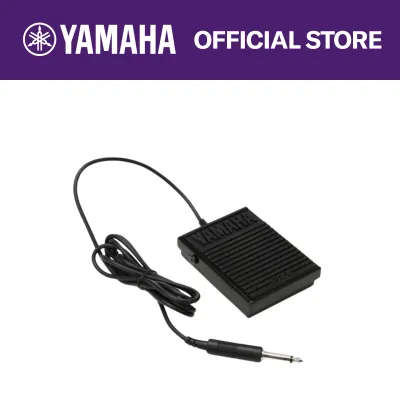
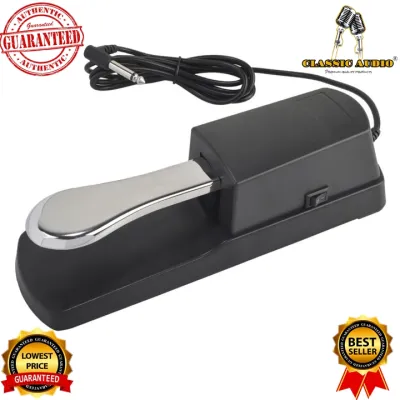
Prices are valid at publication and may change. Please refer to the product page for the latest price.
Understanding Pedal Types: Continuous vs. Switch Mechanisms
To choose the right accessory, you must first understand how different sustain mechanisms interact with your keyboard’s internal sound engine. Sustain pedals generally fall into two categories: continuous controllers and binary switches.

A continuous pedal, such as the Yamaha FC3A, operates much like the damper pedal on an acoustic piano. Instead of simply turning the sustain effect on or off, it sends a continuous stream of MIDI data to the keyboard. This allows for “half-pedaling,” where you can partially depress the pedal to clear some notes while letting others ring out softly. This mechanism requires a compatible keyboard that can interpret these variable control signals.
In contrast, switch pedals like the Yamaha FC4A and FC5 operate on a simple binary system. When you press the pedal, the sustain effect is fully engaged; when you release it, the sustain stops immediately. This on/off behavior is standard for most entry-level keyboards, synthesizers, and MIDI controllers.
Because these mechanisms are fundamentally different, you must check your instrument’s user manual before buying. Look for terms like “half-damper compatible” or “continuous controller support” to confirm if your keyboard can utilize a continuous pedal like the FC3A, or if it is limited to standard switch pedals.
Feature and Build Comparison
While internal mechanisms dictate how a pedal communicates with your keyboard, the physical design and materials determine how it feels under your foot and how well it survives daily use.
Pedal Response and Expressiveness
Your choice of pedal directly impacts your musical expression and the genres of music you can comfortably play. If you are studying classical piano pieces or complex jazz arrangements, the ability to control the decay of notes is essential. The continuous mechanism of the FC3A allows you to execute subtle dampening techniques, preventing your performance from sounding muddy or overly dry.
For pop, rock, electronic music, or synthesizer leads, a binary switch pedal is usually more than sufficient. In these genres, notes are typically sustained fully or not at all, making the complex data of a continuous pedal unnecessary. The FC4A and FC5 both deliver this reliable binary response, allowing you to lock in your rhythm without worrying about intermediate pedal positions.
Beyond the electronic signal, the physical resistance of the pedal plays a major role in your playing comfort. A piano-style pedal like the FC3A or FC4A mimics the mechanical resistance of an acoustic piano’s damper system, which helps you gauge how much pressure to apply. The flat, spring-loaded design of the FC5 offers a different, lighter resistance that some players prefer for quick, rhythmic tapping, though it lacks the traditional feel of an acoustic piano pedal.
Build Quality, Weight, and Portability
The physical environment where you play should heavily influence your choice of pedal build. In tropical climates like the Philippines, high humidity and dust can affect both the internal components and the external grip of your gear.
The FC3A and FC4A feature robust, metal-reinforced chassis designed to resemble traditional acoustic piano pedals. This added weight is highly beneficial if you set up your keyboard on smooth tile or polished wood floors, which are common in local homes and venues. A heavier pedal is far less likely to slide away from your foot during an energetic performance. Additionally, these models feature substantial rubber bases designed to grip the floor, though you should regularly wipe them clean of dust to maintain traction.
The FC5, on the other hand, utilizes a compact, flat metal plate design with a rubberized frame. It is exceptionally lightweight and takes up minimal space in a backpack or gig bag. If you frequently travel via public transportation, such as jeepneys or tricycles, saving weight and space is a massive advantage. The trade-off is stability; because the FC5 is so light, it can shift on slick surfaces during vigorous play, requiring you to position it carefully or use a non-slip mat.
Compatibility and Connection Checks
Before purchasing any sustain pedal, you must perform a few technical checks to avoid compatibility issues. Not all keyboards accept all pedals, and using the wrong type can result in inverted behavior—where notes sustain when your foot is off the pedal and stop when you press down.
First, inspect the physical input jack on your keyboard. Most standard sustain pedals use a 1/4-inch plug. However, you must verify whether your keyboard requires a Tip-Sleeve (TS) mono plug or a Tip-Ring-Sleeve (TRS) stereo plug. Continuous pedals like the FC3A typically require a TRS connection to transmit the variable data stream, while standard switch pedals like the FC4A and FC5 use a TS connection.
Second, check the polarity of your instrument. Different keyboard manufacturers design their instruments to expect either a “normally open” or “normally closed” electrical circuit when the pedal is idle. Yamaha pedals are designed with a specific default polarity. If you connect a Yamaha pedal to a keyboard from another brand, you may experience inverted sustain. While some keyboards automatically detect polarity upon startup or allow you to change it in the system settings, others do not. If your keyboard lacks these settings, you may need to look for a pedal with a physical polarity reverse switch, which none of these three Yamaha models feature.
Finally, confirm your keyboard’s firmware capabilities. Even if a keyboard has a physical port that fits the FC3A, its internal software must be programmed to read continuous half-damper messages. If the keyboard only supports binary switching, plugging in an FC3A will either result in the pedal acting as a simple on/off switch or not working at all. Consulting your product manual or the manufacturer’s official support website is the safest way to verify these details before spending your budget.
Final Decision Framework: Choosing Your Yamaha Sustain Pedal
To make your final decision, evaluate your playing environment, your instrument’s technical specifications, and your budget, which may range from approximately ₱1,500 to ₱3,500 depending on the model and authorized local music store.
Choose the FC3A if:
- Your digital piano explicitly supports half-pedaling or continuous damper control.
- You play classical, jazz, or expressive solo piano music that requires nuanced control over note decay.
- You prefer a heavy, stable, piano-style pedal for a permanent home or studio setup.
Choose the FC4A if:
- Your keyboard only supports standard binary (on/off) sustain, but you still want the realistic physical feel of an acoustic piano pedal.
- You want a durable, heavy-duty metal pedal that stays firmly in place on smooth floors.
- You are setting up a semi-permanent home studio or stage rig where weight is not a primary concern.
Choose the FC5 if:
- Portability is your top priority, and you need a compact pedal that easily fits into a small gig bag for travel.
- You are using a basic keyboard, synthesizer, or MIDI controller for pop, electronic music, or simple practice sessions.
- You prefer a flat, low-profile pedal design and are comfortable playing on a lighter, spring-loaded switch.
Verify first if:
- Your non-Yamaha keyboard has polarity settings to prevent inverted sustain behavior.
- Your keyboard's user manual confirms compatibility with continuous TRS controllers before investing in the FC3A.
- You need to budget for a non-slip mat if you plan to use the lightweight FC5 on slick tile surfaces.
Community discussion
Share your experience or ask a question. Comments are reviewed before publication.