
Choosing the right keyboard stand is just as important as selecting the instrument itself. A poor stand can cause distracting wobbles during a performance, limit your legroom, or even put your expensive keyboard at risk of tipping over. In the Philippines, where musicians often contend with varying performance spaces, humid climates, and transport challenges, finding a stable and ergonomic foundation is essential.
There is no single universal keyboard stand; the ideal choice depends entirely on your instrument’s weight, your playing environment, and your need for portability. X-stands offer affordability and easy transport for lighter keyboards, Z-stands provide excellent stability and legroom for active playing, and table stands deliver a permanent, furniture-grade solution for heavy digital pianos. Use this comparison to match the stand’s structural design to your specific setup requirements.
Comparing the Core Keyboard Stand Designs
To make an informed decision, you must first understand the structural engineering behind the three primary stand styles. Each design handles weight distribution, height adjustment, and spatial footprint differently.
Products mentioned in this guide
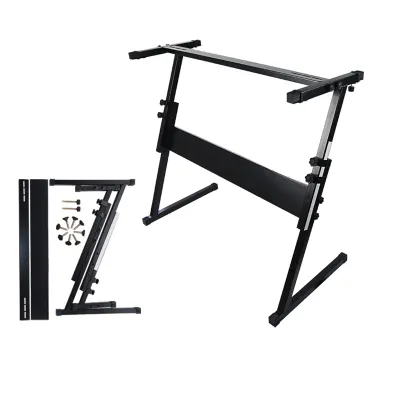


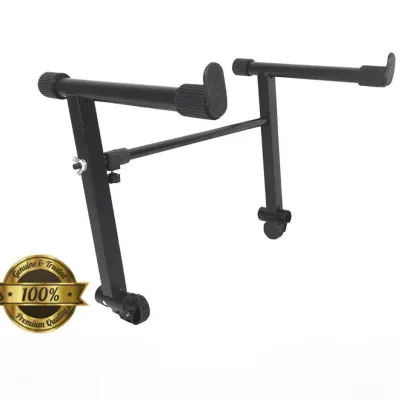
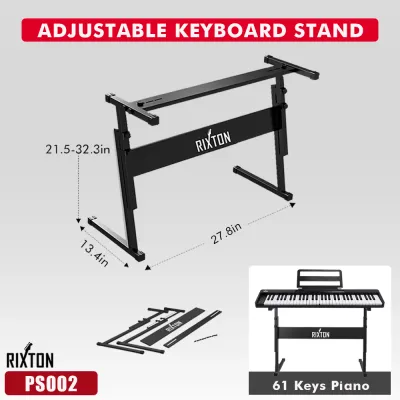
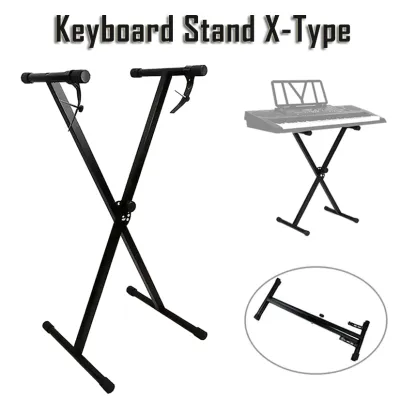
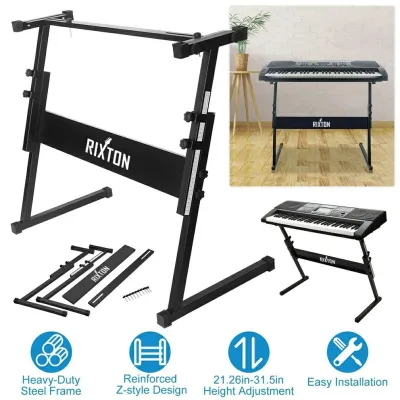
Prices are valid at publication and may change. Please refer to the product page for the latest price.
The X-stand is the most common design on the market, recognizable by its classic crossed-leg frame. These stands are constructed from square or round metal tubing and utilize a central hinge point to fold flat or open into an “X” shape. They are available in single-braced configurations, which feature a single bar on each side of the cross, and double-braced configurations, which use two parallel bars on each side for added reinforcement.
The Z-stand is named for its distinctive Z-shaped side profiles. It consists of two vertical pillars connected by a horizontal crossbar at the back, with flat metal feet at the bottom and support arms at the top. This open-frame design keeps the center of the stand completely clear, distributing the weight of the keyboard straight down through the vertical pillars.
The table stand, often referred to as a platform or utility stand, resembles a small, heavy-duty desk. It features four independent legs that fold out from a central rectangular frame. Alternatively, table stands can take the form of wooden console stands. These are solid, furniture-style wooden panels designed specifically for home digital pianos, enclosing the sides and back of the instrument to mimic the look of an acoustic upright piano.
Evaluating Stability and Weight Capacity
Stability is the most critical safety factor for any keyboard setup. A wobbling stand not only disrupts your playing rhythm but also risks sending your valuable instrument crashing to the floor. When evaluating stability, you must consider the weight of your keyboard and the physical force of your playing style.

X-stands are highly convenient but suffer from inherent stability limitations. Because the height of an X-stand is adjusted by changing the angle of the crossed legs, the stand becomes narrower as you raise it. At standing height, the base footprint is quite narrow, making the setup top-heavy and prone to tipping sideways if bumped. Single-braced X-stands are best reserved for lightweight keyboards, synthesizers, or MIDI controllers. Double-braced models offer significantly more rigidity, but they can still experience lateral sway during aggressive playing or when supporting heavy, weighted 88-key digital pianos.
Z-stands offer a massive upgrade in structural integrity. The wide, rectangular footprint of the base bars ensures that the stand remains firmly anchored to the floor, even during energetic performances. Because the vertical pillars do not cross, the weight of the keyboard is distributed evenly across the entire frame. This design virtually eliminates side-to-side wobbling and front-to-back tipping, making Z-stands an excellent choice for heavy professional workstations and stage pianos.
Table stands provide the highest level of stability, especially for permanent home or studio installations. A four-legged metal table stand distributes weight across four distinct corners, much like a heavy-duty work table. This makes it incredibly rigid and capable of supporting the heaviest digital pianos without a hint of movement. Wooden console table stands offer similar stability, as they are bolted directly to the keyboard’s chassis. However, because they rely on a flat base, they must be placed on level flooring to prevent rocking. In tropical climates, where high humidity can cause cheap fiberboard to warp over time, investing in a high-quality metal table stand or a premium, moisture-resistant wooden console is a smart way to protect your instrument.
Always check the manufacturer’s specified weight limit against your keyboard’s weight. Remember to account for the extra downward force applied by your hands during fortissimo passages.
Assessing Ergonomics and Playing Comfort
Ergonomics play a vital role in preventing muscle strain, back pain, and repetitive strain injuries during long practice sessions. Your posture is directly influenced by how much legroom your stand provides and how precisely you can adjust its height.
Legroom clearance is the primary ergonomic drawback of the X-stand. Because the metal bars cross directly in the center, they block the space beneath the keyboard. If you play while seated, your knees will inevitably bump against the frame, forcing you to sit further back or angle your legs uncomfortably. This restricted space also makes it difficult to place a sustain pedal or expression pedal in a natural position, leading to awkward foot stretching and leg fatigue.
In contrast, Z-stands and table stands offer completely unobstructed legroom. Because their support structures are located at the outer edges of the keyboard, the entire space beneath the instrument is open. This allows you to slide your bench fully forward, maintain a healthy 90-degree angle at your knees, and place your pedals exactly where your feet naturally rest. This open space is particularly beneficial for classical pianists who rely on precise pedal work and proper seated posture.
Height adjustability mechanisms also differ significantly between these designs. X-stands use a central pull-pin or clutch mechanism that allows for rapid adjustments, but they offer a limited number of preset height slots. Furthermore, because height and width are linked, lowering an X-stand for a seated child makes the top support bars incredibly wide, which may not align with a smaller keyboard. Z-stands and metal table stands feature independent height adjustments on each leg or pillar, usually secured by heavy-duty hand knobs or locking pins. This allows you to set the ideal playing height for your elbows and wrists without altering the width of the stand.
If you plan to expand your musical setup, consider the stand’s expandability. Many high-quality Z-stands and table stands are designed with modularity in mind, allowing you to attach a second tier. This second tier can hold a secondary synthesizer, a MIDI controller, a laptop, or sheet music directly above your main keyboard. X-stands rarely support stable second-tier attachments, as the added height and weight can make the already narrow frame dangerously top-heavy.
Portability and Setup Convenience
For gigging musicians, music teachers, or students who need to move their gear frequently, portability and setup speed are major considerations. The ideal stand must balance structural strength with ease of transport.
X-stands are the most convenient option for portability. They fold completely flat in a single motion, resulting in a slim, lightweight profile that easily fits into the trunk of a compact car, behind a sofa, or even carried on public transport. They require zero assembly or tools, making them the fastest option to set up and tear down at a venue.
Z-stands are significantly less portable. While some modern Z-stands feature folding joints, they remain bulky and heavy even when collapsed. Disassembling a standard Z-stand often requires loosening multiple hand knobs and separating the frame into three or more pieces, which can be tedious to transport and easy to lose in a dark venue. They are well suited for setups that stay in one place or are only moved occasionally.
Table stands offer a surprising middle ground. Metal utility table stands feature legs that fold flat against the main frame, similar to a folding card table. This allows them to pack down into a flat, highly transportable shape that is easy to stack with other gear. While they are heavier than X-stands, their superior stability makes the extra weight a worthwhile trade-off for professional gigging keyboardists who require a rock-solid platform on stage. Wooden console stands, on the other hand, are strictly non-portable; they are heavy, semi-permanent fixtures that require tools to assemble and should not be moved once installed.
Decision Framework: Choosing the Right Stand for Your Setup
To finalize your decision, evaluate your specific instrument, playing style, and environment against these practical guidelines.
Choose an X-stand if your budget is a primary concern, you need a highly portable setup for quick gigs, and your keyboard is relatively lightweight (under 15 kilograms). To ensure adequate safety, always opt for a double-braced X-stand rather than a single-braced model if your keyboard is close to the weight limit.
Choose a Z-stand if you primarily play while seated, require maximum legroom for pedal work, and need a highly stable, wobble-free platform for a heavy 88-key keyboard or synthesizer workstation. The Z-stand offers a strong balance of professional stability and ergonomic comfort for active players.
Choose a Table stand if your setup is permanent, such as in a home studio, living room, or music school. A metal utility table stand is perfect for heavy stage pianos, while a wooden console stand provides a clean, furniture-grade aesthetic that blends seamlessly with your home decor.
Before making your purchase, always verify your keyboard’s physical dimensions and weight. Check the bottom of your instrument to ensure it does not have protruding battery compartments or curved plastic molding that might prevent it from sitting flat on the stand’s support arms. Investing in a high-quality stand worth several thousand pesos (₱) is a small price to pay to protect your valuable musical equipment and ensure a comfortable, lifelong playing experience.
Frequently Asked Questions (FAQ)
Can I use an X-stand for a heavy 88-key digital piano?
While some heavy-duty, double-braced X-stands are rated to support the weight of an 88-key digital piano, it is generally not recommended for regular use. The narrow base and high center of gravity of an X-stand make a heavy keyboard highly susceptible to side-to-side wobbling and tipping if bumped. For heavy 88-key instruments, a Z-stand or a table stand provides a much safer, more stable foundation.
How do I prevent my keyboard from sliding off the stand?
To prevent your keyboard from sliding, first ensure that the rubber end caps and grip pads on your stand are clean and intact, as dust and tropical humidity can make rubber surfaces slippery. Many keyboards feature threaded screw holes on the bottom designed to align with security straps or screws on compatible stands. If your stand does not have these, you can use aftermarket adhesive rubber pads or heavy-duty utility straps to secure the keyboard chassis directly to the stand’s upper support bars.
Community discussion
Share your experience or ask a question. Comments are reviewed before publication.