
Deciding between Rich Dad Poor Dad and Why Nations Fail as your first finance book depends entirely on whether you want to master your personal wallet or understand the broader economic forces shaping the world. If your immediate goal is to learn how to manage your income, build personal assets, and change your daily relationship with money, Rich Dad Poor Dad is the logical starting point. However, if you want to understand why some countries prosper while others struggle with poverty, and how institutional systems impact businesses, the why nations fail book is the superior choice. Both offer invaluable perspectives, but they operate on completely different scales.
Understanding What Each Book Actually Teaches
Rich Dad Poor Dad by Robert Kiyosaki is a micro-level guide designed to reshape how you view income, expenses, and career paths. It introduces fundamental concepts like the difference between assets and liabilities, the importance of cash flow, and how to break free from the traditional cycle of working solely for a paycheck. The book focuses heavily on individual financial independence, urging readers to acquire income-generating assets rather than accumulating liabilities disguised as wealth. Kiyosaki uses the contrast between his two ‘dads’—one highly educated but financially struggling, the other a high-school dropout who became a wealthy entrepreneur—to illustrate these concepts.
In contrast, Why Nations Fail by Daron Acemoglu and James A. Robinson is a macro-level political economy text. It does not offer budgeting tips, investment strategies, or personal career advice. Instead, it examines how historical, political, and economic institutions dictate a country’s financial trajectory. The authors argue that ‘inclusive’ institutions, which distribute power and protect property rights, foster long-term prosperity, while ‘extractive’ institutions, which concentrate wealth and power in the hands of a few, lead to economic stagnation. They support this theory with historical examples, comparing regions with shared geography but vastly different institutional systems.
Products mentioned in this guide
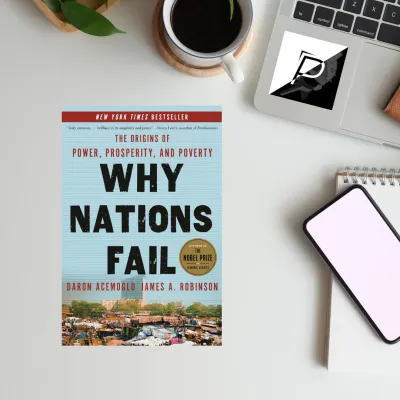
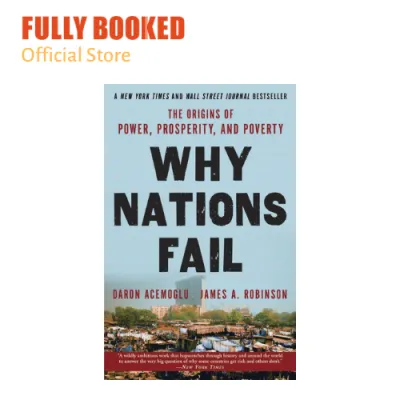
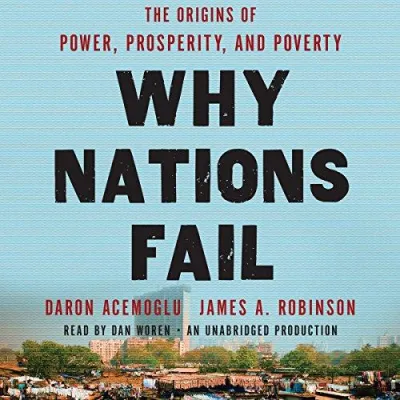
Prices are valid at publication and may change. Please refer to the product page for the latest price.
Ultimately, one book teaches you how to navigate your personal financial ecosystem, while the other explains the global economic machine that houses that ecosystem. Understanding this distinction prevents the disappointment of buying a book that does not match your current learning objectives.
Comparing Reading Experience and Accessibility
The reading experience of these two books could not be more different, which is a critical factor for young readers managing busy schedules. Robert Kiyosaki writes in a highly conversational, anecdotal style, using simple parables and repetitive lessons to drive his points home. This makes Rich Dad Poor Dad highly accessible, allowing you to finish it quickly during short study breaks or casual reading sessions. The concepts are illustrated with basic diagrams that require no prior background in finance or economics.

On the other hand, Why Nations Fail is an academic, research-heavy volume. It requires a higher cognitive load, as it is packed with detailed historical case studies spanning centuries and continents, from the Roman Empire to colonial Latin America. Reading it demands sustained focus, critical thinking, and a willingness to digest complex historical narratives. It is written for a general audience but maintains the rigorous tone of scholarly research.
Before purchasing, it is wise to check the specific edition or format. Some publishers offer abridged versions or study guides, so verifying the page count and edition details ensures the text matches your current reading stamina and available study time. Checking the publisher’s details also helps you avoid outdated prints that may lack modern prefaces or updated chapters.
How Each Book Shapes Your Financial Mindset
Rich Dad Poor Dad is famous for shifting readers from an employee mindset to an investor or entrepreneurial mindset. It encourages you to look at every peso spent as either a lost opportunity or a seed for future growth. For a young reader, this can spark an early interest in side hustles, small business ventures, or local investment vehicles. It teaches you to take personal responsibility for your financial future rather than relying solely on a traditional job.
Why Nations Fail shapes your mindset by teaching you to analyze systemic risks. It helps you understand how property rights, regulatory stability, and institutional integrity affect the local business climate. This macro-level awareness is incredibly practical; it teaches you to evaluate the long-term viability of industries and understand how national policy shifts might impact your personal investments. It prevents you from viewing personal finance in a vacuum, showing how external societal structures influence individual success.
Combining these mindsets creates a powerful synergy. While Kiyosaki teaches you how to build a boat and manage your crew, Acemoglu and Robinson teach you how to read the weather patterns and ocean currents that will determine whether your boat sinks or sails. A young investor who understands both micro-level asset management and macro-level institutional risk is far better equipped to make sound, long-term financial decisions.
Side-by-Side Feature Comparison
To help you quickly evaluate which text aligns with your immediate learning goals, here is a direct comparison of their key characteristics:
| Feature | Rich Dad Poor Dad | Why Nations Fail |
|---|---|---|
| Author(s) | Robert Kiyosaki | Daron Acemoglu & James A. Robinson |
| Primary Subject | Personal finance and wealth mindset | Macroeconomics and political history |
| Target Audience | Beginners seeking financial independence | Readers interested in systemic economics |
| Reading Difficulty | Easy (conversational and anecdotal) | Moderate to High (academic and detailed) |
| Core Takeaway | Buy assets, minimize liabilities, invest | Inclusive institutions drive national prosperity |
How to Choose the Right Starting Point
Your choice should align with your current life stage and immediate practical needs. Choose Rich Dad Poor Dad if you are just starting to earn your own money, need to build a basic budget, or want to understand how to make your savings work for you. It provides the immediate, actionable motivation needed to take control of your personal bank account and start thinking like an investor.
Choose Why Nations Fail if you already have a grasp of basic personal finance and want to deepen your understanding of why economic environments differ so drastically. It is ideal for students of economics, aspiring policymakers, or entrepreneurs who want to understand the structural risks of the markets they operate in. It helps you look beyond individual effort to see how the rules of the game are written.
Keep in mind that neither book serves as a technical, step-by-step manual. If you are looking for specific instructions on stock trading, corporate accounting, or day-to-day bookkeeping, you will need to look for specialized textbooks or practical guides dedicated to those technical skills. Neither title will teach you how to file taxes or manage a specific corporate ledger.
Where to Buy and Verify Your Copies
When you are ready to purchase, it is essential to source your books from authorized physical bookstores, official publisher storefronts, or reputable online marketplaces. The market is often flooded with unauthorized, cheaply printed bootleg copies that suffer from missing pages, illegible text, and poor binding. Buying from official channels ensures that the authors receive their royalties and that you receive a complete, high-quality text.
To ensure you are getting a complete and authorized edition, always verify the International Standard Book Number (ISBN) and check the publisher details. Look for recent printings that may include updated introductions or supplementary study materials.
Consider how your daily routine and environment affect your reading habits. In high-humidity tropical climates, physical books can degrade quickly if not stored in dry, well-ventilated spaces, making digital e-books an attractive, space-saving alternative. If you face long daily commutes in heavy traffic or on crowded public transit, an audiobook format can turn idle travel time into productive learning. Alternatively, a durable physical paperback remains the classic choice for active note-taking and highlighting at your study desk.
Frequently Asked Questions (FAQ)
Is Why Nations Fail considered a personal finance book?
No, Why Nations Fail is not a personal finance book. It is a work of macroeconomic history and political economy. It does not contain practical advice on budgeting, saving, or personal investing. Instead, it explains the institutional frameworks that allow societies to generate and sustain wealth on a national scale.
Can I read both books, and in what order?
Yes, reading both books provides a well-rounded economic education. It is generally recommended to read Rich Dad Poor Dad first to establish a strong, highly motivating foundation in personal money management. Once you have a firm grasp on your individual finances, you can transition to Why Nations Fail to understand the broader economic systems that influence your personal wealth-building efforts.
Community discussion
Share your experience or ask a question. Comments are reviewed before publication.