
A comic-style Bible is an engaging, highly visual medium that translates complex scriptural narratives into sequential art. It is particularly suited for three distinct groups: young children building foundational literacy, teenagers experiencing reading fatigue with dense text, and adult visual learners who benefit from spatial and contextual illustrations to grasp historical timelines. While it serves as an excellent entry point or supplementary study aid, it is rarely a complete substitute for a standard translation. Deciding whether to purchase one depends on matching the reader’s visual processing habits with their specific spiritual and educational goals.
Quick Diagnostic: Is a Comic-Style Bible the Right Fit?
Before investing in a graphic novel Bible, evaluating the reader’s current relationship with text helps prevent a mismatched purchase. This quick diagnostic focuses on three main areas: reading stamina, learning style, and study objectives.
- Reading Stamina: Does the reader struggle to finish a single chapter in a standard text-heavy book, or do they easily navigate dense paragraphs? If long blocks of text cause frustration or distraction, a visual format can maintain momentum.
- Learning Style: Does the reader retain information better through diagrams, maps, and character illustrations, or do they prefer analyzing literal word choices and sentence structures? Visual learners often find that sequential art anchors historical contexts more effectively.
- Primary Goal: Is the objective to gain a broad, chronological understanding of major biblical events, or is it to conduct deep, verse-by-verse theological analysis? A comic format excels at the former but lacks the precision required for the latter.
Evaluating for Children: Engagement and Comprehension
For parents in the Philippines looking to introduce scripture to their children, a comic-style Bible can be a powerful tool to bridge the gap between storybooks and standard text. In a tropical household where distractions like digital screens are highly accessible, keeping a child’s attention on spiritual reading requires dynamic engagement. Sequential art allows children to process narrative arcs visually, helping them identify key figures and chronological events before they possess the vocabulary to read complex biblical prose.
Products mentioned in this guide
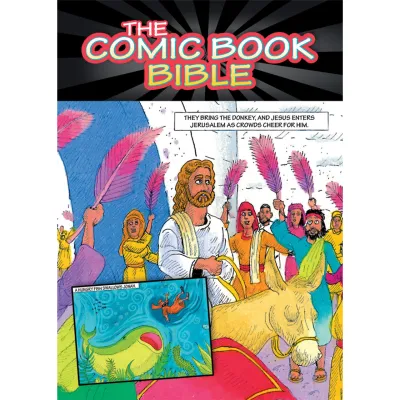
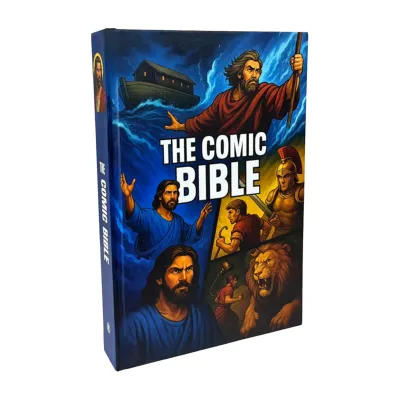
Prices are valid at publication and may change. Please refer to the product page for the latest price.

However, parents must carefully balance this visual engagement with foundational text exposure. While illustrations make stories memorable, they should not entirely replace the practice of reading written words. It is beneficial to choose a graphic format that retains simplified scripture verses alongside the panels, encouraging children to associate the images with actual text.
In the tropical climate of the Philippines, high humidity can affect the longevity of printed books. When selecting a graphic Bible for children, pay attention to the physical construction. Heavy-duty paper and sturdy hardcovers resist moisture damage and frequent handling better than thin newsprint pages, ensuring the book remains a durable part of your family’s library.
Another critical factor is checking how the publisher adapts complex or intense biblical themes. Some graphic Bibles depict historical battles or dramatic events with vivid, mature artwork that might be too intense for younger readers. Parents should inspect the book’s interior pages or online previews to ensure the illustration style and thematic elements align with their child’s emotional maturity and visual processing limits.
Assessing for Teenagers: Reluctant Readers and Visual Storytelling
Teenagers often face significant academic reading fatigue, balancing schoolwork with extracurricular activities. When presented with a traditional, double-column study Bible, reluctant readers may find the dense layout intimidating or dry. A comic-style Bible leverages the popular graphic novel format to re-engage teens by presenting long, complex narrative arcs as dynamic, sequential art. This approach makes historical settings and cultural contexts feel immediate and relatable rather than distant.
Rather than viewing a graphic Bible as a step backward, youth leaders and parents can use it as a transitional bridge. The visual flow helps teenagers grasp the overarching storyline of scripture, making the transition to a standard study Bible less daunting later on. Once a teen understands the basic plot, characters, and historical settings through visual storytelling, they are often more confident when opening a text-only translation to explore specific passages.
Additionally, the visual format helps bridge cultural and historical gaps. For instance, understanding the architectural layout of ancient cities or the visual distinction between different historical empires becomes instantaneous through well-researched illustrations. This visual context reduces the cognitive load on teenagers, allowing them to focus on the moral and spiritual lessons of the text rather than getting bogged down by unfamiliar historical terminology.
When considering this format for youth groups, it is also wise to evaluate peer acceptance. Graphic novels are widely accepted and celebrated among modern teenagers. Introducing a high-quality visual Bible can foster collaborative discussion in youth circles, turning what might have felt like a chore into an interactive, shared reading experience.
Considering for Adults: Visual Learners and Supplemental Study
It is a common misconception that comic-style Bibles are exclusively for younger audiences. Many adults are visual learners who struggle to retain names, geographical movements, and historical timelines when reading traditional text. The cognitive benefits of visual mnemonics are substantial; seeing an illustrated map of a journey or a visual representation of ancient architecture helps adult readers anchor abstract concepts in concrete reality, improving long-term memory retention.
However, adult readers must acknowledge the inherent limitations of graphic formats. A comic-style Bible cannot facilitate deep exegesis, word studies, or the analysis of original Greek and Hebrew terms. The space constraints of speech bubbles and panels mean that poetic books, complex epistles, and nuanced theological discourses are heavily summarized or omitted entirely.
For adults, a graphic Bible can also serve as an excellent tool for family discipleship or mentoring. When reading with others, the illustrations provide a shared visual reference point that makes it easier to discuss complex narratives. It allows mentors to quickly point to a scene to initiate a conversation about character choices, historical consequences, and spiritual truths, making study sessions more interactive and collaborative.
To maximize the value of a visual Bible, adults should plan to use it as a supplemental tool. Pairing a graphic novel format with a standard translation or an audio Bible creates a multi-sensory study routine. For example, one can read the visual narrative to capture the emotional and historical atmosphere of a passage, then consult a standard study Bible to analyze the precise theological doctrines and cross-references.
Decision Matrix: Matching Bible Formats to Reader Profiles
To make an informed purchase, buyers can use a structured framework to match different Bible formats with specific reader profiles and spiritual goals.
- Comic-Style Bible: Best for visual learners, reluctant readers, and those seeking a chronological narrative overview. It excels in engagement and memory retention but has low textual precision.
- Standard Text Bible: Best for daily devotional reading and developing independent reading habits. It offers moderate textual precision and balanced engagement.
- Study Bible: Best for deep theological analysis, verse-by-verse study, and historical research. It features high textual precision but requires strong reading stamina.
- Audio Bible: Best for auditory learners, busy commuters, and multi-sensory study when paired with text.
Recognizing when a reader is ready to transition from a visual format to a traditional text is key. Look for observable signs such as a child asking deep theological questions about the meaning behind an illustrated scene, showing sustained attention when reading longer chapter books, or expressing curiosity about cross-references and study notes.
Before purchasing any Bible from an online marketplace or local bookstore, always verify the publisher’s credentials and translation accuracy. When budgeting for a new edition, which may range from ₱500 to over ₱1,500 depending on the binding and paper quality, verifying these details ensures your investment matches your study goals. Check the introductory pages or product descriptions to identify the underlying translation source (such as the ESV, NIV, or Catholic editions) and ensure the theological perspective aligns with your family’s or church’s teachings.
Frequently Asked Questions (FAQ)
Are comic-style Bibles abridged or fully translated?
Most comic-style Bibles are abridged or paraphrased rather than fully translated word-for-word. Because sequential art relies on visual storytelling, publishers must condense long dialogues, detailed genealogies, and complex poetic passages to fit within panels and speech bubbles. To understand exactly what you are buying, check the publisher’s notes or preface. These sections typically explain whether the book is a direct adaptation of a specific translation, a selective compilation of major narratives, or a creative paraphrase designed to introduce core concepts.
Do church leaders accept graphic novel Bibles for study?
Many church leaders and youth pastors accept and even recommend graphic novel Bibles, but primarily as supplementary reading rather than primary study texts. In local parishes and study groups, visual Bibles are highly valued for their ability to spark interest among beginners and reluctant readers. However, for formal Bible studies, catechism classes, or liturgical services, leaders generally expect participants to use standard, approved translations. If you plan to use a visual Bible in a group setting, it is best to consult your local pastor or study leader to ensure the specific edition is appropriate.
How do I know if my child is ready to transition to a standard Bible?
A child is usually ready to transition to a standard Bible when they display specific, observable reading behaviors. Look for signs such as the ability to read text-heavy chapter books without relying on illustrations, or a growing curiosity about the specific wording of scripture. If your child begins asking deep theological questions that go beyond the visual plot, or if they show interest in the small-print study notes and cross-references in your own Bible, these are clear indicators that they are ready for a standard translation, perhaps starting with a youth-oriented study edition.
Community discussion
Share your experience or ask a question. Comments are reviewed before publication.