
Choosing the right Tagalog Roman Missal—known locally as the Aklat ng Pagmimisa sa Roma—is a deeply personal and practical decision. Whether you are a priest presiding over a parish community, a layperson seeking to participate more actively in the Holy Sacrifice of the Mass, or a thoughtful friend looking for a meaningful religious gift, the right edition makes a significant difference. The Roman Missal is not just a book; it is the structural and spiritual heart of the liturgy, containing the prayers, chants, and rubrics that unite the faithful in worship.
In the Philippines, where the liturgy is celebrated in various regional languages, the Tagalog edition holds a central place in parish life. Navigating the available options requires understanding how these books are structured, how they withstand the local tropical climate, and how to verify their ecclesiastical authenticity. By focusing on your specific role and needs, you can select a missal that serves as a durable, reliable companion for years of prayer and worship.
Understanding the Main Types of Tagalog Roman Missals
To make an informed purchase, you must first distinguish between the two primary formats of the Roman Missal: altar editions and hand missals. These formats serve entirely different purposes in the liturgical space, and confusing them can lead to a purchase that is either too cumbersome to carry or insufficient for conducting a service.
Products mentioned in this guide
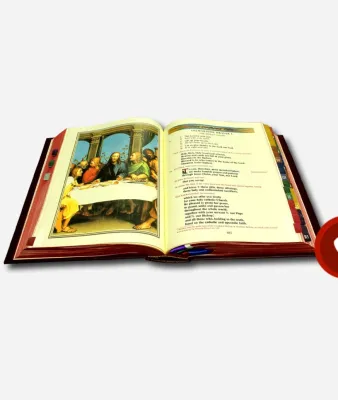
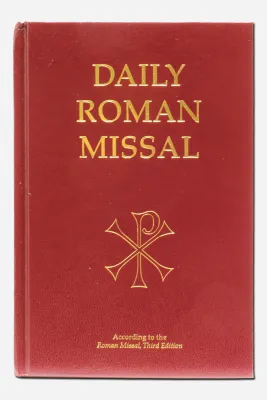

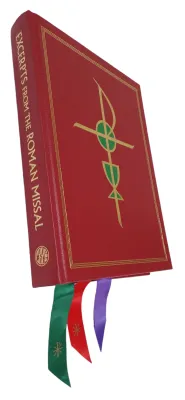
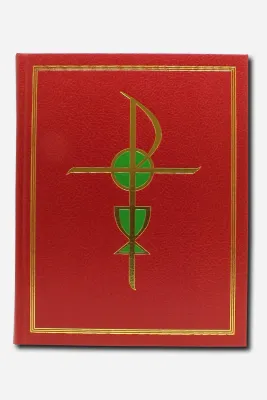
Prices are valid at publication and may change. Please refer to the product page for the latest price.
Altar Missals are large-format, heavy-duty volumes designed specifically for use in the sanctuary. They contain the complete, unabridged texts of the liturgy, including all the rubrics (the instructional text printed in red), the Order of Mass, the Proper of Time, the Proper of Saints, and various ritual and votive masses. Because they are meant to rest on the altar or the ambo, they feature large, high-contrast typography that a priest can easily read from a standing position.
Hand Missals, often referred to as pew or Sunday missals, are compact, portable versions designed for the laity. Rather than containing every single option for every liturgical day of the year, hand missals focus on the texts most relevant to congregational participation. They typically include the Order of Mass, Sunday readings across the three-year liturgical cycle, major solemnities, and a selection of common prayers. Their smaller size makes them easy to slip into a bag for a daily commute or a Sunday trip to the parish church.
When evaluating these types, you should also consider the language distribution. While a standard Tagalog missal is written entirely in the vernacular, some specialized editions are bilingual, featuring Tagalog alongside English or Latin. Bilingual editions are particularly useful for seminarians, liturgical coordinators, or anyone interested in studying the translation nuances of the prayers. For general parish participation, however, a straightforward, fully Tagalog edition is usually the most practical choice.
Choosing a Tagalog Missal for Priests and Clergy
For priests and clergy, selecting a Tagalog Roman Missal is a matter of pastoral utility and liturgical fidelity. The altar missal is the primary tool for leading the congregation in prayer, meaning it must meet strict standards of completeness, readability, and physical durability.

The first priority is the completeness of the texts. A parish priest requires an edition that contains the full Proper of Saints, the Commons, and the various ritual masses used for sacraments like weddings, funerals, and confirmations. It is also essential to verify that the missal includes the specific diocesan propers approved for the Philippines. These local additions ensure that feasts of national significance, such as those dedicated to local saints and patrons, are properly integrated into the liturgical year.
Physical specifications are equally critical for sanctuary use. Because the priest must read the prayers while standing and gesturing, the print must be large, bold, and exceptionally clear. The paper quality must feature high opacity to prevent the text on the reverse side of the page from bleeding through under bright sanctuary lights. Furthermore, the binding must be robust. A high-quality altar missal should feature a sewn binding rather than a glued spine, allowing the book to lie completely flat on the altar without the risk of pages tearing or the spine cracking over time.
Finally, the layout of the rubrics and instructions must be intuitive. The red-printed rubrics guide the movements and gestures of the celebrant. Clear formatting, logical page turns (especially during the Eucharistic Prayer), and sturdy ribbon markers are vital. In the humid climate of the Philippines, ribbon markers should be made of high-grade, non-fraying material, as they will be handled constantly during daily and Sunday celebrations.
Selecting a Hand Missal for Laypeople and Daily Use
For the lay faithful, a hand missal is an invaluable tool for active participation in the liturgy. It helps you follow the readings, internalize the prayers, and prepare your heart before the Mass begins. When choosing a hand missal for personal use, portability, content scope, and readability are the key factors to weigh.
Portability is a primary consideration for anyone commuting to church. A practical hand missal should be lightweight and compact enough to fit comfortably in a backpack, handbag, or even a large pocket. In the Philippines, where Sunday Mass often involves navigating crowded public transportation or walking in warm weather, carrying a bulky book can quickly become a chore. A slim, well-designed volume ensures that your missal remains a constant companion rather than a burden.
You must also decide on the content scope that matches your Mass-going habits. If you primarily attend Mass on Sundays and holy days of obligation, a Sunday missal is the most efficient choice. It contains the readings for Years A, B, and C, making it highly focused and relatively thin. If you attend daily Mass or use the daily readings for personal meditation, a daily missal is necessary. Daily missals are thicker because they cover the two-year weekday cycle, but they offer a much richer resource for daily spiritual growth.
Readability and layout are crucial for keeping your place during the service. Look for a missal with a clear, legible font and a layout that clearly distinguishes between the priest’s parts and the congregation’s responses. Bold text or contrasting colors for responses help you quickly find your cue. A good layout also minimizes unnecessary page-flipping, allowing you to focus on the mystery of the liturgy rather than searching for the next prayer.
Picking the Perfect Tagalog Missal as a Religious Gift
A Tagalog Roman Missal makes an exceptional gift for milestones such as ordinations, weddings, confirmations, or graduations. When purchasing a missal as a gift, you want to look for aesthetic appeal, durability, and supplementary features that make the book a treasured personal heirloom.
The cover material and binding are the first things the recipient will notice. Hardcover editions offer excellent protection for the pages, while leatherette or genuine leather covers provide a premium, tactile feel. In a tropical climate, high-quality leatherette is often a highly practical choice because it resists moisture, sweat, and humidity better than standard paper covers, preventing the growth of mold and mildew. A flexible, reinforced cover also allows the book to bend slightly without damaging the spine.
Look for editions that include supplementary devotional content. A missal that features traditional Tagalog prayers, novenas, the Rosary, and a guide for the Sacrament of Penance adds immense value to the recipient’s spiritual life outside of the Mass. These additions transform the missal from a purely liturgical book into a comprehensive daily prayer companion.
Presentation and personalization options can elevate the gift even further. Check if the publisher or bookstore offers customization, such as gold foil embossing of the recipient’s name on the cover. Multiple ribbon markers in different liturgical colors (red, green, white, violet) are not only highly functional for marking different sections of the Mass but also add a beautiful, traditional aesthetic to the book.
Essential Checks Before Purchasing Any Religious Edition
Before finalizing your purchase of any Tagalog Roman Missal, it is vital to perform a few quality and authenticity checks. Because liturgical texts are sacred and regulated, buying an incorrect or unauthorized edition can lead to confusion during worship.
The most critical check is for ecclesiastical approval. Every official Catholic liturgical book or hand missal must carry an Imprimatur (permission to print) and a Nihil Obstat (declaration that the text is free of doctrinal error) on the copyright page. These declarations, signed by an authorized bishop or church censor, guarantee that the translation is doctrinally sound and officially approved for liturgical use. Avoid purchasing self-published or unauthorized translations found on unregulated online marketplaces.
You must also ensure that the edition aligns with the current approved liturgical translations. Liturgical texts are occasionally updated by the Holy See and the local bishops’ conference to improve translation accuracy. Purchasing an older, secondhand missal might mean using outdated wording that does not match the responses currently spoken by the priest and congregation in your parish. Always verify that the book is marketed as conforming to the latest approved translation of the Aklat ng Pagmimisa sa Roma.
Finally, inspect the physical print quality. Check the paper opacity by holding a page up to the light; if the text on the other side is highly visible, it will make reading difficult during a service. Examine the binding at the spine to ensure that the pages are sewn in sections rather than simply glued to the backing. A sewn binding ensures that the book can be opened repeatedly for years without the pages coming loose, making it a truly lasting investment.
Frequently Asked Questions (FAQ)
Can I use an English Roman Missal in a Tagalog Mass?
While the structure and theological meaning of the Mass are identical regardless of the language, using an English missal during a Tagalog Mass can make active participation difficult. The readings, homily, and congregational responses will be spoken in Tagalog, so trying to follow along in English requires constant mental translation and can disconnect you from the communal prayer. However, an English missal remains a valuable tool for private preparation, personal study, or meditating on the readings before or after the liturgy.
Are digital or app-based Tagalog missals acceptable for personal use?
Digital apps containing the Tagalog liturgical readings are highly convenient for personal prayer, daily meditation, and preparation during your daily commute. However, using a smartphone or tablet during the actual celebration of the Mass is generally discouraged. Screens can be a source of distraction due to incoming notifications, and the glow of a device can disrupt the prayerful atmosphere of the church. For active participation during the liturgy, a physical hand missal remains the preferred and most reverent option.
Community discussion
Share your experience or ask a question. Comments are reviewed before publication.