
Quick Answer: Matching the Right Tagalog Bible to Your Needs
Finding the right version of bible books tagalog depends heavily on your personal reading goals, your church community, and your comfort with classical versus contemporary language. Because there is no single “best” Tagalog translation, readers should choose a version based on whether they prioritize traditional liturgical dignity, modern conversational clarity, or updated formal precision.
The three major Tagalog Bible translations serve distinct needs:
- Ang Biblia (1905) is the classic, formal word-for-word translation. It uses deep, poetic, and sometimes archaic Tagalog, making it the historical standard for traditional Protestant liturgies.
- Magandang Balita Biblia (MBB) utilizes a dynamic, thought-for-thought translation philosophy. It renders the scriptures in modern, everyday Tagalog and is widely available in both Protestant and Catholic editions.
- Ang Banal na Biblia (2001) is a revised formal translation. It updates the classic 1905 text with modernized spelling, corrected grammar, and updated manuscript evidence, maintaining a reverent, academic tone while improving clarity for contemporary readers.
Understanding the Three Major Tagalog Bible Translations
To make an informed decision when purchasing bible books tagalog, it is essential to understand the historical background, theological roots, and translation philosophies behind these three major works. Each represents a distinct era of linguistic development and biblical scholarship in the Philippines.
Products mentioned in this guide
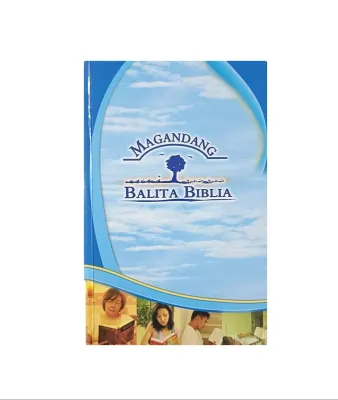
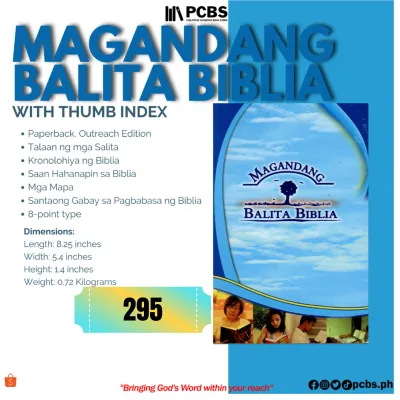
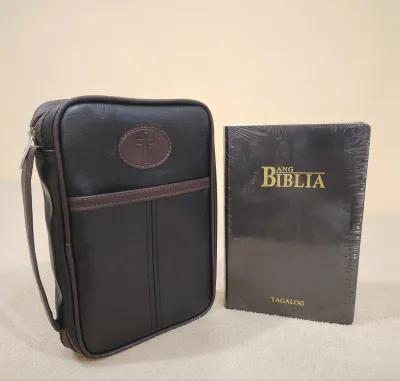
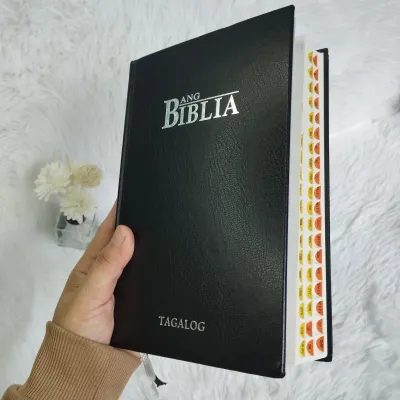
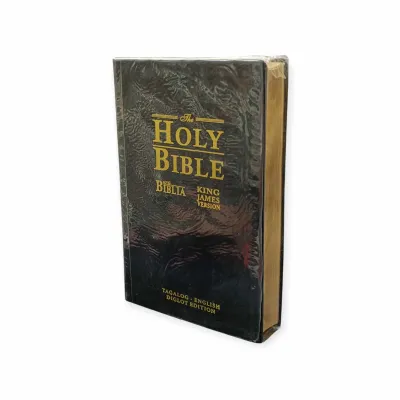
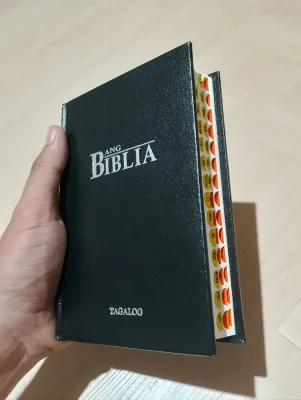
Prices are valid at publication and may change. Please refer to the product page for the latest price.

Ang Biblia (1905)
Originally published at the turn of the twentieth century following the arrival of Protestant missionaries in the Philippines, Ang Biblia (1905) is the historical bedrock of Tagalog Protestant scripture. The translators relied on a formal equivalence methodology, which is a word-for-word translation philosophy. This approach closely mirrors the grammatical structures of the original Hebrew and Greek source texts, as well as the English King James Version of the Bible.
Linguistically, this translation features what is locally known as deep Tagalog (malalim na Tagalog). It employs classical vocabulary and grammatical structures that are rarely used in modern daily conversation, such as talastasin (to understand), magsisisi (to repent), and ipagtalaga (to consecrate). This gives the text an incredibly poetic, majestic, and solemn quality. It remains highly favored in traditional Protestant denominations—such as Methodist, Baptist, and various independent evangelical churches—where the liturgical language demands historical reverence and formal dignity.
Magandang Balita Biblia (MBB)
First published by the Philippine Bible Society in the late 1970s and subsequently updated, the Magandang Balita Biblia (MBB) represents a modern departure from the formal style of the 1905 text. The MBB employs a dynamic equivalence, or thought-for-thought, translation philosophy. Rather than replicating the literal word order of the ancient languages, the translators prioritized the immediate comprehension of the modern reader, rendering the original meaning into natural, contemporary Tagalog.
The vocabulary of the MBB is conversational, clear, and aligned with the standard Tagalog spoken across the Philippines today. This makes it highly accessible for personal devotions, family reading, youth ministry, and evangelical outreach. Crucially, the MBB is an ecumenical milestone; it is widely distributed in both Protestant formats and Catholic editions. The Catholic editions, published with the approval of the Catholic Bishops’ Conference of the Philippines, include the Deuterocanonical books.
Ang Banal na Biblia (2001)
As the decades progressed, the Philippine Bible Society recognized that while the 1905 Ang Biblia was becoming increasingly difficult for younger generations to comprehend, many readers still preferred a formal, literal translation for deep study. To address this, a major revision project was undertaken, culminating in the release of Ang Banal na Biblia in 2001. This translation is often referred to in academic and publishing circles as the Revised Ang Biblia.
This version preserves the formal equivalence structure of the 1905 translation but systematically updates its linguistic features. It replaces obsolete spelling conventions with modern Filipino orthography and corrects archaic grammatical structures that could mislead modern readers. Furthermore, the translators integrated insights from modern biblical archaeology and older manuscript discoveries, such as the Dead Sea Scrolls. The result is a text that retains a majestic, reverent tone suitable for academic study and formal liturgy while ensuring linguistic accuracy and flow for the twenty-first-century reader.
Comparing Language Style, Readability, and Denominational Alignment
When choosing between these translations, you must evaluate how their distinct language styles, theological alignments, and physical editions fit into your daily life and religious practice.
Language Style and Everyday Readability
The practical difference between these three translations becomes obvious when reading them aloud. A modern reader may find the 1905 Ang Biblia beautiful but structurally exhausting, often requiring a dictionary to decode classical idioms. Conversely, the Magandang Balita Biblia reads as naturally as a modern conversation, making it easy to understand during family prayers or community gatherings. Ang Banal na Biblia (2001) sits comfortably in the middle, offering a dignified, structured flow that avoids modern colloquialisms while discarding confusing archaisms.
To gauge your personal preference, we highly recommend performing a comparative reading test before buying. Look up a well-known passage—such as John 3:16 (Juan 3:16), Psalm 23 (Awit 23), or the Lord’s Prayer (Ama Namin in Matthew 6:9-13)—across all three versions. Observe how the vocabulary shifts from the classical, solemn phrasing of the 1905 text to the direct, modern language of the MBB, and finally to the balanced, updated formal structure of the 2001 edition. This simple comparison will immediately reveal which style aligns best with your comprehension level and spiritual practice.
Denominational Alignment and Canonical Differences
A critical factor when purchasing a Tagalog Bible is ensuring it aligns with your specific religious tradition and its recognized biblical canon. The standard Protestant canon consists of 66 books: 39 in the Old Testament and 27 in the New Testament. Both the 1905 Ang Biblia and the 2001 Ang Banal na Biblia are strictly Protestant translations and contain only these 66 books. If you belong to a Protestant denomination, either of these versions will fit seamlessly into your personal study and church life.
For Catholic readers, however, the biblical canon includes the Deuterocanonical books, such as Tobit, Judith, Wisdom, Sirach, Baruch, and 1 and 2 Maccabees. The Magandang Balita Biblia is unique because it is published in two distinct editions: a Protestant edition containing 66 books, and a Catholic edition containing the full Catholic canon, with the Deuterocanonicals either integrated into the Old Testament or appended. When buying online or in a physical bookstore, you must carefully inspect the product listing, the cover (which often features a “Catholic Edition” or “With Deuterocanonicals” label), and the table of contents to ensure you are purchasing the correct version for your faith tradition.
Study Features, Formatting, and Physical Editions
When purchasing physical bible books tagalog, remember that the translation text itself is only one part of the product. The overall utility of your Bible is heavily influenced by its print format and supplementary study features. Publishers offer a wide array of options, ranging from simple, low-cost paperbacks to premium, leather-bound editions with gold-gilded edges and thumb indexing to help you navigate books quickly.
Furthermore, check if the specific edition includes study aids such as cross-references, explanatory footnotes, a concordance, maps of the biblical world, or reading plans. These features are determined entirely by the publisher’s specific print run and layout, not by the translation name alone. For example, a “Magandang Balita Biblia Study Bible” will contain extensive contextual notes and historical backgrounds, whereas a standard compact edition of the same translation will feature only the bare text. Always read the product description carefully to verify what study tools are included in that specific physical volume.
Side-by-Side Comparison of Tagalog Bible Translations
To help you quickly compare the core differences between these three major Tagalog translations, refer to the summary table below.
| Translation Name | Translation Philosophy | Readability Level | Canonical Editions | Best Use Case |
|---|---|---|---|---|
| Ang Biblia (1905) | Formal Equivalence (Word-for-Word) | Challenging (Archaic, Deep Tagalog) | Protestant (66 Books) | Traditional liturgies, poetic reading, historical study |
| Magandang Balita Biblia (MBB) | Dynamic Equivalence (Thought-for-Thought) | High (Modern, Conversational) | Protestant (66 Books) & Catholic (with Deuterocanonicals) | Daily devotions, youth ministries, beginners, ecumenical study |
| Ang Banal na Biblia (2001) | Revised Formal Equivalence | Moderate (Updated grammar & spelling) | Protestant (66 Books) | Deep theological study, formal teaching, balanced liturgical use |
How to Choose: Decision Rules for Your Purchase
To make the final decision on which Tagalog Bible to purchase, consider your primary reading goals and how you plan to use the text. Use the following decision rules to guide your purchase:
- Choose Ang Biblia (1905) if you have a deep appreciation for classical literature, prefer highly poetic and solemn language, or attend a traditional Protestant church where this specific version is used for corporate scripture reading. It is also an excellent choice for linguistic collectors or those studying the history of the Tagalog language.
- Choose Magandang Balita Biblia (MBB) if readability is your absolute top priority. If you are buying a Bible for daily personal devotions, family reading, children, or individuals who are new to Christian scripture, the MBB's modern conversational tone is unmatched. It is also the premier choice for Catholic readers who require the Deuterocanonical books in modern Tagalog.
- Choose Ang Banal na Biblia (2001) if you want to engage in serious, word-for-word theological study but find the 1905 translation's grammar and spelling too archaic. This version provides the structural accuracy of a literal translation while incorporating modern spelling conventions and updated manuscript evidence, making it ideal for pastors, small group leaders, and academic students.
- Verify first if you are purchasing a Bible for a specific church, school, or study group. Many local congregations and religious institutions in the Philippines standardize on a specific translation to ensure unity during corporate readings and lessons. Check with your pastor, priest, or group leader before buying to avoid purchasing a version that differs from the one used in your community.
What to Verify Before Buying Bible Books Tagalog
To ensure a seamless purchase and avoid common pitfalls, buyers must exercise diligence when selecting their bible books tagalog. First, always verify the exact publication year and the publisher. The Philippine Bible Society (PBS) is the primary authorized publisher for these translations; buying editions bearing their official seal ensures textual accuracy, completeness, and ethical publishing standards.
Second, check the physical specifications of the book, especially considering the tropical climate of the Philippines. High humidity can damage thin Bible paper if it is not properly stored or if the binding is of poor quality. Look for durable hardcovers or high-quality synthetic leather covers if you plan to carry your Bible frequently. If buying online, only purchase from official publisher outlets, authorized religious bookstores, or highly rated, reputable booksellers. Avoid unverified third-party sellers whose listings may feature poorly printed, pirated, or physically defective copies that are missing pages or sections.
Frequently Asked Questions (FAQ)
Is the Magandang Balita Biblia Catholic or Protestant?
The Magandang Balita Biblia (MBB) is an ecumenical translation that is published in both Protestant and Catholic editions. The Protestant version contains the standard 66 books of the Protestant canon. The Catholic version, which carries the approval of the Catholic Bishops’ Conference of the Philippines (CBCP), includes the Deuterocanonical books (Apocrypha) integrated into the Old Testament. When purchasing, always check the product description, cover markings, and table of contents to ensure you are getting the correct edition for your denomination.
Which Tagalog Bible translation is best for a beginner?
For beginners, the Magandang Balita Biblia (MBB) is highly recommended. Because it uses a dynamic, thought-for-thought translation philosophy, it presents biblical narratives, historical contexts, and complex theological concepts in modern, everyday Tagalog. This conversational style drastically reduces the learning curve compared to older, formal translations like the 1905 Ang Biblia, allowing new readers to focus on understanding the message rather than deciphering archaic vocabulary.
Community discussion
Share your experience or ask a question. Comments are reviewed before publication.