
Choosing the right pedal for your keyboard or digital piano depends on three main factors: the physical ports on your instrument, the software capabilities built into its system, and the musical genres you play. While a simple sustain pedal is the most common accessory, advanced players and sound designers often require expression pedals or dedicated triple pedal units to unlock the full potential of their instruments. Identifying your specific hardware limits and musical goals before making a purchase ensures you avoid compatibility issues and select a tool that truly enhances your performance.
In the Philippines, where home setups range from compact bedroom desks to church stages, selecting the right gear also means considering physical stability and environmental factors. High humidity can affect electronic contacts over time, and smooth tiled floors can make lightweight accessories slide around during intense practice sessions. Understanding how different pedals connect, function, and withstand daily use will help you make an informed decision that fits your budget and playing style.
Check Your Keyboard's Inputs and Compatibility
Before purchasing any pedal, you must examine the rear panel of your keyboard to identify the available input jacks. The most common connection is a standard 1/4-inch (6.35mm) jack, typically labeled “Sustain,” “Damper,” or “Pedal.” This port accepts standard single-pedal accessories. However, if you are looking to connect a triple pedal unit, your keyboard will usually require a proprietary multi-pin port, which is often shaped like a circular DIN connector or a specialized rectangular plug. These multi-pin ports are typically model-specific, meaning a triple pedal from one brand will rarely work on a keyboard from another.
Products mentioned in this guide
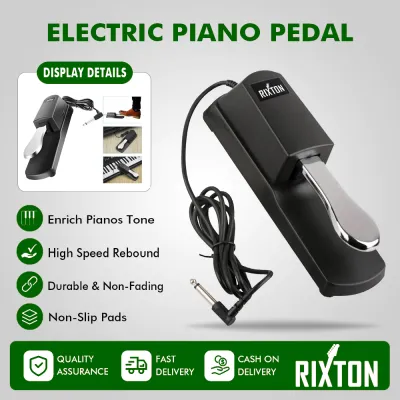
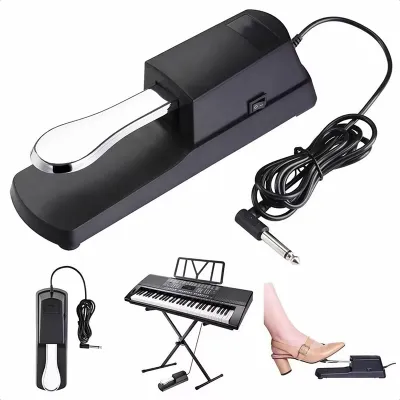
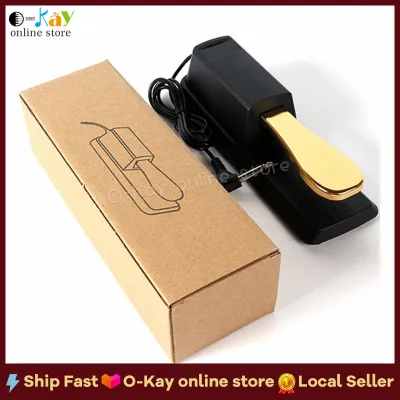
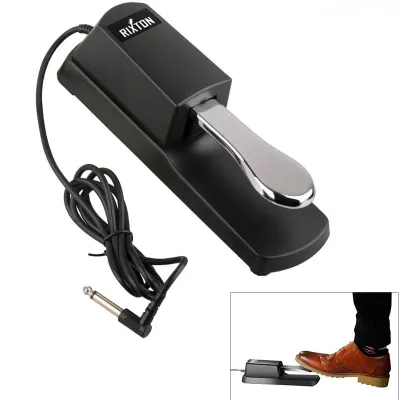
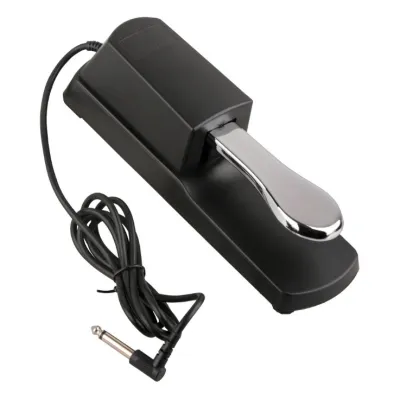
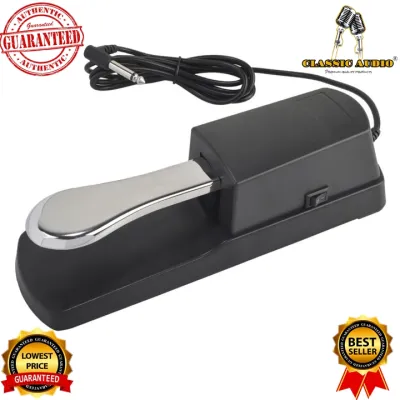
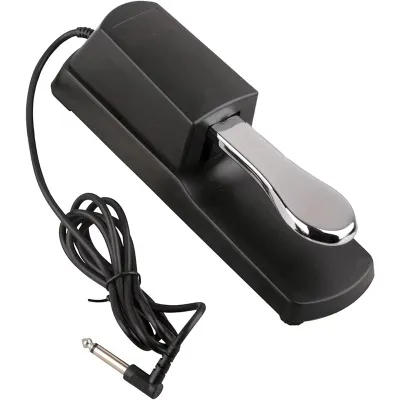
Prices are valid at publication and may change. Please refer to the product page for the latest price.
Polarity is another critical technical factor when selecting a single sustain pedal. Different keyboard manufacturers design their instruments to recognize either a “normally open” or “normally closed” electrical circuit when the pedal is pressed. If you connect a pedal with the wrong polarity, your notes will sustain when your foot is off the pedal and cut off when you press down. To prevent this frustrating issue, look for a sustain pedal equipped with a physical polarity switch on the bottom or side. This switch allows you to toggle between polarity standards, making the pedal universally compatible with almost any keyboard brand.
You must also verify whether your keyboard’s internal software supports advanced pedal behaviors like half-damper control. Standard sustain pedals operate as simple on/off switches, but classical acoustic pianos allow for gradual damping. If your digital piano supports half-damper or continuous controller data, you will need a specialized pedal capable of sending a range of values rather than a simple binary signal. Check your keyboard’s user manual or specifications sheet to confirm if the instrument can interpret continuous damper messages before investing in a high-end, half-damper-capable pedal.
Match the Pedal Type to Your Musical Goals
Your choice of pedal should directly reflect the style of music you play and the sounds you want to produce. For the vast majority of keyboardists, a standard sustain pedal, also known as a damper pedal, is the absolute baseline requirement. This pedal mimics the rightmost pedal of an acoustic piano, allowing notes to ring out even after you lift your fingers from the keys. It is indispensable for playing pop ballads, flowing chord progressions, and standard piano repertoire where smooth transitions between chords are necessary.

If you frequently play organ patches, synthesizers, or orchestral arrangements, an expression pedal is a highly valuable addition to your setup. Unlike a sustain pedal, which only controls note duration, an expression pedal acts as a continuous foot controller to adjust parameters like volume, filter cutoff, or modulation in real time. For organ players, this pedal functions as a swell pedal to control dynamics, allowing you to build dramatic crescendos without taking your hands off the keys. Synthesizer players use expression pedals to sweep through frequencies, creating evolving textures and ambient soundscapes.
For serious classical pianists, a dedicated triple pedal unit is essential for authentic performance. These units replicate the complete three-pedal setup of an acoustic grand piano: the soft pedal (una corda) on the left, the sostenuto pedal in the middle, and the damper pedal on the right. The soft pedal alters the tone and volume of the notes for delicate passages, while the sostenuto pedal sustains only the specific notes that were held down when the pedal was pressed, leaving subsequent notes unaffected. This complex behavior is required for advanced classical pieces by composers like Debussy or Ravel, where intricate tonal layering is necessary.
If you are a beginner or intermediate player focusing on contemporary pop, rock, or basic keyboard lessons, a single sustain pedal is more than enough to get started. You do not need to invest in a complex triple pedal unit unless you are actively studying classical piano techniques that demand specific pedal work. On the other hand, if you are a music producer or sound designer working with virtual instruments on a computer, having both a sustain pedal and an expression pedal will give you the hands-free control needed to record dynamic, expressive MIDI tracks.
Choose the Right Build and Pedal Action
The physical construction of a pedal significantly impacts both your playing comfort and the durability of the accessory. Entry-level keyboards often come bundled with lightweight, plastic square-shaped foot switches. While these are highly portable and budget-friendly, they lack the physical resistance of an acoustic piano pedal and tend to slide easily across tiled or smooth wooden floors. If you practice frequently, upgrading to a heavy, metal chassis pedal shaped like a traditional piano pedal provides a much more realistic feel and stays firmly in place.
The internal mechanism of the pedal must also match the specific function you need. A simple sustain pedal uses a momentary switch that registers only two states: fully pressed or fully released. In contrast, an expression pedal utilizes a rotary potentiometer that tracks the exact angle of the pedal throughout its entire range of motion. This continuous control requires a smooth, heavy-duty hinge mechanism that can hold its position when you remove your foot, allowing you to set a specific volume or filter level and leave it there.
In tropical environments like the Philippines, where high humidity can cause lightweight gear to shift or slide on smooth floors, stability is a major consideration. If you use a portable keyboard stand without a built-in wooden frame, a heavy metal pedal with a thick rubberized base is crucial to prevent the pedal from drifting away during intense practice sessions. Some players also utilize specialized pedal mats or choose keyboard stands with integrated pedal boards that lock the pedals into a fixed physical position, ensuring a consistent ergonomic setup.
Signs It Is Time to Upgrade Your Pedal
Recognizing when your current pedal is holding back your musical progress can save you from unnecessary frustration. A clear sign that you need an upgrade is when you begin studying classical repertoire that explicitly calls for half-pedaling or sostenuto techniques. If your current pedal only supports basic on/off switching, you will find it impossible to achieve the delicate, blended textures required for advanced classical pieces, making an upgrade to a continuous sustain pedal or a triple pedal unit necessary.
Physical fatigue and instability are also strong indicators that your gear needs an upgrade. If you find yourself constantly chasing a lightweight plastic pedal across the floor with your foot during practice, or if the stiff, unnatural spring action causes foot fatigue after just thirty minutes of playing, it is time to invest in a heavy-duty, ergonomically designed metal pedal. A stable pedal allows you to maintain proper posture and focus entirely on your technique rather than physical distractions.
Finally, you should consider adding an expression pedal when your musical interests expand beyond traditional piano sounds. If you are transitioning into playing in a band, managing synth pads, or performing organ solos, relying solely on hand controls for volume and modulation can severely limit your expression. Adding a dedicated continuous controller pedal allows you to manipulate your sound dynamically in real time, elevating your performance from a static keyboard part to an active, expressive musical contribution.
Frequently Asked Questions (FAQ)
Why is my sustain pedal working in reverse?
This issue occurs because of a polarity mismatch between your keyboard and the pedal. Keyboard brands use different electrical standards, where some expect a closed circuit to sustain notes and others expect an open circuit. If your pedal has a physical polarity switch on the bottom, simply unplug the pedal, flip the switch, and plug it back in. If your pedal lacks a switch, try turning off your keyboard, plugging the pedal in, and then turning the keyboard back on without pressing the pedal down, as many modern keyboards auto-detect polarity during startup.
Can I use a guitar expression pedal for my keyboard?
While some guitar expression pedals can physically connect to a keyboard, they are not always fully compatible due to differences in wiring and electrical resistance. Keyboard expression pedals typically use a Tip-Ring-Sleeve (TRS) cable and specific potentiometer resistance values (often 10k to 50k ohms) designed to match keyboard input circuits. Using a guitar pedal with incorrect resistance or a standard Tip-Sleeve (TS) instrument cable can result in an uneven control sweep, limited range, or a complete failure to register. It is always safer and more reliable to use a dedicated keyboard expression pedal designed for continuous control.

Community discussion
Share your experience or ask a question. Comments are reviewed before publication.