
Choosing your first guitar effects pedal is a major milestone in your musical journey. It marks the transition from practicing basic chords to actively sculpting your own signature sound. For most beginners, the sheer variety of options on the market can feel overwhelming. The most effective way to choose is to analyze your current amplifier setup, identify the specific sounds you feel are missing from your playing, and match those needs to a corresponding pedal category.
For the majority of players, starting with either a versatile overdrive pedal or a time-based delay pedal provides the most immediate value. These two categories offer the most dramatic and usable tonal upgrades without requiring a complex setup. Before making a purchase, you must evaluate your existing gear and understand how different effects interact with your guitar and amplifier.
Identify Your Tonal Gaps and Musical Goals
Before browsing online catalogs or visiting a local music store, take a critical look at your current setup. Many modern practice amplifiers, especially digital modeling amps, already come equipped with built-in effects. If your amplifier features a decent digital reverb or a usable overdrive channel, buying standalone pedals that replicate these exact sounds is redundant. Instead, look for a pedal that introduces a completely new texture to your playing.
Products mentioned in this guide
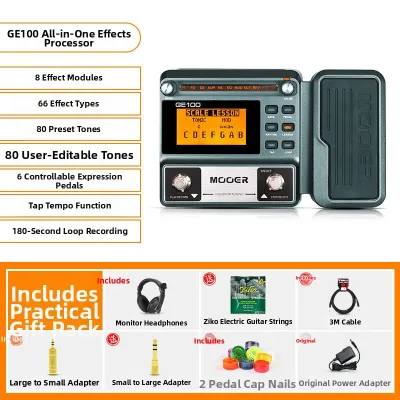
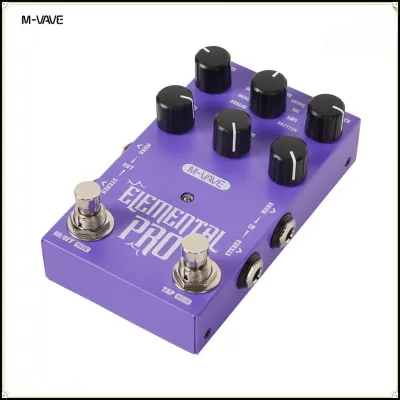
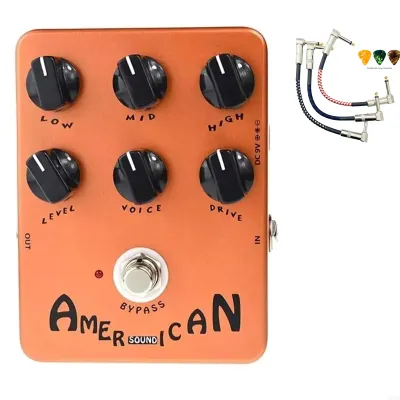
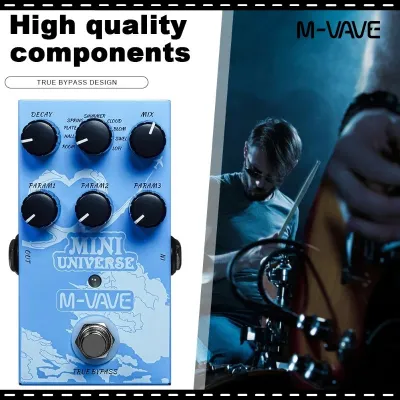
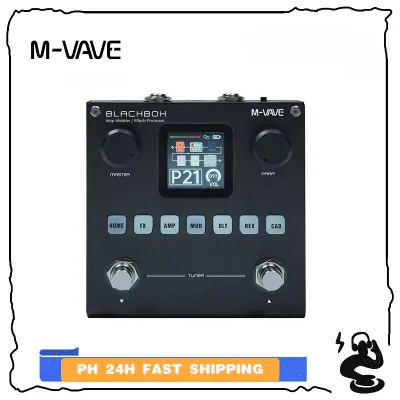
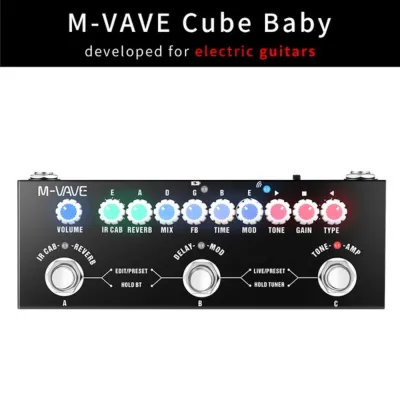
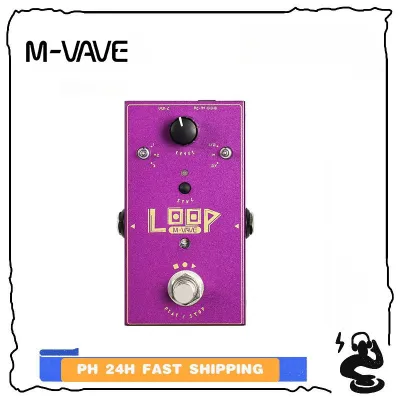
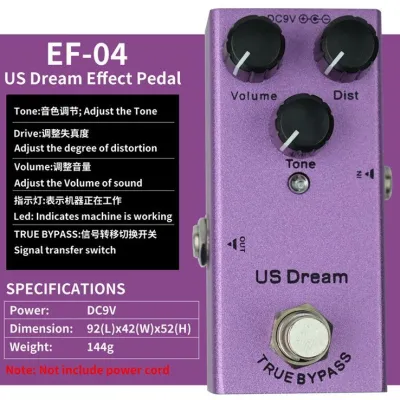
Prices are valid at publication and may change. Please refer to the product page for the latest price.
Recognizing a genuine tonal gap is key to avoiding unnecessary purchases. You are likely ready for your first pedal if you find yourself unable to replicate the core textures of your favorite songs, or if you feel physically limited by your amplifier’s basic clean channel. For example, if you are practicing guitar solos and notice your notes decay too quickly, you likely need a pedal that adds sustain. If your rhythm playing sounds flat and dry compared to the recordings you are studying, a time-based or modulation effect is the logical solution.
It is also important to distinguish between a functional tonal need and the temporary excitement of acquiring new gear. A targeted purchase solves a specific problem in your practice sessions. If you struggle to stay motivated because your guitar tone lacks the grit required for rock riffs, a drive pedal is a functional tool that directly aids your learning. If you already have a multi-effects amplifier but find the menus too tedious to navigate during practice, a physical stompbox offers a tactile, distraction-free workflow that keeps you focused on playing.
Match Your Playing Style to the Right Pedal Category
Your preferred musical genres should dictate your first pedal purchase. Different styles of music rely on specific families of effects to establish their sonic identity. By identifying the primary genre you want to play, you can narrow down your search to the category that will have the greatest impact on your daily practice.

Overdrive and Distortion for Rock, Blues, and Metal
If your musical interests lean toward classic rock, blues, indie, or heavy metal, a gain-based pedal is the most logical first step. These pedals add grit, sustain, and harmonic richness to your signal, transforming a pristine clean tone into an aggressive, cutting sound. They are essential for executing heavy rhythm riffs and singing lead solos.
It is crucial to understand the difference between overdrive and distortion. Overdrive pedals are designed to mimic the natural breakup of a tube amplifier pushed to its volume limits. They feature soft-clipping circuitry that responds dynamically to your playing dynamics; striking the strings softly yields a cleaner tone, while digging in produces more grit. This makes overdrive highly versatile for blues and classic rock. Distortion pedals, by contrast, use hard-clipping circuits to saturate your signal uniformly, creating a heavy, aggressive tone with long sustain regardless of your picking strength. This is the preferred choice for hard rock, punk, and metal.
Before buying a gain pedal, test your amplifier’s native dirty channel. If your amplifier already produces a satisfying high-gain sound, a dedicated distortion pedal might be unnecessary. However, if your amplifier only has a clean channel, or if its built-in distortion sounds thin and fizzy, a dedicated overdrive or distortion pedal running into the clean channel will provide a massive sonic upgrade.
Delay and Reverb for Ambient, Lead, and Post-Rock
If you prefer playing melodic solos, ambient soundscapes, dream pop, or clean arpeggios, time-based effects should be your priority. These pedals manipulate time to create a sense of physical space, depth, and atmosphere, making your guitar sound much larger than it actually is.
Delay pedals record your input signal and play it back after a designated period, creating distinct, repeatable echoes. You can control the time between echoes and the number of repetitions, allowing you to create rhythmic patterns or add a subtle halo of sound behind your notes. Reverb pedals simulate the complex acoustic reflections of a physical environment, such as a small room, a massive hall, or a vintage spring tank. Reverb blends your notes together into a continuous, ambient wash.
If your amplifier already features a basic built-in reverb, prioritize a delay pedal as your first time-based purchase. A delay pedal offers far more creative control and versatility for a beginner. It can be set to a short delay time with a single repeat to mimic a vintage slapback echo, or adjusted to longer delay times with multiple repeats to create cascading, atmospheric textures that are perfect for ambient music and soaring guitar solos.
Modulation Effects for Funk, Pop, and Shoegaze
Modulation effects alter the pitch, phase, or timing of your guitar signal over time to create movement and texture. This family includes chorus, phaser, flanger, and tremolo pedals. These effects are highly recognizable and have defined the guitar tones of entire decades.
Chorus pedals duplicate your signal, slightly detune the copy, and modulate it with a low-frequency oscillator before mixing it back with your dry signal. This creates a lush, shimmering, double-tracked sound that is synonymous with 80s pop, alternative rock, and clean funk rhythm playing. A phaser sweeps a series of electronic filters across the frequency spectrum, producing a swirling, spacey effect. While these sounds are highly creative, modulation is generally recommended as a second or third pedal purchase rather than your very first.
Unless your target genre relies heavily on a specific modulation effect as its foundational sound, a gain or time-based pedal will offer much more daily utility. Analyze your favorite tracks to see if modulation is used as a constant, foundational element or merely as an occasional embellishment. If it is the latter, you will get much more long-term value from a pedal that shapes your core tone first.
Technical and Practical Checks Before You Buy
Once you have decided on a pedal category, you must ensure the specific model you choose is compatible with your existing setup and environment. Neglecting these technical details can result in unwanted noise, poor performance, or even permanent damage to your new equipment.
First, verify the power supply requirements of the pedal. The vast majority of standard guitar pedals run on a 9-volt Direct Current (9V DC) power supply, but you must check the specific current draw, measured in milliamperes (mA). Analog pedals, such as simple overdrives, typically draw very little current, often under 20mA. Digital pedals, such as delays or multi-effects, require significantly more current, sometimes up to 300mA or more. Running a digital pedal on an underpowered power supply can cause digital hum, glitches, or cause the pedal to fail to power on entirely. Always check the manufacturer’s user manual to verify the exact voltage, current draw, and polarity (most pedals use a center-negative barrel connector) to avoid damaging the internal circuitry.
Second, consider the signal chain and bypass style of the pedal. Pedals generally feature either true bypass or buffered bypass switching. True bypass completely disconnects the pedal’s internal circuitry from your signal path when the pedal is turned off, preserving your guitar’s natural tone. However, if you run multiple true bypass pedals through long cables, the cumulative capacitance can cause “tone suck,” which dulls your high-frequency response. A buffered bypass pedal actively strengthens your signal, preserving those high frequencies over long cable runs. For a beginner with only one or two pedals, this distinction is minor, but it becomes important as your collection grows.
In the tropical climate of the Philippines, environmental factors also play a role in gear maintenance. High humidity can accelerate the oxidation of metal jacks, cable plugs, and internal potentiometers, leading to crackling noises and signal dropouts. When setting up your gear, invest in high-quality shielded cables, and consider keeping silica gel packs in your pedal case or gig bag to help absorb excess moisture.
Finally, allocate your budget realistically. In the local market, reliable, entry-level utility pedals from reputable manufacturers typically range from ₱1,500 to ₱4,000. Mid-range industry standards generally cost between ₱5,000 and ₱12,000. As a beginner, there is no practical need to chase expensive, boutique pedals that cost upwards of ₱15,000. Focus on finding a pedal with a robust aluminum chassis and solid metal footswitches that can withstand regular physical use. Always purchase from authorized local dealers to ensure you receive a genuine product covered by a valid manufacturer warranty.
How to Test Pedals to Confirm Your Choice
Testing a pedal in person is the most reliable way to confirm it matches your expectations. If you plan to visit a local music showroom, a structured approach to testing will help you make an objective decision.
If possible, bring your own guitar to the store. Different guitar pickups interact uniquely with effects pedals. A high-output humbucker pickup will push an overdrive pedal into saturation much faster than a vintage-voiced single-coil pickup. Testing the pedal with your own instrument ensures you hear exactly how it will perform in your home practice space. If bringing your guitar is not feasible, ask the store staff for a instrument that matches your guitar’s pickup configuration and wood type as closely as possible.
When testing, play a simple, familiar riff that you can execute flawlessly without thinking. Do not try to practice complex new techniques or improvise heavily. Using a consistent, well-practiced riff allows you to focus your entire attention on the tonal changes introduced by the pedal as you adjust the control knobs. Turn the knobs to their extreme minimum and maximum settings to understand the full range of the pedal’s capabilities.
Test the pedal through both the clean and dirty channels of an amplifier that is similar to your own. Pay close attention to the noise floor. All high-gain pedals introduce some level of hiss, but excessive hum or buzzing could indicate poor internal shielding or grounding issues. Additionally, check the physical usability of the pedal: ensure the knobs turn smoothly with appropriate resistance, the footswitch engages without an audible pop through the speaker, and the status LED is clearly visible.
If the store environment is too loud or crowded to accurately hear subtle effects like the decay of a reverb or the modulation depth of a chorus, ask the staff if you can test the pedal using a headphone-equipped amplifier or a modern multi-effects unit with a headphone output. This isolated listening environment will allow you to catch subtle details and make a much more informed buying decision.
Frequently Asked Questions (FAQ)
Do I need an effects pedal if I already have a modeling amp?
If you own a modeling amplifier, you already have access to a wide array of digital effects built directly into the amp’s software. For basic bedroom practice and general tone exploration, these built-in effects are highly convenient and cost-effective. However, physical pedals offer a distinct advantage in terms of workflow and performance. Adjusting a physical knob on a stompbox is instantaneous and intuitive, whereas modeling amps often require you to scroll through digital menus and submenus to tweak a single parameter. Physical pedals also provide immediate tactile control during live performances or band practices, allowing you to turn effects on and off instantly with a foot switch without having to look away from your instrument.
Should I buy a multi-effects processor instead of single pedals?
Multi-effects processors are highly practical units that pack dozens of different effects, amp models, and cabinet simulations into a single chassis. They offer incredible value for money and are excellent tools for beginners who want to experiment with a wide variety of sounds to discover what they like. However, they often come with a steep learning curve and complex user interfaces that can be distracting for a beginner. Single pedals, by contrast, teach you the fundamentals of signal flow and tone shaping step-by-step. They offer a straightforward, tactile user interface where one knob controls one specific parameter, allowing you to build your dream tone gradually and customize your setup over time.
Community discussion
Share your experience or ask a question. Comments are reviewed before publication.