
Choosing the right capo comes down to matching its clamping mechanism to your guitar’s fretboard shape and your personal playing habits. If you perform live and need to change keys instantly between songs, a spring-loaded trigger capo offers the speed you need. For studio recording or playing instruments with delicate setups, an adjustable screw capo provides the precise tension control required to keep your strings perfectly in tune. Understanding how these different designs apply pressure to your fretboard ensures you protect your guitar’s neck while maintaining excellent intonation.
Decoding Standard Capo Mechanisms
A capo acts as a temporary nut, shortening the vibrating length of your guitar strings to raise their pitch without changing your fingerings. While the concept is simple, the way a capo applies pressure to the strings directly affects your instrument’s tuning stability and overall playability.
If a capo clamps down too hard, it stretches the strings downward toward the fretboard wood, pulling them sharp. Conversely, if the clamping force is too weak, the strings will buzz against the frets, ruining your tone. Choosing the right mechanism helps you strike the perfect balance between secure pressure and accurate tuning.
Products mentioned in this guide
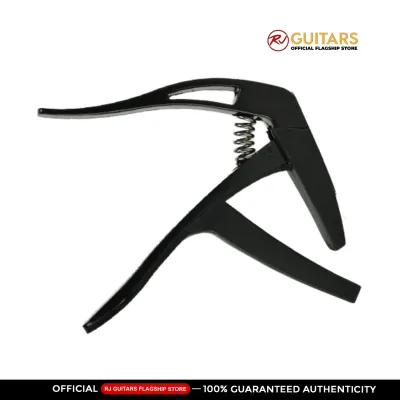
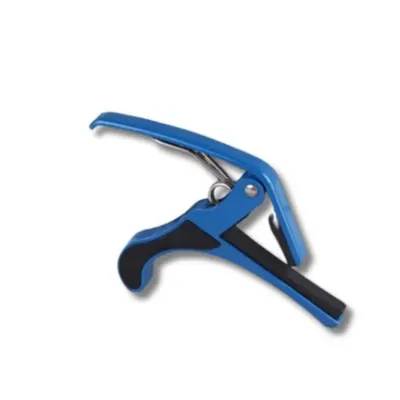
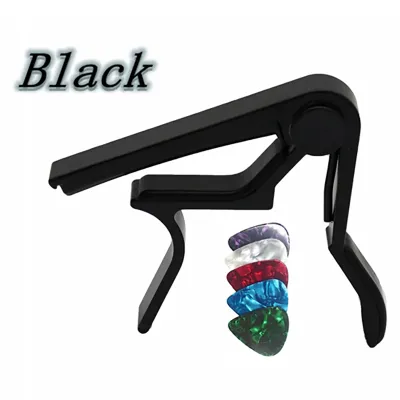
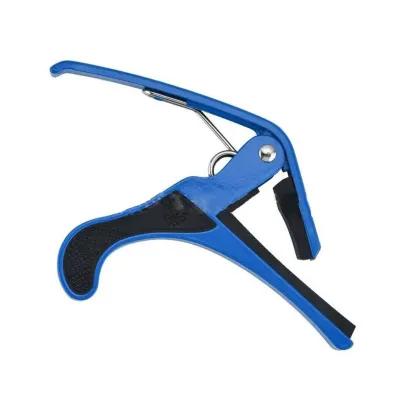
Prices are valid at publication and may change. Please refer to the product page for the latest price.
Spring-Loaded and Trigger Capos
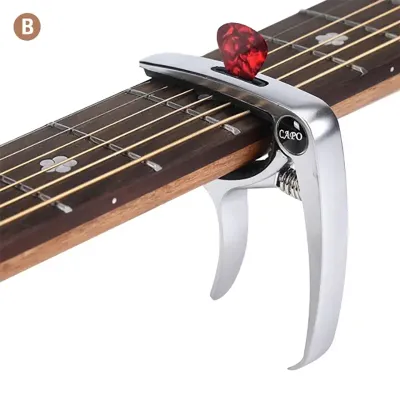
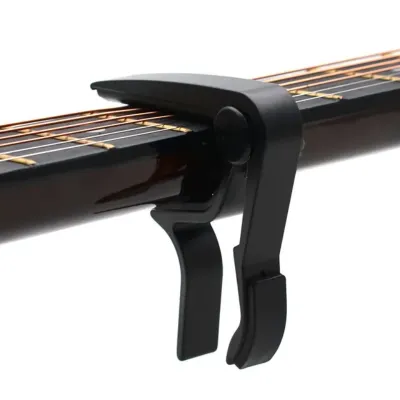
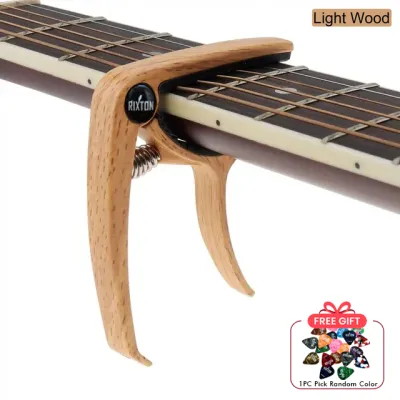
Spring-loaded capos, often called trigger capos, are highly popular due to their sheer convenience and speed. These devices use a strong internal spring to clamp onto the neck, allowing you to squeeze the handle and reposition the capo with just one hand.
This rapid operation makes them excellent for live performances where you cannot afford to pause between songs to turn a screw. You can quickly clamp it onto a higher fret or clip it to your guitar’s headstock when it is not in use.
However, because the spring tension is fixed, these capos apply the exact same amount of force regardless of your guitar’s neck thickness. On a guitar with a thin neck profile, the high tension can easily pull your strings sharp, requiring you to retune. On a very thick neck, the spring might struggle to apply even pressure across all strings, leading to unwanted fret buzz.
Screw and Adjustable Tension Capos
Screw-style capos feature an adjustable knob or dial that allows you to manually control the amount of clamping force applied to the strings. This micro-adjustability is a major advantage for maintaining precise intonation across different frets.
By turning the screw, you can apply only the minimum amount of pressure needed to make the strings ring clearly behind the fret. This prevents the strings from being pulled sharp and minimizes wear on your frets and fretboard.
The trade-off for this precision is speed. Applying or moving a screw-style capo requires two hands and takes several seconds, making it less practical for fast-paced live sets. However, it is highly suitable for studio recording, 12-string guitars, classical guitars, and instruments with delicate neck profiles that require highly balanced pressure.
Elastic and Toggle Capos
Elastic and toggle capos use a flexible strap made of heavy-duty elastic or fabric, which wraps around the back of the neck and secures with a snap, hook, or toggle system. These are among the most lightweight and affordable capos available, often costing just a few hundred ₱, making them highly accessible for beginners.
Because they lack bulky metal hardware, they have a very low profile that will not interfere with your fretting hand. They are easy to slip into a pocket or gig bag accessory compartment.
Despite their portability, elastic capos require two hands to install and can be difficult to align perfectly. The flexible strap can apply uneven pressure across the fretboard, causing some strings to buzz while others go sharp. Additionally, in warm and humid tropical climates like the Philippines, elastic materials tend to degrade, stretch out, or lose their elasticity over time, meaning they will eventually need to be replaced.
Exploring Specialized Capo Designs
Beyond standard full-width capos, specialized designs cater to specific musical genres, complex arrangements, and advanced playing techniques. These tools allow guitarists to explore unique sonic textures without permanently altering their instruments.

Partial capos are designed to cover only a select number of strings, such as three, four, or five, leaving the remaining strings to ring open. This setup allows you to simulate alternate tunings, like Drop D or DADGAD, while keeping your guitar in standard tuning. It creates beautiful drone effects and opens up new chord voicing possibilities for fingerstyle players.
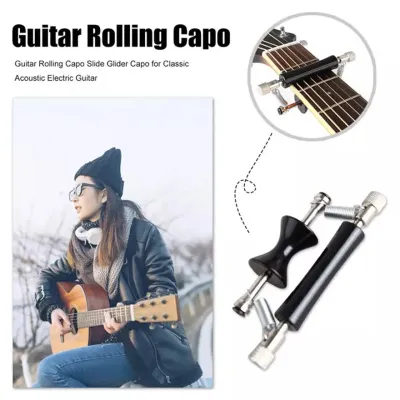
Roller capos feature a rolling mechanism that allows you to slide the capo up and down the neck mid-song using your fretting hand. This is highly useful for dynamic key changes within a single piece of music. However, they require a guitar with a smooth neck finish and adequate clearance behind the neck to roll smoothly without binding.
Cutout capos are pre-configured to skip specific strings, such as the low E or high E, allowing for intricate arrangements where open bass notes can ring out beneath fretted melodies. These specialized tools are excellent additions to a guitarist’s toolkit once they have mastered standard capo techniques.
Matching the Capo to Your Guitar and Playing Style
To find the right capo, you must match its physical design to your guitar’s specifications. The most critical factor is your fretboard’s radius, which refers to the curvature of the wood.
Classical guitars have completely flat fretboards, requiring a straight capo pad to apply equal pressure to all strings. Steel-string acoustic and electric guitars have curved fretboards, meaning you need a capo with a matching curved pad. Using a curved capo on a flat classical fretboard will pinch the outer strings while leaving the middle strings loose and buzzing.
You must also consider your guitar’s neck profile and depth. A bulky, heavy capo might feel unbalanced on a lightweight electric guitar, while a small capo might not open wide enough to fit a vintage acoustic neck.
Your primary playing environment should guide your final choice. If you mostly play live gigs where quick transitions are essential, prioritize a spring-loaded trigger capo. If you spend your time recording or practicing complex fingerstyle pieces where perfect tuning is paramount, an adjustable screw capo is the better investment.
| Capo Type | Best Guitar Type | Primary Advantage | Ideal Use Case |
|---|---|---|---|
| Spring-Loaded | Acoustic / Electric | One-handed, rapid key changes | Live gigs and casual practice |
| Screw-Adjustable | Classical / 12-String / Acoustic | Precise tension control, perfect tuning | Studio recording and delicate necks |
| Elastic / Toggle | Budget Acoustic / Travel | Lightweight, low profile, affordable | Travel, backup gear, and beginners |
| Partial | Acoustic (Fingerstyle) | Simulates alternate tunings | Creative songwriting and drone effects |
Essential Specs and Fit Checks Before Purchase
Before buying a capo from an online marketplace or local music store, check the pad material. High-quality capos use non-marring silicone or dense rubber pads that protect your guitar’s finish and strings. Avoid cheap, hard plastic pads, which can slip, wear down quickly, or react chemically with nitrocellulose finishes in hot, humid environments.
Look into the spring tension rating if you are choosing a spring-loaded model. Some manufacturers offer different models optimized for electric guitars (which have lighter string gauges and lower action) versus acoustic guitars (which require more clamping force for heavier strings).
Whenever possible, perform a physical test with your own guitar. Clamp the capo on the third or fifth fret and check for tuning drift using a digital tuner. Ensure the mechanism does not block your hand when playing open chords close to the capo, and verify that the clamping pads do not leave marks on the back of your guitar’s neck.
Frequently Asked Questions (FAQ)
Will a steel-string capo work on a classical guitar?
Generally, no. Steel-string guitars have curved fretboards, so their capos are designed with a matching curve. Classical guitars have flat fretboards. If you use a curved capo on a flat fretboard, it will apply too much pressure to the outer strings and not enough to the middle strings, resulting in severe buzzing. Always check the manufacturer’s specifications to ensure the capo matches your guitar’s fretboard radius.
How do I stop my capo from making my guitar sound out of tune?
To maintain tuning stability, place the capo directly behind the fret wire rather than in the middle of the fret space. Placing it too far back forces you to apply more tension, which pulls the strings sharp. If you are using an adjustable capo, tighten it only until the strings ring clearly without buzzing. Finally, check that you are clamping the capo straight across the neck so it does not pull the strings sideways.
Community discussion
Share your experience or ask a question. Comments are reviewed before publication.