
Selecting an Ethiopian Bible for personal reading is a rewarding journey into one of the world’s oldest and richest Christian traditions. However, because the term “Ethiopian Bible” can refer to several different things—ranging from modern translations in Ethiopian languages to English translations of the unique 81-book Orthodox canon—it is easy for readers to purchase the wrong edition. To make an informed choice, you must first clarify whether your goal is to study the ancient, expanded biblical canon or to read standard scriptures in a language like Amharic or Tigrinya.
For most English-speaking readers, the primary draw is the unique collection of books preserved by the Ethiopian Orthodox Tewahedo Church. This canon includes fascinating texts like the Book of Enoch and the Book of Jubilees, which are not found in Western Protestant or Catholic Bibles. Approaching these texts requires an understanding of their historical context, translation styles, and physical formats. By evaluating your personal reading goals, study habits, and the practical aspects of book preservation, you can select an edition that will serve as a durable and enriching companion for your spiritual or academic study.
Understanding the "Ethiopian Bible": Canon vs. Language
To choose the right edition, you must first distinguish between the canon of the scripture and the language in which it is written. The Ethiopian Orthodox Tewahedo Church recognizes a canon of 81 books, which is divided into the “narrower” and “broader” canons. This collection is significantly larger than the 66-book Protestant canon and the 73-book Catholic canon. It includes unique writings such as 1 Enoch, Jubilees, and the books of Meqabyan, which offer deep insights into early Jewish and Christian theology. If your interest lies in these specific texts, you need an English translation of the Ethiopian Orthodox canon, not simply any Bible printed in Ethiopia.
Products mentioned in this guide
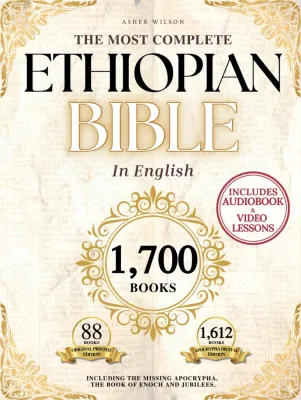
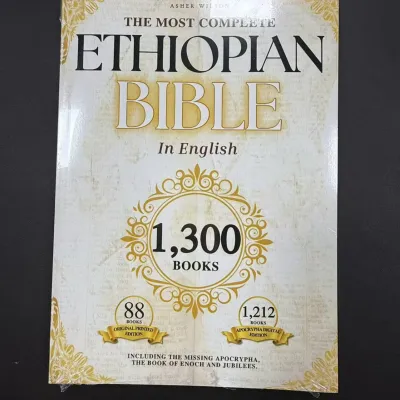
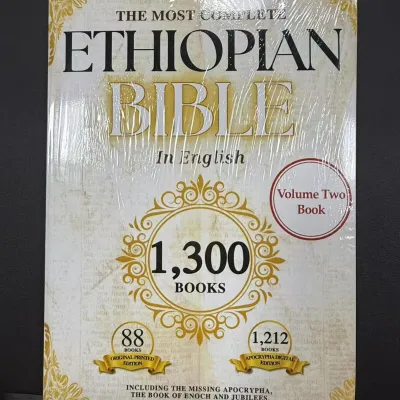
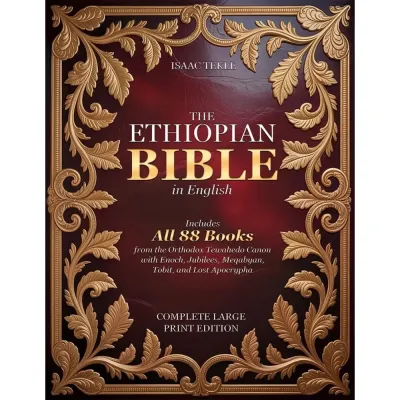
Prices are valid at publication and may change. Please refer to the product page for the latest price.
Conversely, if you are looking for a Bible written in an Ethiopian language, you are looking at a linguistic requirement rather than a canonical one. The primary languages used in Ethiopian Christian communities today are Amharic, Tigrinya, and Oromo, while Ge’ez serves as the classical liturgical language, similar to Latin in Western Europe. Many modern Bibles printed in Amharic actually follow the standard Protestant or Catholic canons rather than the full 81-book Orthodox canon. Therefore, searching for an “Amharic Bible” might lead you to a standard 66-book translation, whereas searching for an “Ethiopian Orthodox Bible” is more likely to lead you to the expanded canon.
Understanding how these terms are used in retail spaces is crucial. Many online listings use the phrase “Ethiopian Bible” as a marketing term to sell standalone copies of the Book of Enoch or incomplete compilations of apocryphal texts. True, complete editions of the 81-book canon in English are rare and require careful verification. By keeping the distinction between language and canon clear, you can narrow down your search to editions that truly match your study objectives.
Key Selection Criteria for Personal Reading
When evaluating different editions for personal reading, several key criteria should guide your decision. The first is the translation philosophy. Translations of ancient Ge’ez texts into English generally fall along a spectrum between formal equivalence (word-for-word translation) and dynamic equivalence (thought-for-thought translation). Formal equivalence is excellent for close textual study and theological analysis, as it preserves the structure and idioms of the ancient language. However, it can result in stiff, archaic English that is difficult to read devotionally. Dynamic equivalence offers a smoother reading experience but may interpret ambiguous passages for you, potentially obscuring deeper layers of meaning.

The presence of study aids is another critical factor. Because books like Enoch and Jubilees contain complex apocalyptic imagery and historical references that are unfamiliar to most Western readers, having access to robust footnotes, introductions, and cross-references is invaluable. A well-annotated edition will explain the historical context of the text, clarify difficult terms, and show how these books relate to the rest of the biblical narrative. If you plan to use the Bible for deep study, prioritize editions that include these scholarly resources over bare-text editions.
Physical format and durability are also vital, especially for readers living in tropical climates like the Philippines. High relative humidity and warm temperatures can take a toll on books, causing cheap glue bindings to crack, pages to warp, and covers to deteriorate. If you are investing in a physical copy—which often ranges from ₱1,500 to ₱4,500 due to import costs—it is wise to look for editions with Smyth-sewn bindings and acid-free paper. Sewn bindings allow the book to lie flat without putting stress on the spine, ensuring the pages remain secure over years of daily use. Additionally, consider whether you prefer a portable paperback for daily commuting or a sturdy hardcover for your home study desk.
Types of Ethiopian Bible Editions to Consider
As you begin your search, you will encounter several distinct types of Ethiopian Bible editions, each catering to different reading preferences and study goals.
Complete 81-Book English Editions: These volumes are designed for readers who want the entire Ethiopian Orthodox canon in a single English-language book. They compile the Old Testament, the New Testament, and all the unique deuterocanonical and pseudepigraphal books recognized by the Tewahedo Church. These editions are ideal for those who want a comprehensive, unified reading experience. However, because compiling and translating all 81 books is an immense scholarly task, these volumes are often quite large, heavy, and may be more expensive to import.
Bilingual and Parallel Editions: Often featuring Amharic and English side-by-side, these editions are highly valued by language learners, members of the Ethiopian diaspora, and scholars. They allow you to read the modern vernacular translation alongside an English equivalent, which is excellent for linguistic study and cultural connection. Keep in mind that some parallel editions may only include the standard Protestant or Catholic books, so you must verify the table of contents if you specifically want the unique Orthodox books.
Academic and Historical Translations: If your primary interest is historical research or textual criticism, you might prefer academic translations of individual books rather than a complete Bible. Scholars have produced highly detailed, standalone translations of 1 Enoch, Jubilees, and the Ascension of Isaiah. These volumes feature extensive commentary, linguistic analysis, and comparisons of different ancient manuscripts. While they lack the traditional devotional layout, they offer the highest level of academic rigor for serious students of ancient literature.
Standard Bibles with Apocrypha: For a more accessible and affordable option, you might consider a standard Western Bible that includes the Apocrypha or Deuterocanonical books, such as the New Revised Standard Version or the Common English Bible. While these editions do not contain the uniquely Ethiopian books like Enoch or Meqabyan, they do include books like Tobit, Judith, and Wisdom, which are shared parts of the broader canon. This is an excellent starting point if you want a familiar, high-quality study Bible while gradually exploring the wider biblical tradition.
Pre-Purchase Verification Checklist
To avoid disappointment when purchasing an Ethiopian Bible online, it is essential to perform a few quick checks before finalizing your order.
Verify the Table of Contents: Do not rely on the book’s title or cover art alone. Many publishers use sensational titles like “The Complete Ethiopian Bible” for books that only contain a few apocryphal texts. Always look for a digital preview or a detailed product description that lists the exact table of contents. Confirm that the specific books you wish to study, such as 1 Enoch, Jubilees, and the three books of Meqabyan, are explicitly included in the volume.
Check the Language Specifications: Carefully read the product details to ensure the text is in a language you can read. Some listings for “Ge’ez Bibles” or “Amharic Bibles” are written entirely in the traditional Ethiopic script without English translation. Unless you are studying these languages, look for editions clearly marked as “English Translation” or “Bilingual English-Amharic.”
Research the Publisher and Translation Source: Because interest in the Ethiopian canon has grown, many independent and print-on-demand publishers have released low-quality reprints of public-domain translations. Some of these editions suffer from poor formatting, missing pages, or unreadable fonts. Check the publisher’s reputation and read customer reviews to ensure the translation is respected, readable, and physically well-made.
Consider Climate-Resistant Formats: If you live in a humid environment, look for editions with durable covers and high-quality paper. Synthetic leather or hardback covers generally resist moisture and mold better than standard paperbacks. If you are concerned about physical degradation, a high-quality digital edition can be a practical, climate-proof alternative that also offers adjustable font sizes and search functions.
Frequently Asked Questions (FAQ)
Why are there 81 books in the Ethiopian Bible?
The Ethiopian Orthodox Tewahedo Church has preserved an ancient Christian tradition that did not experience the same canonical reductions as Western churches. While Western traditions narrowed their canons during early councils and the Protestant Reformation, the Ethiopian Church maintained a broader view of scripture, incorporating historical, prophetic, and apocalyptic texts that were highly valued by early Christians. This 81-book canon is divided into the Old and New Testaments, providing a rich, holistic library of spiritual and historical guidance.
Can I read the Book of Enoch in a standard Western Bible?
No, standard Western Bibles do not include the Book of Enoch. Protestant Bibles contain 66 books, and Catholic Bibles contain 73 books, neither of which feature Enoch or Jubilees. To read these texts, you must purchase a specific edition of the Ethiopian Orthodox canon or a standalone academic translation of these individual books.
Where is the safest place to buy authentic editions online?
The safest way to purchase an authentic Ethiopian Bible is through established theological publishers, academic university presses, or specialized religious bookstores. When shopping on general e-commerce platforms, always verify the publisher’s name, check the seller’s ratings, and cross-reference the book’s ISBN with official library databases to ensure you are buying a legitimate, complete translation rather than an unauthorized or poorly formatted reprint.
Community discussion
Share your experience or ask a question. Comments are reviewed before publication.